
If you’ve ever tried to use the bathroom in peace only to find your cat sitting intently by the door—or worse, perched on the sink watching you—it’s not just a coincidence. This behavior is surprisingly common among cat owners, and while it may seem odd or even intrusive, it’s deeply rooted in feline psychology. Cats are creatures of routine, observation, and attachment, and their decision to follow you into the bathroom isn’t random. It’s a complex blend of instinct, social bonding, and environmental awareness.
Understanding why your cat insists on being your bathroom shadow can deepen your relationship with them and help you respond appropriately—whether that means embracing the companionship or gently encouraging more independence.
The Social Bond: You’re Their Person
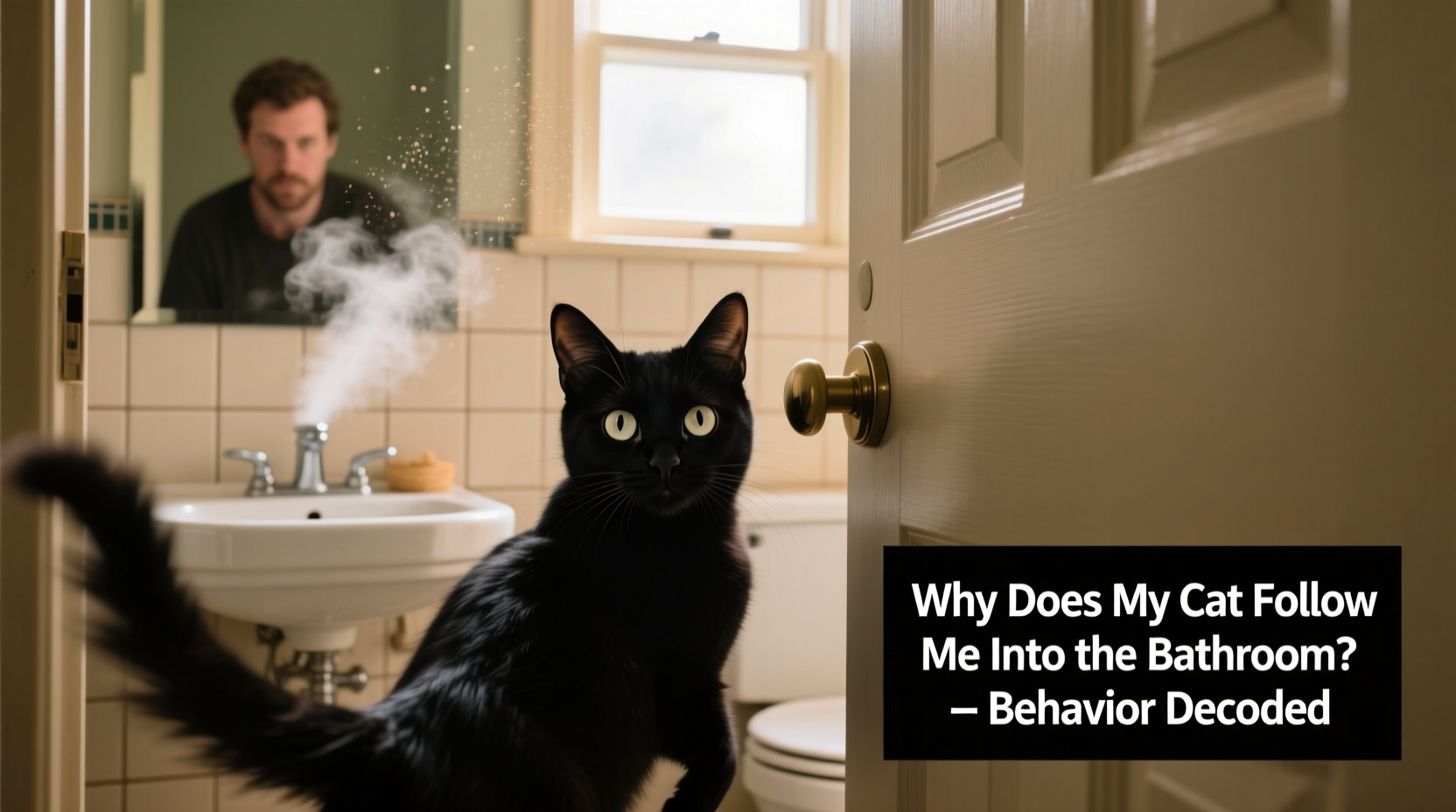
Cats are often misunderstood as solitary or aloof animals, but modern research shows they form strong emotional attachments to their human caregivers. When your cat follows you into the bathroom, it may simply be because they see you as part of their social group—and they don’t want to miss out on time together.
In the wild, cats live in loose colonies where individuals maintain close bonds through proximity and grooming. Your home environment mimics this dynamic. The bathroom, despite its lack of obvious appeal to humans, becomes a space of enforced stillness—where you sit down, make soft noises, and are temporarily unavailable. To a cat, this signals an opportunity for attention.
“Cats view their humans as social partners. Following them into confined spaces like bathrooms is a sign of attachment, not just curiosity.” — Dr. Sarah Ellis, Feline Behavior Scientist, University of Bristol
This behavior is especially common in households where the owner works long hours. The cat may perceive bathroom breaks as one of the few times they can reliably access undivided attention—even if that attention is indirect.
Curiosity and Environmental Monitoring
Cats are natural observers. They rely heavily on scent, sound, and movement to assess their surroundings. The bathroom introduces a variety of unusual stimuli: running water, flushing sounds, splashing, and unfamiliar scents from soaps, shampoos, and cleaning products. All of these pique a cat’s interest.
Additionally, bathrooms often have smooth, cool surfaces (tile floors, porcelain fixtures) that cats enjoy exploring. Some cats are drawn to the residual warmth of the shower or the reflective shine of mirrors and faucets. Others are intrigued by the act of water flowing from a tap—especially if they don’t drink from bowls readily.
Sensory Triggers That Attract Cats to Bathrooms
| Stimulus | Why It Interests Cats |
|---|---|
| Running water | Mimics fresh, moving water—more appealing than stagnant bowl water |
| Humid air after showers | Can soothe respiratory passages; also carries concentrated human scent |
| Shiny surfaces | Reflect movement, triggering predatory tracking instincts |
| Unfamiliar scents | Trigger investigation due to novelty and potential threat assessment |
| Confined space | Limits escape routes, making it easier for cats to monitor activity |
Security and Routine: Predictability Matters
Cats thrive on routine. They notice when you deviate from your usual patterns—even briefly. Entering the bathroom represents a temporary disappearance from their field of vision. For some cats, this triggers mild anxiety, prompting them to follow you to ensure you haven’t vanished or entered a potentially dangerous situation.
This behavior is more pronounced in cats who were orphaned, adopted as strays, or experienced early separation from their mothers. These individuals may develop stronger attachment behaviors as a coping mechanism. Similarly, multi-cat households may see increased following behavior from the most socially bonded cat—the one who views you as their primary ally.
The bathroom door, especially when closed, acts as a barrier. Cats cannot understand why you would voluntarily isolate yourself. From their perspective, it’s akin to hiding or retreating from the group. Their insistence on joining you is an attempt to maintain social continuity.
Attention-Seeking and Learned Behavior
Let’s face it: sometimes, your cat has learned that the bathroom is a guaranteed interaction zone. Even if you’re unresponsive during your visit, your presence alone provides sensory stimulation. Over time, your cat associates the bathroom with opportunities for engagement—whether it’s pawing at your leg, meowing, or simply being near you.
If you’ve ever spoken to your cat while in the bathroom (“What are you doing here?” or “You’re not coming in!”), you’ve inadvertently reinforced the behavior. To your cat, any vocalization—even scolding—is a form of communication and attention.
- Cats remember which rooms yield the most interaction.
- Brief moments of eye contact or petting reinforce the habit.
- Even negative reactions (pushing them out) confirm your presence and involvement.
“Cats don’t distinguish between positive and negative attention—they only register that you responded. Consistency in boundaries is key.” — Jackson Galaxy, Animal Behaviorist and Host of *My Cat from Hell*
Mini Case Study: Luna and the Locked Door
Maria, a remote worker in Portland, noticed her 3-year-old tabby, Luna, became increasingly anxious whenever she used the bathroom. If the door was closed, Luna would cry loudly and scratch at the wood. If left open, she’d jump onto the sink and stare intently.
After consulting a feline behaviorist, Maria realized that Luna had developed separation-related stress during lockdowns when they were together 24/7. The bathroom became the only place Maria regularly disappeared. By leaving a baby monitor speaker in the bathroom and using a calm voice (“I’m right here, Luna”), Maria gradually reduced the anxiety. She also began offering a treat-filled puzzle toy outside the door to create a positive association with staying put.
Within six weeks, Luna stopped demanding entry and would wait patiently nearby—proof that small environmental adjustments can reshape ingrained behaviors.
Is It Normal? A Behavioral Checklist
Following you into the bathroom is generally normal, but context matters. Use this checklist to assess whether the behavior is healthy or potentially concerning:
- ✅ Does your cat remain calm once inside?
- ✅ Do they leave quietly when invited or distracted?
- ✅ Is this part of a broader pattern of affectionate behavior?
- ✅ Are there no signs of excessive vocalization, scratching, or aggression?
- ✅ Does your cat have other outlets for mental stimulation?
If you answered “yes” to all, your cat is likely expressing typical attachment. However, if your cat displays distress when denied access—such as prolonged crying, destructive scratching, or refusing to eat—it may signal underlying anxiety that warrants professional evaluation.
When Following Becomes Obsessive: Red Flags
While most bathroom-following is harmless, it can escalate into problematic dependency. Signs of compulsive attachment include:
- Refusing to eat unless you’re present
- Following you from room to room without pause
- Exhibiting destructive behavior when separated
- Over-grooming or self-harm when left alone
These behaviors may indicate underlying issues such as past trauma, inadequate environmental enrichment, or medical conditions affecting cognition (especially in older cats).
How to Manage the Behavior (Without Breaking the Bond)
You don’t need to stop your cat from following you—but you can guide the behavior in healthier directions. Here’s a step-by-step approach:
Step 1: Assess Your Cat’s Environment
Ensure your home offers multiple high vantage points, cozy resting areas, and stimulating toys. Boredom amplifies clinginess.
Step 2: Create Positive Distractions
Place a treat-dispensing toy or cat tree near the bathroom door. Reward your cat for staying outside.
Step 3: Practice Gradual Separation
Spend short periods in the bathroom with the door ajar. Gently close it over time, offering praise or treats when your cat remains calm.
Step 4: Avoid Reinforcing Anxiety
Don’t yell or push your cat away—this increases stress. Instead, calmly redirect with a toy or verbal cue.
Step 5: Maintain a Predictable Routine
Cats feel safest when they know what to expect. Regular feeding, play, and rest times reduce insecurity-driven behaviors.
FAQ: Common Questions About Bathroom-Following Cats
Is it weird that my cat watches me pee?
Not at all. From a cat’s perspective, you’re engaging in a routine behavior in a familiar space. They’re observing, not judging. As long as they’re not distressed or aggressive, this is normal curiosity and bonding.
Can I train my cat to stop following me into the bathroom?
You can modify the behavior, but not eliminate it entirely if your cat is strongly attached. Focus on redirection rather than punishment. Use food puzzles or automated toys to keep them occupied elsewhere.
Do male and female cats differ in this behavior?
No significant gender-based differences exist. Personality, early life experiences, and household dynamics play a much larger role than sex. Neutered males and spayed females exhibit similar levels of social attachment.
Final Thoughts: Embracing the Quirks of Cat Companionship
Your cat following you into the bathroom isn’t a flaw in their personality—it’s a testament to the bond you share. In a world where cats are often labeled as indifferent, this behavior reveals their capacity for deep connection, vigilance, and love. While it might test your privacy, it also offers insight into how your cat perceives safety, routine, and relationship.
Rather than viewing it as an annoyance, consider it a privilege. Few animals choose to invest emotionally in humans the way cats do. By understanding the motivations behind the behavior—security, curiosity, affection—you can respond with empathy and intention.
Whether you gently close the door with a distraction in place or welcome your furry chaperone with a smile, the choice is yours. What matters most is consistency, patience, and mutual respect.




 浙公网安备
33010002000092号
浙公网安备
33010002000092号 浙B2-20120091-4
Comments
No comments yet. Why don't you start the discussion?