
It’s a familiar holiday scene: you’ve just assembled the perfect tree—fresh pine scent, twinkling lights, carefully placed ornaments—only to find your usually serene cat hissing from behind the sofa, swatting at tinsel like it’s a venomous intruder, or knocking over the entire stand in a single, defiant pounce. This isn’t mere mischief. It’s a biological and behavioral response rooted in feline evolution, sensory perception, and environmental psychology. Cats don’t “hate” Christmas trees in the human sense of emotional disdain; they perceive them as unpredictable, threatening, or irresistibly provocative stimuli. Understanding that distinction is the first step toward genuine peace—not just for your décor, but for your cat’s wellbeing.
The Real Reasons Behind the Resistance
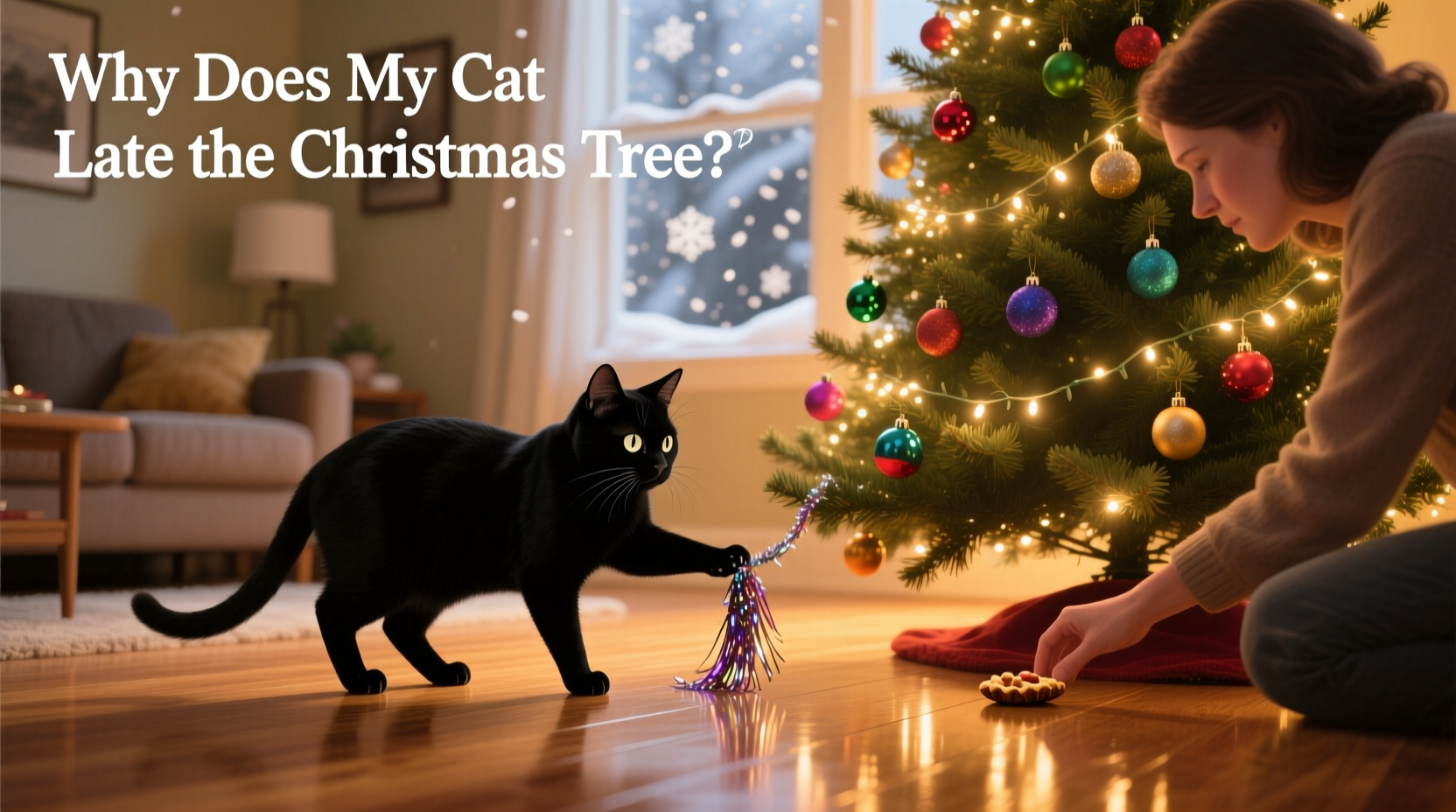
Cats are obligate predators with finely tuned survival instincts. A Christmas tree disrupts their established territory in multiple, simultaneous ways:
- Sensory overload: The tree introduces unfamiliar scents (sap, resin, artificial fragrances), erratic light patterns (flickering LEDs), subtle vibrations (from nearby foot traffic or HVAC systems), and novel textures (rough bark, slippery glass ornaments, static-charged tinsel). Each input competes for neural attention, triggering hypervigilance.
- Violation of spatial predictability: Cats rely on consistent environmental mapping. A tall, dense, moving object—especially one that shifts when brushed or jostled—destroys their mental blueprint of safe pathways, resting spots, and escape routes.
- Perceived predation opportunity: Swaying branches mimic prey movement. Reflective ornaments act like unpredictable, darting objects. Tinsel and ribbons dangle like insects or small mammals—activating innate chase-and-capture circuits.
- Stress-induced displacement aggression: When overwhelmed, some cats redirect anxiety onto the most salient new stimulus—the tree—rather than withdrawing entirely. This manifests as batting, scratching, or vocalizing near it.
Crucially, this reaction isn’t about “disliking” the holiday spirit. It’s about neurobiological mismatch. As Dr. Sarah Heath, a European Veterinary Specialist in Behavioural Medicine, explains:
“Cats don’t experience novelty as ‘excitement’ the way humans do. To them, an unexplained change in their environment is first assessed as a potential threat or resource. The Christmas tree scores high on both counts—unpredictable enough to be threatening, and visually dynamic enough to trigger predatory interest. Peace isn’t achieved by forcing acceptance—it’s built by reducing ambiguity and offering control.”
Practical, Cat-Centered Solutions
Effective strategies prioritize your cat’s autonomy, safety, and sensory comfort—not just protecting the tree. The goal isn’t to eliminate all interaction, but to transform the tree from a source of conflict into a neutral or even enriching element of the home.
Step-by-Step Tree Integration Timeline
- Day 1–2 (Bare Tree Phase): Set up the undecorated tree in its final location. Place familiar bedding or a soft mat nearby. Observe your cat’s approach behavior—do they sniff, circle, or avoid? Note baseline reactions.
- Day 3 (Scent & Texture Introduction): Rub a cloth on your cat’s cheek glands (where calming pheromones are secreted) and gently wipe it on the tree trunk. Add one non-reflective, securely anchored ornament (e.g., a felt star) at cat-eye level.
- Day 4–5 (Gradual Decoration): Decorate incrementally—no more than 3–5 new elements per day. Prioritize matte, lightweight, non-breakable items at lower levels. Avoid tinsel, loose ribbons, and dangling hooks entirely.
- Day 6+ (Environmental Anchoring): Place vertical cat furniture (a sturdy cat tree or wall-mounted shelf) within 3 feet of the tree—but not directly in front of it. This gives your cat a high vantage point to observe without feeling trapped.
- Ongoing (Daily Calibration): Spend 5 minutes daily sitting near the tree while calmly petting your cat. If they retreat, stop and try again later. Never force proximity.
What to Use—and What to Avoid
Not all tree-safe solutions are created equal. Some popular “fixes” actually escalate stress or pose hidden dangers. This table compares evidence-informed options against common misconceptions:
| Strategy | Why It Works (or Doesn’t) | Key Considerations |
|---|---|---|
| Feline pheromone diffusers (Feliway Optimum) | Releases synthetic analogues of facial pheromones, reducing anxiety-related marking and vigilance. Proven effective in multi-cat households and novel environments. | Must be placed near the tree *and* sleeping areas. Replace refills every 4 weeks for sustained effect. |
| Physical barriers (low-profile baby gates) | Creates a respectful boundary without confinement. Allows visual access while preventing direct contact with fragile elements. | Avoid tall, opaque barriers—they increase uncertainty. Use mesh or open-bar designs so the tree remains partially visible. |
| Redirected play sessions | Channels predatory drive away from the tree using scheduled, high-intensity play (e.g., wand toys mimicking bird flight) 2x daily, ending with a meal. | Timing matters: conduct sessions 30 minutes *before* peak tree-interaction times (e.g., early evening). |
| “Tree-proofing” sprays (citrus or bitter apple) | Ineffective and potentially harmful. Cats may associate the aversive smell with the entire room, worsening anxiety. Sprays can irritate eyes/nose and damage ornaments. | Never apply directly to tree branches or ornaments. Avoid entirely—focus on positive reinforcement instead. |
| Leaving the tree unlit overnight | Reduces visual stimulation during peak feline activity hours (dawn/dusk). Eliminates flicker-triggered startle responses. | Use a timer switch to automate lighting. Ensure no cords are accessible when lights are off. |
A Real Example: How Maya’s Household Found Balance
Maya adopted Luna, a 3-year-old rescue with a history of environmental sensitivity. Last December, Luna didn’t just avoid the tree—she stopped using her favorite window perch because it faced the living room where the tree stood. She’d hide for hours after ornaments were added, and her grooming increased to the point of hair loss on her hind legs.
Working with a certified feline behavior consultant, Maya implemented a modified version of the timeline above. She started with a bare, real fir tree (avoiding artificial scent additives), placed Feliway Optimum diffusers in both the living room and Luna’s bedroom, and introduced decorations only after Luna began napping near the base. Crucially, Maya replaced Luna’s old perch with a new one positioned *behind* the tree—giving Luna a secure observation post with full visibility but zero pressure to engage. Within 10 days, Luna was sleeping beside the tree’s base. By New Year’s Eve, she’d bat at a single, securely glued felt ornament—playfully, not aggressively. The transformation wasn’t about the tree becoming “fun.” It was about Luna regaining confidence in her own space.
Essential Safety Checklist
Before the first branch goes up, verify these non-negotiable safeguards. This checklist prioritizes health, welfare, and structural integrity:
- ✅ Stability First: Anchor the tree stand to a wall stud using aircraft cable or heavy-duty straps—not just a decorative ribbon.
- ✅ Cord Management: Conceal all electrical cords inside rigid conduit or under thick, immovable rugs. Never use cord covers that cats can chew through.
- ✅ Ornament Audit: Remove all glass, mercury-dipped, or lead-weighted ornaments. Replace dangling hooks with loop-style hangers secured with hot glue.
- ✅ Water Safety: Cover the tree stand reservoir with a fitted lid or mesh screen. Add 1 tsp white vinegar per quart of water to deter drinking (never use aspirin or fertilizer).
- ✅ Plant Check: Keep poinsettias, holly, mistletoe, and lilies completely out of the home. Even nibbling a leaf can cause severe gastrointestinal distress or kidney failure.
FAQ: Addressing Common Concerns
My cat only attacks the tree at night—why?
Cats are crepuscular, meaning their natural activity peaks at dawn and dusk. Nighttime aggression often reflects heightened predatory arousal when household noise drops and ambient light creates dramatic shadows. Counter this with scheduled play sessions at dusk and dawn, plus a small, protein-rich snack before bedtime to promote satiety-driven rest.
Will a fake tree be less stressful than a real one?
Not necessarily. While real trees introduce volatile organic compounds (VOCs) from sap that some cats find irritating, artificial trees carry risks too: plastic off-gassing, sharp wire branches, and static electricity that makes ornaments “jump” unpredictably. Choose based on your cat’s individual triggers—if scent sensitivity is primary, opt for an unscented artificial tree. If texture or movement drives interest, a real tree with trimmed lower branches may offer fewer temptations.
Is it okay to punish my cat for interacting with the tree?
No. Punishment (spraying water, shouting, clapping) increases fear and erodes trust. It teaches your cat that *you*, not the tree, are the source of danger. Worse, it may suppress outward signs of stress while intensifying internal anxiety—leading to redirected aggression or silent health issues like cystitis. Focus exclusively on antecedent arrangement (changing the environment) and positive reinforcement.
Conclusion: Peace Is a Practice, Not a Perfect Outcome
Making peace with the Christmas tree isn’t about achieving a Pinterest-perfect photo where your cat curls peacefully beneath glittering boughs. It’s about honoring your cat’s nature while thoughtfully adapting your traditions. It’s recognizing that their hiss isn’t rebellion—it’s communication. Their swat isn’t destruction—it’s instinct seeking appropriate expression. Every small adjustment you make—a diffuser placed just so, a perch repositioned, a play session timed with precision—reinforces that their safety and autonomy matter as much as your holiday joy.
This season, measure success not by ornament count, but by moments of quiet coexistence: your cat blinking slowly from across the room, choosing to nap near—not under—the tree, or simply ignoring it altogether as if it’s always been part of the landscape. That’s the deepest kind of peace: not the absence of tension, but the presence of mutual respect.




 浙公网安备
33010002000092号
浙公网安备
33010002000092号 浙B2-20120091-4
Comments
No comments yet. Why don't you start the discussion?