
Cats are creatures of habit, instinct, and selective preference. You might spend $200 on a multi-level cat tree with dangling toys, sisal-wrapped posts, and plush condos—only to watch your cat leap past it toward the wobbly, tinsel-laden Christmas tree in the corner. It’s baffling, frustrating, and more than a little ironic. But this behavior isn’t random or spiteful. It’s rooted in feline psychology, environmental needs, and subtle cues humans often overlook.
The truth is, cats don’t care about price tags or aesthetics. They respond to function, security, stimulation, and territory. Understanding why your cat chooses the holiday centerpiece over their designer perch reveals deeper insights into feline behavior—and how to create spaces they’ll actually use year-round.
The Hidden Logic Behind Feline Preferences
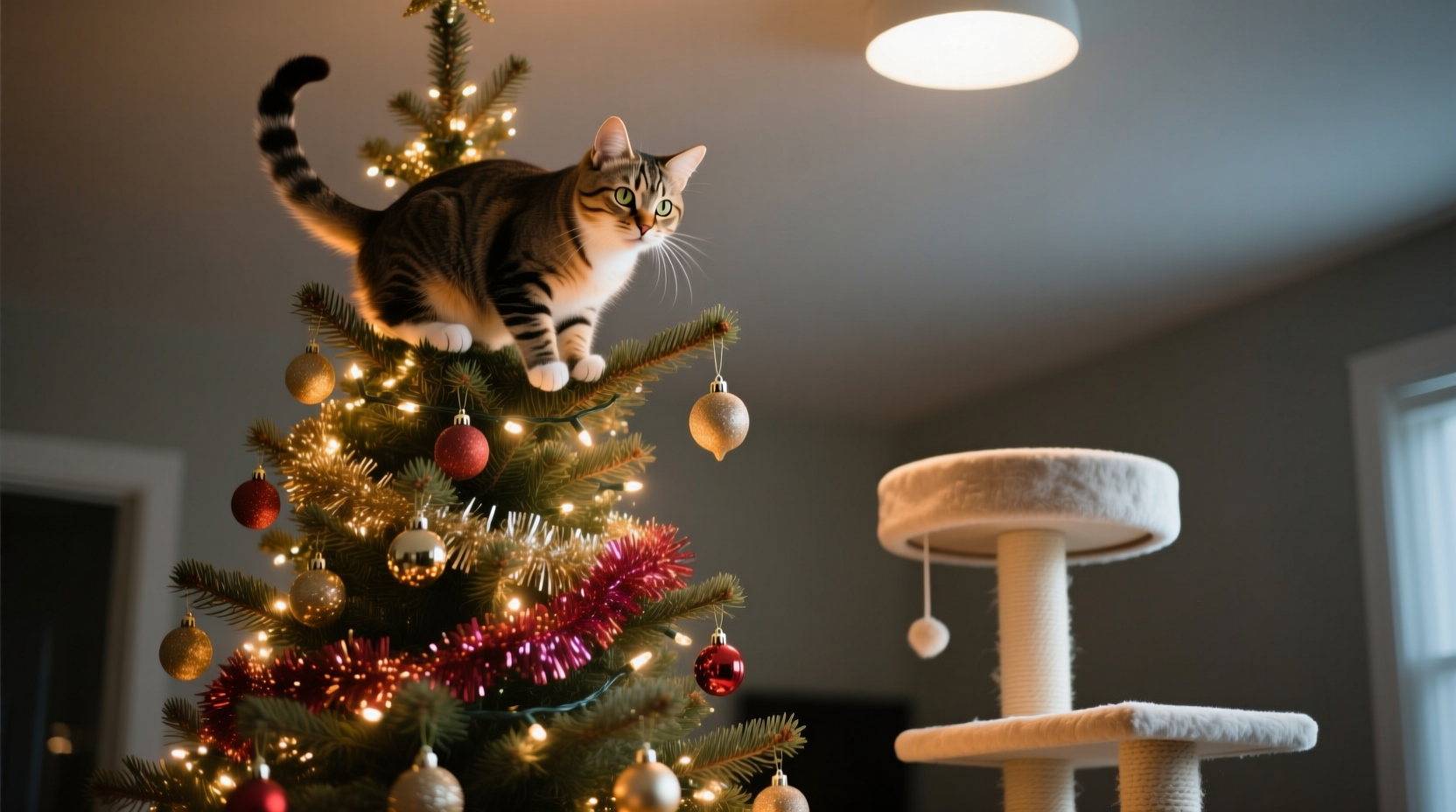
Cats are predators by nature, even when they’ve never hunted a mouse. Their brains are wired to assess environments for safety, vantage points, novelty, and control. The Christmas tree, despite being temporary and potentially dangerous, checks several of these boxes in ways that many commercial cat trees do not.
Consider the location: Christmas trees are typically placed in high-traffic living areas—the heart of the home. From this central spot, a cat can observe family movements, door activity, and outdoor views through nearby windows. In contrast, many cat trees end up tucked in quiet corners, bedrooms, or basements—places that feel isolated from the action.
Height also plays a role. Most Christmas trees are tall, giving cats an elevated platform to survey their domain. This satisfies a primal need for vertical territory. While some cat trees offer height, others are too short or unstable to inspire confidence. A wobbly tower may look sturdy to you, but to a cat weighing just 10 pounds, it feels like an earthquake risk.
“Cats seek out spaces that give them control over their environment. Elevation, visibility, and access to escape routes are far more important than soft fabric or built-in toys.” — Dr. Sarah Lin, Feline Behavior Specialist
Why the Christmas Tree Wins: A Breakdown
The appeal of the Christmas tree goes beyond height and location. Let’s dissect what makes it irresistible:
- Novelty: The tree appears suddenly, smells different (pine, water, soil), and introduces new textures—ornaments, lights, tinsel. To a cat, this is a sensory playground.
- Vertical Complexity: Branches create natural platforms at multiple levels, mimicking the layered terrain of wild habitats.
- Social Significance: Humans gather around it, making it a focal point. Cats often gravitate toward areas where attention is concentrated.
- Exploration Opportunities: Swinging ornaments mimic prey movement. Tinsel rustles like small animals in underbrush.
- Unpredictability: Lights flicker, branches sway slightly—stimuli that trigger hunting instincts.
In contrast, many cat trees fail because they’re static, predictable, and lack dynamic features. Even if they’re well-built, they become background furniture—ignored after initial curiosity fades.
Design Flaws in Commercial Cat Trees
Not all cat trees are created equal. Many prioritize human convenience over feline needs. Here’s where common models fall short:
| Feature | Common Design | Feline Need | Problem |
|---|---|---|---|
| Base Size | Compact footprint | Stability | Wobbles when climbed, deterring confident use |
| Height | Under 3 feet | Elevated viewing | Too low to provide real surveillance advantage |
| Material | Plush carpeting | Scratch resistance + hygiene | Traps odors; less appealing than natural fibers |
| Toys | Fixed plastic attachments | Movement & interaction | Become boring quickly; no variability |
| Location Flexibility | Heavy, hard to move | Adaptation to household changes | Stuck in suboptimal spots |
Additionally, many cat trees are designed for kittens or small adults. Larger breeds like Maine Coons or Norwegian Forest Cats may find platforms too narrow or supports too flimsy to support their weight comfortably.
How to Make Your Cat Tree Irresistible
You don’t need to replace your cat tree—you just need to rethink how it’s used. With a few strategic adjustments, you can shift your cat’s attention back to their designated space.
Step-by-Step Guide to Reviving Cat Tree Appeal
- Relocate Strategically: Move the cat tree to a high-activity area—near the living room sofa, beside a sunny window, or close to the kitchen doorway. Proximity to human motion increases its social value.
- Add Movement: Hang lightweight toys from strings so they swing freely. Replace them weekly to maintain novelty. Feathers, crinkle balls, or faux mice work well.
- Incorporate Scent: Rub valerian root or catnip on the platforms and scratching posts. These scents are naturally attractive and signal “safe” and “fun” to most cats.
- Introduce Height Extensions: If possible, add a top platform that reaches ceiling height or aligns with a shelf. Cats prefer being above eye level with people.
- Use Food as Incentive: Place treats or a small feeding bowl on one of the upper levels. Positive reinforcement builds positive associations.
- Allow Safe Risk-Taking: Let your cat knock things down occasionally. A dangling toy that falls off after batting teaches cause-and-effect play, which is mentally stimulating.
Checklist: Cat Tree Optimization
- ✅ Positioned in a busy, sunlit room
- ✅ At least one level above head height
- ✅ Base is wide enough to prevent tipping
- ✅ Scratching surfaces are accessible and undamaged
- ✅ Toys are movable or interactive
- ✅ Cleaned regularly (fur, dander, old food debris removed)
- ✅ Rotated or updated every 4–6 weeks
A Real Example: Bella and the Forgotten Tower
Bella, a 3-year-old tabby, had a $180 three-tier cat tree placed in her owner’s bedroom. For two weeks, she used it. Then, like clockwork, she abandoned it. When her owners put up their Christmas tree in the living room, Bella began sleeping in its branches nightly—despite attempts to deter her.
A feline behavior consultant visited and made simple changes: the cat tree was moved to the living room, adjacent to the window. Two shelves were added using wall-mounted ledges to extend upward. A feather teaser was hung from the highest point, and catnip was sprinkled on the main platform. Within three days, Bella returned to the cat tree—now taller and more engaging than the Christmas tree.
The key wasn’t replacing the structure but repositioning and enhancing it based on Bella’s behavioral drivers: view access, height, and novelty.
Respecting Feline Autonomy
One of the biggest mistakes cat owners make is assuming cats should use furniture simply because it was bought for them. But cats don’t operate on obligation—they respond to utility and comfort.
If your cat prefers the Christmas tree, ask not “Why won’t they listen?” but “What does that space offer that theirs doesn’t?” The answer usually lies in visibility, scent, temperature, or social dynamics.
For example, the Christmas tree may be near a radiator, creating a warm microclimate ideal for napping. Or it might be close to a bird feeder visible from the window. These subtle factors outweigh plush cushions or brand reputation.
FAQ: Common Questions About Cat Tree Avoidance
Is it normal for cats to ignore expensive cat trees?
Yes, extremely common. Price and appearance mean nothing to cats. Functionality, placement, and sensory engagement determine whether a cat adopts a space.
Can I train my cat to use the cat tree instead of the Christmas tree?
Yes, but not through force. Use positive reinforcement: place treats, toys, or catnip on desired levels. Gradually phase out rewards once the habit forms. Never punish tree-climbing—it creates fear-based avoidance.
Should I get rid of the cat tree if my cat never uses it?
Not immediately. Try relocating, upgrading, or accessorizing it first. If, after six months of adjustments, it remains unused, consider donating it and investing in modular or wall-mounted alternatives better suited to your home layout.
Building a Cat-Centered Environment Year-Round
The lesson of the Christmas tree isn’t that cats are whimsical or ungrateful—it’s that they thrive in environments designed with their senses and instincts in mind.
Instead of buying bigger or pricier cat furniture, focus on integration. Think vertically: install floating shelves, window perches, or ladder-style climbers that blend into your decor while serving feline needs. These solutions often cost less than bulky towers and provide more usable space.
Also, embrace impermanence. Just as the Christmas tree loses its charm after January, any cat space will eventually bore your pet. Rotate locations. Swap out toys. Introduce seasonal elements—like a cardboard box fort in autumn or a cooling mat in summer—to keep exploration alive.
“The best cat environment isn’t perfect—it’s evolving. Cats don’t want luxury; they want relevance.” — James Holloway, Certified Feline Enrichment Consultant
Conclusion: Design for the Cat, Not the Catalog
Your cat isn’t rejecting you by ignoring their expensive cat tree. They’re simply following millions of years of evolution that prioritize survival, observation, and stimulation. The Christmas tree wins because, however briefly, it speaks their language.
The solution isn’t frustration—it’s adaptation. By observing your cat’s true preferences, adjusting placement, adding movement and scent, and respecting their need for change, you can transform overlooked furniture into a favorite haunt.
Start today: move the cat tree five feet closer to the living room. Hang a ribbon. Sprinkle some catnip. Watch what happens. You might not need a new purchase—just a new perspective.




 浙公网安备
33010002000092号
浙公网安备
33010002000092号 浙B2-20120091-4
Comments
No comments yet. Why don't you start the discussion?