
Cat owners often find themselves puzzled by the subtle contradictions in their pets’ behavior. One moment, a cat curls into a purring ball on your lap; the next, it avoids your touch despite showing affectionate gestures elsewhere. A common example is kneading—those rhythmic pushes of paws against soft surfaces like blankets, pillows, or couch cushions. Many cats perform this ritual religiously on fabric but seem reluctant to do so on their human companions. Why does this happen? Is it a sign of preference, discomfort, or something deeper rooted in feline psychology?
Kneading is more than just a quirky habit—it’s a window into your cat’s emotional world, early development, and instinctual wiring. Understanding why your cat chooses blankets over you involves exploring biology, social signals, and environmental comfort. This article breaks down the science behind the behavior, debunks myths, and offers practical guidance for strengthening your bond with your feline friend.
The Origins of Kneading: An Instinct from Kittenhood
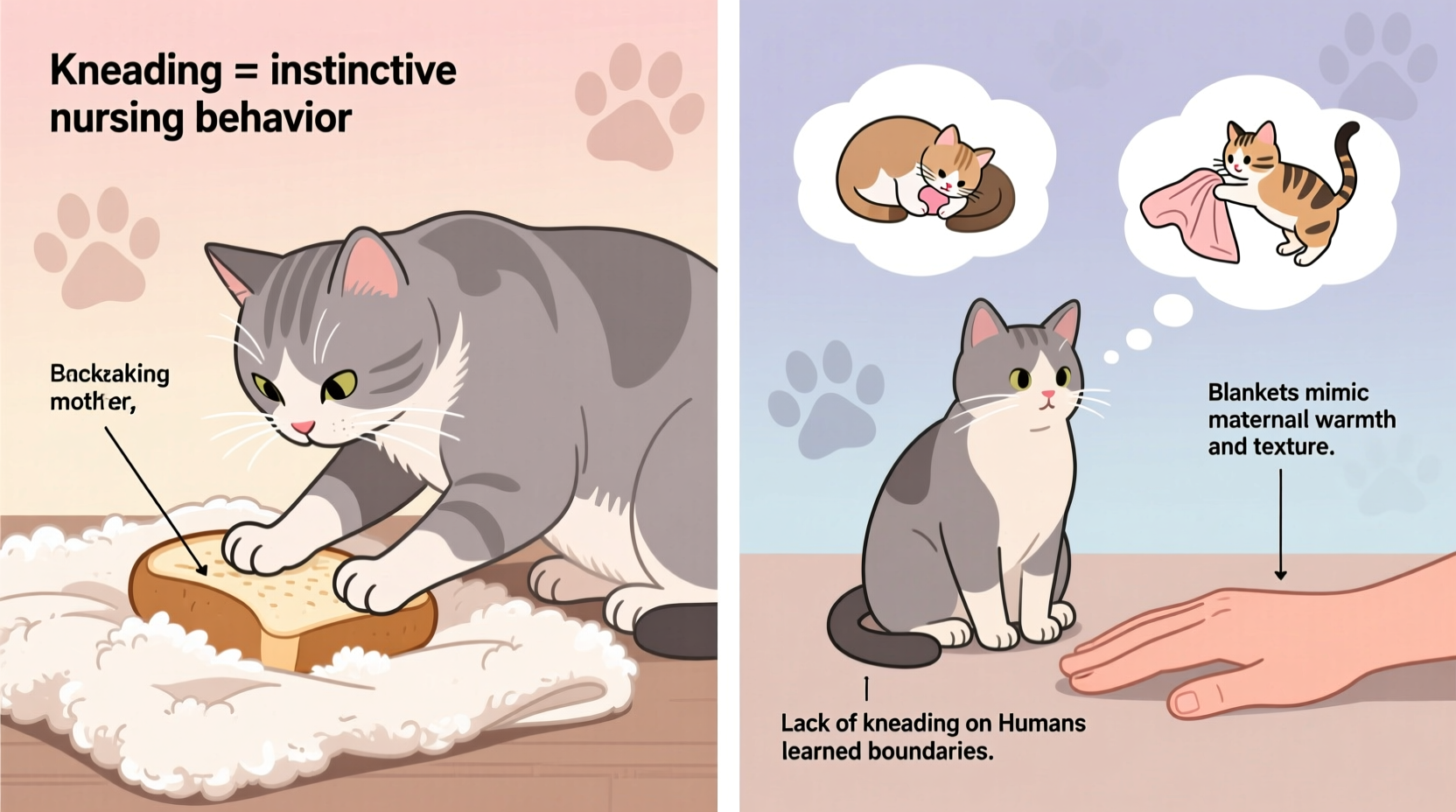
Kneading begins in the earliest days of a cat’s life. Newborn kittens knead their mother’s belly with their tiny paws to stimulate milk flow during nursing. This motion is both functional and comforting—it ensures nourishment while reinforcing the bond between kitten and mother. The sensation of warmth, security, and fullness becomes deeply associated with the act of kneading.
As cats mature, they retain this behavior into adulthood, even though it no longer serves a nutritional purpose. Instead, it transforms into a self-soothing mechanism. When an adult cat kneads, it often accompanies purring, half-closed eyes, and relaxed body language—all signs of contentment. In essence, kneading is a throwback to kittenhood, triggered by feelings of safety and satisfaction.
“Kneading is one of the clearest examples of neonatal behavior persisting into adulthood in cats. It reflects deep-seated comfort and emotional regulation.” — Dr. Sarah Thompson, Feline Behavior Specialist
Why Blankets Over Humans? Key Behavioral Factors
If kneading is about comfort, why would a cat prefer a blanket to a living, breathing human companion? Several interrelated factors explain this selective behavior:
Texture and Surface Stability
Cats are highly sensitive to tactile feedback. Blankets, especially knitted or fleece materials, provide consistent resistance and texture that mimic the feel of fur or soft bedding. Human skin, clothing, or laps may not offer the same predictable grip. Loose fabric on a sofa might shift under pressure, whereas a thick blanket stays firm and responsive.
Temperature Regulation
Cats seek out warm spots instinctively. Heated blankets, sun-warmed furniture, or freshly dried laundry emit residual heat that appeals to a cat’s thermoregulatory needs. While humans generate body heat, clothing layers or cooler room temperatures may make a person less appealing than a warmed-up throw.
Control and Predictability
A blanket doesn’t move, react, or change position unexpectedly. Humans, however, might shift, stand up, or pet too vigorously—disrupting the cat’s focused ritual. Cats value control during vulnerable moments of relaxation. Choosing an inanimate object allows them to maintain autonomy without fear of interruption.
Emotional Association with Objects
Cats often form strong attachments to specific items that carry familiar scents—especially those imbued with their own pheromones or their owner’s smell. A frequently used blanket becomes a “safe zone” marked by olfactory cues. Even if you’re nearby, the object itself has become symbolically linked to calmness and routine.
Is Avoidance a Sign of Dislike?
It’s natural to wonder if your cat’s refusal to knead on you means they don’t trust or love you. The truth is far more nuanced. A cat’s decision to knead on a blanket rather than a person rarely reflects rejection. More often, it’s a matter of environmental optimization—not emotional distance.
Cats express affection in subtle ways: slow blinks, tail twitches, following you from room to room, or sleeping near you. Kneading is just one outlet among many. If your cat chooses a blanket but still seeks proximity to you, climbs onto your bed, or nuzzles your hand, these are positive indicators of attachment.
Additionally, some cats are simply more tactilely selective. Breeds like Ragdolls or Persians may be more inclined to engage physically with humans, while independent types like Russian Blues or Norwegian Forest Cats may reserve intense contact for private moments.
Encouraging Kneading on You: A Step-by-Step Approach
If you’d like your cat to feel comfortable kneading on you, consider a gradual, patience-based strategy. Forcing interaction will backfire; instead, create conditions that naturally invite closeness.
- Choose the Right Time: Wait until your cat is already relaxed—after meals, grooming, or waking from a nap. Approaching during high-alert states increases resistance.
- Use Familiar Textures: Drape a soft, fuzzy blanket over your lap when sitting. This combines the surface your cat likes with your presence.
- Add Warmth: Use a heated pad (on low setting) beneath the blanket or sit in a sunlit area. Warmth encourages prolonged contact.
- Stay Still and Calm: Avoid sudden movements, loud noises, or excessive petting. Let your cat initiate and control the interaction.
- Reinforce Positively: Offer quiet praise or a treat *after* the kneading session ends, not during, to avoid disrupting the behavior.
- Respect Boundaries: If your cat stops mid-knead or moves away, don’t pursue. Consistency builds trust over time.
When Kneading Signals Stress or Discomfort
While kneading is typically a sign of well-being, context matters. Excessive, frantic kneading—especially when paired with vocalization, restlessness, or hiding—can indicate anxiety or medical issues. Older cats with cognitive decline may knead repetitively due to confusion. Painful conditions like arthritis can also cause atypical behaviors as cats attempt to self-soothe.
Similarly, if a cat suddenly stops kneading altogether after doing so regularly, it may signal illness or environmental stress (e.g., new pets, moving, loud noises).
| Behavior Pattern | Likely Meaning | Action to Take |
|---|---|---|
| Occasional, rhythmic kneading on blankets | Normal comfort behavior | None needed; enjoy the moment |
| Frequent, intense kneading on multiple surfaces | Possible anxiety or overstimulation | Assess environment; consult vet if persistent |
| Sudden cessation of kneading | Pain, illness, or stress | Veterinary checkup recommended |
| Kneading accompanied by biting or scratching | Overstimulation or play aggression | End session calmly; avoid punishment |
Mini Case Study: Luna and the Memory Blanket
Luna, a 4-year-old domestic shorthair adopted from a shelter, consistently kneaded a tattered fleece blanket but avoided her owner’s lap. Her guardian, Maria, worried that Luna didn’t feel safe. A behaviorist observed that the blanket had been present since adoption—originally used during transport—and carried Maria’s scent from frequent washing.
The consultant suggested placing the blanket over Maria’s legs during evening TV time. Within two weeks, Luna began kneading on the blanket while Maria sat beneath it. By week four, she occasionally extended her paws onto Maria’s arm. The breakthrough wasn’t about changing Luna’s habits but integrating them into shared spaces. Today, Luna kneads both the blanket and Maria interchangeably, demonstrating how small environmental tweaks can bridge behavioral gaps.
Checklist: Creating a Kneading-Friendly Environment
- Provide soft, textured blankets in sunny or warm areas
- Wash favorite fabrics with unscented detergent to preserve natural odors
- Place personal items (like worn shirts) near resting zones to strengthen scent bonds
- Avoid startling or interrupting your cat during kneading sessions
- Monitor changes in frequency, intensity, or location of kneading
- Ensure claws are trimmed if kneading causes discomfort when on skin
- Introduce heated pads cautiously—never use high settings or leave unattended
Frequently Asked Questions
Does kneading mean my cat thinks I’m their mother?
Not exactly. While kneading originates from kitten nursing behavior, adult cats don’t confuse humans with biological mothers. Instead, the action signifies deep comfort and emotional security—similar to how a person might hug a childhood blanket for reassurance.
My cat kneads but bites the blanket or drools—is that normal?
Yes. Some cats exhibit “wool-sucking” or gentle chewing during kneading, especially if weaned early. Drooling is also common and linked to the nursing reflex. As long as there’s no destructive chewing or weight loss, it’s generally harmless.
Can I train my cat to knead on me instead of blankets?
You can’t force it, but you can encourage it. Focus on making your lap a desirable extension of their preferred environment—warm, still, and layered with familiar textures. Patience yields better results than training.
Conclusion: Respecting Feline Individuality
Your cat’s choice to knead blankets rather than you isn’t a reflection of your relationship’s quality—it’s a testament to their complex nature. Cats navigate the world through instinct, memory, and sensory precision. They aren’t being aloof; they’re optimizing for comfort in ways shaped by evolution and experience.
Understanding this behavior invites deeper empathy. Rather than seeking to redirect every action toward ourselves, we can appreciate that cats express love on their own terms. Whether they press their paws into a quilt beside you or finally extend that rhythm onto your leg, each gesture carries meaning.




 浙公网安备
33010002000092号
浙公网安备
33010002000092号 浙B2-20120091-4
Comments
No comments yet. Why don't you start the discussion?