
Cat owners often find themselves on the receiving end of rhythmic paw pressing—tiny paws pushing into their laps, thighs, or favorite blankets. This behavior, affectionately known as \"making biscuits,\" is more than just a quirky habit. It's a deeply ingrained feline ritual with roots in early kittenhood, emotional regulation, and communication. While it may seem random or purely cute, kneading serves multiple biological, psychological, and social purposes. Understanding why your cat engages in this behavior can deepen your bond and help you interpret their emotional state.
The Origins of Kneading: A Behavior Born in Kittenhood
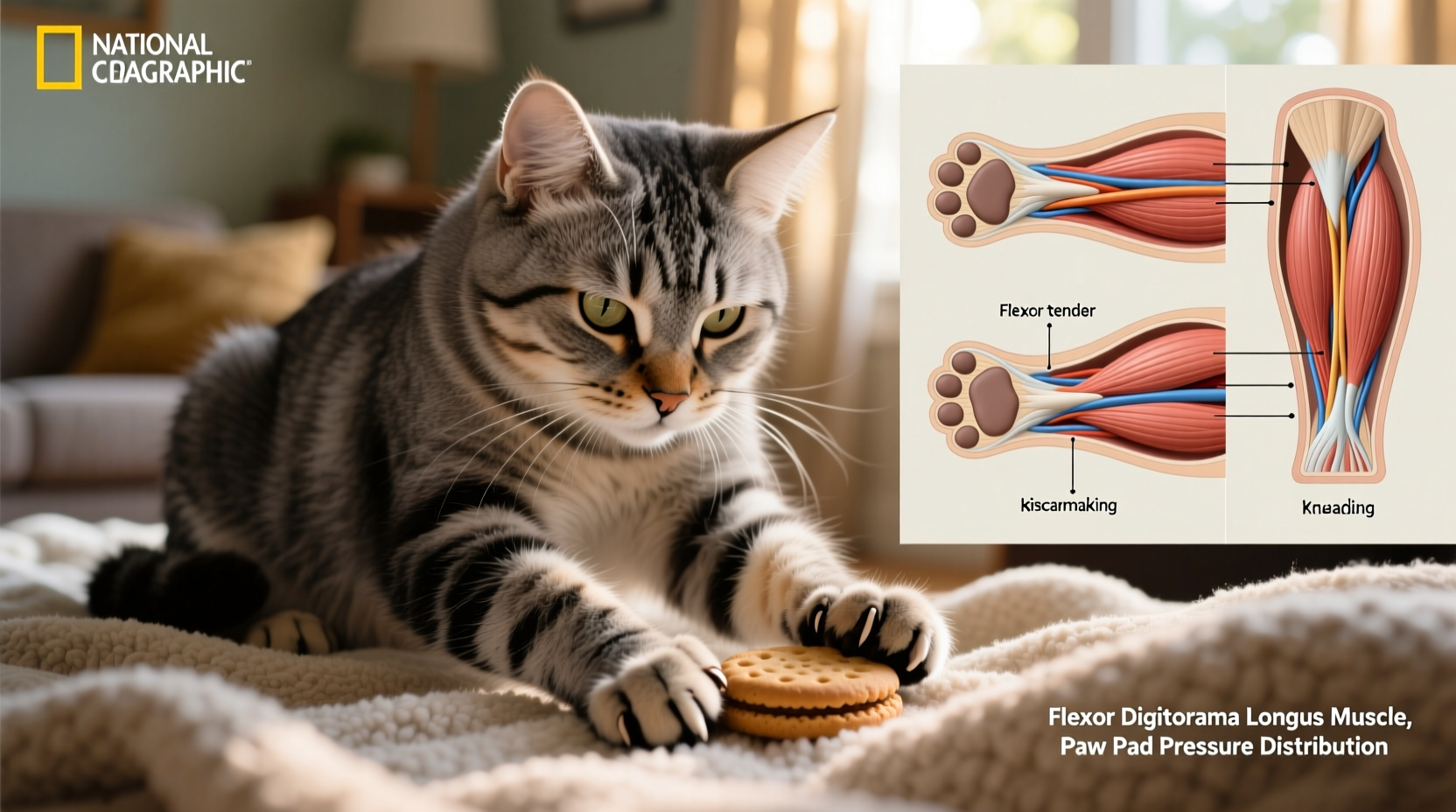
Kneading begins when kittens are just days old. As newborns nurse, they push against their mother’s mammary glands with alternating forepaws. This motion stimulates milk flow, ensuring they receive adequate nourishment. The action is both functional and comforting—the warmth, scent, and physical contact associated with nursing create a strong positive association.
As cats mature, most lose the need to stimulate milk production. However, the behavior often persists into adulthood, especially in cats who were weaned early or had particularly nurturing early experiences. Adult cats don’t knead for nutrition, but the act remains linked to feelings of safety, comfort, and emotional satisfaction.
“Kneading is one of the clearest examples of behavioral carryover from infancy. It’s not just nostalgia—it’s a physiological comfort mechanism embedded during a critical developmental stage.” — Dr. Lena Peterson, Feline Behavioral Scientist, Cornell University College of Veterinary Medicine
This early-life imprinting explains why many adult cats knead soft surfaces that resemble their mother’s belly—blankets, pillows, laps, or even other pets. The texture and warmth trigger memories of security, prompting the repetitive motion even without a practical feeding purpose.
The Biological and Emotional Triggers Behind Kneading
Beyond its origins in nursing, kneading serves several important functions in adult cats:
- Stress relief and self-soothing: The rhythmic nature of kneading has a calming effect on the nervous system. Much like humans might rock or fidget when anxious, cats use kneading to regulate emotions during transitions, unfamiliar environments, or moments of uncertainty.
- Scent marking: Cats have scent glands in the pads of their paws. Each time they press down, they release pheromones that mark the surface as “safe” or “theirs.” This territorial signaling helps them feel more secure in their environment.
- Muscle conditioning: The motion keeps paw and shoulder muscles limber. In wild ancestors, this could have aided climbing or stretching after rest—traits still present in domestic cats despite generations of indoor living.
- Preparing a resting spot: In outdoor or feral settings, cats knead tall grass or leaves to flatten them into a makeshift bed. Though modern cats sleep on plush cushions, the instinct to “fluff” their sleeping area remains active.
Why Blankets? The Role of Texture and Warmth
Not all surfaces elicit kneading. Cats tend to favor materials that mimic the softness and warmth of their mother’s fur or body heat. Common targets include fleece throws, wool blankets, memory foam cushions, and human clothing (especially sweatshirts).
Thermal feedback plays a significant role. When a cat kneads a warm lap or sunlit blanket, the combination of tactile stimulation and elevated temperature enhances the sensation of comfort. Infrared studies show that cats spend more time kneading on surfaces above ambient room temperature, suggesting thermal preference is a key motivator.
Interestingly, some cats prefer textured fabrics over smooth ones. Ribbed knits, terry cloth, and quilted materials offer resistance that makes the kneading motion more satisfying—similar to how chewing gum provides oral feedback. Smooth satin or leather rarely triggers the behavior, reinforcing the idea that sensory input drives the action.
Preferred Kneading Surfaces Compared
| Material | Triggers Kneading? | Reason |
|---|---|---|
| Fleece | Highly Likely | Soft, warm, mimics fur; excellent grip for paw pads |
| Terry Cloth | Very Likely | Textured surface offers resistance and friction |
| Cotton Blanket | Moderate | Depends on thickness and warmth retention |
| Leather/Synthetic Leather | Rare | Too smooth, lacks warmth and texture feedback |
| Human Skin (Lap) | Common | Body heat + scent familiarity = high comfort value |
When Kneading Becomes Problematic: Managing Claws and Overstimulation
While kneading is natural, it can sometimes lead to discomfort—especially when claws are involved. Some cats extend their claws while kneading, which can snag fabric or scratch skin. Others become so engrossed in the activity that they bite or suck on the material, particularly if they were weaned prematurely.
Over-kneading may also signal underlying anxiety. If your cat compulsively kneads for long durations, avoids other activities, or appears distressed when interrupted, it could indicate environmental stressors such as loneliness, changes in routine, or lack of enrichment.
Checklist: Healthy Kneading vs. Cause for Concern
- ✅ Occasional kneading on soft surfaces during relaxation – Normal
- ✅ Purring while kneading – Sign of contentment
- ✅ Stops when called or distracted – Indicates emotional balance
- ⚠️ Kneads aggressively for hours daily – May require behavioral evaluation
- ⚠️ Bites or sucks fabric intensely – Possible sign of early weaning trauma
- ⚠️ Kneads only in response to loud noises or visitors – Could indicate anxiety
Real-Life Example: Luna’s Transition to a New Home
Luna, a three-year-old domestic shorthair, was adopted from a shelter after spending her first year in a foster home. Her new owner, Maria, noticed that Luna would knead obsessively on her bedspread every evening, often for 20–30 minutes at a time. At first, Maria found it endearing. But when Luna began pulling threads from the quilt and seemed reluctant to stop even when tired, she grew concerned.
After consulting a veterinary behaviorist, Maria learned that Luna’s intense kneading was likely tied to early separation from her mother and inconsistent caregiving in her first months. The behavior served as a self-soothing mechanism during the transition to a new environment.
The solution wasn’t to stop the kneading, but to redirect it. Maria introduced a heated pet pad covered with a fleece blanket that carried her own scent (worn clothing placed nearby). She also increased playtime and introduced puzzle feeders to reduce overall anxiety. Within three weeks, Luna’s kneading became less frequent and more relaxed—confined mostly to bedtime and nap times.
This case illustrates how understanding the root cause of kneading allows caregivers to support their cats without suppressing natural instincts.
How to Respond to Your Cat’s Kneading: A Step-by-Step Guide
Instead of discouraging kneading, consider shaping it into a safe and mutually enjoyable interaction. Follow these steps to support your cat while protecting yourself and your belongings:
- Observe the context: Note when and where your cat kneads. Is it during relaxation, after eating, or during moments of stress? This helps determine whether the behavior is content-based or anxiety-driven.
- Provide appropriate outlets: Offer a dedicated kneading blanket made of washable fleece or terry cloth. Rub it on your clothes first to transfer your scent, enhancing its emotional appeal.
- Trim claws regularly: Keeping nails blunt reduces damage to furniture and skin. Use a pet nail clipper every 10–14 days.
- Introduce alternatives: If your cat kneads destructively, place a scratching post nearby. Some cats will switch between scratching and kneading depending on mood.
- Avoid punishment: Never scold or push your cat away mid-knead. This can break trust and increase insecurity, potentially worsening the behavior.
- Encourage bonding: Gently stroke your cat’s head or cheeks while they knead. Many cats appreciate this tactile reciprocity, strengthening the emotional connection.
Frequently Asked Questions About Cat Kneading
Is kneading a sign of affection?
Yes, in most cases. Kneading typically occurs when a cat feels safe and bonded to their environment or caregiver. Combined with purring, half-closed eyes, and slow blinks, it’s one of the strongest indicators of feline trust and contentment.
Why does my cat drool when kneading?
Drooling during kneading is common and usually harmless. It’s often a leftover reflex from kittenhood, when sucking accompanied the nursing-related kneading motion. As long as your cat is healthy and eating normally, this behavior is a sign of deep relaxation.
Do all cats knead, or is it breed-specific?
Most cats knead at some point, though frequency varies by individual. It’s not strictly breed-dependent, but some anecdotal evidence suggests that breeds with strong maternal bonds (like Ragdolls or Maine Coons) may exhibit it more often. Early life experiences—such as length of time spent with the mother—play a bigger role than genetics.
Conclusion: Embracing the Quirks of Feline Communication
Kneading is far more than a whimsical habit—it’s a window into your cat’s emotional world. Rooted in survival, shaped by early experience, and sustained by comfort, this behavior bridges the gap between kitten vulnerability and adult security. By recognizing its significance, you honor your cat’s instincts rather than suppress them.
Next time your feline companion starts making biscuits on your favorite blanket, take a moment to appreciate the complex blend of biology, memory, and trust at play. With thoughtful management and empathy, you can ensure this natural expression remains a joyful part of your shared life.




 浙公网安备
33010002000092号
浙公网安备
33010002000092号 浙B2-20120091-4
Comments
No comments yet. Why don't you start the discussion?