
It’s a familiar scene: your cat curls up on your lap, settles into a soft blanket, and begins rhythmically pushing its paws in and out, alternating between front limbs as if making dough. This behavior, known as “kneading,” is common among domestic cats of all ages and breeds. While adorable to watch, many cat owners wonder—why do cats knead? Is it a sign of comfort, stress, or something deeper rooted in their biology? The answer lies in a blend of early kittenhood instincts, emotional regulation, and evolutionary adaptation. Understanding the science behind this behavior offers insight into your cat’s inner world and strengthens the human-feline bond.
The Origins of Kneading: A Kittenhood Reflex
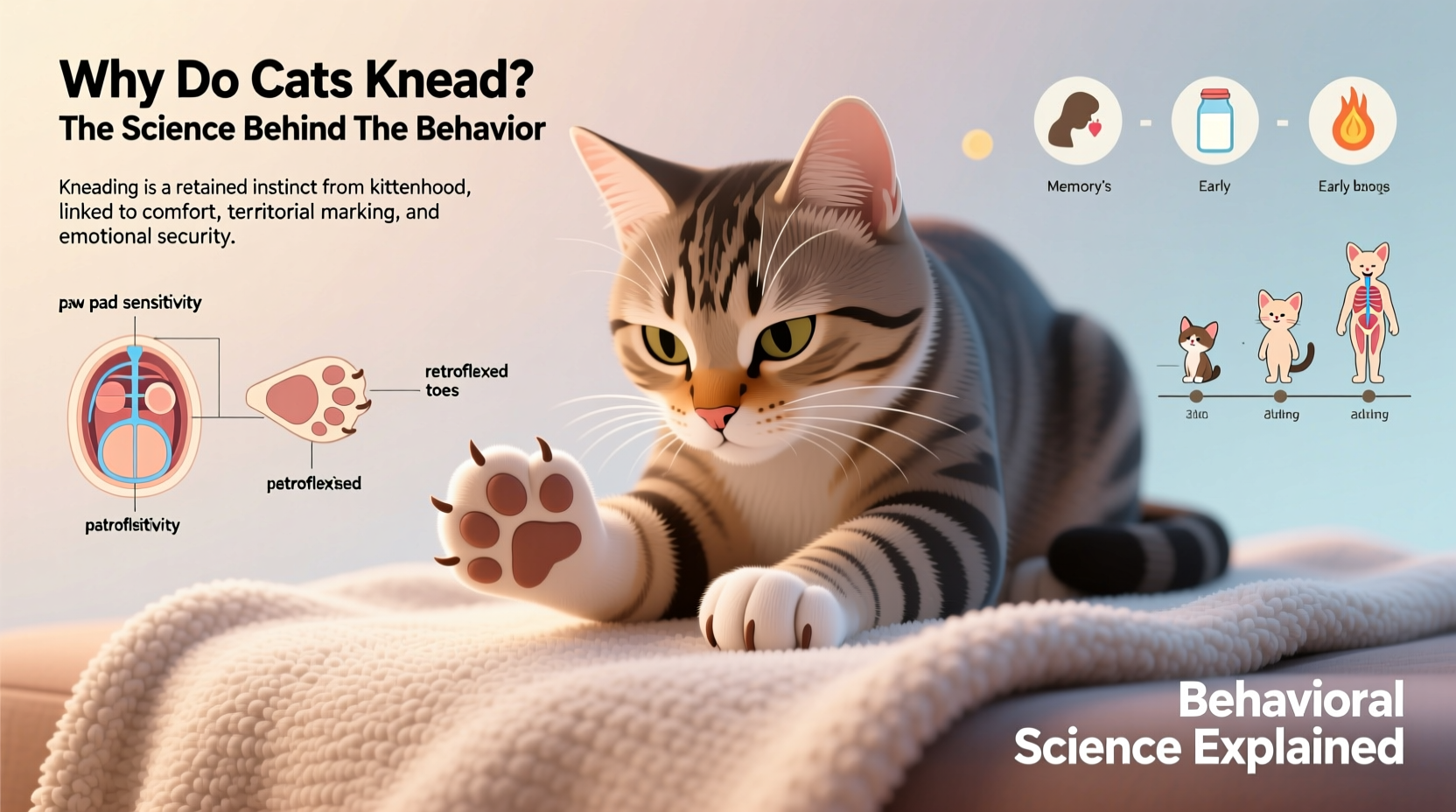
Kneading begins in the earliest days of a cat’s life. Newborn kittens are blind and deaf for the first week, relying entirely on touch and smell to locate their mother’s nipples for milk. To stimulate milk flow, they press their tiny paws against the mammary glands—a motion that closely resembles the adult version of kneading. This reflex is crucial for survival, ensuring nourishment during a vulnerable developmental stage.
Even after weaning, many cats retain this behavior into adulthood. The act becomes associated not just with feeding, but with warmth, safety, and maternal care. When an adult cat kneads a blanket, pillow, or even your leg, it may be re-experiencing the deep sense of security linked to nursing. This explains why kneading often occurs during moments of relaxation or when seeking affection.
“Kneading is a carryover from kittenhood that serves both physiological and emotional functions. It’s a self-soothing mechanism rooted in early bonding experiences.” — Dr. Sarah Thompson, Feline Behavioral Scientist
Emotional and Psychological Triggers
Beyond instinct, kneading plays a significant role in a cat’s emotional well-being. Cats are creatures of routine and comfort, and behaviors that evoke positive memories are often repeated to reduce anxiety or express contentment. When your cat kneads while purring, half-closed eyes, and slow blinking, it’s a clear indicator of trust and relaxation.
Stressful environments can also trigger kneading. A cat adjusting to a new home, encountering unfamiliar pets, or experiencing changes in routine might resort to kneading as a coping strategy. In these cases, the behavior functions much like a human fidgeting or hugging a childhood blanket—it provides psychological grounding.
Interestingly, some cats only knead certain people or specific fabrics. Soft, fuzzy materials that resemble fur or downy bedding tend to elicit stronger kneading responses. This preference further supports the theory that tactile familiarity reinforces emotional safety.
Scent Marking and Territorial Behavior
Cats possess scent glands in multiple areas of their body, including the paws. When a cat kneads, it releases pheromones—chemical signals used for communication. These invisible markers serve to claim territory and convey emotional states. By kneading a blanket, couch, or even your arm, your cat is effectively saying, “This space is safe, and I belong here.”
This territorial function is subtle but powerful. In multi-cat households, kneading patterns can help establish social hierarchies and reduce conflict. A dominant cat may knead more frequently in shared spaces, reinforcing ownership without aggression. Conversely, a submissive cat might limit kneading to private areas, signaling deference.
Owners sometimes mistake this behavior for possessiveness, especially when cats knead them directly. However, it’s less about control and more about inclusion. Your cat isn’t trying to “claim” you—it’s inviting you into its trusted inner circle.
Physical Comfort and Nesting Instincts
In the wild, felines prepare sleeping areas by pawing at leaves, grass, or soil to create a comfortable, insulated nest. This nesting instinct persists in domestic cats, even when physical preparation is unnecessary. Kneading a blanket mimics this ancestral habit, allowing cats to shape their resting spot to ideal firmness and temperature.
Additionally, the rhythmic muscle movement involved in kneading may provide mild physical relief. Some experts suggest it helps improve circulation, stretch muscles, or soothe minor discomfort—particularly in older cats with arthritis. While not a substitute for veterinary care, the repetitive motion could contribute to overall physical ease.
Female cats, especially those who have never been spayed, may exhibit intensified kneading during heat cycles. This behavior is tied to reproductive instincts, as nesting becomes biologically urgent in preparation for potential offspring. Spaying typically reduces such hormonally driven kneading, though it rarely eliminates it entirely due to its multifaceted nature.
Why Some Cats Don’t Knead—and That’s Okay
Not all cats knead, and absence of the behavior doesn’t indicate distress or poor socialization. Individual personality, early life experiences, and breed tendencies influence whether a cat develops this habit. For example, cats separated from their mothers too early may miss the critical window for imprinting the kneading reflex. Others simply find alternative ways to self-soothe, such as grooming, chewing soft objects, or vocalizing.
Some breeds, like Siamese or Bengal cats, are more prone to kneading due to high affection levels and strong attachment behaviors. Meanwhile, more independent breeds may display minimal kneading throughout life. As long as your cat appears emotionally balanced and physically healthy, lack of kneading is not a concern.
When Kneading Becomes Problematic
While generally harmless, kneading can occasionally lead to issues—especially when claws are involved. Untrimmed nails may snag fabrics or scratch skin, causing discomfort for owners. In rare cases, excessive kneading (lasting hours daily) may signal underlying anxiety or obsessive-compulsive tendencies, particularly if accompanied by over-grooming or vocalization.
If kneading seems compulsive or painful for your cat, consult a veterinarian or certified animal behaviorist. Medical conditions like hyperesthesia syndrome—where cats experience abnormal skin sensitivity—can manifest as frantic paw movements mistaken for intense kneading.
| Scenario | Likely Cause | Recommended Action |
|---|---|---|
| Kneading with purring and relaxed posture | Contentment, bonding | Allow behavior; enjoy the moment |
| Kneading excessively after environmental change | Stress or anxiety | Provide safe spaces and consistent routine |
| Kneading with biting or drooling | Overstimulation or medical issue | Monitor closely; consult vet if persistent |
| No kneading observed | Normal variation in behavior | No action needed unless other signs of distress |
How to Manage Kneading Comfortably
For most owners, kneading is a cherished sign of affection. But managing it safely ensures both you and your cat remain comfortable. Consider these practical strategies:
- Trim nails regularly – Keeping claws blunt minimizes damage to furniture and skin.
- Use protective barriers – Place a thick blanket or cushion on your lap during cuddle sessions.
- Redirect to appropriate surfaces – Encourage kneading on washable mats or plush toys designed for scratching.
- Introduce soft-textured items – Offer fleece or wool blankets that mimic the sensation of fur, satisfying tactile needs.
- Avoid punishment – Never scold or push your cat away mid-knead; this can erode trust and increase anxiety.
Mini Case Study: Luna, the Anxious Apartment Cat
Luna, a 3-year-old domestic shorthair, was adopted from a shelter and moved into a high-rise apartment with her owner, James. Initially, she showed little interest in interacting, hiding under furniture for days. Over time, James noticed she began kneading his sweater whenever he sat quietly reading. At first, the claw pricks were painful, but he resisted pulling away, instead placing a folded towel on his lap.
Within weeks, Luna’s kneading increased in frequency and duration. She started purring during the process and would fall asleep shortly after. James consulted a feline behavior consultant, who explained that Luna was using kneading to rebuild a sense of safety. By responding patiently and providing a consistent kneading surface, James helped Luna transition from fearfulness to confidence. Today, Luna greets him at the door and initiates contact—her kneading now a symbol of hard-won trust.
Expert Insight: The Role of Early Experience
Dr. Elena Ruiz, a veterinary ethologist specializing in feline development, emphasizes the importance of early life in shaping kneading behavior.
“Cats who experienced prolonged nursing periods with attentive mothers are more likely to retain kneading into adulthood. Early tactile stimulation lays the foundation for emotional resilience. Even rescued or orphaned cats can develop healthy kneading habits through patient, positive interactions.” — Dr. Elena Ruiz, PhD, Animal Behavior Research Institute
This underscores the idea that while biology sets the stage, environment shapes the performance. A nurturing, stable home—even one introduced later in life—can activate latent comforting behaviors like kneading.
Frequently Asked Questions
Do all cats knead?
No, not all cats knead. While it’s common, individual differences in temperament, upbringing, and breed affect whether a cat exhibits this behavior. Lack of kneading does not indicate unhappiness or poor bonding.
Why does my cat drool when kneading?
Drooling during kneading is often a sign of extreme relaxation, reminiscent of kittenhood when sucking triggered saliva production. As long as your cat is otherwise healthy, this is normal and indicates deep contentment.
Can I stop my cat from kneading?
You can redirect but should not eliminate kneading. It’s a natural, emotionally beneficial behavior. Instead of stopping it, manage it with nail trimming, protective layers, and suitable surfaces to preserve both comfort and your furnishings.
Conclusion: Embracing the Purr-fect Ritual
Kneading is far more than a quirky habit—it’s a window into your cat’s emotional history, instinctual drives, and present state of mind. Whether rooted in kittenhood comfort, scent-based communication, or stress relief, this rhythmic paw motion connects your cat to its past while expressing trust in the present. Rather than viewing it as a nuisance, consider it a compliment: your cat feels safe enough to revert to one of its most primal, vulnerable behaviors.
By understanding the science behind kneading, you’re better equipped to support your cat’s well-being and deepen your relationship. Simple steps like offering soft textiles, maintaining claw health, and respecting your cat’s need for tactile rituals go a long way. Every push of those padded paws tells a story—one of survival, comfort, and connection.




 浙公网安备
33010002000092号
浙公网安备
33010002000092号 浙B2-20120091-4
Comments
No comments yet. Why don't you start the discussion?