
If you’ve ever settled in with your cat only to feel rhythmic pressing from their paws against your lap, a blanket, or even your arm, you’ve witnessed one of the most endearing quirks of feline behavior: kneading. Often referred to as “making biscuits,” this motion—where cats push their front paws in and out, alternating left and right—resembles the action of kneading dough. While it may seem random or purely adorable, this behavior is deeply rooted in instinct, emotion, and communication. Understanding why cats knead provides insight into their psychological needs, early development, and bond with humans.
The Origins of Kneading: A Behavior Rooted in Kittenhood
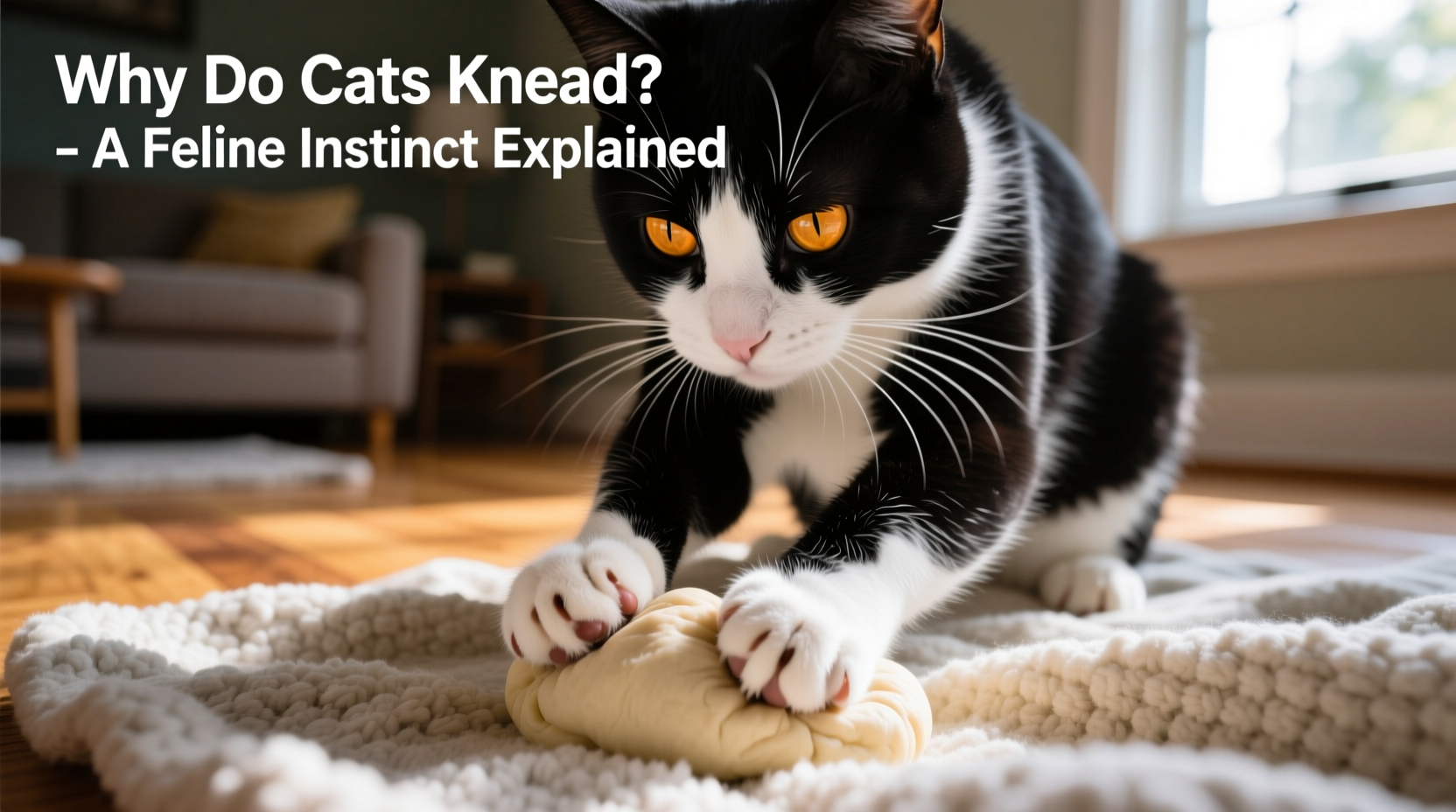
Kneading begins in the earliest days of a cat’s life. Newborn kittens instinctively press their tiny paws against their mother’s mammary glands to stimulate milk flow during nursing. This survival-driven behavior ensures they receive adequate nourishment. The repetitive motion triggers the release of oxytocin in the mother cat, encouraging milk let-down. Over time, the act becomes associated not just with sustenance but with warmth, safety, and comfort.
As cats grow into adulthood, many retain this behavior despite no longer needing milk. When an adult cat kneads a soft surface—be it a wool blanket, a pillow, or your thigh—they are often re-experiencing that primal sense of security. The behavior is especially common in cats who were weaned early or who had strong maternal bonds, suggesting it serves as both a physical and emotional comfort mechanism.
“Kneading is one of the clearest examples of neonatal behavior persisting into adulthood. It’s not learned—it’s hardwired.” — Dr. Sarah Ellis, Feline Behavior Scientist, University of Lincoln
Emotional Significance: More Than Just a Habit
Beyond its origins in infancy, kneading plays a significant role in a cat’s emotional regulation. Cats are creatures of routine and sensory association. The softness of a blanket or fabric can mimic the texture of their mother’s fur, triggering nostalgic feelings of safety. In stressful environments—such as after moving homes, introducing new pets, or during loud weather events—cats may increase kneading as a self-soothing technique.
Moreover, kneading often occurs when a cat is relaxed or preparing to nap. It’s typically paired with purring, half-closed eyes, and slow blinking—all signs of contentment. This suggests that the act itself may release endorphins or create a meditative state, helping the cat transition into rest. For owners, recognizing these cues can be valuable in assessing their pet’s mood and overall well-being.
Scent Marking and Territorial Communication
Another key reason cats knead involves scent marking. Cats have scent glands located in the pads of their paws, which release pheromones when pressure is applied. By kneading a surface, they are subtly marking it as part of their territory. This is not aggressive territorial behavior but rather a way of creating a familiar, reassuring environment.
In multi-pet households, you might notice cats kneading shared spaces like couches or favorite human laps. This reinforces social bonding and establishes communal areas infused with familiar scents. Even solitary cats will knead personal items—your sweater, a specific cushion—to surround themselves with their own olfactory signature, reducing anxiety and reinforcing ownership.
This aspect of kneading explains why some cats are particular about where and when they perform the behavior. They’re not just seeking comfort; they’re curating their environment through biological communication.
Physical Comfort and Nesting Instincts
Long before domestication, wild ancestors of modern cats—such as the African wildcat—engaged in nest preparation behaviors. Female cats would trample down grass, leaves, or soil to create a soft, secure den for giving birth or raising kittens. Kneading mimics this nesting instinct, even in spayed or neutered indoor cats.
Unspayed female cats may exhibit increased kneading during heat cycles, as hormonal fluctuations trigger nesting impulses. However, even males and fixed females continue the behavior, indicating it has evolved beyond reproduction into a broader comfort-seeking activity. The rhythmic motion may help them assess the texture and stability of a resting spot, ensuring it meets their standards for safety and coziness.
| Behavior Trigger | Explanation | Common Contexts |
|---|---|---|
| Nursing Memory | Recreates kittenhood stimulation for milk flow | During relaxation, before sleep |
| Scent Marking | Releases pheromones from paw glands | On favorite furniture or owner’s clothing |
| Stress Relief | Self-soothing through rhythmic motion | After environmental changes or loud noises |
| Nesting Impulse | Prepares a safe resting place | Pregnancy, heat cycle, or bedtime routine |
| Stretching & Circulation | Maintains paw flexibility and blood flow | Upon waking or after long rests |
When Kneading Becomes Problematic: Claws, Pain, and Solutions
While kneading is generally harmless, it can sometimes lead to discomfort—especially if your cat uses their claws. Sharp nails digging into your skin or snagging fabrics can turn a sweet moment into a painful one. Additionally, excessive kneading on delicate materials may cause damage over time.
The good news is that this behavior can be gently managed without suppressing your cat’s natural instincts. Trimming your cat’s nails regularly reduces the risk of injury. You can also place a thick towel or padded blanket between your lap and the cat during kneading sessions. Some owners train their cats to redirect the behavior to a nearby pillow or pet bed by rewarding alternative kneading spots with treats or affection.
“We don’t want to discourage kneading—it’s a sign of trust and happiness. Instead, we guide it toward safer outlets.” — Dr. Elizabeth Collinge, Veterinary Ethologist
Step-by-Step Guide to Managing Kneading Behavior
- Observe patterns: Note when and where your cat tends to knead. Is it before naps? When you pet them?
- Provide alternatives: Introduce a plush blanket or cat bed in their preferred location.
- Use positive reinforcement: Reward your cat with treats or praise when they knead the designated item.
- Trim nails regularly: Maintain claw length every 2–3 weeks to minimize discomfort.
- Protect surfaces: Cover furniture arms with removable fabric protectors if needed.
- Avoid punishment: Never scold or restrain your cat during kneading—it undermines trust.
Mini Case Study: Luna and the Heirloom Quilt
Sarah adopted Luna, a 3-year-old domestic shorthair, six months ago. Soon after, she noticed Luna obsessively kneading her grandmother’s handmade quilt whenever she sat on the couch. While touched by the affection, Sarah worried about fabric damage and occasional scratches.
She began placing a faux-fur throw beside the quilt and gently guided Luna onto it each time she started kneading. Whenever Luna used the throw, Sarah offered a small treat and gentle chin scratches. Within three weeks, Luna consistently chose the throw over the heirloom quilt. The transition preserved both the family treasure and Luna’s need for comforting ritual.
This case illustrates how understanding feline motivation allows for compassionate behavior management. Sarah didn’t stop Luna from kneading—she redirected it in a way that respected both emotional needs and household boundaries.
Frequently Asked Questions
Is kneading a sign that my cat wants food or attention?
Not usually. While some cats may approach you before kneading, the act itself is more about internal comfort than soliciting resources. If your cat vocalizes or follows kneading with meowing, they may be combining behaviors—but kneading alone is typically self-directed.
Do all cats knead, or is it breed-specific?
Most cats knead at some point, though frequency varies. It’s not linked to breed but rather individual temperament, early life experiences, and stress levels. Some cats stop as adults; others maintain the habit lifelong. Even declawed cats may simulate the motion, showing its deep-rooted nature.
Should I be concerned if my older cat suddenly starts kneading again?
Increased kneading in senior cats isn’t inherently alarming. It could indicate anxiety, cognitive changes, or a desire for comfort due to age-related discomfort. However, if accompanied by other symptoms—excessive vocalization, confusion, or litter box issues—consult your veterinarian to rule out underlying conditions.
Checklist: Supporting Healthy Kneading Behavior
- ✅ Provide soft, washable surfaces for kneading (blankets, mats)
- ✅ Trim your cat’s nails every 2–3 weeks
- ✅ Observe when and where kneading occurs to identify triggers
- ✅ Use positive reinforcement to encourage use of designated kneading zones
- ✅ Avoid startling or restraining your cat mid-kneading
- ✅ Monitor for sudden changes in frequency or intensity
- ✅ Respect the behavior as a sign of emotional security
Conclusion: Embracing the Biscuit-Making Ritual
Kneading is far more than a quirky habit—it’s a window into your cat’s inner world. From its roots in kitten survival to its role in emotional regulation and communication, this behavior reflects millions of years of evolutionary refinement. When your cat makes biscuits on your lap, they’re not just pushing paws into fabric; they’re expressing trust, nostalgia, and a deep-seated need for comfort.
Rather than discouraging kneading, consider how you can support it in a way that protects both your cat’s well-being and your belongings. With thoughtful adjustments, you can preserve this intimate ritual as a symbol of the unique bond you share. After all, there are few greater compliments in the feline world than being chosen as someone’s personal dough board.




 浙公网安备
33010002000092号
浙公网安备
33010002000092号 浙B2-20120091-4
Comments
No comments yet. Why don't you start the discussion?