
Cat owners often witness a peculiar yet endearing behavior: their feline companion rhythmically pushing their paws in and out against a soft surface—usually a blanket, pillow, or even a lap. This motion, known as kneading, resembles a baker working dough, which is why some affectionately call it “making biscuits.” While generally harmless and rooted in instinct, kneading can sometimes escalate into repetitive or obsessive behavior that raises concern. Understanding the biological, emotional, and psychological drivers behind this action is key to distinguishing normal feline habits from signs of stress or compulsive disorder.
The Origins of Kneading: An Instinct from Kittenhood
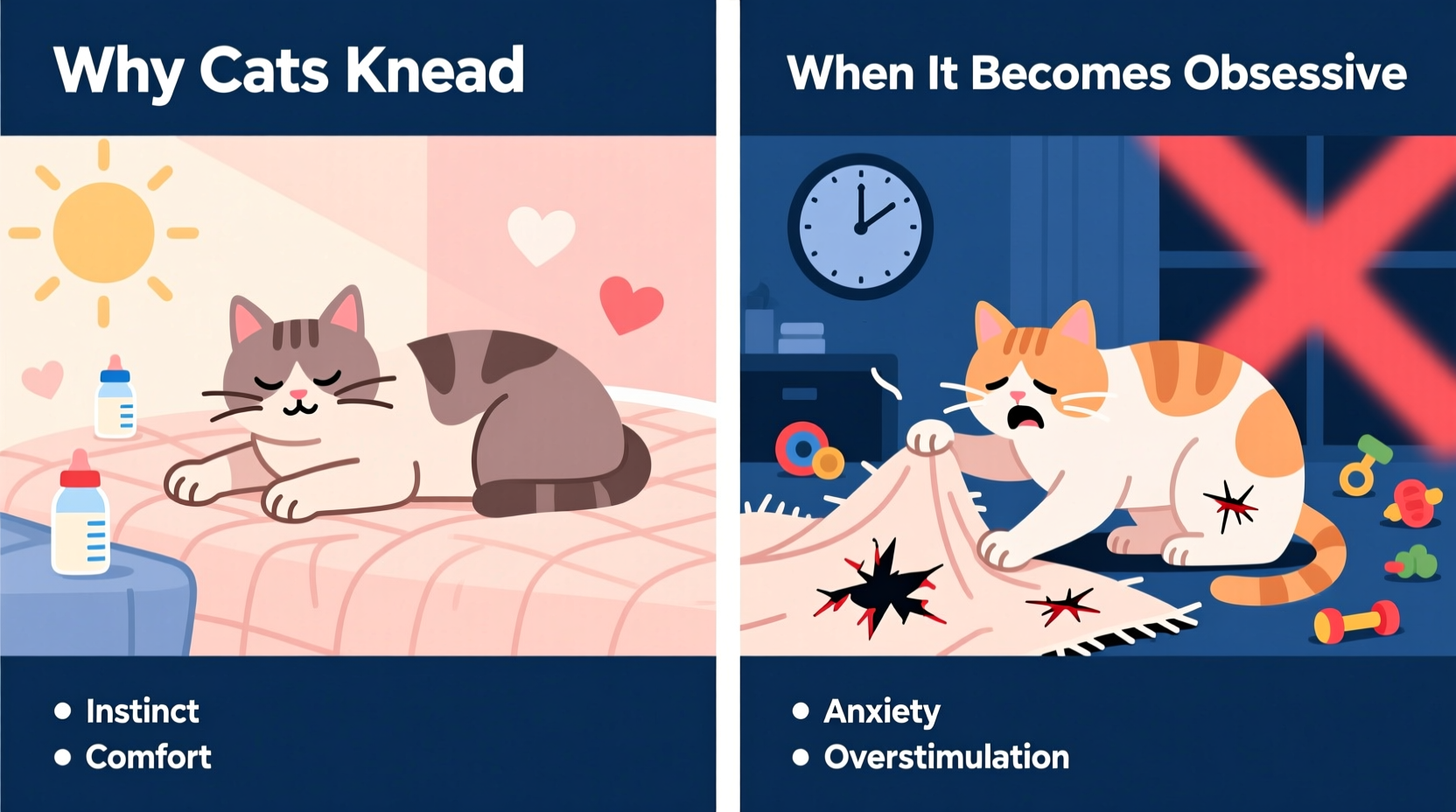
Kneading begins in the earliest days of a cat’s life. Newborn kittens instinctively press their tiny paws against their mother’s mammary glands to stimulate milk flow during nursing. This rhythmic motion is essential for survival and becomes deeply associated with comfort, nourishment, and safety. As cats mature, they retain this behavior, often directing it toward soft materials that mimic the warmth and texture of their mother’s belly.
Even though adult cats no longer need milk, the act of kneading triggers the same emotional response—it evokes feelings of security and contentment. When your cat settles onto your lap and starts pressing its paws into your leg, it's not just claiming territory; it's reliving a primal moment of carefree comfort.
Emotional and Behavioral Reasons Cats Knead
Beyond early-life conditioning, kneading serves several emotional and communicative functions in adult cats. It is a multi-purpose behavior that reflects mood, territory marking, and bonding.
- Marking Territory: Cats have scent glands in the pads of their paws. Each time they knead, they release pheromones that mark the object—or person—as part of their safe space. This subtle chemical signal tells other animals (and themselves) that the area is familiar and secure.
- Stress Relief: The repetitive motion has a self-soothing effect, much like humans might rock or fidget when anxious. In unfamiliar environments or during transitions (like moving homes or introducing new pets), cats may increase kneading to regain a sense of control.
- Expressing Affection: When directed toward humans, kneading is often a sign of deep trust. Your cat views you as a parental figure and expresses love through this nurturing gesture.
- Preparing a Sleeping Area: In the wild, cats would flatten grass or leaves to create a comfortable resting spot. Though domestic cats sleep on plush beds, the instinct to “fluff” their sleeping surface remains active.
“Kneading is one of the purest expressions of feline contentment. It’s a window into a cat’s emotional world—a blend of memory, comfort, and connection.” — Dr. Lena Patel, Feline Behavior Specialist
When Kneading Crosses the Line: Signs of Obsessive Behavior
While occasional or frequent kneading is normal, there are instances where the behavior becomes excessive or disruptive. Obsessive kneading is characterized by duration, intensity, and interference with daily functioning. It may indicate underlying anxiety, medical issues, or environmental stressors.
Key indicators that kneading may be obsessive include:
- Kneading for hours at a time without breaks
- Inability to settle or sleep without constant kneading
- Self-injury from over-grooming or claw damage during the motion
- Aggression when interrupted
- Loss of appetite or social withdrawal alongside the behavior
Obsessive behaviors in cats are often linked to changes in routine, lack of stimulation, or unmet emotional needs. For example, a cat left alone for long periods may develop compulsive habits as a coping mechanism. Similarly, trauma—such as abandonment or rehoming—can trigger repetitive actions like over-kneading.
Mini Case Study: Bella, the Over-Kneading Rescue Cat
Bella, a three-year-old domestic shorthair adopted from a shelter, began kneading excessively after her new owner returned to full-time office work. Previously, she had received near-constant attention. After the schedule change, Bella spent up to five hours a day kneading an old sweater, often refusing food unless her owner was present.
A veterinary behaviorist diagnosed mild separation anxiety. Through environmental enrichment—scheduled play sessions, puzzle feeders, and a second cat for companionship—Bella’s kneading decreased significantly within six weeks. The case highlights how seemingly harmless behaviors can mask deeper emotional distress.
Do’s and Don’ts of Managing Kneading Behavior
| Do’s | Don’ts |
|---|---|
| Provide soft, designated kneading zones (e.g., fleece blankets) | Yell at or punish your cat for kneading |
| Trim claws regularly to prevent fabric damage or skin scratches | Remove all kneading surfaces abruptly |
| Use positive reinforcement when your cat uses appropriate items | Force your cat off your lap mid-knead |
| Introduce calming aids like pheromone diffusers if anxiety is suspected | Ignore signs of distress or obsession |
| Schedule interactive play to reduce stress and redirect energy | Assume all excessive kneading is purely behavioral—rule out medical causes first |
Step-by-Step Guide: Addressing Obsessive Kneading
If your cat’s kneading appears compulsive, follow this structured approach to identify causes and implement solutions:
- Observe and Document: Track when, where, and how often your cat kneads. Note any triggers—like visitors, loud noises, or being left alone.
- Rule Out Medical Issues: Schedule a vet visit to check for pain, neurological conditions, or hyperesthesia syndrome (a disorder causing skin sensitivity and repetitive behaviors).
- Assess Environmental Stressors: Evaluate recent changes in the home. Has a pet been introduced? Was furniture rearranged? Even subtle shifts can unsettle cats.
- Enhance Enrichment: Provide climbing shelves, rotating toys, and daily interactive play (at least 15 minutes twice a day). Mental stimulation reduces compulsive tendencies.
- Create Safe Zones: Designate quiet areas with cozy bedding, hiding spots, and calming scents (like cat-safe lavender or synthetic feline pheromones).
- Gradual Intervention: If kneading occurs on inappropriate surfaces, gently redirect to a soft mat or blanket. Reward use of the correct item with treats or praise.
- Consult a Professional: If behavior persists, seek help from a certified feline behaviorist or veterinary ethologist. Medication may be considered in severe anxiety cases.
Frequently Asked Questions
Is kneading a sign that my cat is happy?
Generally, yes. Most cats knead when relaxed and content. Combined with purring, half-closed eyes, and slow blinks, it’s a strong indicator of emotional well-being. However, context matters—kneading during stressful events may serve as self-soothing rather than pure joy.
Why does my cat drool when kneading?
Drooling during kneading is common and usually harmless. It stems from the same kittenhood association with nursing and deep relaxation. As long as your cat is otherwise healthy, this is a sign of extreme comfort—not a medical issue.
Can I stop my cat from kneading altogether?
You shouldn’t try to eliminate kneading entirely, as it’s a natural, comforting behavior. Instead, manage it by guiding your cat toward acceptable surfaces and keeping claws trimmed. Suppressing instinctive actions can lead to increased stress and behavioral problems.
Checklist: Healthy vs. Problematic Kneading
Use this checklist to evaluate your cat’s kneading habits:
- ✅ Kneads occasionally, especially when settling down to rest
- ✅ Stops when called or distracted by food/toys
- ✅ Shows no signs of pain or agitation during the process
- ✅ Uses soft surfaces without damaging them excessively
- ✅ Maintains normal eating, grooming, and social behaviors
- ❌ Kneads nonstop, even during meals or sleep attempts
- ❌ Becomes aggressive when interrupted
- ❌ Causes injury to itself (e.g., bleeding paw pads)
- ❌ Ignores surroundings, appearing “zoned out” while kneading
- ❌ Developed suddenly after a major life change
If three or more “❌” items apply, consider consulting a veterinarian or behavior specialist.
Conclusion: Respecting Instinct While Monitoring Well-Being
Kneading is a beautiful remnant of kittenhood—a tactile echo of warmth, nourishment, and safety. For most cats, it’s a joyful ritual that strengthens bonds with their human companions. But like any behavior rooted in emotion, it can become unbalanced under stress or neglect. Recognizing the difference between soothing self-expression and compulsive repetition is essential for responsible pet care.
By providing a stable environment, enriching daily life, and staying attuned to behavioral shifts, you can ensure your cat’s kneading remains a sign of happiness—not a cry for help. Observe with empathy, respond with patience, and never underestimate the depth of communication hidden in those rhythmic paw presses.




 浙公网安备
33010002000092号
浙公网安备
33010002000092号 浙B2-20120091-4
Comments
No comments yet. Why don't you start the discussion?