
Cat owners often find themselves puzzled by their feline companions’ selective behaviors—especially when it comes to kneading. You may notice your cat rhythmically pushing its paws into your favorite blanket, yet ignore identical fabrics belonging to someone else in the household. This seemingly small act carries layers of meaning rooted in biology, emotion, and individual experience. Understanding why your cat chooses your blanket over another’s involves untangling a mix of instinctual programming and personal attachment.
Kneading is more than just a quirky habit; it’s a behavior embedded in a cat’s earliest memories and reinforced through comfort and scent. While it might appear random, the choice of surface—and owner—is rarely arbitrary. By examining the science behind kneading, the role of scent in feline decision-making, and how emotional bonds shape preferences, we gain deeper insight into one of the most endearing quirks of cat ownership.
The Origins of Kneading: A Survival Instinct
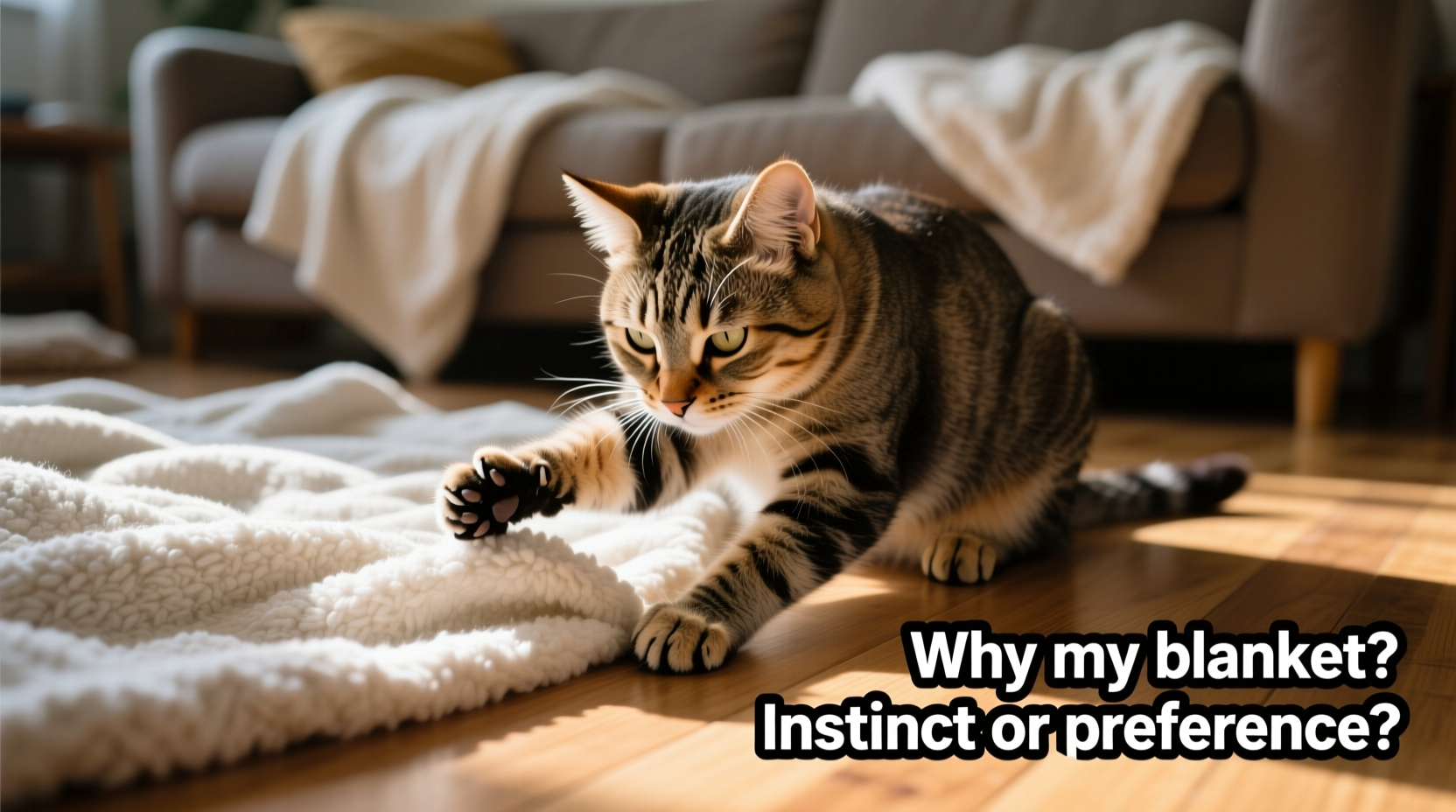
Kneading, sometimes called “making biscuits,” begins in kittenhood. Newborn kittens instinctively press their paws against their mother’s mammary glands to stimulate milk flow. This rhythmic motion is crucial for survival during the first weeks of life. The physical action becomes associated with nourishment, warmth, and safety—core elements of early well-being.
As cats mature, they retain this behavior even though it no longer serves a nutritional purpose. Instead, it transforms into a self-soothing mechanism. Adult cats often knead when they feel relaxed, content, or are preparing a soft surface to rest on—echoing ancestral instincts to flatten grass or leaves before settling down.
“Kneading is a throwback to kittenhood, but it persists because it’s deeply tied to emotional regulation. When a cat kneads, it’s tapping into a primal sense of security.” — Dr. Lydia Chen, Feline Behavior Specialist
This ingrained reflex explains why kneading occurs at all—but not why it happens selectively. If the behavior is instinctual, why doesn’t your cat knead every soft surface equally?
Scent as Identity: Why Your Blanket Smells Like Home
To a cat, scent is identity. Humans rely heavily on sight; cats navigate the world primarily through smell. Each person emits a unique olfactory signature composed of skin cells, sweat, hormones, and environmental traces like laundry detergent or perfume. Your cat has memorized your scent profile—and associates it with safety and affection.
Your blanket absorbs and retains your personal aroma far more intensely than a rarely used guest throw or another family member’s bedding. Over time, it becomes an olfactory extension of you. When your cat kneads your blanket, it’s not just interacting with fabric—it’s engaging with *you*, symbolically and sensorially.
In multi-cat or multi-human households, cats often show clear preferences based on scent familiarity. A study published in *Applied Animal Behaviour Science* found that cats spend significantly more time interacting with objects bearing the scent of their primary caregiver compared to neutral or unfamiliar scents—even when visual and textural cues are identical.
Emotional Attachment and Territory Marking
Beyond instinct and scent, kneading also functions as a form of emotional expression and territorial marking. Cats have scent glands located in their paw pads that release pheromones when pressed into surfaces. These chemical signals are undetectable to humans but serve as a powerful communication tool among cats.
When your cat kneads your blanket, it’s simultaneously calming itself *and* marking the item as part of its social territory. This dual-purpose behavior reinforces the bond between pet and owner while asserting ownership in a non-aggressive way. It’s a subtle declaration: *This space is safe, and I belong here.*
In contrast, blankets belonging to less familiar individuals lack both emotional significance and the cat’s own scent imprint. Even if another person is kind to the cat, absence of daily interaction means lower emotional investment. The cat may perceive those items as “neutral” or even “foreign,” making them less likely targets for kneading.
Factors Influencing Kneading Preferences
While scent and bonding are primary drivers, several secondary factors influence whether and where a cat chooses to knead:
- Fabric texture: Soft, pliable materials like fleece or knitted wool mimic the feel of fur and are more likely to trigger kneading.
- Location: Items placed in high-comfort zones (beds, sofas, sunlit spots) receive more attention.
- Temperature: Warmth enhances relaxation, increasing the likelihood of kneading.
- Past associations: A blanket linked to positive experiences (napping together, grooming sessions) becomes a preferred object.
Case Study: Two Sisters, One Cat
Samantha and Julia share a home and a rescue cat named Milo. Though both sisters feed and play with him equally, Milo consistently kneads Samantha’s bathrobe draped over her bedroom chair—but never Julia’s nearly identical robe hanging nearby.
An observation log revealed key differences: Samantha sleeps with Milo three to four nights a week, while Julia keeps her door closed. Additionally, Samantha uses unscented detergent, whereas Julia’s detergent contains lavender—a fragrance some cats find overpowering. Over time, Milo formed a stronger emotional and sensory association with Samantha’s belongings.
When Julia temporarily switched to fragrance-free detergent and began leaving her robe on the living room couch (a shared space), Milo eventually started kneading it—though less frequently. This shift illustrates how scent, accessibility, and routine interactions collectively shape feline preferences.
Do’s and Don’ts of Responding to Kneading Behavior
| Do’s | Don’ts |
|---|---|
| Allow kneading on designated soft items (e.g., pet beds, old sweaters) | Reprimand or push the cat away during kneading |
| Trim claws regularly to prevent fabric damage | Use aversive sprays or textures to deter kneading |
| Provide alternative kneading surfaces if needed | Assume the behavior is attention-seeking; it’s usually self-soothing |
| Respect the ritual—interrupting can cause stress | Force interaction if the cat seems overstimulated |
How to Encourage Comfortable Kneading (Without Destroying Furniture)
While kneading is natural, sharp claws can damage delicate fabrics. Managing this behavior humanely ensures both your cat’s needs are met and your belongings remain intact.
- Introduce a kneading mat: Place a soft, washable pad near your usual sitting or sleeping area. Rub it with your hands to transfer your scent.
- Rotate scented items: Occasionally place a worn T-shirt on top of the mat to strengthen the association.
- Use claw caps: Soft vinyl nail covers reduce scratching damage without interfering with movement or behavior.
- Reinforce gently: When your cat uses the designated mat, offer quiet praise or a treat—but avoid overexcitement, which may disrupt the calming intent.
- Monitor for overstimulation: Some cats become hyperactive after prolonged kneading. Watch for tail flicking or skin rippling, which signal discomfort.
FAQ: Common Questions About Selective Kneading
Why does my cat knead me but not my partner, even though they both pet her?
Kneading preference isn’t solely about physical contact. It’s influenced by scent familiarity, tone of voice, daily routines, and subconscious body language. Even if both people are kind, cats detect subtle differences in energy and consistency. The cat may perceive one person as a more reliable source of calm.
Is it normal for a cat to stop kneading suddenly?
Yes. While many cats knead throughout life, some phase it out due to age, arthritis, or changes in environment. However, a sudden cessation accompanied by lethargy or avoidance could indicate pain or stress and warrants a vet visit.
Can I train my cat to knead a specific blanket instead of my favorite quilt?
You can redirect the behavior through scent transfer and positive reinforcement. Place the desired blanket where your cat already likes to rest. Sleep with it for a few nights, then introduce it gradually. Avoid removing the original item abruptly, as this may cause anxiety.
Action Checklist: Supporting Healthy Kneading Habits
- ✅ Identify your cat’s current kneading triggers (location, fabric, time of day)
- ✅ Assess claw condition and schedule trims every 2–3 weeks
- ✅ Choose a replacement fabric with similar texture and warmth
- ✅ Transfer your scent to the new item by handling or storing it with your clothes
- ✅ Introduce the new surface gradually, alongside the familiar one
- ✅ Monitor for signs of stress or resistance during transition
- ✅ Reward appropriate use with gentle pets or treats—only if the cat seeks interaction
Conclusion: A Gesture Rooted in Trust and Memory
Your cat’s decision to knead your blanket and not another’s is neither random nor superficial. It’s a complex interplay of biological instinct, emotional connection, and sensory recognition. That rhythmic push of tiny paws is a living echo of kittenhood comfort, amplified by trust and familiarity. When your cat chooses your blanket, it’s choosing *you*—your presence, your scent, your shared history.
Far from being a mere quirk, kneading is a silent testament to the depth of your bond. Rather than discouraging it, consider how you can support this natural behavior in ways that protect both your cat’s well-being and your household items. Create spaces where your cat feels safe to express its instincts freely. In doing so, you honor not just a behavior, but a relationship built on mutual care.




 浙公网安备
33010002000092号
浙公网安备
33010002000092号 浙B2-20120091-4
Comments
No comments yet. Why don't you start the discussion?