
Cats are creatures of comfort—but their idea of comfort rarely aligns with ours. You’ve invested in a plush, orthopedic cat bed, perhaps one that mimics warmth and softness, only to find your cat curled up on a cardboard box or insistently kneading your thigh like dough. This common household mystery isn’t about ingratitude or poor taste. It’s rooted in biology, emotion, and subtle environmental cues that shape your cat’s decisions every day.
Kneading—sometimes called “making biscuits”—is a rhythmic pushing motion cats make with their front paws. Often accompanied by purring, half-closed eyes, and contented drooling, it’s a deeply soothing behavior. But when it happens exclusively on you while an expensive bed gathers dust nearby, it raises questions: Why choose a human over premium pet gear? Is your cat rejecting your gift? Or is something deeper at play?
The answer lies not in logic, but in instinct, bonding, and sensory perception—all filtered through the unique lens of feline psychology.
The Biology Behind Kneading: A Behavior Rooted in Survival
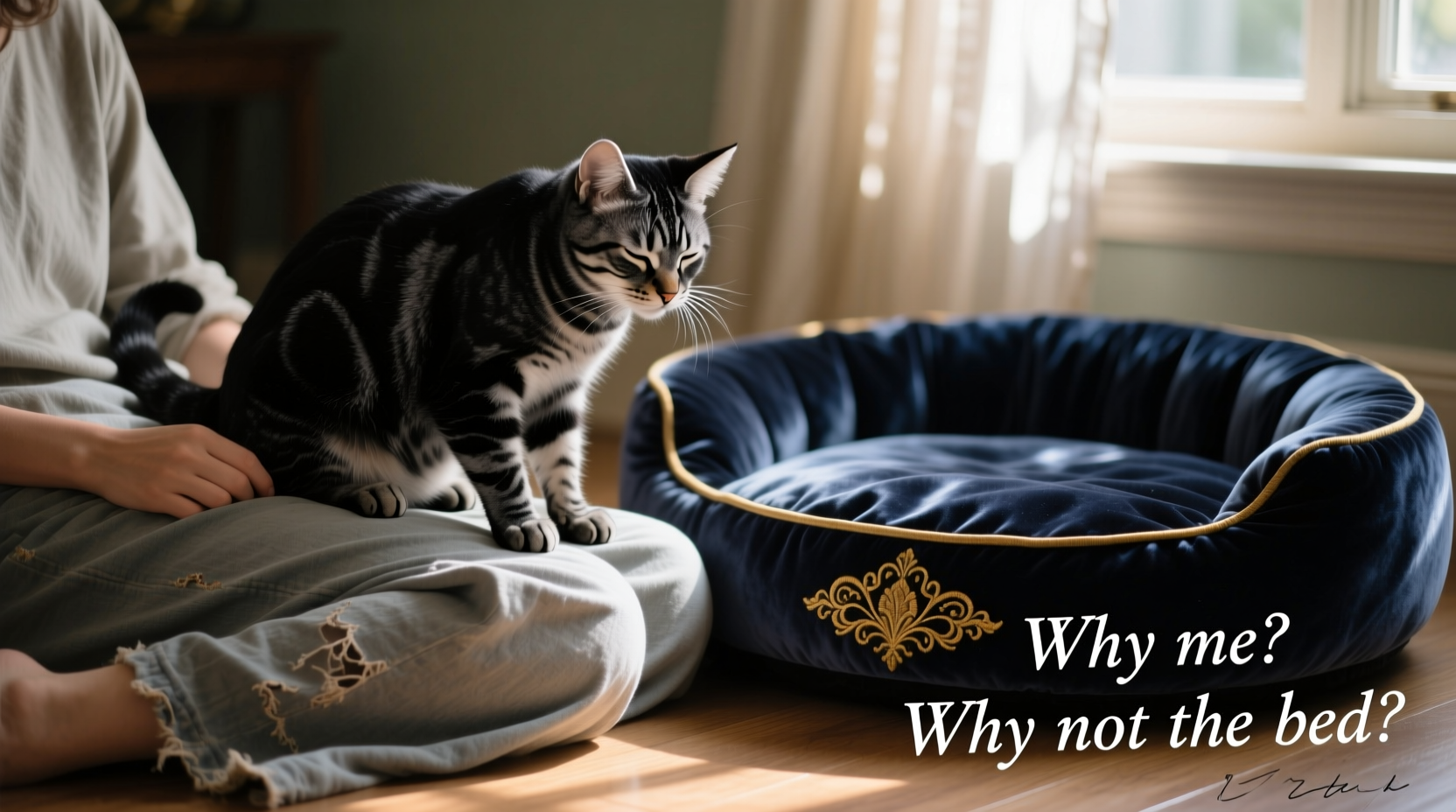
Kneading begins in kittenhood. Newborn kittens knead their mother’s mammary glands to stimulate milk flow. The motion is both functional and comforting, linking tactile stimulation with nourishment and safety. As they grow, the behavior persists—not because they still need milk, but because the action triggers emotional recall of security and warmth.
Even adult cats retain this reflex. When a cat kneads your lap, it’s not just stretching its paws—it’s reliving a primal sense of belonging. The rhythmic pressure releases endorphins, creating a self-soothing effect similar to how humans might rock or hug themselves when anxious or content.
“Kneading is one of the clearest signs of emotional security in cats. It’s a throwback to infancy, but it also serves as a present-day stress reliever.” — Dr. Lena Torres, Feline Behavioral Specialist, Cornell University College of Veterinary Medicine
This instinctual behavior doesn’t require a perfect surface—only one that feels safe and familiar. Your lap, imbued with your scent and warmth, fits that description far better than any store-bought bed, no matter how highly rated.
Scent, Warmth, and Territory: Why Your Lap Wins Over Luxury
Cats are olfactory-driven animals. They navigate the world primarily through scent, more so than sight or sound. Your body emits a complex bouquet of familiar pheromones, skin oils, and laundry detergent residues—all signals that tell your cat, “This space is mine, and it’s safe.”
In contrast, a new cat bed—even if made from hypoallergenic memory foam—lacks personal scent. Unless it has been slept on, worn, or rubbed against by your cat, it remains emotionally neutral, even suspicious. Many owners report that their cats eventually accept a new bed only after it has absorbed enough ambient scents or been placed near frequently used furniture.
Additionally, your lap offers dynamic warmth. Body heat radiates in pulses, responding naturally to movement and blood flow. Most cat beds, even heated ones, provide static warmth that may cool down or feel artificial. Cats often prefer surfaces that mimic living warmth—like a sunlit windowsill or a human leg—over synthetic alternatives.
The Emotional Connection: Kneading as Love Language
When your cat chooses your lap over a designer bed, it’s not rejecting comfort—it’s choosing connection. Kneading is often paired with purring, slow blinking, and head-butting, all behaviors associated with trust and affection. By engaging in this ritual on you, your cat is expressing deep emotional attachment.
In the wild, cats form tight-knit social groups where grooming and physical contact reinforce bonds. Domestic cats transfer these instincts to their human caregivers. Kneading becomes a form of tactile communication: “I am safe with you. I belong here.”
This explains why some cats only knead certain family members. They reserve the behavior for those they perceive as primary caregivers or emotional anchors. It’s not random—it’s relational.
Case Study: Bella and the Unused Heated Bed
Sarah from Portland adopted Bella, a three-year-old domestic shorthair, six months ago. Concerned about winter drafts, she purchased a heated cat cave with faux fur lining—a $75 investment marketed for senior and anxious cats. Bella sniffed it once, walked away, and hasn’t returned since.
Instead, she kneads Sarah’s legs every evening during TV time, often falling asleep mid-motion. Confused and slightly offended, Sarah consulted a veterinary behaviorist. After observing Bella’s routine, the expert noted: “She doesn’t reject the bed because it’s uncomfortable. She rejects it because it doesn’t smell like you, and it doesn’t move. Your presence is her comfort protocol.”
Following advice, Sarah placed a worn sweatshirt inside the bed and moved it next to her favorite armchair. Within two weeks, Bella began napping in it during the day—though she still returned to Sarah’s lap each night for kneading sessions.
The takeaway? Function matters, but emotional context matters more.
Why Expensive Beds Often Fail: A Misunderstanding of Feline Needs
Pet product marketing often emphasizes human-centric ideas of luxury: memory foam, ergonomic design, temperature control. But cats prioritize different criteria. Below is a comparison of what we assume cats want versus what they actually respond to.
| Human Assumption | Feline Reality |
|---|---|
| Soft, cushioned materials | Texture matters more than softness—some prefer crinkly plastic or tightly woven fabric |
| Enclosed spaces for privacy | Only if escape routes are visible; enclosed beds can feel like traps |
| Elevated or heated surfaces | Preferred only if they offer vantage points or natural warmth (e.g., sunlight) |
| Strong association with owner scent | Highly influential—cats avoid items without familiar smells |
| Quiet, isolated locations | Many cats prefer proximity to activity; isolation can increase anxiety |
Moreover, novelty itself can be off-putting. Cats are neophobic—they approach new objects with caution. An expensive bed placed abruptly in a quiet corner may be interpreted as a foreign object until gradually accepted through repeated exposure.
How to Encourage Bed Use Without Discouraging Bonding
You don’t have to choose between your cat’s affection and practical sleep solutions. With thoughtful adjustments, you can support both emotional bonding and independent rest.
Step-by-Step Guide: Transitioning Your Cat to a New Bed
- Choose the right location. Place the bed near where you spend time—next to your sofa, beside your desk, or in your bedroom. Proximity to you increases appeal.
- Add your scent. Drape a recently worn shirt or blanket over the bed for 3–5 days. Replace it regularly to maintain freshness.
- Warm it naturally. Position the bed in a sunbeam or near a radiator (not too close). Avoid plug-in heaters unless recommended by a vet.
- Use positive reinforcement. Toss treats into the bed or praise your cat when they approach it. Never force interaction.
- Gradually phase in use. Allow exploration first, then resting, then sleeping. Full acceptance may take weeks.
- Maintain consistency. Once your cat starts using the bed, keep it in the same spot and clean it gently—avoid strong detergents that erase familiar scents.
Checklist: Signs Your Cat Might Accept a New Bed
- Sniffs or circles the bed repeatedly
- Sits near it (even if not inside)
- Brings toys or blankets to the area
- Stretches or grooms nearby
- Spends increasing time in the room where it’s located
If your cat exhibits these behaviors, they’re likely warming up to the idea—literally and emotionally.
FAQ: Common Questions About Kneading and Cat Beds
Is kneading a sign of dominance or territorial behavior?
Partly. While kneading originates from nursing behavior, adult cats also have scent glands in their paw pads. When they knead, they deposit pheromones, marking you as part of their trusted territory. It’s less about dominance and more about inclusion: “You are mine, and I feel safe here.”
Should I discourage kneading if it hurts?
If claws are digging in, don’t punish the behavior—redirect it. Place a thick blanket or pillow on your lap as a barrier. Trim your cat’s nails regularly, or consider soft claw caps. Abruptly pushing your cat away can damage trust, especially if kneading is a bonding ritual.
Will my cat ever use their bed if they love my lap so much?
Yes—but on their terms. Many cats use beds for naps or overnight sleep while reserving lap time for bonding moments. The key is making the bed feel like an extension of you, not a replacement.
Conclusion: Embrace the Biscuits, Not the Bed War
Your cat isn’t rejecting your expensive bed out of spite or poor judgment. They’re following millions of years of evolutionary programming, guided by scent, warmth, and emotional security. Choosing your lap isn’t a critique of consumerism—it’s a compliment to your relationship.
Rather than seeing this as a problem to fix, consider it a privilege. Few animals express trust so openly. The rhythmic push of tiny paws, the rumble of a purr, the slow blink as they drift off—these are the quiet languages of love in the feline world.
That said, supporting healthy sleep habits matters. With patience and understanding, you can create a space your cat loves—one that honors both their instincts and your shared bond.




 浙公网安备
33010002000092号
浙公网安备
33010002000092号 浙B2-20120091-4
Comments
No comments yet. Why don't you start the discussion?