
Cats are creatures of subtle communication. Their actions often carry deep instinctual meaning, even when they seem contradictory. One of the most common yet puzzling behaviors pet owners report is a cat that lovingly kneads their lap—purring, content, seemingly in bliss—only to abruptly turn and deliver a quick bite. This sudden shift can leave owners confused, hurt, or even reluctant to interact. But far from being spiteful or unpredictable, this behavior is rooted in biology, sensory thresholds, and unmet needs. Understanding the reasons behind this pattern empowers you to build a stronger, more trusting relationship with your feline companion.
The Dual Nature of Kneading: Comfort and Communication
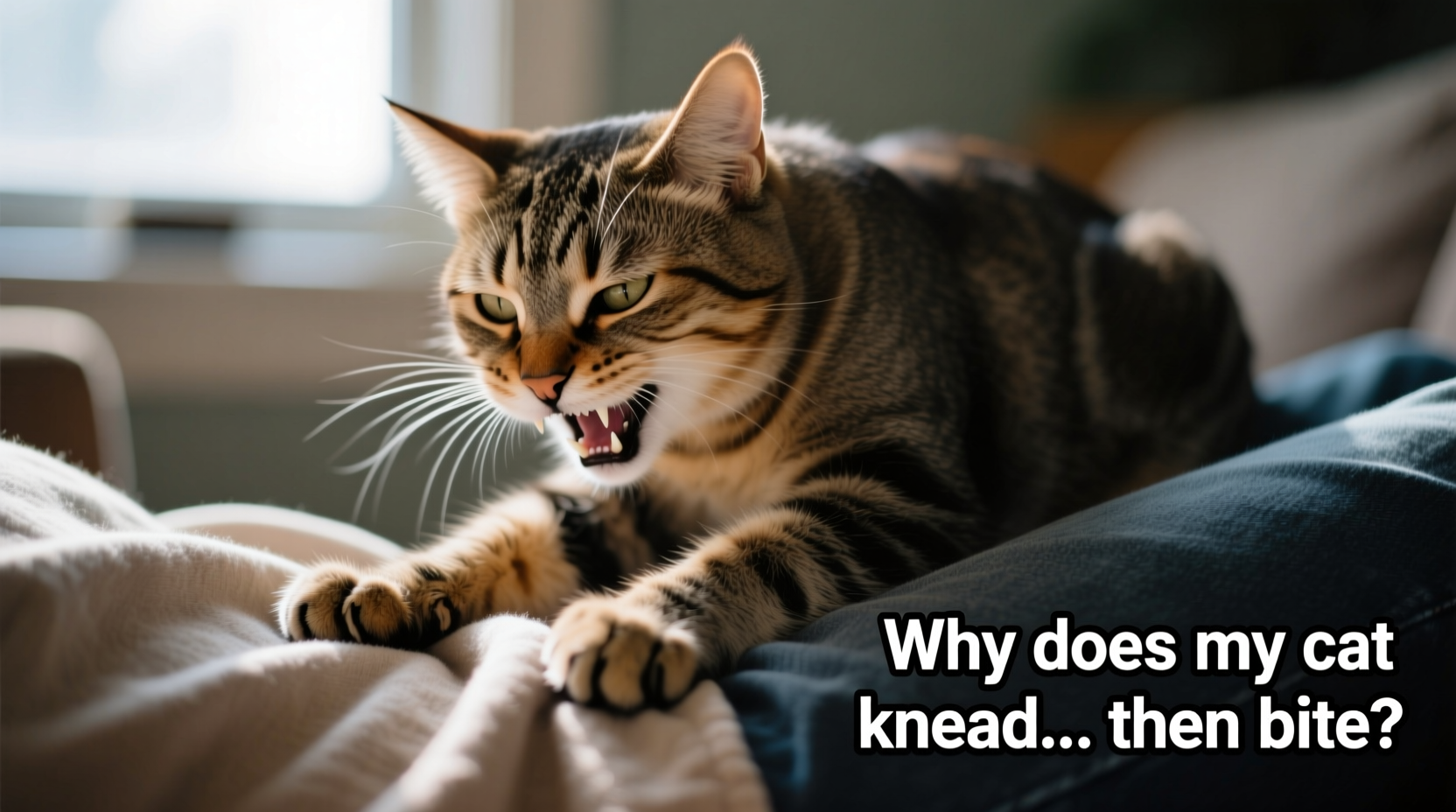
Kneading is a behavior cats retain from kittenhood. As newborns, kittens knead their mother’s belly to stimulate milk flow. The motion becomes associated with warmth, nourishment, and security. Adult cats often knead soft surfaces—blankets, pillows, or laps—when they feel safe and relaxed. It's a self-soothing mechanism, much like a human might rock or hum when content.
However, kneading isn’t purely passive. It also serves as a form of scent marking. Cats have scent glands in their paw pads, and the rhythmic pressing releases pheromones, signaling ownership and comfort. When your cat kneads your lap, they’re not just enjoying the moment—they’re claiming you as part of their safe space.
Why the Bite Follows: Sensory Overload and Thresholds
The transition from kneading to biting is rarely about aggression. Instead, it typically reflects a phenomenon known as sensory overload. While the initial touch may be pleasurable, prolonged petting—especially in sensitive areas like the base of the tail, stomach, or back—can become irritating. Cats have highly sensitive nerve endings, and what starts as soothing stimulation can escalate into discomfort.
Unlike dogs, many cats have a limited tolerance for sustained physical contact. After a certain number of strokes or minutes of petting, their threshold is reached. The bite is not an attack but a signal: “I’ve had enough.” In the wild, such signals are clear and respected among animals. Domestic cats, however, often learn that humans don’t always read these cues correctly—so they escalate to a nip to enforce boundaries.
“Cats communicate through subtle shifts in posture and expression. A twitching tail or flattened ears during petting is a warning sign long before a bite occurs.” — Dr. Sarah Thompson, Feline Behavior Specialist
Common Triggers That Lead to Sudden Biting
Beyond general overstimulation, several specific factors can prompt a cat to bite after kneading:
- Petting duration: Even if your cat initially enjoys attention, continuous touching past their limit causes irritation.
- Touch sensitivity: Some cats dislike being touched on the belly, tail, or paws, regardless of mood.
- Environmental distractions: A sudden noise, movement, or perceived threat can break their relaxed state, making them react defensively.
- Play aggression: Kneading can sometimes precede playful behavior. If your cat is in a high-energy state, the bite may be an invitation to play, not a rejection.
- Redirected aggression: If your cat sees another animal outside or hears a loud sound, their built-up tension may be released through a bite, even if you're not the cause.
Recognizing Early Warning Signs
Cats rarely bite without warning. They use body language to signal discomfort, but these signs are often missed by well-meaning owners. Learning to read them can prevent bites before they happen.
| Body Language | Meaning | Action to Take |
|---|---|---|
| Tail flicking or lashing | Agitation or overstimulation | Stop petting, give space |
| Ears flattening or turning sideways | Discomfort or anxiety | Pause interaction |
| Looking at your hand or mouth while being petted | Anticipating more touch they don’t want | End session gently |
| Skin rippling along the back | Hypersensitivity | Immediately stop touching |
| Low growl or hiss | Clear warning of aggression | Retreat calmly |
A Real-Life Scenario: Understanding Bella’s Behavior
Consider Bella, a 3-year-old domestic shorthair. Her owner, Mark, noticed that every evening, Bella would jump onto his lap, purr loudly, and begin kneading his thigh. After about two minutes, she’d suddenly twist and bite his hand. Mark interpreted this as betrayal—he thought she was being affectionate, then inexplicably aggressive.
After consulting a behaviorist, Mark learned to observe Bella’s subtle cues. He began noticing that her tail started twitching around the 90-second mark, and her pupils would dilate slightly. Once he stopped petting her at the first sign of tail movement, the biting stopped. The behavior wasn’t malice—it was miscommunication. By respecting her limits, their bond actually improved.
How to Respond: Practical Steps to Prevent Biting
Preventing post-kneading bites isn’t about suppressing your cat’s nature—it’s about understanding and responding appropriately. Here’s a step-by-step approach:
- Observe closely: Pay attention to your cat’s body language during interactions. Note when signs of overstimulation appear.
- Limit petting duration: Start with short sessions (10–15 seconds) and gradually increase only if your cat remains relaxed.
- Avoid sensitive zones: Stick to the head, chin, and neck—areas most cats enjoy. Skip the belly and tail unless your cat clearly invites it.
- Let the cat control the interaction: Allow your cat to initiate and end contact. Don’t force pets when they walk away.
- Use distraction techniques: If your cat seems wound up after kneading, offer a toy or treat to redirect energy.
- Respect the bite as communication: Never punish a cat for biting. Instead, reflect on what led up to it and adjust future interactions.
When Is It Not Overstimulation? Other Possible Causes
While overstimulation is the most common reason for post-kneading biting, other underlying issues may contribute:
- Medical discomfort: Arthritis, skin conditions, or nerve pain can make touch painful, even if the cat otherwise seems healthy.
- Stress or anxiety: Changes in environment, routine, or household dynamics can lower a cat’s tolerance for interaction.
- Lack of early socialization: Cats not handled gently as kittens may struggle with human touch later in life.
- Play-related behavior: Young cats especially may mix love and play, using bites as part of interactive behavior.
If biting becomes frequent, intense, or occurs without any apparent trigger, consult a veterinarian or certified feline behaviorist. Medical screening can rule out pain or neurological issues.
Do’s and Don’ts of Handling Post-Kneading Biting
| Do’s | Don’ts |
|---|---|
| Watch for early body language cues | Ignore tail flicking or ear movements |
| Let your cat initiate contact | Force pets when they retreat |
| Use toys to redirect energy | React with loud noises or punishment |
| Keep nails trimmed to reduce injury | Yank your hand away abruptly (may trigger chase response) |
| Consult a professional if behavior persists | Assume the cat is “being mean” |
Frequently Asked Questions
Is my cat being aggressive when they bite after kneading?
Not necessarily. Most of the time, this is not true aggression but a defensive or communicative response to overstimulation. True aggression involves stalking, hissing, and intent to harm, whereas post-kneading bites are usually quick, inhibited nips meant to stop interaction.
Can I train my cat to stop biting altogether?
You can reduce biting by learning your cat’s limits and adjusting your interactions. However, you cannot—and should not—eliminate all mouthing behavior. Cats use their mouths to explore and communicate. The goal is mutual understanding, not suppression.
Why does my cat only bite me and not others?
This often relates to familiarity and routine. You may be the primary caregiver, so your cat feels safest with you and thus more comfortable expressing boundaries. Alternatively, others may naturally respect your cat’s limits better than you do.
Building a Healthier Relationship: A Checklist
To foster trust and minimize unwanted biting, follow this actionable checklist:
- ✅ Learn your cat’s individual tolerance level for petting.
- ✅ Memorize their warning signs (tail flick, ear position, skin ripple).
- ✅ Pet only in preferred areas—usually head and neck.
- ✅ End interactions before signs of irritation appear.
- ✅ Provide alternative outlets like scratching posts or toys.
- ✅ Keep claws trimmed to reduce injury risk.
- ✅ Avoid punishment; instead, redirect with positive reinforcement.
- ✅ Schedule regular vet checkups to rule out medical causes.
- ✅ Consider pheromone diffusers if stress is a factor.
- ✅ Consult a feline behavior specialist if biting escalates.
“Cats don’t misbehave—they communicate in ways we sometimes fail to understand. Patience and observation are the keys to harmony.” — Dr. Lena Reyes, Veterinary Ethologist
Conclusion: Embracing Your Cat’s True Nature
Your cat’s kneading and biting aren’t contradictions—they’re parts of a complex emotional language. What may seem like a betrayal of affection is often a plea for respect. By tuning into your cat’s subtle cues, honoring their boundaries, and responding with empathy, you transform confusing moments into opportunities for deeper connection.
Instead of asking, “Why does my cat do this?” try asking, “What is my cat trying to tell me?” The answer will lead to fewer bites, more purrs, and a relationship built on mutual understanding.




 浙公网安备
33010002000092号
浙公网安备
33010002000092号 浙B2-20120091-4
Comments
No comments yet. Why don't you start the discussion?