
Cat owners often observe their feline companions rhythmically pushing their paws into soft surfaces—blankets, pillows, laps—with a slow, alternating motion known as kneading. This behavior, sometimes called “making biscuits,” is common across cats of all ages and breeds. While it may seem odd or even disruptive at times, kneading is deeply rooted in instinct and emotion. But what does it really mean? Is your cat expressing contentment, or could this be a sign of underlying stress? Understanding the nuances behind kneading helps you interpret your cat’s mood more accurately and strengthen your bond with her.
The Origins of Kneading: A Behavior Rooted in Kittenhood
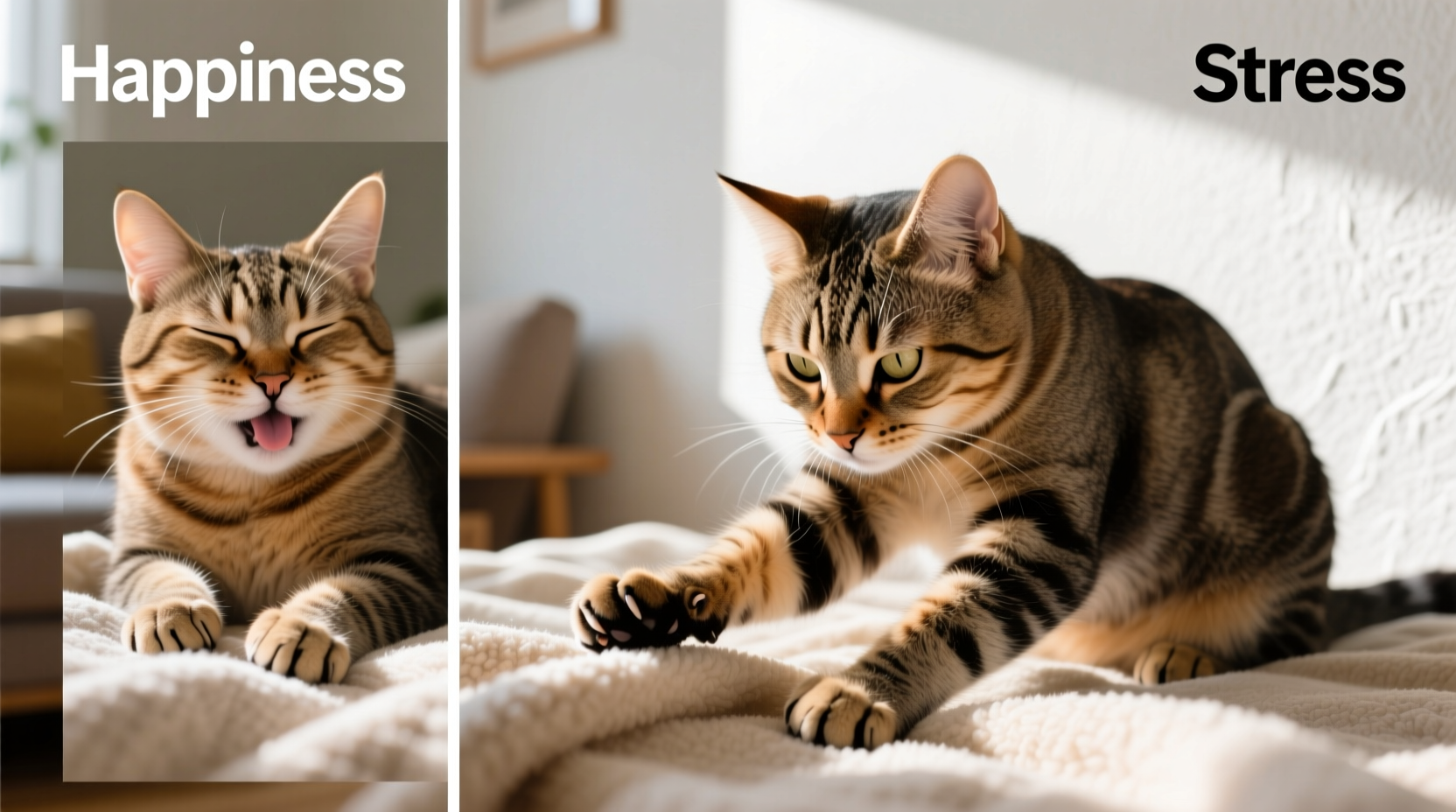
Kneading begins in early kittenhood. Newborn kittens knead their mother’s belly to stimulate milk flow during nursing. This action is both functional and comforting—it ensures nourishment while reinforcing a sense of safety and warmth. As kittens grow, they associate the motion with feelings of security, warmth, and maternal care. Even after weaning, many cats continue to knead well into adulthood, especially when relaxed or seeking comfort.
This ingrained behavior doesn’t disappear with age because it’s tied to positive emotional experiences. When an adult cat kneads a blanket or your lap, she’s likely recalling the deep sense of calm from her earliest days. The rhythmic motion triggers endorphin release, similar to how humans might rock or hug themselves when self-soothing. In most cases, this is a sign of emotional comfort—not distress.
“Kneading is one of the clearest examples of a retained neonatal behavior that serves an emotional function in adult cats.” — Dr. Sarah Elliott, Feline Behavioral Scientist
When Kneading Signals Happiness and Contentment
In the majority of cases, kneading is a strong indicator that your cat feels safe, relaxed, and emotionally fulfilled. You’ll typically see this behavior when your cat is curled up on your lap, nestled into a sunlit corner, or settling into her favorite sleeping spot. Accompanying signs of contentment include:
- Purring loudly or softly
- Slow blinking (often called “cat kisses”)
- Lying on her side or back with limbs relaxed
- Gentle tail flicks or tucked neatly around her body
- Soft vocalizations or chirps
If your cat kneads while purring and nuzzling against you, she’s expressing trust and affection. This is her way of marking you as part of her secure environment. Cats have scent glands in their paw pads, so kneading also deposits their pheromones onto the surface—a natural way of claiming territory in a peaceful, bonding context.
When Kneading May Indicate Stress or Anxiety
While kneading is usually a sign of happiness, it can occasionally emerge in stressful situations. Like humans who bite their nails or twirl their hair when anxious, some cats use repetitive behaviors like kneading as a coping mechanism. This is particularly true if the kneading appears excessive, frantic, or occurs in unusual contexts.
Signs that kneading may be stress-related include:
- Rapid, forceful paw movements instead of slow, rhythmic presses
- Kneading in isolation or hiding spots, rather than near trusted humans
- Accompanied by dilated pupils, flattened ears, or tense posture
- Occurs after loud noises, changes in routine, or introduction of new pets
- May be paired with overgrooming, loss of appetite, or litter box avoidance
In these cases, kneading functions as a self-soothing ritual. It brings back the sensory memory of comfort from kittenhood, helping the cat regain a sense of control. If you notice this pattern, consider recent environmental changes—such as moving, visitors, or construction noise—that might be affecting your cat’s emotional state.
Real-Life Example: Luna Adjusts to a New Home
Luna, a 3-year-old domestic shorthair, was adopted into a new household after spending time in a shelter. Her new owner noticed that Luna would frequently knead a small blanket in the corner of the guest room—away from family activity. At first, it seemed like a sweet habit. But further observation revealed that Luna only did this after hearing the vacuum or when guests arrived. She wasn’t purring, and her body was rigid during the episodes.
After consulting a veterinary behaviorist, the owner learned that Luna was using kneading to manage anxiety in an unfamiliar environment. By providing a consistent routine, a quiet retreat space, and gradual socialization, Luna’s stress-related kneading decreased within weeks. Eventually, she began kneading on her owner’s lap—this time with purring and full-body relaxation.
Do’s and Don’ts of Responding to Kneading Behavior
| Do’s | Don’ts |
|---|---|
| Allow kneading on soft blankets or designated cushions | Reprimand or punish your cat for kneading |
| Trim your cat’s claws regularly to prevent fabric damage or scratches | Yank your cat off your lap mid-knead without warning |
| Use positive reinforcement when kneading occurs in calm settings | Assume all kneading is a sign of happiness without observing body language |
| Provide a consistent, low-stress environment to reduce anxiety-driven kneading | Force interaction during or after stress-related kneading |
| Offer alternative textures (like fleece mats) if furniture damage is a concern | Ignore potential signs of underlying stress just because kneading seems harmless |
How to Support Healthy Kneading Behavior
Whether your cat kneads out of joy or as a calming strategy, there are practical ways to support her emotional well-being while protecting your belongings.
Step-by-Step Guide: Managing Kneading Comfortably
- Observe the context. Note when and where kneading happens. Is your cat purring and relaxed, or alert and tense?
- Check body language cues. Look at ear position, tail movement, eye dilation, and vocalizations to assess emotional state.
- Provide a kneading-friendly zone. Place a soft, washable blanket or cushion in a quiet area where your cat feels safe.
- Keep claws trimmed. Regular nail trims reduce damage to fabrics and skin during enthusiastic kneading sessions.
- Introduce scratching alternatives. Scratching posts or pads satisfy paw-motor needs and redirect energy appropriately.
- Minimize environmental stressors. Maintain predictable routines, limit sudden changes, and use pheromone diffusers if needed.
- Consult a vet if behavior changes. Sudden increases in kneading, especially with other behavioral shifts, may indicate pain or illness.
Frequently Asked Questions
Is it normal for adult cats to knead?
Yes, it’s completely normal. Many adult cats retain kneading behavior throughout life, especially those who were closely bonded with their mothers or weaned naturally. It’s a sign of emotional health when done in relaxed settings.
Why does my cat drool when kneading?
Drooling during kneading is common and usually harmless. It’s often linked to extreme relaxation and nostalgia for nursing. Some cats even suckle on soft fabric while kneading. As long as your cat is otherwise healthy, this behavior isn’t a cause for concern.
Can kneading hurt my cat?
Generally, no. Cats instinctively regulate pressure. However, older cats with arthritis may show discomfort during prolonged kneading. Watch for limping, reluctance to move, or vocalizing during the act. If observed, consult your veterinarian.
Final Thoughts: Listening to Your Cat’s Silent Language
Kneading is more than a quirky habit—it’s a window into your cat’s emotional world. When performed gently and accompanied by purring or relaxed posture, it’s a powerful affirmation that your cat feels loved and secure. But when it appears compulsive or occurs in fearful contexts, it may signal unmet emotional needs.
The key lies in observation. By paying attention not just to the action itself but to the surrounding cues—body language, environment, timing—you gain deeper insight into your cat’s inner life. Rather than trying to stop the behavior, focus on nurturing the conditions that make it joyful rather than necessary for survival.
Every push of your cat’s paws is a story: of comfort remembered, of trust given, or sometimes, of quiet resilience in the face of stress. Recognizing the difference empowers you to respond with empathy, care, and informed support.




 浙公网安备
33010002000092号
浙公网安备
33010002000092号 浙B2-20120091-4
Comments
No comments yet. Why don't you start the discussion?