
Every evening, like clockwork, a delicate ceramic bird topples from your mantel. You reset it. The next night—same thing. Your cat watches with wide eyes, tail flicking, clearly pleased with their handiwork. This isn’t random mischief. It’s communication. Cats don’t act out of malice, but their repetitive behaviors often signal unmet needs, environmental triggers, or instinctual drives. Understanding why your cat targets that one specific ornament—and only at night—can transform frustration into empathy and lead to lasting solutions.
The Science Behind the Swipe: Why Cats Knock Things Over
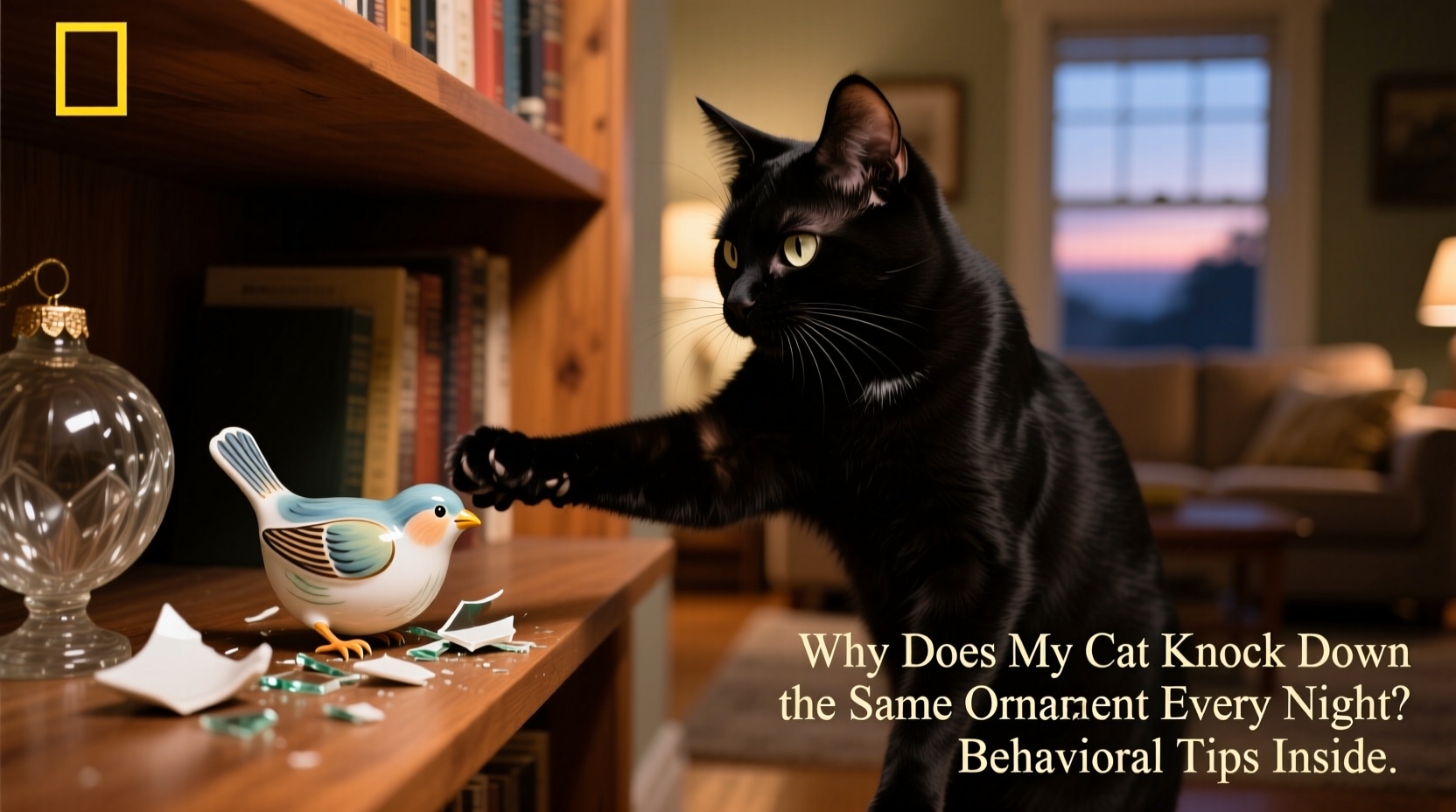
Cats are natural hunters, and even indoor cats retain strong predatory instincts. Their paws are highly sensitive tools used for exploration, manipulation, and play. When a cat bats an object off a surface, they’re not just being destructive—they’re testing it. Is it alive? Can it move? Does it respond? These questions drive behavior rooted in survival.
Nighttime activity is also biologically normal. Cats are crepuscular, meaning they’re most active during dawn and dusk. If your cat wakes around 9 PM and begins prowling, knocking over the same figurine each time, it’s likely part of their natural rhythm. Without sufficient stimulation during the day, this energy gets funneled into disruptive nighttime habits.
Dr. Sarah Thompson, feline behavior specialist at the American Veterinary Society of Animal Behavior, explains:
“Cats repeat behaviors that produce a result. If knocking something down earns attention—even negative attention—it becomes reinforced. The consistency of targeting one item suggests it has unique sensory appeal: shape, sound, movement, or placement.”
Decoding the Pattern: What Makes That Ornament So Appealing?
Not all objects are equally tempting. The fact that your cat returns to the same ornament night after night indicates there’s something specific about it that captures their interest. Consider these factors:
- Visual Movement: Does it wobble when touched? Even slight motion can trigger a chase response.
- Sound: Does it make a soft clink or rattle when moved? Auditory feedback can be rewarding.
- Texture: Is it smooth, cold, or oddly shaped? Cats use their paws to gather tactile information.
- Location: Is it on a high ledge near a window? Elevated spaces are prime observation points, making nearby objects easy targets.
- Human Reaction: Do you react strongly when it falls? Yelling, rushing in, or picking it up may inadvertently reward the behavior.
Step-by-Step Guide to Stopping the Nightly Knockdown
Breaking this cycle requires consistency, environmental adjustment, and behavioral redirection. Follow this five-step plan over 2–3 weeks for best results.
- Document the Behavior
For three nights, quietly note the time, your cat’s activity beforehand (sleeping, playing, staring), and your response. This helps identify patterns. - Remove the Target (Temporarily)
Take the ornament out of reach. Don’t replace it immediately. Observe if your cat targets other objects. If not, the item itself is the trigger. - Increase Daytime Engagement
Schedule two 10–15 minute play sessions daily using wand toys that mimic prey (birds, mice). End each session with a treat or meal to simulate a “kill-and-eat” sequence. - Create a Nighttime Routine
One hour before bedtime, engage in vigorous play, followed by a small meal. This mimics natural hunting cycles and encourages sleep afterward. - Reintroduce the Ornament Safely
After a week of no incidents, return the ornament—but pair it with deterrents. Place double-sided tape nearby or use a motion-activated air canister (safe for pets) to disrupt the approach without punishment.
Do’s and Don’ts: Managing Feline Object Interaction
| Do | Don’t |
|---|---|
| Provide alternative outlets like puzzle feeders and climbing shelves | Yell at or punish your cat—this increases anxiety and reinforces attention-seeking |
| Rotate toys weekly to maintain novelty | Use physical punishment or spray bottles as primary correction tools |
| Secure fragile items on lower, stable surfaces or in display cases | Leave tempting objects within paw’s reach overnight |
| Use positive reinforcement when your cat ignores off-limits items | Assume the behavior will stop on its own without intervention |
| Install window perches with bird feeders outside for mental stimulation | Ignore signs of stress like excessive grooming or hiding |
Case Study: Luna and the Blue Glass Dolphin
Maria, a graphic designer from Portland, noticed her 3-year-old tuxedo cat Luna knocked over a blue glass dolphin figurine every night at 8:30 PM. She’d place it back each morning, growing increasingly frustrated. After consulting a certified cat behaviorist, Maria tracked Luna’s routine and discovered a pattern: Luna would nap from 5–7 PM, wake up restless, and head straight to the mantel.
The solution was multi-layered. First, Maria began playing with Luna using a feather wand at 6:30 PM daily. She ended the session with a food puzzle filled with kibble. Second, she replaced the dolphin with a soft plush toy glued to the shelf (making it immovable). Third, she placed a motion-activated device behind the shelf that emitted a gentle puff of air when triggered.
Within ten days, Luna stopped approaching the shelf. After two weeks, Maria reintroduced the dolphin—this time secured with museum putty. No incidents occurred in the following month. “I realized she wasn’t trying to annoy me,” Maria said. “She just needed an outlet for her energy.”
Behavioral Tips to Prevent Repetitive Destructive Actions
Addressing the root cause is more effective than managing symptoms. Use these evidence-based strategies to reduce unwanted behaviors long-term.
- Enrich the Environment: Offer multiple types of stimulation—visual (bird feeders), tactile (different textures), and cognitive (treat puzzles).
- Control Access: Use baby gates or close doors to rooms with fragile items during high-risk hours.
- Use Positive Distraction: When you see your cat eyeing a forbidden object, toss a toy in the opposite direction to shift focus.
- Neutralize Scent Marking Triggers: If the ornament carries your scent (from frequent handling), clean it gently and store it briefly to reduce its personal significance.
- Monitor for Stress: Changes in routine, new pets, or loud noises can increase displacement behaviors like object-knocking.
“Cats don’t misbehave—they behave according to their nature. Our job is to guide that behavior humanely.” — Dr. James Reed, Certified Feline Behavior Consultant
FAQ: Common Questions About Repetitive Cat Behavior
Is my cat knocking things over for attention?
Possibly. Even negative attention—like scolding or rushing into the room—can reinforce the behavior. If your cat looks at you after knocking something down, they’ve learned that the action produces a reaction. Instead, remain calm and redirect silently.
Could this be a sign of a medical issue?
In rare cases, yes. Sudden onset of obsessive behaviors could indicate neurological issues, vision loss, or cognitive dysfunction, especially in older cats. If the behavior is accompanied by disorientation, vocalization, or changes in appetite, consult your veterinarian.
Can I train my cat not to do this?
You can’t train a cat not to explore with their paws, but you can train them toward preferred alternatives. Use clicker training or treat rewards when they interact with appropriate toys instead of household objects.
Checklist: How to Stop the Nightly Ornament Incident
- ✅ Identify the exact time and conditions under which the behavior occurs
- ✅ Remove the targeted object temporarily
- ✅ Increase daytime mental and physical stimulation
- ✅ Establish a consistent pre-bed play-and-feed routine
- ✅ Secure or replace the ornament using deterrents (tape, air canister)
- ✅ Reintroduce the item gradually, monitoring closely
- ✅ Reward calm behavior near the object with treats or affection
- ✅ Consult a professional if the behavior persists beyond three weeks
Conclusion: Turning Frustration into Understanding
Your cat isn’t trying to ruin your decor—they’re expressing natural instincts in a domestic environment that doesn’t always accommodate them. The nightly ornament knockdown is a symptom, not a crime. By adjusting routines, enriching their world, and responding with patience, you can preserve both your belongings and your bond.
Start tonight. Play with your cat for ten minutes before dinner. Move the figurine to a safer spot. Watch what happens. Small changes, consistently applied, yield the most significant results. Over time, that once-irritating habit may become a story you laugh about—a reminder of how deeply attuned cats are to their surroundings, and how responsive they are to compassionate care.




 浙公网安备
33010002000092号
浙公网安备
33010002000092号 浙B2-20120091-4
Comments
No comments yet. Why don't you start the discussion?