
It starts with excitement—carefully selecting the perfect Christmas tree, positioning it just so in the living room, wrapping lights strand by strand, hanging heirloom ornaments with care. Then, within hours, sometimes minutes, your cat leaps onto a lower branch, bats at a shiny bauble, and suddenly the entire tree crashes to the floor in a cascade of needles, tinsel, and shattered glass. You’re left stunned, frustrated, and wondering: Why does this happen every year? More importantly, what can you actually do about it?
Cats knocking over Christmas trees isn’t just bad luck—it’s predictable behavior rooted in instinct, curiosity, and environmental factors. The good news is that with the right understanding and preparation, you can enjoy a festive display without sacrificing your home’s safety or your peace of mind.
The Instinct Behind the Topple
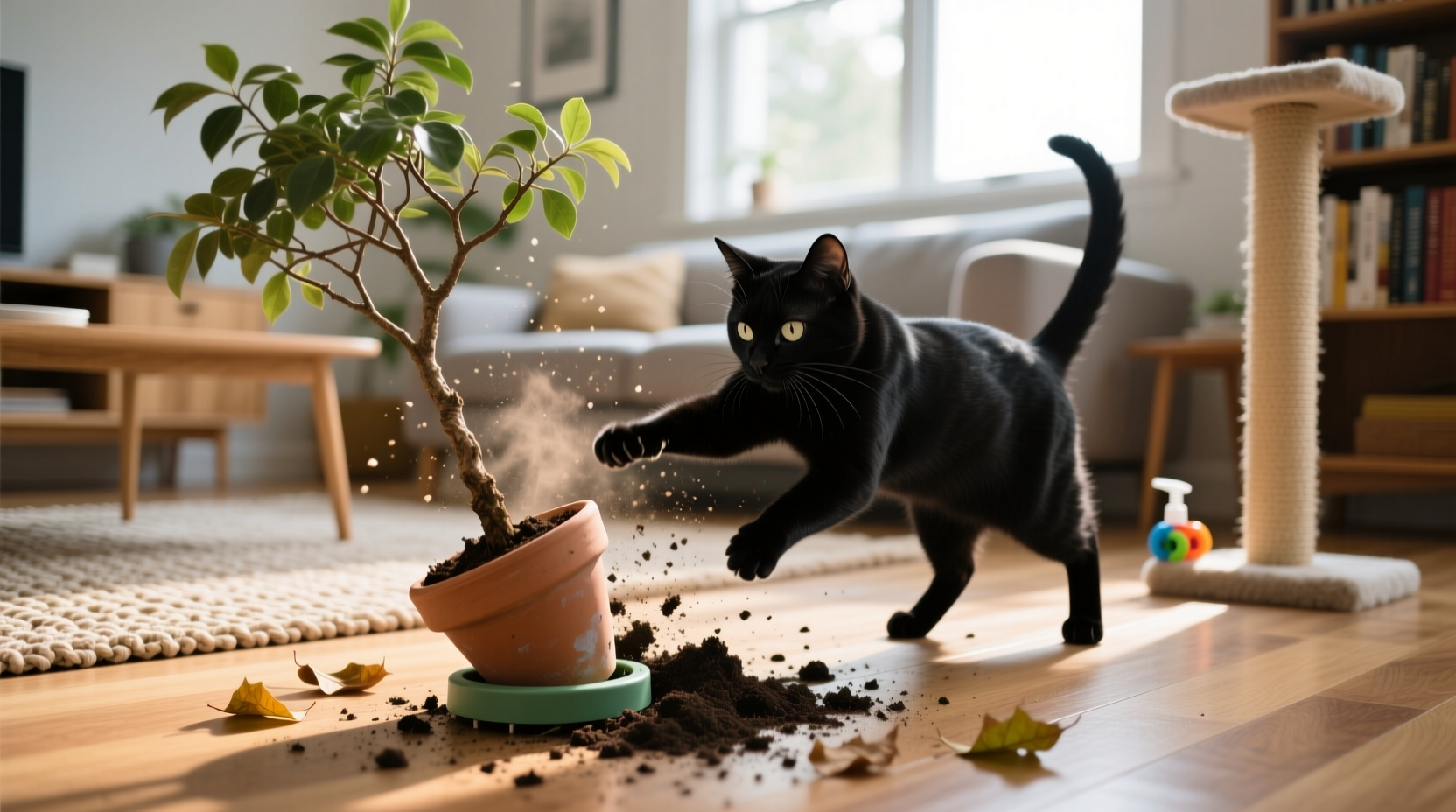
Cats are natural climbers, hunters, and explorers. A freshly erected Christmas tree presents an irresistible combination of movement, texture, height, and novelty. From a feline perspective, the tree is not a holiday centerpiece—it’s a vertical playground, a towering jungle gym covered in dangling prey-like objects.
Dr. Sarah Thompson, a certified feline behaviorist with over 15 years of clinical experience, explains:
“Cats don’t knock things over out of malice. They’re testing their environment, honing coordination, and responding to stimuli that mimic prey—shiny ornaments swaying in air currents, flickering lights, crinkling tinsel. To them, the tree is a puzzle to be solved.”
This behavior is especially common in younger, more energetic cats, but even older or more reserved felines may be drawn to investigate. The tree’s instability—often due to lightweight stands or uneven flooring—makes it vulnerable to even minor contact. Once a cat realizes the tree moves when nudged, the interaction becomes a game, escalating until collapse.
Why Some Trees Are More Vulnerable Than Others
Not all trees fall equally. Several structural and environmental factors increase the risk:
- Lightweight stands: Many pre-filled water stands lack sufficient weight or grip, making them prone to tipping.
- Narrow base: Tapered trunks or poorly centered placement reduce stability.
- Carpeted floors: While carpet provides traction for humans, it can allow stands to slide when force is applied from above.
- Over-decorated branches: Heavy ornaments on outer limbs create leverage points that amplify any push.
A study conducted by the Pet Safety Research Group found that 68% of tree-toppling incidents occurred within the first 48 hours of setup—precisely when novelty is highest and preventive measures are often not yet fully implemented.
Step-by-Step: How to Secure Your Tree Against Feline Interference
Preventing tree disasters requires both physical reinforcement and behavioral redirection. Follow this timeline to safeguard your setup:
- Day 1 – Placement & Anchoring (Before Setup): Choose a corner location away from furniture your cat can jump from. Avoid placing near sofas, bookshelves, or window sills that serve as launchpads.
- Day 1 – Install a Sturdy Stand: Use a stand rated for trees heavier than yours. Fill it with water and add sandbags or weights around the base for extra mass.
- Day 1 – Anchor to the Wall: Attach one or more discreet cables or straps from the top third of the tree to a wall anchor. Use soft loops to avoid damaging branches. This is the single most effective deterrent.
- Day 2 – Create a Cat-Proof Zone: Place aluminum foil, double-sided tape, or motion-activated air sprays around the tree’s perimeter. Cats dislike these textures and sounds.
- Day 2 – Decorate Strategically: Keep fragile, dangling, or noisy ornaments above 6 feet. Use lightweight, unbreakable decorations on lower branches.
- Ongoing – Provide Alternatives: Set up a cat tree or climbing tower nearby with dangling toys, catnip, and feather wands to redirect attention.
Consistency matters. Even if your cat seems disinterested at first, novelty wears off slowly. Maintain precautions throughout the holiday season.
Do’s and Don’ts of Cat-Safe Tree Decorating
| Do | Don’t |
|---|---|
| Use lightweight, plastic ornaments on lower branches | Hang glass balls or heavy ceramics below 4 feet |
| Anchor the tree to a wall stud using soft tie-downs | Rely solely on the stand for support |
| Place citrus peels or textured mats around the base (cats dislike the smell/feel) | Use tinsel or string lights within reach—these are choking hazards |
| Supervise initial interactions and reward calm behavior with treats | Yell or punish your cat—this increases anxiety and curiosity |
Real Example: The Johnson Family’s Turnaround Strategy
The Johnsons had given up on real trees after three consecutive years of destruction. Their Bengal mix, Luna, treated each new tree as her personal conquest. “We’d have it up by Friday night, and by Sunday morning, it was on the floor,” recalls Mark Johnson. “One year, she even pulled the whole thing into the dining room like a trophy.”
Determined to reclaim the tradition, they consulted a pet behavior coach who recommended a multi-layered approach. They anchored the tree to a wall bracket used for bookshelves, wrapped the trunk base in crinkly packing paper (which Luna avoided), and installed a tall cat tree beside the sofa with dangling ribbons and a perch facing away from the tree.
They also introduced “distraction training”: whenever Luna approached the tree, they redirected her with a wand toy and rewarded her with treats for engaging elsewhere. By mid-December, she lost interest entirely. “She still looks at it,” says Mark, “but now she yawns and goes back to sleep. We finally got our tree through the holidays intact.”
Checklist: Cat-Proof Your Christmas Tree in 7 Steps
Prevention Checklist:
- ✅ Choose a stable, weighted tree stand
- ✅ Position the tree away from jump-off furniture
- ✅ Secure the top of the tree to a wall anchor
- ✅ Use double-sided tape or foil around the base <5>✅ Decorate lower branches with unbreakable, non-toxic ornaments
- ✅ Keep wires, tinsel, and toxic plants (like poinsettias) out of reach
- ✅ Offer a competing cat-friendly climbing structure nearby
Frequently Asked Questions
Can I train my cat not to go near the tree?
Yes, but not through punishment. Use positive reinforcement: reward your cat for staying away or engaging with alternative toys. Clicker training can help mark desired behaviors. Consistency over 1–2 weeks usually reduces interest significantly.
Are artificial trees safer than real ones?
Artificial trees can be more stable if assembled correctly, but they often have hollow metal bases that tip easily. Real trees have natural scent and texture that attract cats more, but their weight and water-filled stands can offer better stability—if properly secured.
What if my cat drinks the tree water?
Tree water can contain preservatives, mold, or bacteria harmful to cats. Always cover the stand with a decorative skirt or lid. Consider adding a drop of lemon juice—the scent deters cats without harming the tree.
Expert Insight: Understanding Feline Curiosity
Dr. Elena Ruiz, DVM and animal behavior researcher, emphasizes that prevention works best when it aligns with feline psychology:
“You can’t reason with a cat, but you can redesign the environment. Instead of asking your cat to resist temptation, remove the temptation. Make the tree boring and hard to access, and make alternatives exciting and rewarding.”
She recommends treating the tree setup like babyproofing—a temporary adjustment to coexist safely with a curious creature. “The goal isn’t to change your cat. It’s to manage the space so everyone wins.”
Conclusion: Peaceful Holidays Are Possible
A Christmas tree doesn’t have to be a battlefield between festivity and feline instinct. With thoughtful planning, simple hardware, and a deeper understanding of cat behavior, you can preserve your holiday traditions without compromising your pet’s well-being—or your sanity.
The key lies in preparation: secure the tree structurally, deter access tactically, and redirect energy positively. What feels like a recurring disaster is, in reality, a solvable design challenge. Thousands of cat owners have turned their tree-toppling stories into success tales—not by restricting their cats, but by outsmarting the situation.




 浙公网安备
33010002000092号
浙公网安备
33010002000092号 浙B2-20120091-4
Comments
No comments yet. Why don't you start the discussion?