
Cats are enigmatic creatures, capable of both tender affection and sudden bursts of chaotic energy. One of the most common yet baffling behaviors among domestic cats is their tendency to deliberately knock objects off tables, shelves, and countertops. Whether it’s a water glass, a phone, or your favorite candle, if it’s within paw’s reach, there’s a chance your cat will send it crashing to the floor. While this behavior can be frustrating—and sometimes costly—it’s rarely random. Behind every toppled mug lies a complex web of instinct, communication, and curiosity. Understanding the reasons behind this action is the first step toward managing it effectively without compromising your cat’s well-being.
The Evolutionary Roots of Object-Knocking Behavior
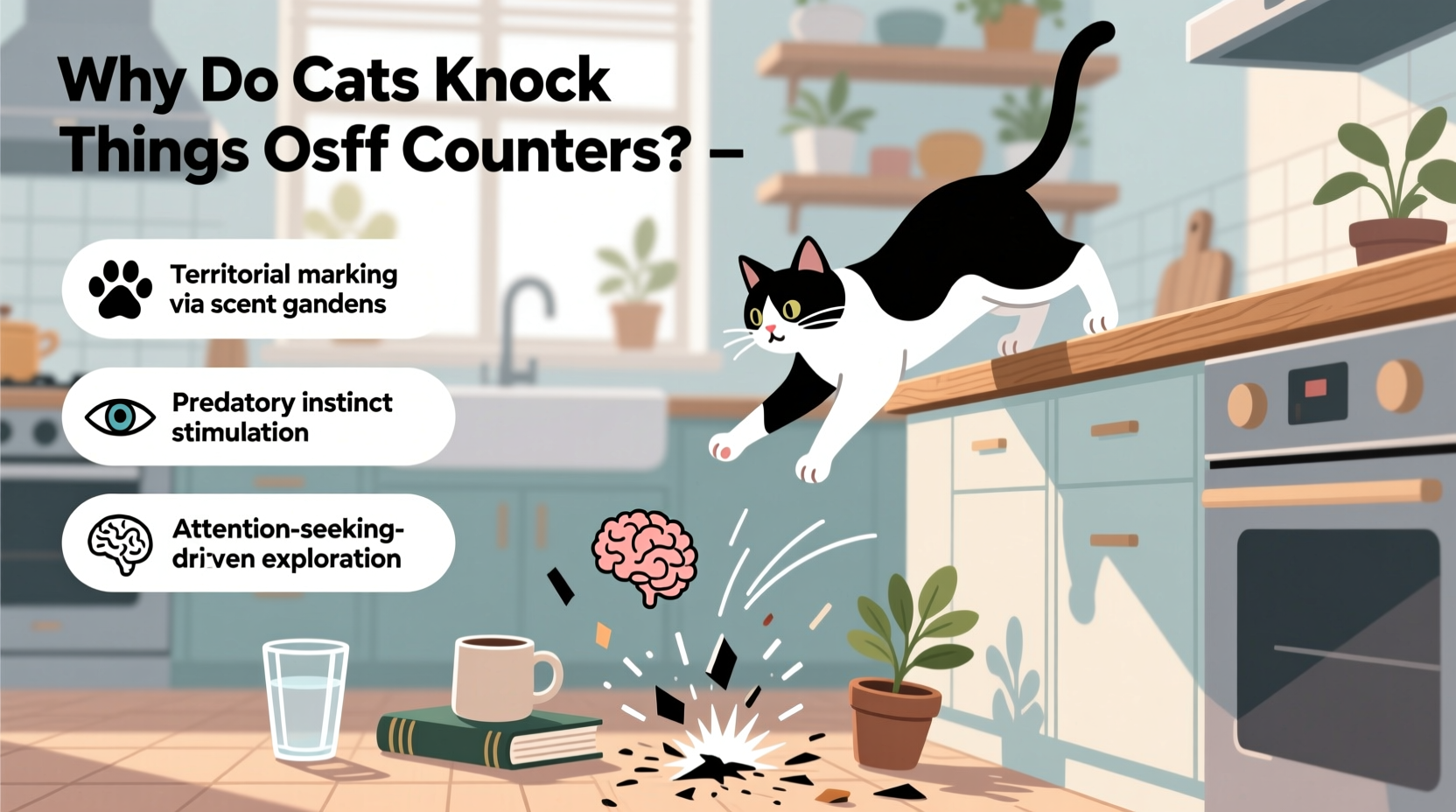
Cats are natural predators, evolved from solitary hunters who relied on stealth, precision, and sensory awareness to survive. In the wild, felines investigate their environment not just visually, but through touch and movement. When a cat bats at an object, it’s replicating the motion used to test prey—probing for reaction, assessing threat level, and determining whether something is alive or inert. This instinctual behavior persists in domestic cats, even when they’ve never hunted a mouse.
Objects that move unpredictably when nudged—like pens rolling off edges or keys clattering down—are especially enticing. The motion triggers the same neural pathways activated during hunting. From a cat’s perspective, a pen falling off a desk might resemble a small rodent darting away, prompting a chase response. Even stationary items become targets because knocking them over produces sound and movement—stimuli that satisfy a cat’s need for environmental engagement.
Communication Through Chaos: What Your Cat Is Trying to Tell You
Beyond instinct, object-knocking is often a form of communication. Cats are masters of subtle signaling, and when verbal cues fail, they resort to actions. If your cat consistently knocks things off surfaces when you’re working, eating, or focused elsewhere, it may be seeking attention. The crash serves as an auditory beacon: “Look at me now.”
This behavior is particularly common in cats that feel under-stimulated or neglected. Unlike dogs, which may bark or nudge hands for attention, cats use environmental manipulation to provoke a reaction. A successful knock—followed by human surprise, scolding, or interaction—reinforces the behavior. Even negative attention is still attention, and from a feline standpoint, it’s better than being ignored.
In multi-cat households, object-knocking can also serve as a territorial display. A dominant cat may displace items near shared spaces to assert control or disrupt another cat’s routine. Alternatively, anxious or insecure cats might engage in displacement behaviors—such as pawing at objects—when stressed by changes in the household, new pets, or unfamiliar noises.
“Cats don’t misbehave out of malice. They act based on instinct, need, or learned outcomes. Knocking things over is often their way of interacting with a world they don’t fully control.” — Dr. Lena Reyes, Feline Behavioral Specialist
Environmental Enrichment Deficit: A Key Contributor
A lack of mental and physical stimulation is one of the leading causes of destructive or repetitive behaviors in indoor cats. Without sufficient outlets for hunting, climbing, and exploring, cats redirect their energy into inappropriate activities—like swatting objects off counters. This is especially true for cats living in small apartments or homes with minimal vertical space or interactive toys.
Enrichment isn’t just about providing toys; it’s about creating a dynamic environment that mimics natural feline experiences. A cat perched on a windowsill watching birds engages in predatory focus. A puzzle feeder encourages problem-solving. A climbing tower satisfies vertical territory needs. When these elements are missing, object-knocking becomes a default source of entertainment.
Solutions Checklist: Reducing Counter-Knocking Through Enrichment
- Introduce daily interactive play sessions (10–15 minutes, twice daily) using wand toys
- Install window perches or bird feeders outside to encourage observational hunting
- Use food puzzles or treat-dispensing toys to stimulate foraging behavior
- Add vertical spaces like cat trees, shelves, or wall-mounted steps
- Rotate toys weekly to maintain novelty and interest
- Provide safe outdoor access via catio or harness training
Training and Management: Practical Steps to Discourage the Habit
While you can’t eliminate instinct, you can shape how it’s expressed. The goal isn’t to punish your cat, but to redirect the behavior toward acceptable outlets. Consistency and positive reinforcement are essential.
First, secure high-value or fragile items. Use adhesive putty, non-slip mats, or designated storage zones to keep breakables out of reach. Avoid leaving tempting objects—especially those with dangling cords or moving parts—on edges where paws can easily reach.
Second, interrupt the behavior gently. If you catch your cat mid-swipe, make a soft noise (like a hand clap or “tsk”) to startle without frightening. Immediately redirect to an appropriate toy. Never yell or physically punish—this damages trust and increases anxiety, potentially worsening the behavior.
Third, reward desired behavior. When your cat ignores counter objects or engages with its own toys, offer praise, treats, or petting. Over time, this reinforces alternative choices.
Step-by-Step Guide to Managing Counter-Knocking
- Assess the environment: Identify high-risk areas and remove or secure vulnerable items.
- Enhance enrichment: Add at least two new stimulating activities (e.g., puzzle feeder, bird window perch).
- Establish a play routine: Schedule two 10-minute sessions daily using a wand toy to simulate hunting.
- Interrupt and redirect: When knocking occurs, distract with a toy and guide engagement elsewhere.
- Reinforce good behavior: Reward calm presence near counters with treats or affection.
- Monitor progress: Track incidents weekly to assess improvement or adjust strategy.
Case Study: Luna, the Curious Calico
Luna, a three-year-old calico living in a downtown apartment, had developed a reputation for toppling anything left unattended on kitchen counters. Her owner, Mark, reported frequent losses of coffee mugs, phones, and even a small potted plant. Initially annoyed, he tried scolding her, but the behavior only increased. Concerned about potential injury or damage, he consulted a certified feline behaviorist.
The assessment revealed several contributing factors: Luna spent most of her day alone while Mark worked, had no window access, and was only played with sporadically. Her diet consisted of free-fed dry food, eliminating any foraging motivation. The behaviorist recommended a structured plan: installing a window perch overlooking a busy street, introducing timed feeding with puzzle bowls, and committing to two daily play sessions using a feather wand.
Within three weeks, Luna’s counter-knocking decreased by 80%. She spent more time observing birds, engaged actively with her puzzle toys, and showed less interest in household objects. By week six, the behavior had nearly ceased. Mark noted that Luna seemed more relaxed and affectionate overall—a sign that her underlying needs were finally being met.
Do’s and Don’ts: How to Respond to Object-Knocking
| Do’s | Don’ts |
|---|---|
| Provide daily interactive play to satisfy hunting instincts | Yell, hit, or spray your cat with water as punishment |
| Use environmental modifications (e.g., double-sided tape) to deter access | Leave fragile or dangerous items within paw range |
| Redirect to appropriate toys when knocking begins | Ignore persistent behavior that may signal stress or boredom |
| Reinforce calm behavior with treats and affection | Assume the cat is acting out of spite or defiance |
| Consult a veterinarian or behaviorist if the behavior escalates | Use sticky traps or shock mats that cause fear or pain |
Frequently Asked Questions
Is my cat knocking things over because it’s angry at me?
No, cats don’t act out of revenge or anger in the human sense. While they can feel stressed or frustrated, object-knocking is typically driven by instinct, curiosity, or a desire for interaction—not emotional retaliation. Attributing human motives to feline behavior can lead to misunderstandings and ineffective responses.
Can this behavior be a sign of illness?
In rare cases, yes. Sudden onset of obsessive or compulsive behaviors—such as repeated pawing, tail chasing, or excessive grooming alongside object-knocking—can indicate neurological issues, pain, or cognitive dysfunction, especially in older cats. If the behavior appears compulsive, occurs at odd times (e.g., during sleep), or is accompanied by other changes in appetite, litter box use, or sociability, consult your veterinarian.
Will my cat grow out of this habit?
Some kittens and young cats may reduce the behavior as they mature, especially if provided with consistent mental and physical stimulation. However, without intervention, the habit often persists into adulthood. Early redirection and enrichment are key to preventing it from becoming ingrained.
Conclusion: Understanding Leads to Harmony
Your cat isn’t trying to annoy you when it knocks things off counters—it’s responding to deep-seated instincts and unmet needs. By viewing this behavior through a lens of empathy rather than frustration, you open the door to meaningful change. With thoughtful environmental adjustments, consistent play, and positive reinforcement, you can guide your cat toward healthier expressions of its natural drives.
Every swat, tap, and tumble tells a story. Listen closely, meet your cat where it is, and you’ll find that peace between species isn’t about eliminating quirks—it’s about understanding them. Start today by observing when and why the knocking happens, then apply one or two strategies from this guide. Small shifts can lead to lasting improvements in both behavior and bond.




 浙公网安备
33010002000092号
浙公网安备
33010002000092号 浙B2-20120091-4
Comments
No comments yet. Why don't you start the discussion?