
Cats are naturally curious, agile, and intelligent animals. Their instinctual behaviors—many of which evolved from survival in the wild—can sometimes clash with modern home environments. One such behavior that puzzles and frustrates many cat owners is their tendency to knock objects off shelves, tables, and countertops. While it may seem random or even mischievous, this action is rarely about malice. Instead, it stems from deeply ingrained feline instincts, environmental triggers, and unmet needs. Understanding the root causes behind this behavior is the first step toward addressing it humanely and effectively.
The Instinctual Drives Behind Object-Knocking
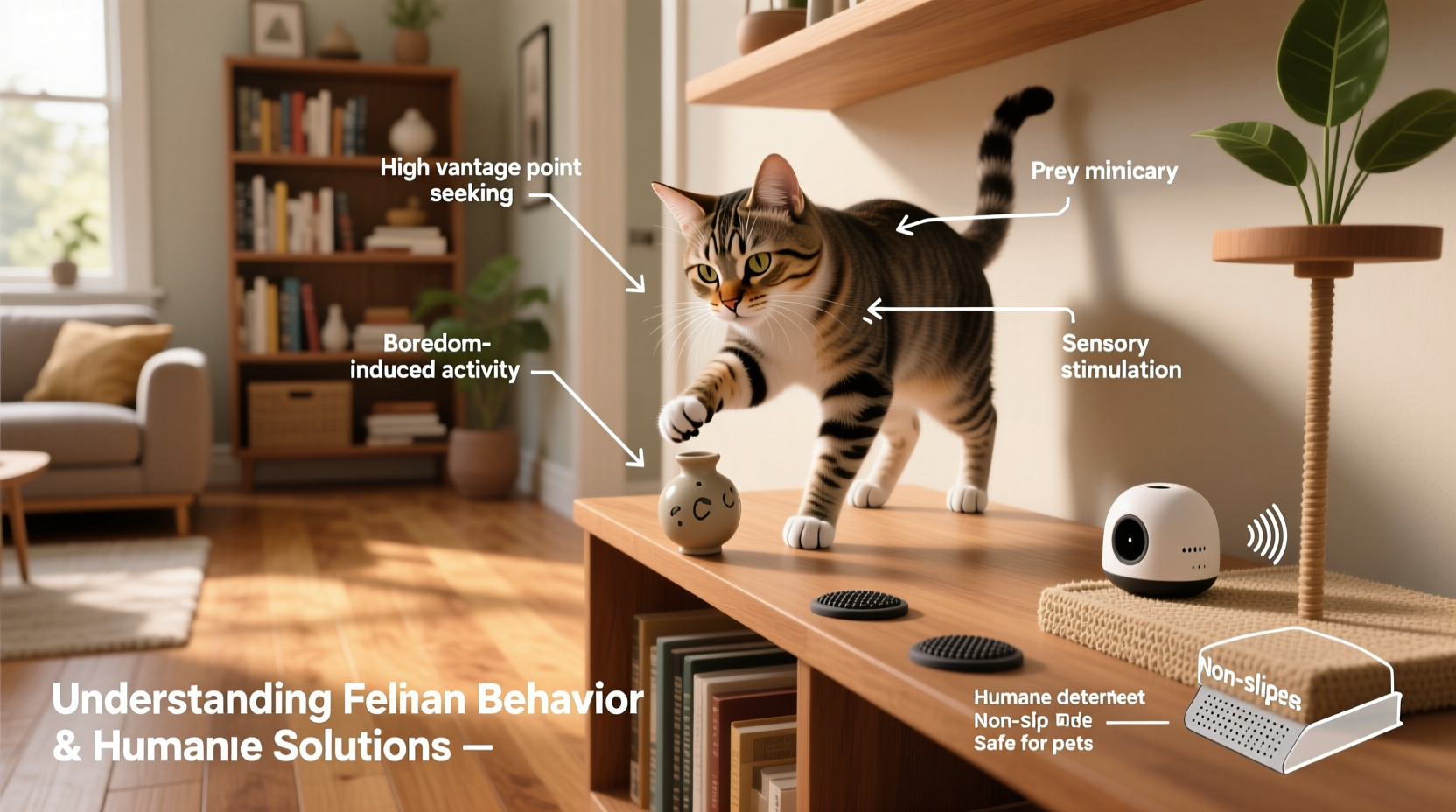
Cats don’t knock things over for attention alone. The behavior is often rooted in evolutionary biology. In the wild, felines rely on sensory exploration and physical manipulation of their environment to assess potential threats, locate prey, and establish territory. When a domestic cat bats a pen off a desk or nudges a vase to the floor, they’re not being destructive—they’re engaging in investigative play.
One primary reason is tactile curiosity. Cats use their paws as sensory tools. Unlike humans who primarily use sight, cats gather information through touch. A dangling cord, a wobbling cup, or an unfamiliar object on a shelf can trigger their predatory reflexes. The movement caused by pushing something slightly off balance mimics the motion of prey, activating their hunting instincts.
“Cats live in a world of motion. Anything that moves—even slightly—becomes a target for investigation. What looks like mischief is often just curiosity expressed through instinct.” — Dr. Lena Patel, Feline Behavior Specialist
Additionally, some cats knock items down to test spatial boundaries. They’re assessing how far an object can move before falling, which helps them map their environment. This is especially common in younger cats and kittens, who are still learning about physics and consequences through trial and error.
Environmental and Psychological Triggers
Beyond instinct, several environmental factors can encourage or exacerbate object-knocking behavior. A lack of mental stimulation is one of the most common contributors. Cats left alone for long periods without toys, climbing structures, or interactive engagement may resort to self-entertainment—often involving household objects within paw’s reach.
Stress or anxiety can also manifest in seemingly odd behaviors. Changes in routine, new pets, loud noises, or rearranged furniture may unsettle a cat. Knocking things over could be a displacement behavior—a way to cope with internal tension. In multi-cat households, this action might also serve as a form of communication or boundary testing between animals.
Another overlooked factor is vision impairment. Older cats with declining eyesight may misjudge distances or fail to notice small objects, leading to accidental knocks. If the behavior starts suddenly in a senior cat, a veterinary checkup is advisable to rule out medical issues.
Humane Deterrents That Work Without Punishment
Punishing a cat for knocking things over is ineffective and counterproductive. Cats don’t connect delayed punishment with past actions, and scolding can damage trust. Instead, focus on redirection and environmental modification. The goal isn’t to suppress natural behavior but to channel it appropriately.
Start by making tempting surfaces less appealing. Use double-sided tape, aluminum foil, or plastic mats with textured surfaces on shelves. Most cats dislike the feel of these materials under their paws and will avoid them after a few encounters. These deterrents are temporary; once the cat learns the area isn’t for play, they can often be removed.
Provide alternative outlets for batting and swatting. Wand toys, puzzle feeders, and motorized toys simulate unpredictable movement, satisfying the cat’s need to “hunt.” Daily interactive play sessions lasting 10–15 minutes help burn excess energy and reduce compulsive behaviors.
Step-by-Step Guide to Reducing Shelf-Knocking
- Assess the Environment: Identify high-risk zones where your cat frequently knocks things over. Note what types of objects are targeted (lightweight, movable, dangling).
- Remove or Secure Valuables: Store breakable or important items out of reach. Use museum putty or non-slip shelf liners to stabilize objects.
- Introduce Deterrents: Apply temporary aversive textures (e.g., aluminum foil) to discourage paw contact.
- Enrich the Space: Add vertical spaces like cat trees, window perches, or wall-mounted shelves filled with toys to redirect climbing and exploring.
- Engage in Daily Play: Use wand toys to simulate prey movements, ending each session with a treat or food reward to mimic a “kill.”
- Monitor and Adjust: Track progress over two to three weeks. If behavior persists, consider consulting a feline behaviorist.
Effective Tools and Modifications: A Comparison
| Method | Effectiveness | Duration | Notes |
|---|---|---|---|
| Double-sided tape | High | Short-term | Inexpensive and easy to apply; best for flat surfaces. |
| Aluminum foil | Moderate | Short-term | Noisy and crinkly—most cats avoid it after initial contact. |
| Non-slip shelf liners | High | Long-term | Secures objects and prevents sliding; aesthetically neutral. |
| Vertical enrichment (cat trees) | Very High | Ongoing | Addresses root cause by providing alternative activity zones. |
| Punishment (spraying, yelling) | Low / Harmful | N/A | Can increase fear and aggression; not recommended. |
Real-Life Example: Managing a Persistent Knocker
Sarah adopted a two-year-old tabby named Milo, who quickly earned the nickname “The Shelf Reaper.” Within weeks, he’d knocked over picture frames, remote controls, and even a glass water pitcher. Frustrated, Sarah initially tried verbal corrections, but the behavior continued.
After consulting a cat behavior consultant, she realized Milo was highly energetic and had no climbing structures in the living room—his favorite hangout spot. She installed a tall cat tree near the bookshelf he frequented and began daily play sessions with a feather wand. She also used rubber shelf liner to stabilize lightweight decor and covered the edge of one shelf with foil temporarily.
Within three weeks, the incidents dropped by 90%. Milo now spends his time climbing, batting at dangling toys, and napping atop his new perch. Sarah replaced the foil with a decorative ledge designed for cats, turning a problem zone into a functional part of her pet-friendly home.
Checklist: Cat-Proofing Your Surfaces Humanely
- ✅ Remove fragile or valuable items from accessible ledges
- ✅ Use museum putty or non-slip pads to secure remaining objects
- ✅ Install deterrents (foil, tape, plastic mats) on high-risk surfaces
- ✅ Provide multiple interactive toys and rotate them weekly
- ✅ Establish a daily play routine using wand toys
- ✅ Add vertical spaces like cat shelves or towers near problem areas
- ✅ Avoid yelling or physical punishment when accidents occur
- ✅ Monitor changes in behavior that might indicate stress or illness
Frequently Asked Questions
Is my cat knocking things over to get attention?
While cats can learn that certain behaviors elicit a response, most object-knocking begins as instinctual exploration. However, if you consistently react—whether by shouting or picking up the item—the cat may associate the action with interaction. Instead, respond calmly and redirect their attention to a toy.
Could this behavior be a sign of a medical issue?
In older cats, sudden onset of knocking things over could signal vision loss, cognitive decline, or neurological issues. If accompanied by disorientation, vocalization, or changes in sleep patterns, consult your veterinarian. For younger cats, medical causes are rare, but persistent obsessive behavior may warrant evaluation.
Will neutering or spaying stop this behavior?
Spaying or neutering reduces hormonally driven behaviors like spraying or roaming, but it has minimal impact on object-knocking, which is primarily instinctual or environmental. The most effective solutions remain environmental enrichment and behavioral redirection.
Conclusion: Coexisting with Curiosity
Cats will always be curious, agile, and occasionally chaotic companions. Rather than trying to eliminate natural behaviors, the most compassionate approach is to understand them and adapt our homes accordingly. By recognizing that knocking things over is not defiance but exploration, we can create environments where both cats and their owners thrive.
Successful management doesn’t require expensive gadgets or strict rules—it requires observation, patience, and a willingness to see the world from a cat’s perspective. When we provide appropriate outlets for their instincts, we don’t just stop broken vases; we enrich our cats’ lives and deepen our bond with them.




 浙公网安备
33010002000092号
浙公网安备
33010002000092号 浙B2-20120091-4
Comments
No comments yet. Why don't you start the discussion?