
Cats are often seen as enigmatic creatures—graceful, independent, and sometimes aloof. Yet, many owners are surprised by how talkative their cats can be. From soft chirps to persistent yowls, meowing is one of the primary ways cats communicate with humans. But what do these sounds really mean? Unlike dogs, who bark for attention or alert, cats have evolved a nuanced vocal language almost exclusively directed at people. Understanding why your cat meows isn’t just about curiosity—it’s key to building trust, meeting their needs, and strengthening your bond.
The Evolution of Meowing: A Human-Directed Language
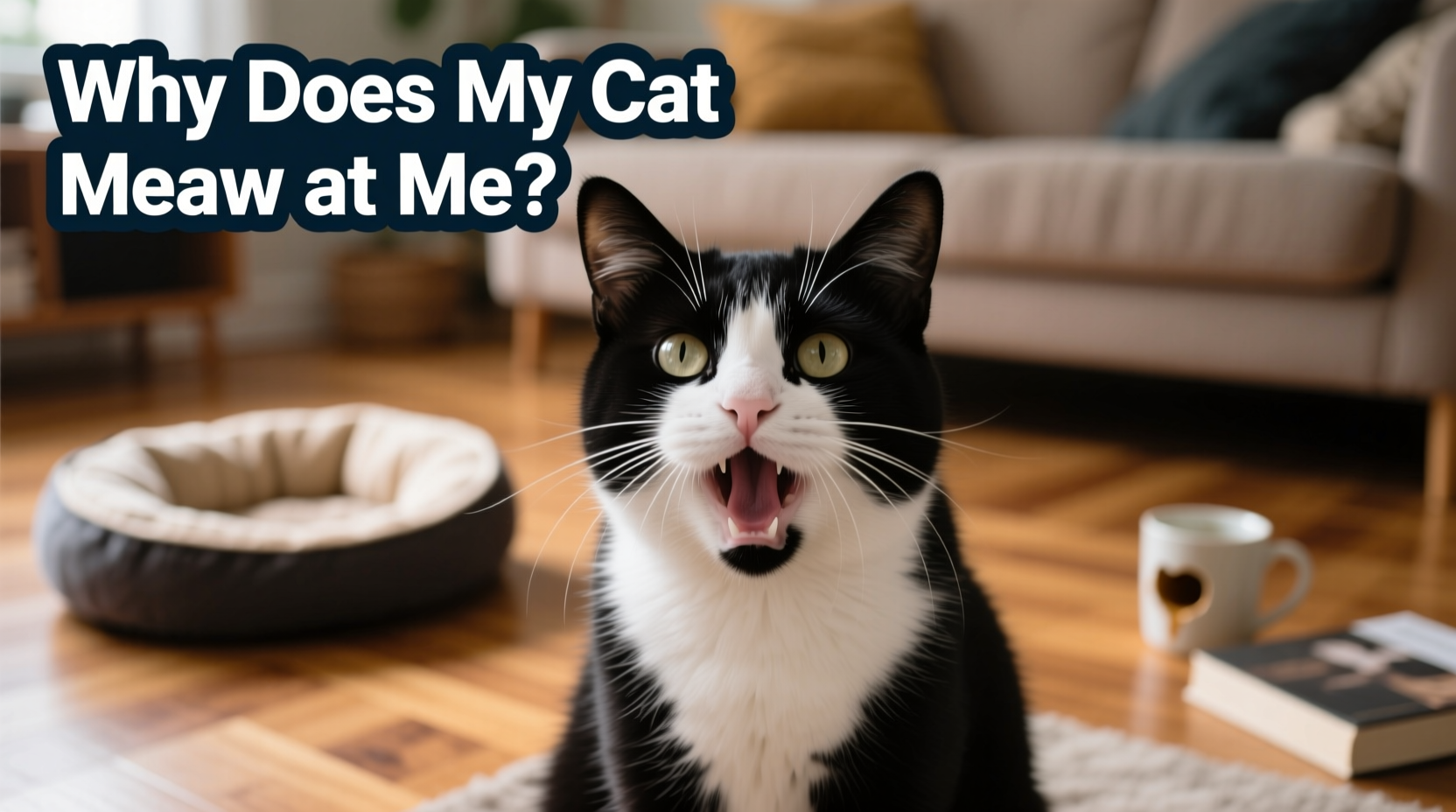
Cats rarely meow at other cats. In the wild, adult felines rely on body language, scent, and subtle vocalizations like growls or hisses when interacting with peers. Meowing, however, is primarily a behavior developed between kittens and their mothers. Kittens use high-pitched mews to signal hunger, discomfort, or fear, and queens respond accordingly. As domestication progressed, cats retained this kitten-like vocalization into adulthood—but redirected it toward humans.
Dr. Susanne Schötz, a phonetics researcher specializing in cat-human communication, explains:
“Cats have learned that meowing gets results from humans. Over time, they’ve fine-tuned their vocalizations to manipulate our responses—much like babies crying to be fed or comforted.” — Dr. Susanne Schötz, Lund University, Feline Communication Researcher
This means your cat isn’t just making noise—they’re speaking *to you*, using a language shaped by thousands of years of cohabitation.
Decoding Common Meow Types and Their Meanings
Not all meows are created equal. The pitch, duration, frequency, and context reveal a great deal about your cat’s intent. Here’s a breakdown of common meow variations:
| Meow Type | Sound Description | Most Likely Meaning |
|---|---|---|
| Short, high-pitched | Quick “mew” or chirp | Greeting (“Hello!”) |
| Mid-tone, repeated | Series of medium-pitched calls | Demand for food or attention |
| Low, drawn-out | Long, plaintive cry | Discomfort, pain, or distress |
| Chattering or trilling | Rapid, bird-like sound | Excitement (often while watching birds) |
| Yowling or howling | Loud, sustained, intense | Pain, territorial dispute, or mating call |
Context is critical. A short meow at the door may mean “Let me in,” while the same sound at dinner time likely means “Feed me now.” Paying attention to timing, body posture, and environment helps clarify your cat’s message.
Common Reasons Cats Meow at Their Owners
While each cat has a unique personality, certain motivations for meowing recur across households:
- Hunger or feeding cues: Many cats develop a ritualistic meow around meal times. Some even wake owners at dawn with insistent calls.
- Attention-seeking: Cats may meow to initiate play, request petting, or simply check in when you’re busy.
- Stress or anxiety: Changes in routine, new pets, or loud noises can trigger excessive vocalization.
- Medical issues: Hyperthyroidism, cognitive decline in older cats, or pain can lead to increased meowing, especially at night.
- Social bonding: Some cats “chat” just to maintain connection, much like humans talking while cooking together.
One often-overlooked factor is breed predisposition. Siamese, Bengals, and other vocal breeds naturally meow more than quieter types like Persians or Russian Blues. If your cat comes from a chatty lineage, frequent meowing may simply be part of their nature—not a behavioral problem.
A Real-Life Example: Bella the Nighttime Vocalizer
Maria, a nurse from Portland, adopted a 10-year-old tabby named Bella. Initially affectionate, Bella began yowling loudly every night between 2 and 4 a.m. Concerned, Maria tried closing doors, ignoring the sounds, and even using deterrent sprays—all ineffective. After a vet visit, blood tests revealed early-stage hyperthyroidism. With medication, the nighttime vocalizations ceased within two weeks. This case illustrates how medical conditions can masquerade as behavioral issues.
“Never assume excessive meowing is ‘just personality.’ Rule out health problems first, especially in senior cats.” — Dr. Lena Patel, DVM, Feline Internal Medicine Specialist
How to Respond: A Step-by-Step Guide to Healthier Communication
Instead of reacting to meows with frustration or automatic rewards, follow this structured approach to improve understanding:
- Observe and document: Note when, where, and how your cat meows. Include body language—ears forward (curious), tail flicking (annoyed), or crouching (fearful).
- Rule out medical causes: Schedule a vet exam if meowing increases suddenly, especially in older cats. Blood work can detect thyroid, kidney, or neurological issues.
- Identify triggers: Is the meowing linked to feeding times, door openings, or strangers? Pinpoint patterns before intervening.
- Respond appropriately: Reward quiet behavior. For example, wait until your cat stops meowing before giving food or attention—this teaches patience.
- Provide enrichment: Boredom leads to attention-seeking. Rotate toys, offer puzzle feeders, and create vertical spaces to reduce vocal demands.
When Meowing Becomes a Problem: Do’s and Don’ts
Occasional meowing is normal. Excessive, incessant, or aggressive vocalization may require intervention. Use this checklist to assess and act:
| Do’s | Don’ts |
|---|---|
| Consult a veterinarian for sudden changes | Ignore persistent nighttime yowling |
| Use positive reinforcement for quiet behavior | Yell or spray water to stop meowing |
| Establish consistent routines for feeding and play | Reinforce meowing by giving treats mid-call |
| Consider pheromone diffusers for anxious cats | Assume the cat is “being annoying” without investigation |
Frequently Asked Questions
Why does my cat meow at me but not others?
Cats form strong bonds with their primary caregivers and view them as parental figures. They meow more at familiar people because they’ve learned those individuals respond best to vocal cues. It’s a sign of attachment, not favoritism.
Is it normal for older cats to meow more at night?
Increased nocturnal vocalization in senior cats can be normal due to age-related hearing loss or disorientation. However, it’s often linked to medical conditions like hypertension, hyperthyroidism, or cognitive dysfunction. Always consult a vet to rule out underlying illness.
Can I train my cat to meow less?
You can’t eliminate meowing entirely—that’s like asking a child to stop talking. But you can shape the behavior. Reward silence, avoid reinforcing demands, and ensure physical and emotional needs are met. Consistency over weeks yields the best results.
Final Thoughts: Listening Beyond the Sound
Every meow is a message. Whether it’s a gentle greeting, a plea for food, or a cry for help, your cat is trying to tell you something. Rather than tuning them out, lean into the conversation. Learn their dialect. Notice the shifts in tone and timing. Respond with empathy and structure.
Understanding feline communication doesn’t require fluency in “cat”—just patience, observation, and care. When you listen closely, you don’t just hear meows. You hear companionship, need, and sometimes, quiet affection expressed in the only way your cat knows how.




 浙公网安备
33010002000092号
浙公网安备
33010002000092号 浙B2-20120091-4
Comments
No comments yet. Why don't you start the discussion?