
At precisely 3 a.m., just as you drift into deep sleep, it happens: a sudden, insistent meow pierces the silence. You open one eye, glance at the clock, and sigh. Your cat is staring at you from the foot of the bed—or worse, standing on your chest—demanding attention with a vocalization that sounds equal parts urgent and dramatic. You're not alone. This phenomenon affects millions of cat owners worldwide. While cats are naturally crepuscular (most active at dawn and dusk), persistent 3 a.m. meowing isn't normal behavior and often signals deeper issues related to health, environment, or instinct. Understanding the root causes is the first step toward restoring nighttime peace—for both you and your feline companion.
The Science Behind Feline Nocturnal Behavior
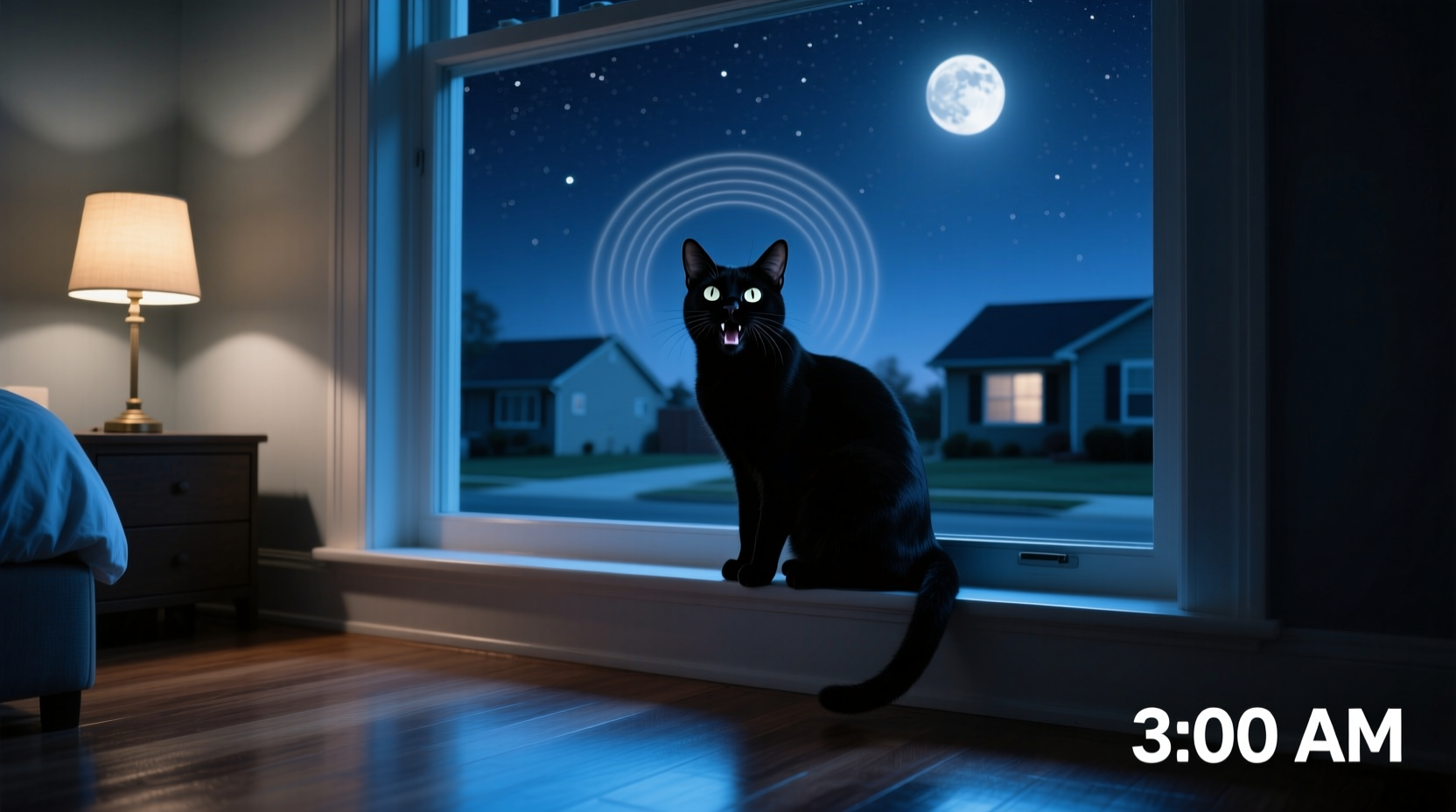
Cats evolved as predators whose hunting success depended on low-light conditions. Their ancestors roamed and hunted primarily during twilight hours—just before sunrise and after sunset. This biological rhythm persists in domestic cats, even those raised entirely indoors. The period around 3 a.m. often coincides with a natural peak in feline alertness, making it a common time for activity, including vocalization.
However, while some nighttime stirring is normal, consistent loud meowing at this hour usually indicates more than just instinct. According to Dr. Sarah Ellis, co-author of *The Domestic Cat: The Biology of its Behaviour*, “Cats don’t vocalize without reason. Meowing is a communicative tool they’ve developed primarily to interact with humans.” In the wild, adult cats rarely meow at each other. The fact that your cat chooses 3 a.m. to meow suggests they’ve learned this is when they’re most likely to get a response—even if that response is you yelling at them to be quiet.
Common Reasons Cats Meow at 3 a.m.
Understanding the motivation behind the meow is essential for effective intervention. Below are the most frequent causes:
- Hunger: If your cat’s last meal was early in the evening, they may genuinely be hungry by 3 a.m. Some cats have fast metabolisms and need multiple small meals throughout the day and night.
- Boredom: Indoor cats without sufficient mental stimulation often become restless at night. Without toys, climbing structures, or interaction, they may meow simply to initiate play or break the monotony.
- Attention-seeking: Cats quickly learn that meowing at night results in human interaction—even negative attention like scolding reinforces the behavior.
- Medical issues: Conditions such as hyperthyroidism, hypertension, dental pain, or arthritis can cause discomfort that worsens at night, prompting vocalization.
- Cognitive decline: Older cats may suffer from feline cognitive dysfunction (FCD), similar to dementia in humans. This can lead to confusion, disorientation, and increased nighttime vocalization.
- Litter box problems: A dirty litter box, inaccessible location, or medical issue like urinary tract infections can make your cat anxious and vocal at odd hours.
- Environmental stress: Changes in routine, new pets, moving furniture, or outdoor animals visible through windows can trigger anxiety and nighttime calling.
“Persistent nighttime meowing should never be dismissed as ‘just being a cat.’ It’s often the only way they can tell us something is wrong.” — Dr. Elizabeth Colleran, DVM, Past President of the American Association of Feline Practitioners
Action Plan: How to Stop 3 a.m. Meowing
Resolving this issue requires consistency, observation, and proactive changes. Reacting emotionally—yelling, throwing pillows, or giving in—only reinforces the behavior. Instead, follow this structured approach:
Step 1: Rule Out Medical Causes
Schedule a veterinary checkup. Blood work, urinalysis, and blood pressure tests can detect underlying conditions like hyperthyroidism or kidney disease, which are common in middle-aged and senior cats and often manifest through behavioral changes.
Step 2: Adjust Feeding Schedule
Feed a larger meal right before bedtime. Consider using an automatic feeder programmed to dispense food at 3 a.m. or slightly earlier. This teaches your cat that food arrives predictably without needing to meow.
Step 3: Increase Daytime Activity
Engage your cat in vigorous play sessions in the late afternoon and evening. Use wand toys, laser pointers, or interactive games to tire them out. A tired cat is less likely to seek stimulation at 3 a.m.
Step 4: Create a Nighttime Routine
Cats thrive on predictability. Establish a calming pre-sleep ritual: feeding, play, grooming, then quiet time. Avoid stimulating activities right before bed.
Step 5: Optimize the Sleep Environment
Ensure your cat has a comfortable sleeping area away from your bedroom if possible. Provide warm bedding, hiding spots, and access to windows (with secure screens). White noise machines or calming pheromone diffusers (like Feliway) can reduce nighttime anxiety.
Checklist: What to Do When Your Cat Meows at 3 a.m.
- Stay calm and do not respond immediately—this rewards the behavior.
- Wait for silence, then quietly praise or offer a treat (if training).
- Check if the litter box is clean and accessible.
- Ensure fresh water is available.
- Rule out signs of distress: pacing, excessive grooming, or vocalization unrelated to attention.
- Log the frequency and duration of meowing to share with your vet.
- Avoid punishment—meowing cannot be “scared” out of a cat.
Do’s and Don’ts: Managing Nighttime Vocalization
| Do | Don’t |
|---|---|
| Establish a consistent daily routine | Give treats or attention immediately after meowing |
| Use timed feeders for overnight meals | Yell or punish your cat |
| Provide enrichment toys and climbing spaces | Ignore potential medical symptoms |
| Visit the vet annually (twice for seniors) | Assume it’s “normal” without investigation |
| Use pheromone diffusers to reduce stress | Keep the house completely dark and silent—some cats fear the dark |
Real-Life Example: Bella the Siamese
Maria, a software engineer from Portland, adopted Bella, a rescue Siamese cat, six months ago. Within weeks, she noticed a pattern: every night at 3:15 a.m., Bella would stand by her bed and yowl insistently. At first, Maria assumed Bella was hungry and started leaving extra food out. The meowing worsened. She tried closing her bedroom door, but Bella scratched and cried louder.
After consulting her veterinarian, Maria learned that Bella had mild hyperthyroidism—a condition common in older cats that increases metabolism and restlessness. With medication, the vet also recommended environmental adjustments: installing a timed feeder, increasing daytime play, and using a Feliway diffuser. Within three weeks, Bella’s 3 a.m. calls ceased. “I realized she wasn’t being annoying—she was trying to tell me she wasn’t feeling well,” Maria said. “Now she sleeps peacefully on the windowsill, and so do I.”
Frequently Asked Questions
Is it normal for cats to meow at night?
Occasional soft vocalizations can be normal, especially in kittens or newly adopted cats adjusting to a home. However, persistent, loud, or distressed meowing at 3 a.m. is not typical and should be investigated. Adult cats who were once quiet and suddenly start meowing at night often have medical or emotional needs.
Should I ignore my cat when they meow at night?
Yes—but strategically. Immediate attention (even negative) reinforces the behavior. Instead, ensure their basic needs are met before bed. If the meowing continues, wait for a pause, then quietly acknowledge them. Never reward vocalization with food or petting mid-meow. Over time, they’ll learn silence gets results, not noise.
Can older cats develop nighttime meowing habits?
Yes. Cats over 10 years old are at higher risk for feline cognitive dysfunction (FCD), which can cause confusion, aimless wandering, and increased vocalization at night. Other age-related issues like hearing loss, pain, or vision decline may also contribute. Regular vet visits are crucial for senior cats exhibiting these behaviors.
Conclusion: Reclaim Your Sleep and Support Your Cat’s Well-Being
The 3 a.m. meow is more than a nuisance—it’s a signal. Whether rooted in biology, boredom, or health concerns, your cat is communicating a need. Dismissing it as “just how cats are” risks missing opportunities to improve their quality of life—and yours. By combining veterinary insight, behavioral strategies, and environmental enrichment, most cases of nighttime meowing can be resolved within weeks.
Start tonight: observe without reacting, document patterns, and schedule a vet visit if changes persist. Small adjustments—like a timed feeder or a 10-minute evening play session—can yield dramatic improvements. Remember, a quiet night isn’t about silencing your cat. It’s about understanding them.




 浙公网安备
33010002000092号
浙公网安备
33010002000092号 浙B2-20120091-4
Comments
No comments yet. Why don't you start the discussion?