
Cats are creatures of instinct, and even the most domesticated feline carries behaviors rooted in survival, communication, and territory management. One such behavior that often puzzles cat owners is scratching the wall immediately after using the litter box. While it may seem odd—or even destructive—this action is rarely a sign of misbehavior. Instead, it’s a complex blend of biological drives, sensory feedback, and environmental cues. Understanding why your cat engages in post-litter-box wall scratching can help you respond appropriately, preserve your walls, and support your cat’s well-being.
The Instinct Behind Post-Litter Scratching
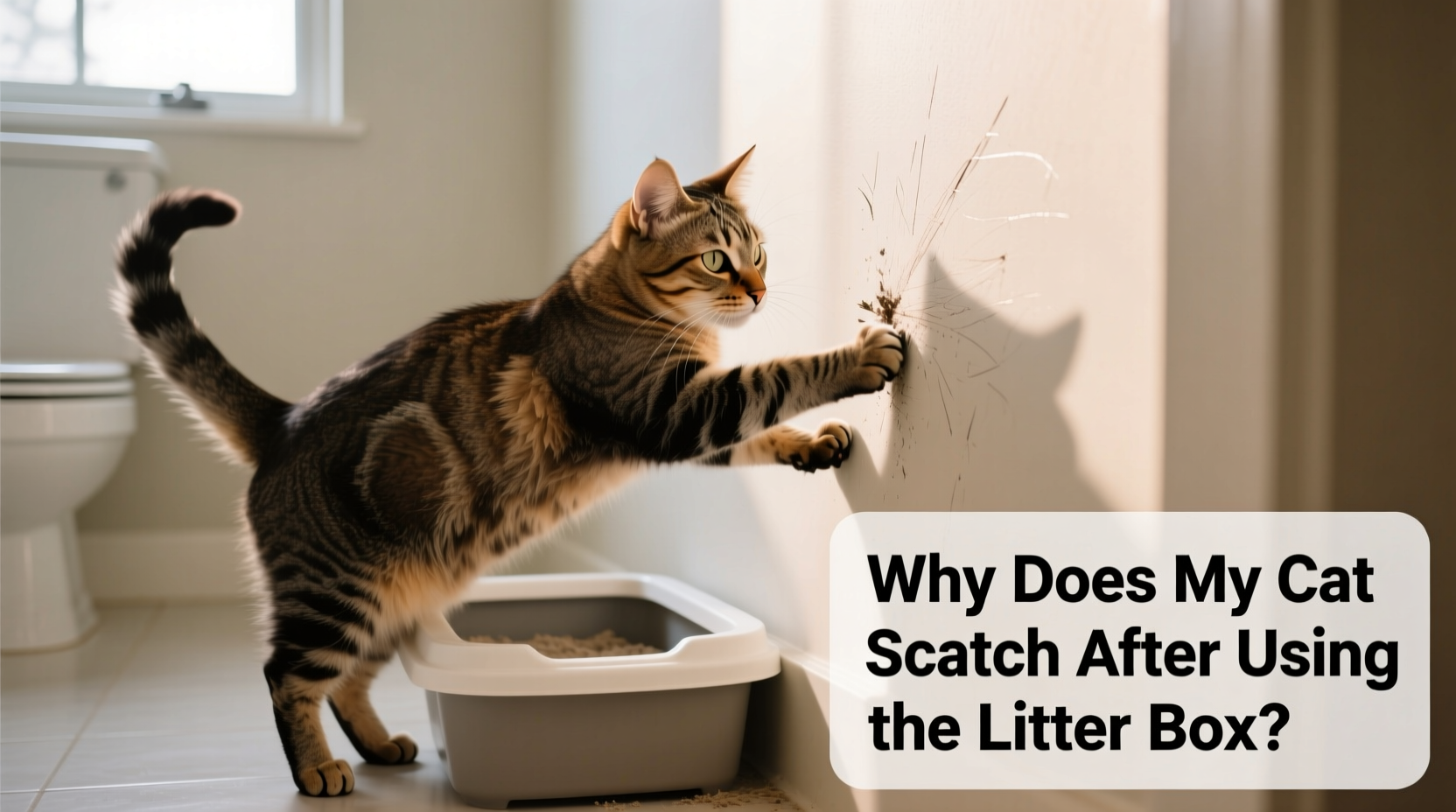
Scratching is one of the most fundamental feline behaviors, serving multiple purposes beyond mere claw maintenance. When a cat scratches—whether on carpet, furniture, or walls—they’re not just sharpening their claws; they're communicating, marking territory, and expressing emotional states. After eliminating, these impulses intensify.
In the wild, cats bury their waste to avoid attracting predators or signaling dominance to rivals. Once finished, however, some species will scrape the ground around the site—not to dig further, but to leave visible marks and scent signals via glands in their paw pads. This dual-purpose act simultaneously conceals waste while broadcasting presence. Domestic cats retain this paradoxical behavior: they cover their feces (a submissive or non-confrontational signal in multi-cat households), then perform an exaggerated scratching motion nearby.
Wall scratching post-litter use may be an extension of this ground-scratching ritual. Since litter boxes are contained spaces, the nearest vertical surface becomes the default target for this instinctive display.
Scent Marking: The Hidden Communication System
Cats have scent glands concentrated between the toes, on the face, and along the tail base. Every time a cat scratches, they deposit pheromones onto the surface. These chemical signals are undetectable to humans but convey detailed information to other cats: identity, reproductive status, mood, and territorial claim.
After using the litter box, a cat may feel a heightened need to reassert ownership over its immediate environment. Elimination is a vulnerable act, and following it with scent marking helps restore a sense of security. The wall scratch becomes a “I was here” declaration—a way to reclaim control of the space.
This is especially common in homes with multiple pets, where subtle competition exists even among amicable animals. Even if your cat lives alone, it may still engage in marking due to outdoor cats visible through windows or residual stress from past changes in routine.
“Post-elimination scratching isn’t about hygiene—it’s about psychological comfort. Cats use scent to create a familiar, safe environment.” — Dr. Lena Patel, Feline Behavior Specialist
Physical and Environmental Triggers
While instinct plays a major role, physical discomfort or environmental factors can amplify or redirect this behavior. Consider the following potential triggers:
- Litter texture or depth: If the litter is too shallow, too coarse, or unpleasant underfoot, your cat might attempt to \"dig\" more vigorously—even after exiting the box.
- Box size or location: A cramped litter box forces awkward positioning, making natural digging motions difficult. This frustration may spill over into wall scratching.
- Proximity of walls: Boxes placed flush against a wall give cats no alternative vertical surface. Without a scratching post nearby, the wall becomes the default option.
- Claw health: Overgrown or splitting claws can make normal scratching uncomfortable, leading to erratic or aggressive attempts elsewhere.
A study published in the *Journal of Feline Medicine and Surgery* found that 68% of cats exhibiting unusual post-litter behaviors improved significantly after adjustments to litter type and box placement, underscoring the importance of ergonomics in feline toileting routines.
Do’s and Don’ts: Managing Post-Litter Scratching
| Do’s | Don’ts |
|---|---|
| Place a sturdy scratching post directly beside the litter box | Yell at or punish your cat for scratching |
| Use unscented, soft-textured litter for sensitive paws | Relocate the litter box abruptly |
| Trim claws regularly to reduce damage | Cover walls with sticky deterrents without offering alternatives |
| Ensure the box is at least 1.5x the length of your cat | Use ammonia-based cleaners near the area (mimics urine smell) |
Redirecting the Behavior: A Step-by-Step Guide
Instead of suppressing natural instincts, guide them toward appropriate outlets. Follow this timeline to gradually shift your cat’s post-litter scratching away from walls:
- Week 1: Assess and Adjust Environment
Evaluate litter box setup. Is it large enough? Is there sufficient litter depth (3–4 inches)? Move the box slightly forward from the wall to break the habit-path. Introduce a vertical sisal post within 6 inches of the exit point. - Week 2: Encourage Alternative Surfaces
Rub silver vine or catnip onto the new scratching post. Spend five minutes twice daily encouraging interaction through play—use a wand toy to guide your cat past the post after simulated bathroom breaks. - Week 3: Discourage Wall Access (Temporarily)
Apply double-sided tape or aluminum foil to the targeted wall section. These textures are unpleasant but harmless. Continue reinforcing the post with praise and treats when used. - Week 4: Reinforce and Fade Deterrents
Once consistent use of the post is observed, remove wall deterrents. Monitor closely for relapse. Maintain positive reinforcement for at least two additional weeks.
Success isn't measured by elimination of scratching—but by redirection to acceptable surfaces.
Mini Case Study: From Wall Damage to Designated Post
Sophie, a 3-year-old tabby living in a Chicago apartment, began scratching a plaster wall adjacent to her corner-placed litter box. Within three months, the wallpaper peeled and baseboards were gouged. Her owner, Marcus, initially tried sprays and scolding, which only made Sophie hesitant to use the box altogether.
After consulting a veterinary behaviorist, Marcus moved the box six inches forward and installed a 30-inch-tall cardboard corner scratcher right beside it. He rubbed dried valerian root on the surface and placed a feather toy nearby. Within ten days, Sophie transitioned fully to the new post. The wall healed, and litter box avoidance ceased.
The key wasn’t stopping the behavior—it was relocating it.
When to Be Concerned: Signs It’s More Than Instinct
While occasional wall scratching after litter use is normal, persistent or sudden changes may indicate underlying issues:
- New onset in older cats: Could signal arthritis pain affecting balance in the box.
- Excessive digging or vocalization: May reflect urinary discomfort or constipation.
- Refusal to cover waste: Often linked to stress, illness, or substrate aversion.
- Aggression when interrupted: Suggests high anxiety or territorial insecurity.
If your cat begins kicking litter violently out of the box, scraping for extended periods, or avoiding the area entirely, consult your veterinarian. Rule out medical causes like cystitis, gastrointestinal distress, or hyperesthesia before assuming behavioral roots.
Checklist: Is Your Cat’s Scratching Normal?
- ✅ Occurs briefly (under 10 seconds) after elimination
- ✅ Consistent across days, not escalating in intensity
- ✅ No signs of pain during or after use
- ✅ Uses litter box reliably and covers waste appropriately
- ✅ Has access to alternative scratching surfaces nearby
- ✅ No skin lesions or lameness in hind legs or paws
If all boxes are checked, the behavior is likely instinctual and manageable. If two or more are unchecked, professional evaluation is recommended.
Frequently Asked Questions
Is wall scratching after the litter box a sign of stress?
Not necessarily. While stress can increase marking behaviors, occasional post-elimination scratching is a normal part of feline communication. However, if your cat suddenly starts scratching more intensely, avoids the box, or marks unrelated areas, stress or medical issues should be investigated.
Can I stop this behavior completely?
You shouldn’t try to eliminate the behavior entirely—it serves important psychological functions. Instead, focus on redirecting it to appropriate surfaces like scratching posts. Complete suppression can lead to anxiety, inappropriate elimination, or obsessive-compulsive patterns.
Why does my cat only scratch the wall at night?
Cats are crepuscular, meaning they’re most active at dawn and dusk. Nighttime scratching may coincide with peak elimination times. Additionally, quieter environments make the sound more noticeable to you, even if the frequency is consistent throughout the day.
Conclusion: Working With Nature, Not Against It
Your cat isn’t damaging your walls out of defiance or spite. That post-litter scratch is a deeply ingrained act of survival, communication, and self-soothing. Rather than viewing it as a problem to fix, see it as insight into your cat’s inner world—an opportunity to refine their environment and deepen mutual understanding.
By providing proper outlets, respecting natural rhythms, and observing without judgment, you support both your cat’s mental health and your home’s integrity. Small changes—like adding a strategically placed scratcher or adjusting litter depth—can yield lasting results without conflict.




 浙公网安备
33010002000092号
浙公网安备
33010002000092号 浙B2-20120091-4
Comments
No comments yet. Why don't you start the discussion?