
Cats are enigmatic creatures, communicating through subtle body language that often leaves their human companions guessing. One of the most puzzling yet endearing behaviors is when a cat rolls onto its back, exposing its belly. At first glance, it seems like an open invitation for a rub or a sign of complete trust. But is it really? Understanding why your cat shows their belly requires a deeper look into feline psychology, social signals, and instinctual survival mechanisms.
The exposed belly is one of the most vulnerable areas on a cat’s body—packed with vital organs and protected by soft fur. In the wild, showing this area means lowering defenses. So when a domestic cat chooses to lie on its back in your presence, it's a significant gesture. However, not all belly exposures mean the same thing, and misreading the signal can lead to swats, hisses, or even bites. Decoding this behavior accurately strengthens the bond between you and your pet and prevents misunderstandings.
The Meaning Behind the Belly Roll
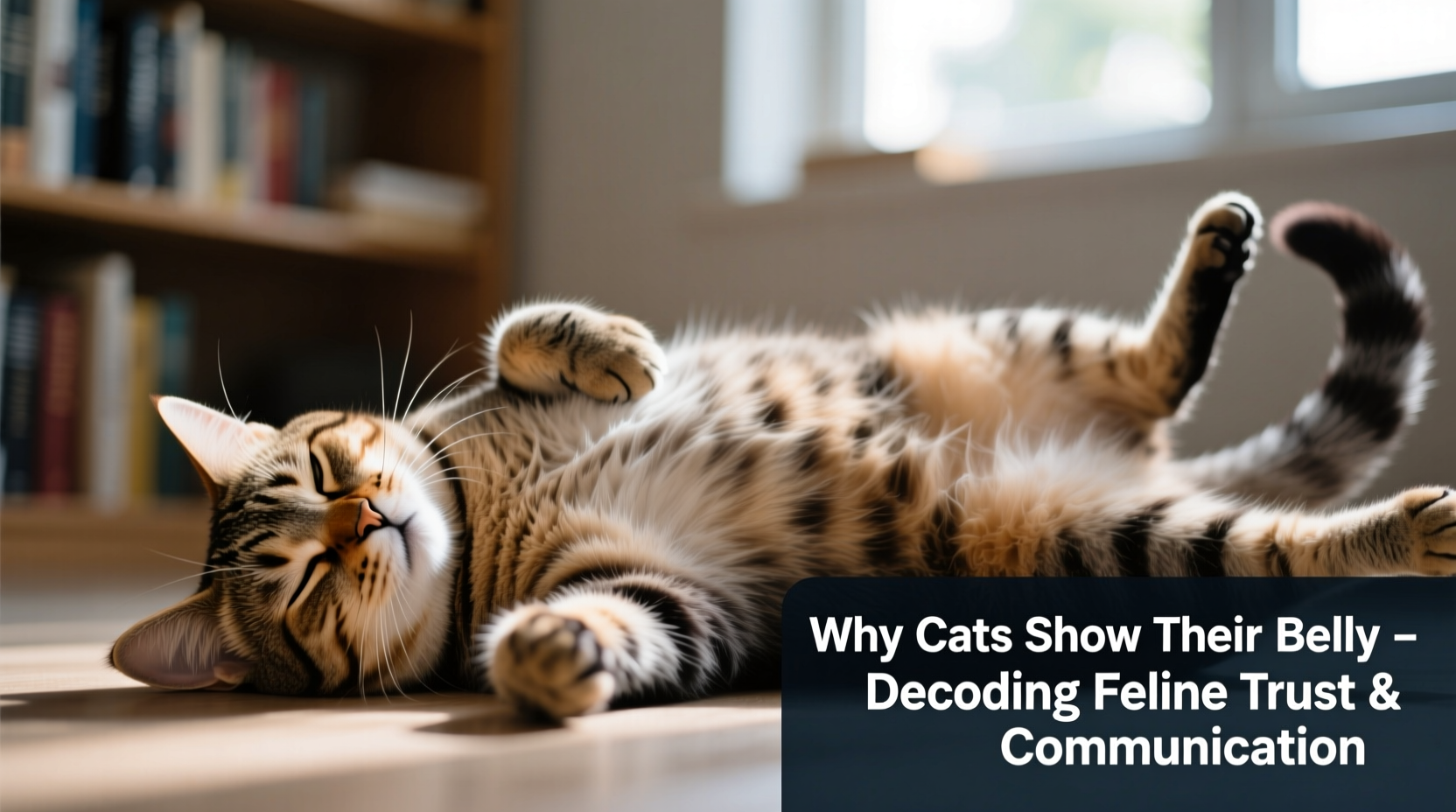
When a cat flips onto its back, several motivations may be at play. The context, accompanying body language, and relationship with the observer all influence what the gesture signifies.
- Trust and Affection: If your cat exposes its belly while purring, kneading, or gazing softly at you, it likely sees you as safe. This is a profound compliment—your cat feels secure enough to be defenseless around you.
- Invitation to Play: Especially in kittens and young cats, the belly-up position often precedes play-fighting. They may kick, swipe, or roll during mock battles, using their hind legs as primary weapons.
- Thermoregulation: Cats seek cool surfaces to regulate body temperature. A tile floor or shaded carpet might prompt a belly flop purely for comfort, not communication.
- Stretching or Grooming: Sometimes, rolling is just part of a stretch routine or an attempt to reach hard-to-groom spots like the abdomen or sides.
- Defensive Posture: In tense situations, a cat may roll to use all four paws defensively. Claws out, muscles tensed, ears flattened—this isn’t submission; it’s preparation for self-defense.
Reading the Full Body Language
A cat’s belly display must never be interpreted in isolation. Other physical cues provide essential context:
| Body Signal | Relaxed Belly Display | Defensive/Playful Belly Display |
|---|---|---|
| Tail | Still or gently twitching | Flicking rapidly or puffed up |
| Ears | Forward or slightly to the side | Flattened or rotated backward |
| Whiskers | Forward or neutral | Pulled back against the face |
| Vocalization | Purring or silent | Hissing, growling, or chirping aggressively |
| Eye Contact | Soft blinking or relaxed gaze | Dilated pupils, intense stare |
For example, a cat lying on its back with half-closed eyes and a slowly waving tail is likely content. But if the tail is lashing and the claws are extended, touching could trigger a reflexive attack—even if the cat initiated the roll.
“Cats don’t generalize their emotions the way humans do. A belly-up posture might mean trust in one moment and readiness to play-fight the next. Context is everything.” — Dr. Lena Torres, Feline Behavior Specialist, American Veterinary Society
How to Respond: A Step-by-Step Guide
If your cat exposes their belly, follow these steps to assess and respond appropriately:
- Pause and Observe: Wait 5–10 seconds. Watch for signs of tension or relaxation.
- Check the Tail: Is it calm or flicking? A slow sway suggests openness; rapid motion warns of overstimulation.
- Approach Slowly: Extend your hand slowly without reaching for the belly. Let the cat sniff you.
- Test with Chin or Head Pet: Most cats prefer being touched on the head, cheeks, or under the chin. Start there instead of the abdomen.
- Respect Boundaries: If the cat tenses, pulls away, or thumps its tail, stop immediately. Do not force contact.
- Reinforce Positive Reactions: If your cat stays relaxed after gentle interaction, offer a quiet word or treat to build positive associations.
Common Misconceptions About Cat Bellies
Many cat owners mistakenly believe that a visible belly equals an invitation for rubbing. This assumption leads to frustration on both sides—one party feeling rejected, the other ambushed. Here are three widespread myths:
- Myth 1: Exposed Belly = Wanting a Rub. Reality: Most adult cats dislike belly touches, even if they expose the area. It’s often a visual signal, not a tactile request.
- Myth 2: Rolling Over Means Submission. Reality: Unlike dogs, cats rarely display true submission through posture. Even in multi-cat households, belly exposure is more about thermoregulation or play than hierarchy.
- Myth 3: All Cats Will Eventually Accept Belly Rubs. Reality: Some cats never enjoy abdominal contact, regardless of bonding level. Respecting this preference fosters trust.
Real-Life Example: Bella and the Misread Signal
Sarah adopted Bella, a shy two-year-old tabby, six months ago. Over time, Bella began rolling onto her back when Sarah sat nearby—a milestone Sarah interpreted as growing affection. One evening, excited by the gesture, Sarah reached down to stroke Bella’s belly. Instantly, Bella twisted, swatted, and retreated under the couch.
Confused and hurt, Sarah consulted a feline behaviorist. Reviewing video footage, the expert pointed out subtle clues: Bella’s tail had been twitching before the touch, and her ears were slightly pinned. While Bella trusted Sarah enough to relax nearby, she wasn’t inviting contact on such a sensitive zone. After adjusting her approach—offering chin scratches instead—Sarah noticed Bella staying closer and even initiating contact more frequently.
This case illustrates how well-intentioned actions can backfire without proper interpretation of feline signals. Bella wasn’t rejecting Sarah; she was defending a vulnerable area from unwanted stimulation.
Actionable Checklist: Responding to Your Cat’s Belly Display
Use this checklist the next time your cat rolls over:
- ✅ Pause and observe body language for at least 10 seconds
- ✅ Check tail movement and ear position
- ✅ Avoid immediate touch, especially on the belly
- ✅ Offer a slow blink to signal friendliness
- ✅ Initiate contact on preferred zones (head, cheeks, base of ears)
- ✅ Withdraw calmly if the cat shows discomfort
- ✅ Reward calm interactions with treats or quiet praise
Frequently Asked Questions
Can I train my cat to enjoy belly rubs?
Some cats can be gradually desensitized to light belly touches, but many never will. Start with brief touches near the chest during relaxed moments, paired with treats. Never force it. Progress is slow and not guaranteed—respect your cat’s limits.
Why does my cat show their belly but then bite when I touch it?
This is often due to sensory overload. The belly has dense nerve endings, and even gentle touch can feel intense. Additionally, your cat may have communicated relaxation, not desire for contact. The bite is a defensive reflex, not aggression.
Do outdoor or feral cats ever show their bellies?
Rarely—and only in extremely safe environments. Feral cats conserve energy and minimize vulnerability. If observed, it’s usually during grooming, stretching, or in kittens playing. Trust-based belly exposure is almost exclusively seen in secure, indoor settings.
Conclusion: Building Deeper Understanding
Your cat’s belly display is more than a cute pose—it’s a complex message shaped by instinct, emotion, and environment. Whether it reflects trust, playfulness, or simple comfort, your response shapes the quality of your relationship. By learning to read the full spectrum of feline body language, you move beyond assumptions and build a connection rooted in mutual respect.
Instead of asking, “Why does my cat show their belly?” consider reframing the question: “What is my cat trying to communicate right now?” That shift—from expectation to empathy—is the foundation of a truly harmonious bond.




 浙公网安备
33010002000092号
浙公网安备
33010002000092号 浙B2-20120091-4
Comments
No comments yet. Why don't you start the discussion?