
Cats are enigmatic companions—affectionate one moment, aloof the next. One common yet puzzling behavior many cat owners experience is their feline suddenly inserting themselves between them and their partner during quiet moments on the couch or even while having a conversation. While it might seem like a quirky habit, this behavior often stems from deep-rooted instincts tied to territory, social hierarchy, and emotional attachment. Understanding why your cat does this can transform frustration into insight, helping you build a stronger bond with your pet.
The Instinct Behind the Behavior
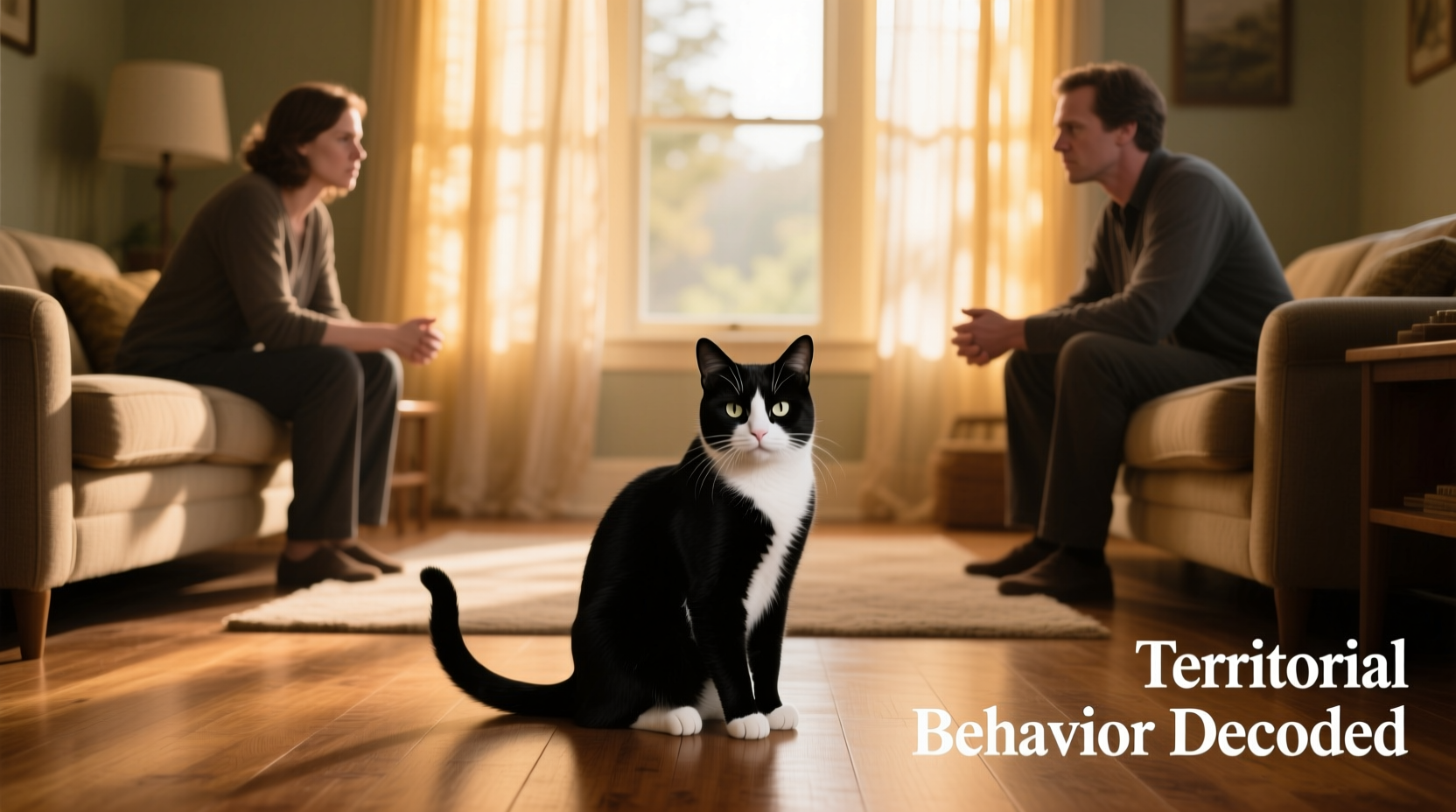
Cats are not pack animals in the traditional sense, but they do form strong social bonds—especially with humans they trust. In the wild, cats maintain territories and use scent marking, body positioning, and physical presence to communicate ownership and safety. When your cat sits between you and your partner, it may be asserting its place within what it perceives as its core social unit.
This act isn’t necessarily aggressive; rather, it’s a subtle way of saying, “This space—and these people—belong to me.” By placing itself physically between two individuals, the cat creates a buffer zone that reinforces its role as both participant and guardian of the interaction. It’s not trying to break up the relationship—it’s claiming inclusion in it.
Scent, Territory, and Emotional Security
Cats have an extraordinary sense of smell—up to 14 times more sensitive than humans. They use scent glands located on their cheeks, forehead, paws, and flanks to mark objects and people they consider part of their trusted environment. When your cat rubs against you or kneads your lap, it’s depositing its unique pheromones, essentially tagging you as “safe” and “mine.”
Sitting between you and your partner allows the cat to simultaneously engage with both scents it recognizes and trusts. More importantly, it positions itself at the center of a shared emotional field. If your cat feels anxious about changes in routine, new people, or perceived competition for attention, this central placement offers psychological comfort. It becomes the mediator, the anchor, and sometimes even the referee.
“Cats don’t see household members as equals—they see them as part of a dynamic social structure. When a cat places itself between two people, it’s often reinforcing its position within that hierarchy.” — Dr. Sarah Thompson, Feline Behavior Specialist
Signs Your Cat Is Acting Territorially (Not Just Affectionately)
While some cats simply enjoy warmth and closeness, others exhibit clear territorial signals. Recognizing these signs helps distinguish between innocent cuddling and boundary-setting behavior.
- Blocking access: The cat moves deliberately between you and your partner when one approaches the other.
- Vocal protests: Hissing, growling, or meowing when the two of you interact closely.
- Stiff posture: Ears back, tail twitching, or a rigid body while sitting between you.
- One-person preference: The cat consistently favors one human over another, especially if jealousy seems evident.
- Scent marking: Rubbing excessively on one person after the other has touched them.
These behaviors suggest the cat isn’t just seeking warmth or affection—it’s actively managing the social space.
Case Study: Luna and the Couch Divide
Maria and James adopted Luna, a three-year-old tuxedo cat, six months ago. At first, she was shy, but soon warmed up to both of them. However, Maria noticed that every time she and James sat close together on the sofa, Luna would appear out of nowhere and wedge herself between them, often turning her back to James.
At first, they laughed it off. But when Luna began swatting James’s hand away when he reached for Maria, they grew concerned. A consultation with a certified feline behaviorist revealed that Luna had formed a stronger bond with Maria due to her being home more often. James’s attempts to get closer to Maria triggered Luna’s anxiety—she interpreted intimacy between them as a potential threat to her primary relationship.
The solution? Gradual desensitization. James started spending dedicated time with Luna—feeding her, playing with her, grooming her—while Maria was present but not the focus. Over several weeks, Luna began tolerating their closeness. Eventually, she still sat between them—but now it was more out of habit than tension.
Do’s and Don’ts: Managing Territorial Sitting Behavior
| Do | Don’t |
|---|---|
| Acknowledge your cat’s presence calmly when it sits between you. | Punish or push the cat away aggressively. |
| Provide alternative cozy spots near where you sit. | Force interactions between your cat and partner if tension exists. |
| Use pheromone diffusers (like Feliway) to reduce stress. | Assume the behavior is malicious or spiteful. |
| Encourage equal bonding time between your cat and all household members. | Let jealousy escalate without intervention. |
| Respect your cat’s need for control over its environment. | Ignore signs of anxiety or aggression. |
Step-by-Step Guide to Reducing Territorial Tension
If your cat’s behavior is causing discomfort or strain in your relationship, follow this gradual process to ease territorial instincts:
- Observe patterns: Note when and how often the cat inserts itself. Is it during physical affection? Conversations? TV time?
- Identify triggers: Does the cat react more strongly when one person is favored? After loud arguments? During feeding routines?
- Create parallel spaces: Place a soft bed or cushion right next to your usual seating area so the cat can be near without being *between* you.
- Encourage independent bonding: Each family member should spend quality one-on-one time with the cat daily—playing, grooming, or hand-feeding treats.
- Use positive reinforcement: Reward calm behavior around each other with praise or small treats. Never reward pushiness or aggression.
- Introduce environmental enrichment: Add vertical spaces (cat trees), puzzle feeders, or window perches to redirect focus.
- Consult a professional: If aggression or extreme anxiety persists, seek help from a veterinary behaviorist.
When It’s Not About Territory: Other Possible Reasons
While territoriality is a leading explanation, your cat may sit between you and your partner for other reasons:
- Thermoregulation: Cats love warmth. Body heat radiating from two people makes an ideal spot.
- Attention-seeking: If the cat learns that inserting itself gets a reaction (even shooing), it may repeat the behavior for stimulation.
- Conflict mediation: Some cats appear to sense tension and step in as peacemakers, possibly due to heightened sensitivity to vocal tones or body language.
- Habit formation: Once established, the behavior can become routine—even if the original cause fades.
Understanding the root cause requires observation over time. Ask yourself: Does the cat only do this with certain people? Only in specific situations? Does it relax afterward, or remain tense?
Frequently Asked Questions
Is my cat jealous of my relationship?
Yes, in a feline context. Cats don’t experience jealousy the way humans do, but they can feel insecure when their access to resources—especially attention—is threatened. A sudden shift in focus toward a partner can trigger behaviors designed to regain priority status.
Should I let my cat sit between us?
If the behavior is peaceful and part of your routine, there’s no harm in allowing it. However, if it leads to tension, aggression, or exclusion, it’s worth gently redirecting the cat to a nearby spot with equal comfort and visibility.
Can neutering or spaying affect territorial sitting?
It can help. Unaltered cats are more prone to marking and guarding behavior. While spaying or neutering won’t eliminate personality-driven actions, it often reduces hormonally influenced territorial intensity.
Building Harmony: A Checklist for Coexistence
To foster balance between your relationship and your cat’s emotional needs, follow this actionable checklist:
- ✅ Spend individual bonding time with your cat every day
- ✅ Provide multiple high-value resting spots in shared rooms
- ✅ Use synthetic pheromone sprays or diffusers to promote calmness
- ✅ Avoid reinforcing pushy behavior with attention
- ✅ Encourage your partner to participate in feeding or play sessions
- ✅ Monitor body language for signs of stress or dominance
- ✅ Consult a behaviorist if aggression or anxiety escalates
Conclusion: Understanding Over Correction
Your cat sitting between you and your partner isn’t a sign of dysfunction—it’s a window into their complex emotional world. Whether driven by territorial instinct, a desire for security, or simple warmth-seeking, this behavior reflects how deeply cats attune themselves to human relationships. Rather than viewing it as an interruption, consider it an invitation: your cat sees you as family and wants to be at the heart of it.
With patience, observation, and consistent care, you can honor your cat’s need for inclusion while maintaining healthy boundaries. The goal isn’t to stop the behavior entirely, but to ensure it stems from confidence, not anxiety. When both humans and cats feel secure, everyone finds their rightful place—without needing to sit directly in the middle.




 浙公网安备
33010002000092号
浙公网安备
33010002000092号 浙B2-20120091-4
Comments
No comments yet. Why don't you start the discussion?