
If you've ever watched your cat attempt to squeeze into a shipping box barely large enough to hold a loaf of bread—or seen them perch inside an oversized cardboard container that could easily fit two cats—you’ve likely wondered: Why do cats insist on sitting in boxes, especially ones that seem too big or oddly shaped for comfort? It’s not just quirky behavior; it’s deeply rooted in feline instincts, environmental needs, and psychological well-being. From shelter cats to pampered house pets, this universal habit transcends breed, size, and age. Understanding the reasons behind this seemingly odd preference offers insight into how cats experience safety, temperature, and control in their surroundings.
The Instinctual Need for Enclosed Spaces
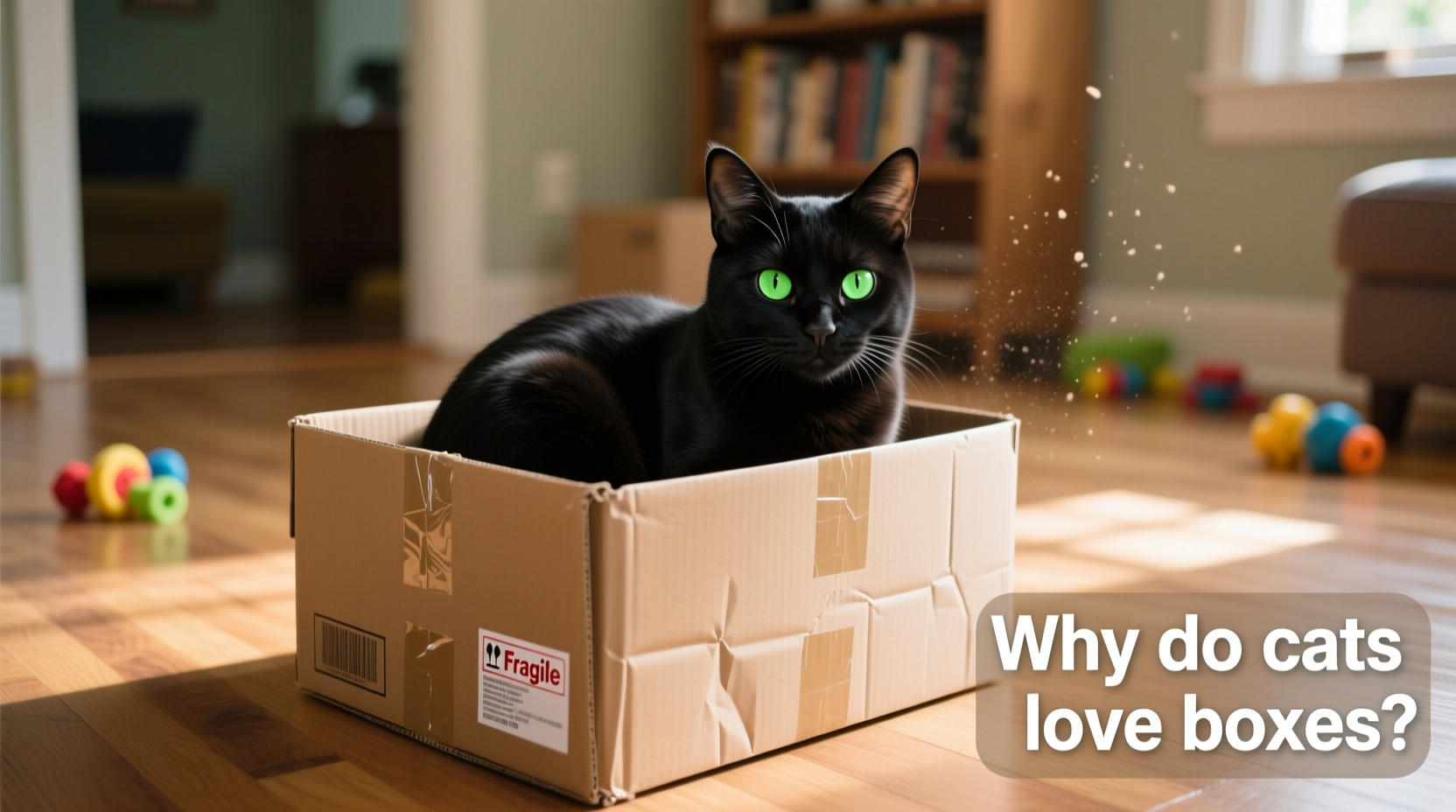
Cats are natural predators, but they’re also prey animals in the wild. Their survival has long depended on remaining hidden from larger threats. This dual role shapes much of their behavior—even in domestic settings. An enclosed space like a cardboard box mimics a den or burrow, offering protection from perceived dangers. While your living room poses no real threat, your cat’s brain still operates with ancient wiring that prioritizes concealment and security.
Boxes provide high walls and limited entry points, allowing cats to monitor their environment while feeling shielded. This sense of enclosure reduces stress by minimizing exposure. Studies have shown that shelter cats given access to hiding boxes acclimate faster and display lower cortisol levels—the hormone associated with stress—than those without such resources.
“Even in safe homes, cats retain strong denning instincts. A box isn’t just fun—it’s functional shelter.” — Dr. Sarah Thompson, Feline Behavior Specialist, American College of Veterinary Behaviorists
The size of the box matters less than its structure. Whether small or large, if it has sides that rise above the cat’s backline, it triggers the same instinctive response: *This is a safe zone.*
Thermoregulation and Warmth Retention
Cats prefer warmer environments than humans typically maintain in their homes. The ideal ambient temperature for a cat ranges between 86°F and 97°F (30°C–36°C), significantly higher than standard indoor climates. Cardboard is a poor conductor of heat, meaning it traps body warmth effectively. When a cat curls up inside a box, the insulating properties help maintain their core temperature with minimal energy expenditure.
This becomes especially important as cats age or if they have medical conditions affecting circulation. Even young, healthy cats benefit from reduced thermal stress when lounging in confined spaces. Larger boxes may seem inefficient at retaining heat due to greater air volume, but cats often position themselves near one wall or corner, reducing exposed surface area. They may also fold limbs tightly or tuck their nose under their tail—a thermally efficient posture known as the “biscuit roll.”
Predictability and Environmental Control
In multi-pet households or busy homes, unpredictability can be stressful for cats. Sudden movements, loud noises, or unfamiliar visitors disrupt their sense of control. A box acts as a personal territory—an autonomous space where rules are simple: four walls, one entrance, full visibility outward without being fully seen.
Larger boxes offer additional advantages here. They allow room for stretching, turning around, or even playful pouncing within the confines of a secure boundary. Unlike open beds or couches, which expose a cat on all sides, a box—regardless of size—provides tactile feedback from contact with walls, reinforcing spatial awareness and mental calm.
This need for controlled environments explains why some cats favor boxes over expensive cat furniture. No matter how plush a store-bought bed may be, it lacks the structural definition that signals safety. A cardboard box, meanwhile, is both predictable and temporary—qualities that appeal to a species that values routine yet remains adaptable.
Stress Reduction Through Confinement
Counterintuitively, confinement can reduce anxiety in cats. In veterinary medicine, it’s common practice to allow stressed animals access to covered carriers or opaque containers during exams. The limited visual field helps prevent sensory overload. Similarly, at home, a box gives cats a retreat when overwhelmed.
Research published in *Applied Animal Behaviour Science* found that newly arrived shelter cats given cardboard boxes showed significantly faster behavioral integration compared to those without. Within days, box-having cats were more likely to approach humans, explore freely, and vocalize normally. The takeaway? Having a defined, enclosed space accelerates emotional regulation.
This principle applies equally to large boxes. Though they don’t fully enclose the body, their presence creates a psychological boundary. A cat lying halfway out of a big box still perceives itself as partially protected. It’s akin to standing under an awning during rain—you’re not completely dry, but you feel sheltered.
Real-Life Example: Luna Adjusts to Apartment Life
Luna, a three-year-old tabby adopted from a rural shelter, struggled after moving into a fifth-floor city apartment. Constant traffic noise, frequent doorbell rings, and a visiting dog left her withdrawn and prone to hiding under furniture. Her owner introduced several large delivery boxes with flaps removed, placing them near sunny windowsills. Within 48 hours, Luna began using one as a daytime lounge. Over time, she rotated between boxes in different rooms, gradually increasing her exploration of open areas. After two weeks, she no longer fled at sudden sounds. The boxes didn’t solve everything—but they provided the stability she needed to adapt.
Play, Predation, and Mental Stimulation
Boxes aren't only for rest—they serve as dynamic tools for play and cognitive engagement. A large empty box becomes a stage for stalking imaginary prey, launching surprise attacks, or practicing ambush tactics. These behaviors fulfill hunting drives that remain active even in well-fed domestic cats.
The crinkly sound of cardboard stimulates auditory interest. Uneven surfaces encourage scratching and kneading. And because boxes are usually free of human scent (unlike sofas or beds), they represent neutral territory ripe for marking and exploration. Cats may scratch the interior, rub their cheeks along the edges (depositing pheromones), or carry toys inside—transforming the box into a personalized domain.
Interestingly, many cats exhibit what scientists call “incomplete occupancy”—choosing to sit in a box far larger than necessary, often with limbs dangling over the edge. This isn’t inefficiency; it’s strategic positioning. By occupying the center or front of a large box, the cat maintains optimal vantage points while reserving space for quick retreats or sudden leaps.
| Box Size | Behavioral Benefit | Common Cat Response |
|---|---|---|
| Small (just fits body) | Maximizes warmth and enclosure | Tightly curled, head tucked in |
| Medium (body + tail) | Balances comfort and security | Relaxed sprawl, ears alert |
| Large (twice cat’s length) | Supports movement and play | Partial occupancy, frequent repositioning |
| Oversized (room for multiple cats) | Social flexibility and observation | Shared use or territorial guarding |
Why Not Just Use Beds or Furniture?
Despite access to cushioned cat beds, heated pads, or dedicated perches, most cats still gravitate toward boxes. There are several reasons:
- Novelty: Boxes are often new objects introduced periodically, triggering curiosity.
- Scent neutrality: Unlike fabric items that absorb odors, fresh cardboard carries no competing scents.
- Structural feedback: Walls provide physical boundaries that soft bedding lacks.
- DIY customization: Cats can chew, scratch, or flatten boxes to suit their preferences.
Moreover, boxes are temporary. Once flattened or soiled, they’re discarded—aligning with a cat’s preference for changing environments. Permanent fixtures like beds become background elements, whereas a new box stands out as a point of interest.
Action Checklist: Enhancing Your Cat’s Box Experience
To support your cat’s natural tendencies safely and enrichingly, consider the following steps:
- Keep clean, unprinted cardboard boxes available in quiet areas.
- Remove tape, staples, and plastic liners before offering a box.
- Add soft linings like fleece throws or old T-shirts for extra comfort.
- Rotate boxes weekly to maintain novelty and hygiene.
- Place boxes near windows or heating vents for added environmental appeal.
- Avoid forcing your cat into a box—let them choose when and how to use it.
- Monitor for signs of excessive hiding, which may indicate underlying stress.
Frequently Asked Questions
Is it normal for my large cat to try fitting into small boxes?
Yes. Even cats weighing over 15 pounds will attempt to squeeze into compact spaces. This behavior reflects instinct, not judgment. As long as the cat can enter and exit freely without injury, it’s considered normal and harmless.
Should I be concerned if my cat hides in boxes all day?
Occasional box use is healthy. However, if your cat consistently avoids interaction, eats less, or shows other signs of withdrawal, consult a veterinarian. Excessive hiding can signal pain, illness, or environmental stress.
Can I make a box more appealing?
Absolutely. Try placing treats, catnip, or a favorite toy inside to encourage exploration. Positioning the box in a sunlit or elevated spot also increases its attractiveness.
Conclusion: Respecting the Box Habit
The sight of a cat wedged into a box too small—or lounging in one far too large—is more than a meme-worthy moment. It’s a window into the complex world of feline psychology. What seems illogical to us—curling up in a rigid container instead of a soft bed—is perfectly rational from a cat’s perspective. Boxes satisfy primal needs for safety, warmth, control, and stimulation. Rather than discouraging this behavior, embrace it as a low-cost, high-impact way to support your cat’s emotional health.




 浙公网安备
33010002000092号
浙公网安备
33010002000092号 浙B2-20120091-4
Comments
No comments yet. Why don't you start the discussion?