
Cats sitting in cardboard boxes is one of the most iconic and endearing quirks of feline behavior. Whether it’s a shipping container barely large enough to fit their body or an oversized crate they could share with a small dog, cats consistently choose these confined spaces over plush beds or open shelves. While many pet owners chuckle at the sight, there’s more behind this habit than mere whimsy. The tendency for cats to occupy boxes is deeply rooted in evolutionary biology, instinctual survival mechanisms, and psychological comfort. Understanding why cats exhibit this behavior provides valuable insight into their natural needs and helps owners create environments that support their pets’ well-being.
The Evolutionary Roots of Box-Sitting Behavior
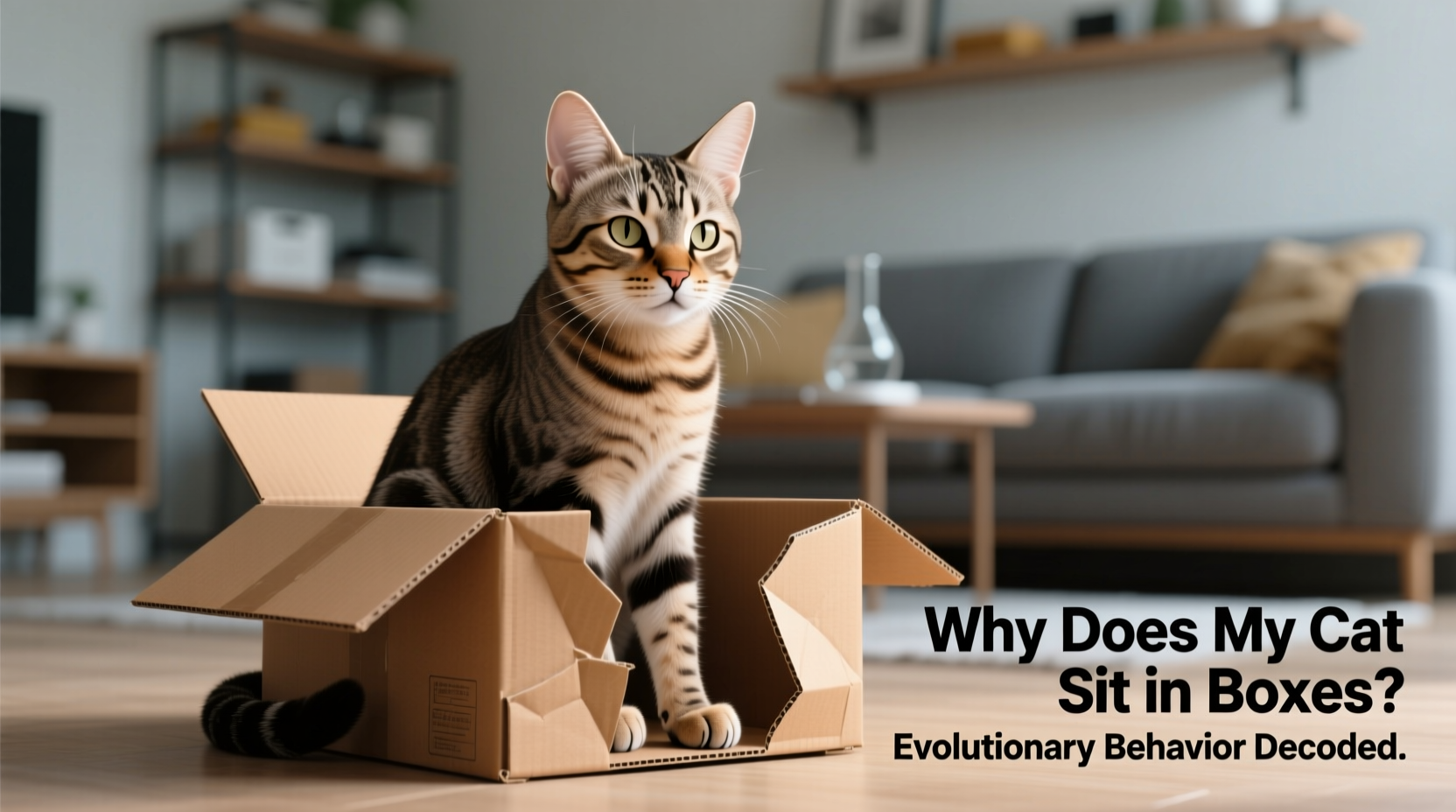
Domestic cats (Felis catus) evolved from solitary desert-dwelling ancestors, primarily the African wildcat (Felis lybica). These early felines relied on stealth, concealment, and thermoregulation to survive harsh environments and avoid predators. In the wild, finding shelter was critical—not just for protection but also for conserving energy. Small, enclosed spaces mimic the burrows, rock crevices, and dense thickets that wildcats used as hiding spots. By entering tight spaces, cats reduce their visibility to larger predators while gaining a vantage point to observe potential threats or prey.
This instinct has been preserved through domestication, even though modern house cats face no real danger from coyotes or birds of prey. When a cat climbs into a box, it’s not simply seeking novelty—it’s acting on millennia of genetic programming designed to maximize safety and thermal efficiency. Enclosed spaces provide insulation, helping cats maintain their optimal body temperature, which ranges between 100.5°F and 102.5°F (38°C–39.2°C). Cardboard, despite its flimsiness, acts as a surprisingly effective heat trap, especially when combined with the cat’s own body warmth.
“Cats are hardwired to seek out micro-environments where they feel hidden and secure. A box isn’t just a container—it’s a den substitute.” — Dr. Sarah Ellis, Feline Behavior Scientist, University of Lincoln
Predatory Instincts and the Ambush Advantage
Beyond shelter and warmth, boxes serve another crucial function: they enhance a cat’s predatory capabilities. Even well-fed indoor cats retain strong hunting instincts. Stalking, pouncing, and ambushing are behaviors hardwired into their nervous systems, regardless of whether they’ve ever caught live prey. A box offers an ideal ambush position—concealed on three sides, with a clear view of the surrounding area. From this vantage, a cat can monitor movement, anticipate activity, and launch surprise attacks on toys, feet, or passing shadows.
Studies using motion-tracking cameras have shown that cats spend significantly more time observing their environment from within enclosed spaces than from open perches. This suggests that confinement increases vigilance and reduces stress by limiting exposure. In multi-cat households, access to boxes can decrease social tension by providing individual retreat zones where subordinate cats can avoid confrontations without feeling trapped.
Stress Reduction and Psychological Security
In unfamiliar or stressful situations, such as visits to the vet or moving to a new home, cats often seek out enclosed spaces. Research conducted at Utrecht University found that shelter cats given access to cardboard boxes adapted to their new environment faster and exhibited lower cortisol levels—a key biomarker of stress—than those without hiding options. The presence of a simple box allowed them to regain a sense of control over their surroundings.
This principle applies equally to home settings. Household changes like guests arriving, construction noise, or the introduction of new pets can unsettle even confident cats. A readily available box functions as an instant safe zone, offering a buffer between the cat and overwhelming stimuli. Unlike elevated cat trees or open beds, boxes provide tactile feedback on multiple sides, creating a “pressure comfort” effect similar to swaddling in human infants.
Moreover, cats are neophilic—they’re naturally curious about new objects—but they approach novelty cautiously. A box represents both a novel item and a protective structure, making it doubly appealing. Once explored and deemed safe, it becomes territory, marked subtly through cheek pheromones and body heat.
Thermoregulation: The Warmth Factor
Cats prefer ambient temperatures between 86°F and 97°F (30°C–36°C), significantly higher than typical human comfort zones. Most homes are kept around 68°F–72°F (20°C–22°C), leaving cats perpetually seeking warmer microclimates. Boxes contribute to heat retention in several ways:
- The insulating properties of corrugated cardboard slow heat loss.
- Tight spaces minimize air circulation, trapping warm air close to the body.
- Curled postures adopted inside boxes reduce surface-area-to-volume ratio, further conserving heat.
This explains why cats often favor boxes during colder months—or gravitate toward electronics like routers and laptops, which emit radiant heat. Interestingly, even in warm environments, cats may still choose boxes, suggesting that thermal benefits are only one component of the attraction.
Do’s and Don’ts of Supporting Natural Box Behavior
| Do’s | Don’ts |
|---|---|
| Provide multiple boxes in quiet, accessible locations | Force a cat into a box or disturb them once inside |
| Use clean, chemical-free cardboard without staples or tape residue | Use plastic bins or sealed containers that lack ventilation |
| Rotate boxes regularly to maintain novelty | Assume all cats will use boxes—some may prefer tunnels or covered beds |
| Add soft bedding or familiar-smelling cloths to increase appeal | Overcrowd a space with too many competing shelters |
Real-Life Example: Managing Stress in a Multi-Cat Home
Sophia, a pet owner in Portland, Oregon, adopted a second cat to keep her shy tabby, Milo, company. However, instead of bonding, the two cats entered a prolonged standoff. The new kitten, Luna, was energetic and outgoing, while Milo retreated to high shelves and under furniture, rarely eating or grooming properly. After consulting a veterinary behaviorist, Sophia began placing shallow cardboard boxes in various rooms, each lined with fleece blankets and lightly sprayed with feline facial pheromone spray.
Within days, Milo started using the boxes as observation posts, gradually increasing his interaction with Luna. The boxes gave him a sense of control—he could watch without being seen—and reduced his anxiety. Over time, the two cats began napping near each other, and eventually sharing a large box. The simple addition of low-cost shelters transformed household dynamics, demonstrating how respecting innate behaviors leads to better cohabitation.
Step-by-Step Guide: Creating an Enriched Environment with Boxes
- Select appropriate boxes: Choose ones large enough for your cat to turn around in but snug enough to provide side contact. Avoid overly large crates.
- Remove hazards: Take off tape, labels, and staples. Wipe down if dirty, but avoid chemical cleaners.
- Enhance comfort: Line the bottom with an old towel or cushion. Optionally add catnip or silver vine for extra attraction.
- Strategic placement: Position boxes near windows, heating vents, or favorite lounging areas.
- Encourage exploration: Toss a toy inside or place treats nearby to spark interest.
- Monitor usage: Note which boxes are preferred and replicate those conditions elsewhere.
- Rotate periodically: Swap out boxes every few weeks to maintain novelty and prevent boredom.
Frequently Asked Questions
Is it normal for my cat to prefer boxes over expensive cat beds?
Absolutely. Many commercially sold cat beds fail to meet feline needs for enclosure and security. While aesthetically pleasing, open or cushion-only designs lack the walls that make cats feel protected. A $20 orthopedic bed may be ignored in favor of a free Amazon shipment box because the latter satisfies deeper behavioral requirements.
Should I be concerned if my cat suddenly stops using boxes?
A sudden change in behavior—including avoiding previously favored hiding spots—can signal illness, anxiety, or environmental stress. Monitor for other symptoms like appetite loss, litter box avoidance, or vocalization changes. If concerns persist, consult your veterinarian.
Can kittens and older cats benefit from box access too?
Yes. Kittens use boxes for play and exploration, supporting cognitive development. Senior cats, who may suffer from arthritis or sensory decline, appreciate boxes as predictable, easy-access sanctuaries that help them conserve energy and manage discomfort.
Expert Insight: What Box Behavior Reveals About Cat Cognition
Dr. Daniel Mills, Professor of Veterinary Behavioral Medicine at the University of Lincoln, emphasizes that box-sitting is not random but reflects sophisticated decision-making. “When a cat chooses a box, it’s assessing risk, comfort, and opportunity simultaneously,” he explains. “This behavior shows that cats aren’t just reactive animals—they actively shape their environment to suit their emotional and physical needs.”
This level of environmental manipulation underscores the importance of allowing cats autonomy in their living spaces. Denying access to hiding places can lead to chronic low-level stress, which in turn contributes to health issues like urinary tract disorders and overgrooming.
Conclusion: Embracing the Box as a Window Into Feline Nature
The question \"why does my cat sit in boxes?\" opens a door into the complex world of feline evolution, psychology, and welfare. Far from being a trivial quirk, this behavior encapsulates essential aspects of what it means to be a cat: cautious, intelligent, temperature-sensitive, and perpetually balancing curiosity with self-preservation. Rather than discouraging it, owners should embrace and support this instinctive need for enclosed spaces.
By providing safe, accessible boxes—and understanding the reasons behind their appeal—you give your cat more than just a nap spot. You offer peace of mind, environmental control, and a connection to their ancestral past. In doing so, you foster a healthier, happier relationship built on respect for their nature.




 浙公网安备
33010002000092号
浙公网安备
33010002000092号 浙B2-20120091-4
Comments
No comments yet. Why don't you start the discussion?