
If you’ve ever brought home a new appliance only to find your cat immediately occupying the cardboard box instead of the expensive cat bed you bought last week, you’re not alone. Cats have an undeniable affinity for squeezing into boxes—shipping containers, shoeboxes, cereal cartons, even the occasional open plastic bin. While this behavior may seem whimsical or inexplicable, it’s deeply rooted in their evolutionary biology. What appears to be a quirky habit is actually a manifestation of ancient survival instincts that continue to shape how domestic cats interact with their environment.
Cats are predators by nature, but they are also small animals vulnerable to larger threats. In the wild, safety often depends on concealment, temperature regulation, and control over one’s surroundings. Boxes—and other enclosed spaces—offer all three. Understanding why cats seek out these confined areas isn’t just about satisfying curiosity; it provides insight into their mental well-being, stress responses, and natural behaviors that persist despite generations of domestication.
The Evolutionary Roots of Hiding Behavior
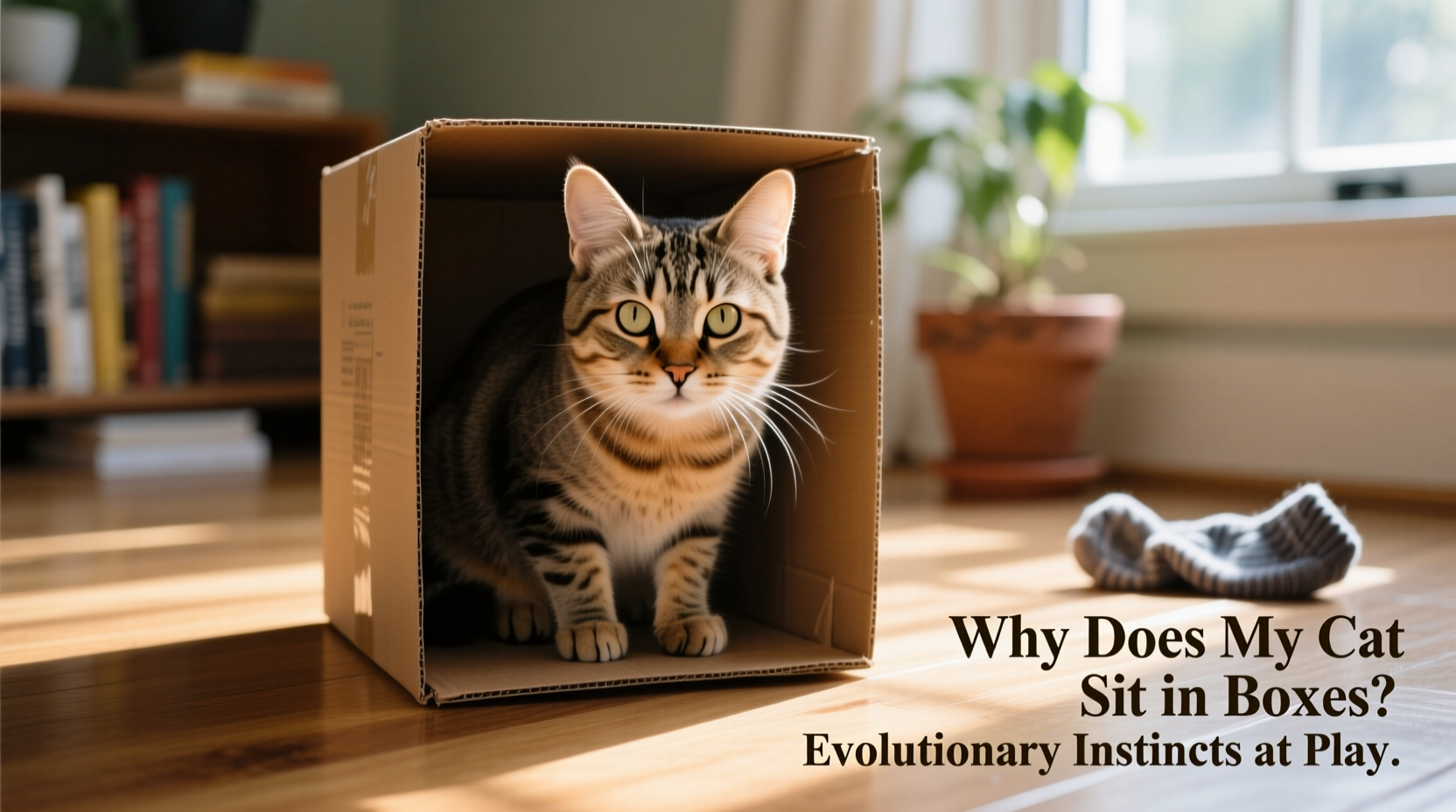
To understand why cats love boxes, we must first look back at their ancestry. The domestic cat (Felis catus) evolved from the African wildcat (Felis lybica), a solitary, nocturnal hunter native to arid regions of North Africa and the Middle East. These ancestors relied heavily on stealth, ambush tactics, and environmental awareness to survive. They didn’t engage in prolonged chases; instead, they used cover to remain hidden until the perfect moment to strike.
In such environments, finding shelter was critical—not just for hunting, but for avoiding predators like birds of prey, jackals, and larger carnivores. Natural enclosures such as rock crevices, hollow logs, and dense brush provided protection from both weather and danger. Over time, cats developed a strong instinct to seek out confined, enclosed spaces where they could observe without being seen.
This instinct persists in modern domestic cats. A box mimics the secure, den-like conditions their wild relatives would have sought. Even though today’s house cats face no real threat from eagles or hyenas, their brains still operate under the same evolutionary programming: if it’s enclosed, it’s safe.
“Cats don’t distinguish between a cardboard box and a cave when it comes to perceived security. Their nervous system responds to enclosure as a protective mechanism.” — Dr. Sarah Thompson, Feline Behavioral Scientist, University of Edinburgh
Thermoregulation: The Warmth Factor
Another key reason cats are drawn to boxes lies in their physiology. Cats maintain a higher body temperature than humans—typically between 100.5°F and 102.5°F (38°C–39.2°C). To conserve energy and stay comfortable, they prefer warm environments. Cardboard, while seemingly flimsy, is an excellent insulator. It traps body heat and reduces exposure to drafts, making boxes surprisingly cozy microclimates.
Studies conducted at the Netherlands’ Utrecht University found that shelter cats given access to cardboard boxes exhibited significantly lower stress levels during their first week in a new environment compared to those without boxes. Researchers concluded that the boxes helped regulate thermal comfort, which in turn reduced anxiety and improved overall adjustment.
This need for warmth is especially pronounced in kittens and older cats, whose ability to regulate body temperature is less efficient. A snug box becomes more than a hiding spot—it’s a personal heating pad crafted by instinct.
Stress Reduction and Environmental Control
Cats are highly sensitive to changes in their environment. Moving homes, introducing new pets, loud noises, or even rearranging furniture can trigger stress responses. Unlike dogs, who often seek social reassurance, cats typically cope by retreating. This is where boxes become psychological sanctuaries.
An enclosed space gives a cat a sense of control. From within a box, they can monitor their surroundings while feeling protected. The high walls block peripheral movement that might otherwise startle them, and the limited entry points allow them to anticipate any approach. This sense of predictability reduces cortisol levels—the hormone associated with stress.
In multi-cat households, boxes can serve as neutral territories or private retreats, minimizing conflict. A cat that feels secure is less likely to exhibit defensive aggression, excessive grooming, or inappropriate elimination—all common signs of environmental stress.
Real-Life Example: The Shelter Cat Study
In a 2017 study published in *Applied Animal Behaviour Science*, researchers observed 19 newly arrived shelter cats over a 14-day period. Half were given a standard litter tray and bedding; the other half received the same setup plus a cardboard box placed in the corner of their cage.
The results were striking: cats with boxes showed significantly faster adaptation to the shelter environment. They approached caregivers sooner, engaged in more exploratory behavior, and displayed fewer stress-related behaviors such as hiding in corners or refusing food. By day seven, the “box group” had stress scores nearly 30% lower than the control group.
One particular cat, a shy tabby named Miso, refused to leave the back wall of her enclosure for the first three days. After a box was introduced, she entered it within minutes and began observing visitors from its opening. Within two days, she was purring when staff approached. Her adoption followed shortly after.
This case illustrates that boxes aren’t just comfort items—they’re tools for emotional regulation and behavioral rehabilitation.
Play, Predation, and the Ambush Instinct
Beyond safety and warmth, boxes tap into another core feline drive: predation. Even well-fed indoor cats retain the urge to stalk, pounce, and capture. A box transforms into a hunting blind—an ideal vantage point from which to launch surprise attacks on unsuspecting toys, feet, or tails.
Observe a cat in a box, and you’ll often see slow blinking, focused gaze, and twitching ears—classic signs of predatory focus. The confined space channels their movements, building tension before release. When a toy rolls past or a human foot enters range, the leap is swift and precise.
This behavior reinforces neural pathways linked to hunting success. Even if the \"prey\" is a crumpled paper ball, the brain registers the sequence—stalk, hide, ambush—as rewarding. Over time, the box itself becomes associated with positive stimulation and engagement.
Do’s and Don’ts: Creating Safe Enclosed Spaces
| Do | Don’t |
|---|---|
| Use clean, untreated cardboard boxes with low entry points | Use boxes with sharp edges or staples exposed |
| Place boxes in quiet, low-traffic areas | Put boxes near loud appliances or high-activity zones |
| Add soft bedding or old towels for extra comfort | Use chemical-laden cleaning products inside or near the box |
| Rotate boxes regularly to maintain novelty | Leave tape, plastic wrap, or string attached |
| Monitor for chewing—some cats ingest cardboard | Ignore signs of obsessive enclosure-seeking, which may indicate chronic stress |
When Box-Sitting Signals a Deeper Issue
While occasional box use is normal and healthy, excessive hiding can signal underlying problems. If a cat suddenly begins spending most of its time in enclosed spaces—especially if accompanied by decreased appetite, vocalization, or litter box avoidance—it may be experiencing illness or anxiety.
Chronic stress in cats often manifests as hyper-vigilance or withdrawal. Common triggers include:
- New pets or people in the home
- Noisy environments (e.g., construction, frequent visitors)
- Litter box placement in high-traffic or exposed areas
- Past trauma or inadequate early socialization
In such cases, simply providing more boxes may not be enough. A holistic approach includes environmental enrichment, pheromone diffusers (like Feliway), predictable routines, and veterinary evaluation to rule out medical causes.
Actionable Checklist: Supporting Your Cat’s Instinctual Needs
- Provide multiple enclosed spaces – Use cardboard boxes, cat caves, or covered beds in different rooms.
- Ensure easy access and escape routes – Avoid deep boxes with high sides that could trap a nervous cat.
- Keep boxes clean and rotated – Replace damp or soiled boxes weekly; introduce new ones monthly to maintain interest.
- Respect your cat’s privacy – Never force a cat out of a box; let them exit on their own terms.
- Pair boxes with calming elements – Place them near windows (for bird watching), heating vents (in winter), or with pheromone diffusers nearby.
- Monitor behavioral changes – Note shifts in box usage, especially sudden increases in hiding duration or frequency.
- Encourage exploration – Toss treats or toys into empty boxes to make them engaging rather than solely defensive spaces.
Frequently Asked Questions
Is it normal for my cat to sleep in boxes every night?
Yes, it’s completely normal—as long as your cat has access to food, water, and a litter box, and shows no signs of distress. Many cats choose boxes as preferred sleeping spots due to the warmth and security they offer. However, if this behavior replaces all other activities or coincides with lethargy, consult a veterinarian.
Can I use plastic containers instead of cardboard boxes?
You can, but with caution. Plastic bins with smooth, non-porous surfaces are easier to clean and more durable. However, they lack breathability and insulation. Ensure the container has ample ventilation, rounded edges, and a shallow depth. Line it with absorbent material and avoid locking lids that could trap the cat.
Why does my cat only sit in boxes after I open them?
Fresh boxes carry your scent (from handling), ambient household odors, and the crisp texture of unused cardboard—all novel stimuli that attract cats. The act of opening a box also creates auditory and visual interest, triggering curiosity. Once the novelty fades, your cat may abandon it unless it continues to serve a functional purpose (warmth, safety, etc.).
Final Thoughts: Embracing Your Cat’s Wild Side
The next time you catch your cat curled up in a delivery box half their size, resist the urge to remove it. That humble cardboard cube is doing far more than storing memories—it’s fulfilling deep-seated needs shaped by thousands of years of evolution. By honoring these instincts, we don’t just accommodate quirks; we support our cats’ mental health, reduce stress, and strengthen the bond between species.
Cats haven’t forgotten their roots. They still rely on concealment, warmth, and control to feel safe in a world they never fully domesticated. A simple box costs nothing, takes little space, and offers immense psychological benefit. It’s one of the easiest, most effective forms of environmental enrichment available to cat owners.




 浙公网安备
33010002000092号
浙公网安备
33010002000092号 浙B2-20120091-4
Comments
No comments yet. Why don't you start the discussion?