
Cats are creatures of mystery and contradiction. They can leap onto the highest shelf one moment and squeeze into a shoebox the next—even if their body barely fits. One of the most common yet puzzling behaviors pet owners observe is their cat choosing to sit in a box that’s clearly too large. Why would a cat settle into an oversized cardboard container instead of a cozy, custom-made bed? The answer lies deep within feline instincts, environmental psychology, and evolutionary biology. This behavior isn’t random or whimsical—it’s purposeful, adaptive, and rooted in survival mechanisms passed down through generations.
Understanding this seemingly odd choice requires looking beyond convenience or cuteness. It involves examining how cats perceive safety, temperature regulation, territorial control, and stress reduction. By exploring these factors through the lens of animal behavior science, we gain not only insight into our pets’ minds but also tools to improve their well-being at home.
The Evolutionary Need for Enclosed Spaces
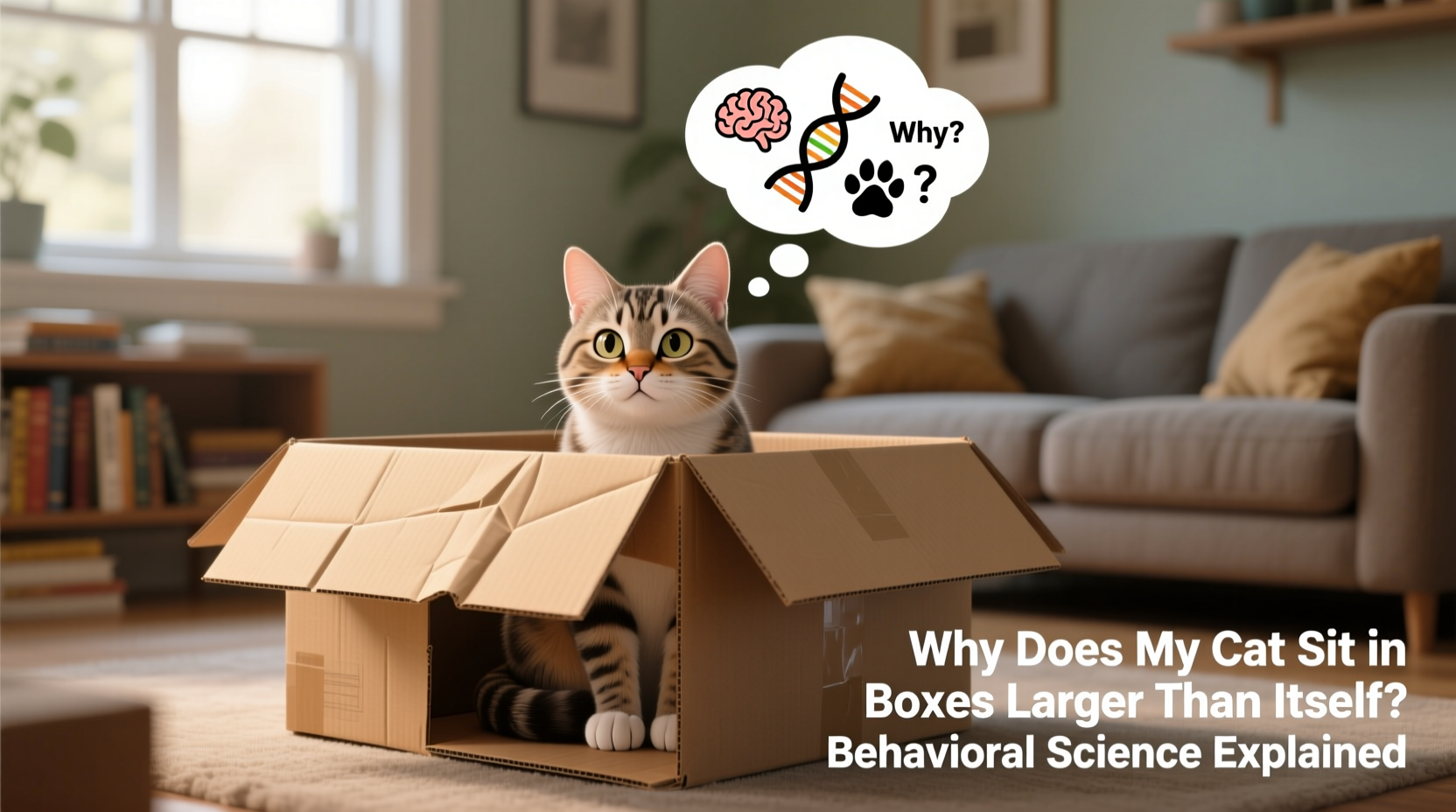
In the wild, cats are both predators and prey. Despite their hunting prowess, small felines remain vulnerable to larger animals, especially during rest periods. To survive, they evolved a preference for concealed, enclosed spaces where they can observe their surroundings without being seen. These micro-environments offer protection from threats above, below, and on all sides.
Domestic cats retain these instincts even when living in safe homes. A box—regardless of size—mimics the den-like shelters wild cats seek: walls on multiple sides, limited entry points, and overhead cover. Even if the box is larger than the cat, its mere presence creates a psychological boundary. The cat doesn’t need to touch all four walls to feel secure; the perception of enclosure is enough to trigger a sense of safety.
Dr. Sarah Ellis, a leading feline behavior expert at the University of Lincoln, explains:
“Enclosure preference in cats is deeply tied to predation risk management. In environments with high perceived unpredictability—like a busy household—a simple cardboard box becomes a refuge because it offers visual barriers and a controlled vantage point.” — Dr. Sarah Ellis, Feline Behavior Researcher
This means that even in a spacious box, your cat may position itself near one wall or corner, using part of the structure as a shield while keeping sight of the room. The unused space isn't irrelevant—it's potential buffer zone, enhancing the feeling of control over personal territory.
Thermoregulation and Comfort: The Science of Warmth
Cats have a higher thermoneutral zone than humans—typically between 86°F and 97°F (30°C–36°C)—meaning they prefer warmer ambient temperatures to feel comfortable. Most indoor environments are maintained around 68°F–72°F, which is relatively cool for a cat. As a result, they actively seek out heat-retaining materials and confined areas to conserve body warmth.
Cardboard is a natural insulator. When a cat enters a box, the material absorbs and reflects its body heat back toward them. Over time, the interior warms slightly, creating a microclimate ideal for resting. Larger boxes provide more air volume, but once occupied, the cat’s presence begins altering the internal temperature. Additionally, many cats curl up tightly regardless of available space, minimizing surface area exposed to cooler air.
Interestingly, studies conducted at the ASPCA found that shelter cats given access to boxes showed significantly lower stress hormone levels compared to those without. Researchers concluded that the combination of thermal comfort and physical enclosure contributed to improved emotional regulation.
Stress Reduction and Environmental Control
Cats are highly sensitive to changes in their environment. New people, loud noises, other pets, or rearranged furniture can elevate anxiety levels. In such situations, access to a hiding spot—like a box—can dramatically reduce cortisol production, the primary stress hormone in mammals.
A large box functions as a “safe base” from which the cat can monitor activity without direct exposure. From an ethological standpoint, this aligns with the concept of optimal vigilance: maintaining awareness of potential threats while minimizing energy expenditure and vulnerability.
In multi-cat households, dominant cats often claim elevated positions, while subordinate ones use ground-level enclosures like boxes for security. Even in single-cat homes, a large box provides spatial control—an essential component of feline mental health. The ability to choose where to rest, hidden or visible, empowers the cat and reinforces environmental predictability.
How Box Use Impacts Shelter Cats: A Mini Case Study
In a 2017 study published in *Applied Animal Behaviour Science*, researchers observed 19 newly arrived shelter cats. Half were given standard bedding; the other half received identical bedding plus a cardboard box. Over two weeks, the boxed group exhibited:
- Lower aggression scores during handling
- Faster acclimation to staff and volunteers
- Higher engagement in exploratory behavior after day five
One cat, a shy three-year-old tabby named Luna, initially refused interaction. After receiving a medium-sized shipping box placed sideways, she began sitting inside daily. Within ten days, she approached caregivers voluntarily and was adopted shortly after. Staff noted that the box didn’t just serve as shelter—it became a transitional tool between fear and trust.
This demonstrates that enclosure use isn't merely about physical comfort—it plays a critical role in emotional resilience.
Do’s and Don’ts of Supporting Healthy Hiding Behavior
| Do’s | Don’ts |
|---|---|
| Provide multiple boxes in quiet, low-traffic areas | Force your cat into a box or disturb them while inside |
| Use plain, unprinted cardboard to avoid chemical exposure | Use tape-heavy or stapled boxes that could injure curious paws |
| Rotate boxes weekly to maintain novelty and hygiene | Place boxes near noisy appliances like washers or vacuums |
| Add soft blankets for extra insulation in colder months | Assume your cat doesn’t need hiding spots just because they seem confident |
Why Size Doesn’t Matter: Perception Over Fit
Unlike dogs or humans, cats don’t assess furniture based on ergonomic fit. Their decision-making is guided more by sensory input and emotional response than spatial logic. A large box still satisfies key criteria: vertical boundaries, tactile feedback from cardboard, and separation from open floor space.
Moreover, larger boxes allow flexibility. Your cat might enter tail-first one day and head-first the next, adjusting orientation based on noise direction, light levels, or mood. Some cats even use oversized boxes as play arenas—batting toys against the walls or leaping across the interior. This dual function—as both sanctuary and stimulation zone—increases the box’s value in the cat’s mind.
Interestingly, video analyses from cat cognition labs show that felines often spend time investigating the edges and corners of large boxes before settling. This suggests a deliberate evaluation process, not impulsive nesting. Once chosen, the box becomes temporarily marked as part of their territory through cheek rubbing (scent marking), further reinforcing ownership and comfort.
Actionable Tips for Cat Owners
To support your cat’s natural tendencies while promoting long-term well-being, consider the following checklist:
Cat-Friendly Box Setup Checklist
- Choose clean, dry boxes free of labels, ink, or residue
- Remove all plastic, tape, or staples before offering
- Position boxes in calm areas with moderate foot traffic (so your cat feels connected but not exposed)
- Line interiors with washable fleece or cotton fabric for added warmth
- Introduce new boxes gradually—place them nearby for sniffing before expecting use
- Monitor for signs of over-reliance (e.g., refusing to leave the box for meals or litter), which may indicate underlying anxiety
- Replace boxes every 2–3 weeks or sooner if soiled or collapsing
If you have multiple cats, ensure there are enough hiding options to prevent competition. The general rule is one hiding place per cat, plus one extra. This prevents resource guarding and supports social harmony.
FAQ: Common Questions About Cats and Boxes
Is it normal for my cat to prefer boxes over expensive cat beds?
Absolutely. Many commercial cat beds fail to replicate the enclosed, elevated-walled design that cats instinctively seek. While plushness appeals to human sensibilities, cats prioritize security over softness. A simple cardboard box often outperforms costly alternatives simply because it meets core behavioral needs.
Should I be concerned if my cat sits in very large boxes?
No, provided the box is structurally sound and free of hazards. Size alone isn’t an issue. However, if your cat suddenly starts hiding more than usual or avoids social interaction, consult a veterinarian to rule out illness or chronic stress.
Can I encourage my cat to use boxes more effectively?
Yes. Try placing treats, catnip, or a favorite toy inside a new box to create positive associations. Warming the interior slightly with a blanket (not heated) can also make it more inviting. Avoid forcing entry—let curiosity guide the process.
Conclusion: Embracing the Box Habit for a Healthier Cat
The tendency for cats to sit in boxes larger than themselves isn’t a quirk—it’s a window into their evolutionary past and emotional present. Far from being arbitrary, this behavior serves vital functions: reducing stress, regulating body temperature, asserting territorial control, and providing cognitive reassurance in unpredictable environments.
By recognizing the science behind the cardboard obsession, owners can move beyond amusement to informed care. Instead of questioning why their cat chooses a flimsy box over a designer bed, they can appreciate the depth of instinct at play and support it intentionally. Simple actions—like offering clean, accessible enclosures—can profoundly impact a cat’s quality of life.




 浙公网安备
33010002000092号
浙公网安备
33010002000092号 浙B2-20120091-4
Comments
No comments yet. Why don't you start the discussion?