
Cats are creatures of habit, curiosity, and contradiction. One moment they’re perched regally on a windowsill surveying their domain, the next they’re crammed into a cardboard box barely large enough to hold their tail. But even more puzzling: why do cats so often choose boxes that are clearly too big? You’ve likely seen it—your cat stepping into an oversized shipping container, circling once, then settling in as if claiming a throne. This seemingly odd behavior is deeply rooted in feline psychology, survival instincts, and environmental comfort. Understanding it offers insight not just into your cat’s mind, but into how you can better meet their emotional and physical needs.
The Instinct to Hide: Safety and Security
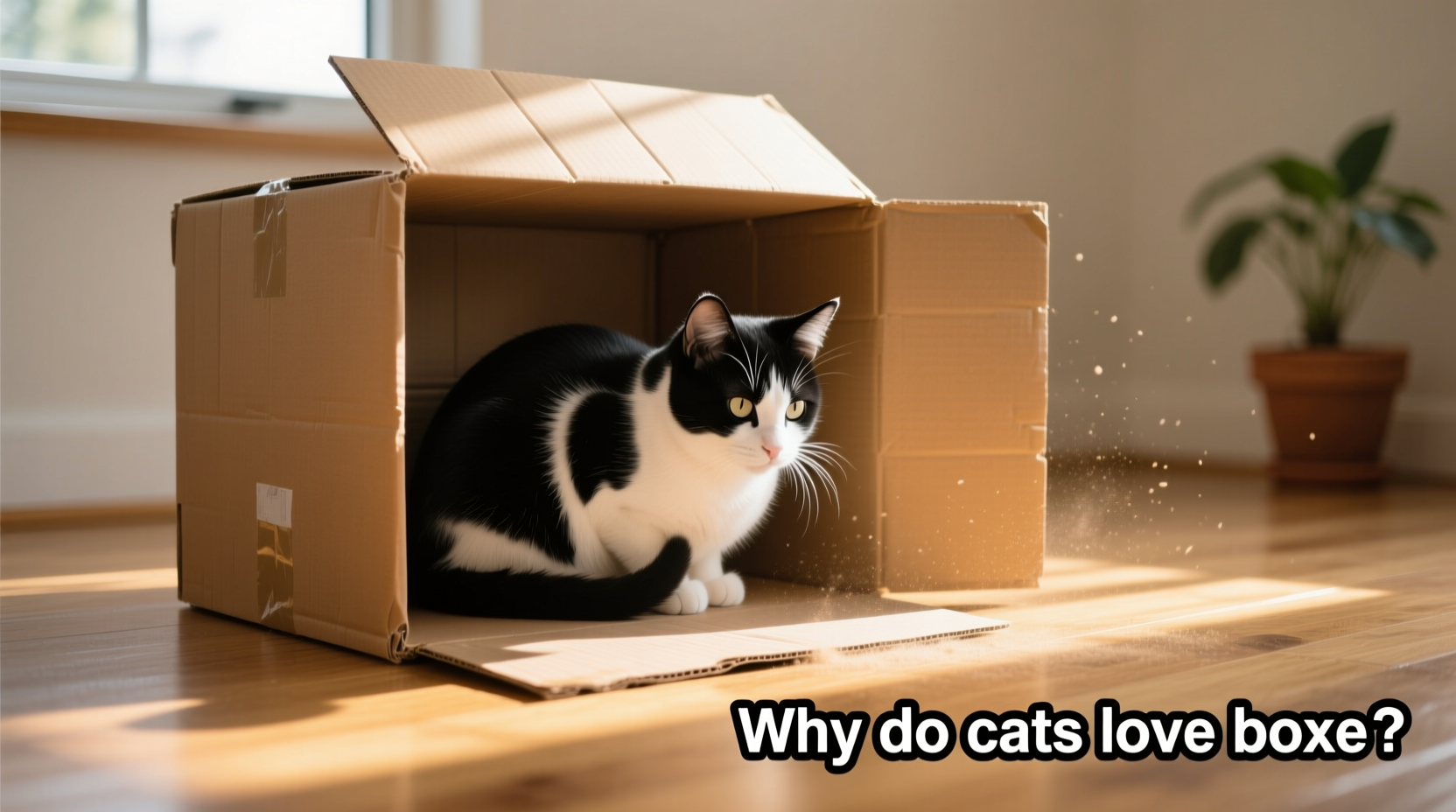
At the core of the box-sitting phenomenon is the feline need for security. In the wild, cats are both predators and prey. While domestic cats don’t face the same threats as their ancestors, the instinct to seek shelter remains hardwired. Enclosed spaces like boxes mimic dens or burrows—places where a cat can observe its surroundings while remaining hidden from potential threats.
Even in safe homes, sudden noises, unfamiliar guests, or changes in routine can stress cats. A box provides a buffer zone—a retreat where they feel protected. This is especially true for larger boxes. The extra space allows them to adjust their posture, stretch, or curl up depending on their mood, all while maintaining the psychological benefit of enclosure.
“Cats seek out confined spaces because they reduce anxiety by limiting sensory input and creating a sense of control.” — Dr. Sarah Ellis, Feline Behavior Scientist, University of Lincoln
Thermoregulation: The Warmth Factor
Cats prefer warmer environments than humans do. The ideal ambient temperature for a cat ranges between 86°F and 97°F (30°C–36°C), significantly higher than typical indoor settings. Cardboard is a natural insulator, trapping body heat and creating a cozy microclimate. Even oversized boxes contribute to this effect—the walls reflect warmth back toward the cat, and the enclosed top (if present) reduces heat loss.
This explains why cats often ignore expensive heated beds in favor of a humble moving box. The combination of elevation off cold floors, insulation from cardboard, and the ability to tuck limbs close makes even a large box an efficient thermal refuge. In fact, studies have shown that access to warm hiding spots reduces stress in shelter cats, improving immune function and socialization.
How Box Size Influences Thermal Comfort
| Box Size | Heat Retention | Mobility & Posture | Overall Suitability |
|---|---|---|---|
| Too Small | High (but uncomfortable) | Restricted movement | Low – causes stress |
| Just Right | Optimal balance | Comfortable curling | High – preferred for naps |
| Larger Than Cat | Moderate (walls still insulate) | Full stretch or repositioning | High – used for lounging, observation |
| Very Large | Low (acts more like open furniture) | Free movement | Medium – only appealing if partially enclosed |
Note that “larger than them” doesn’t mean “massive.” Cats tend to favor boxes that give them room to move but still provide wall contact on at least two sides. This tactile feedback reinforces the feeling of protection.
Observation Posts and Territory Control
A large box isn’t just a hiding spot—it’s a strategic vantage point. Elevated or centrally placed, it becomes a command center. From within, a cat can watch household activity without being directly engaged. This aligns with their natural tendency to monitor territory from secure locations.
In multi-pet homes, dominant cats may claim the largest box as a symbolic assertion of status. Even solitary cats use spacious boxes to establish presence. The act of sitting in a box larger than themselves can be a subtle declaration: “This space is mine.”
Interestingly, the size allows for behavioral flexibility. A cat might enter the box to hide, then shift to a sprawled-out position when relaxed—demonstrating a transition from defensive to confident state, all within the same location.
Texture, Scent, and Sensory Appeal
Cardboard has a unique sensory profile that appeals to cats. Its rough texture satisfies the instinct to scratch and knead, behaviors linked to marking territory through scent glands in the paws. Even if a cat doesn’t actively claw the box, the tactile sensation underfoot provides stimulation.
Fresh cardboard also carries a neutral or slightly woody scent, which many cats find calming. When combined with the owner’s residual scent (transferred via handling), it becomes even more inviting. Larger boxes offer more surface area for scent marking and exploration, enhancing their appeal.
Additionally, the crinkle sound of cardboard can be stimulating. For kittens and playful adults, entering a large box becomes part of interactive behavior—jumping in, pushing against walls, or pawing at loose flaps. What looks like passive lounging may actually be low-level enrichment.
Real Example: Luna and the Amazon Box
Luna, a three-year-old tortoiseshell living in a busy Chicago apartment, had always been shy around guests. Her owners noticed that whenever a delivery arrived, she’d immediately investigate the box—even if it was nearly twice her size. One evening, before a dinner party, they left a large Amazon box upright in the living room, leaning one side against the couch to create a semi-enclosed cave.
As guests arrived, Luna retreated—but instead of hiding under the bed, she climbed into the tilted box, positioning herself diagonally across the base. She remained there for two hours, watching the gathering from a safe distance. Once the guests settled, she began grooming herself inside the box, eventually stretching out fully. After everyone left, her owners found claw marks along one edge and a small pile of shed fur—clear signs of prolonged occupancy.
This case illustrates how a large box served multiple functions: a visual barrier, a thermal refuge, a scratching surface, and a territory marker. It wasn’t about fitting perfectly—it was about having options within a secure framework.
Step-by-Step: Creating the Ideal Box Environment
To support your cat’s natural instincts, follow this practical guide to optimize box use in your home:
- Select the right size: Choose a box that allows your cat to lie down stretched out, with at least 6 inches of clearance on each side. Too much space reduces the den-like effect.
- Modify for access: Cut one side down to table height if the box is too tall, or tilt it against furniture to create a lean-to shelter.
- Enhance comfort: Line the bottom with a soft towel or fleece blanket. Avoid thick padding that collapses and eliminates wall contact.
- Add sensory elements: Rub the interior with a cloth bearing your scent, or sprinkle a pinch of silver vine or valerian root (alternatives to catnip).
- Place strategically: Position the box in a low-traffic area with good visibility—near a window or beside a favorite furniture piece.
- Rotate regularly: Replace or reposition boxes every 2–3 weeks to maintain novelty and prevent boredom.
- Monitor usage: Note how your cat uses the space. Do they enter headfirst? Stay briefly? Sleep for hours? Adjust size or placement based on behavior.
Common Misconceptions About Cat Box Behavior
- Myth: Cats only like small boxes because they fit snugly.
Reality: While tight fits offer warmth, larger boxes provide versatility in posture and function. - Myth: If a cat doesn’t curl up, the box is too big.
Reality: Stretching out in a large box is normal and indicates relaxation and trust. - Myth: Only anxious cats use boxes.
Reality: Even confident cats use boxes for thermoregulation, play, and environmental enrichment.
Frequently Asked Questions
Do cats prefer new boxes over old ones?
Yes, generally. Fresh cardboard has a stronger scent and structural integrity, making it more stimulating. However, some cats grow attached to well-used boxes that carry familiar scents. Observe your cat’s preference—some rotate between new and old.
Is it safe for cats to eat cardboard?
Occasional nibbling is usually harmless, but ingesting large amounts can cause gastrointestinal blockages. Discourage chewing by providing alternative outlets like cat-safe chew toys or untreated wicker baskets.
Can I use plastic containers instead of cardboard?
Sometimes, but with caveats. Plastic bins retain heat but lack breathability and scent absorption. They can also be slippery and intimidating. If using plastic, opt for opaque containers with textured floors and always provide an easy exit.
Checklist: Is Your Cat’s Box Setup Optimal?
- ☑ Box is larger than your cat but not excessively so
- ☑ Walls are intact and provide partial enclosure
- ☑ Placed in a quiet yet observable location
- ☑ Lined with washable, non-slip material
- ☑ Free from staples, tape residue, or sharp edges
- ☑ Rotated or refreshed every few weeks
- ☑ Used consistently by your cat (observe patterns)
“The box isn’t just a toy—it’s a psychological tool. It gives cats control over their environment, which is essential for emotional well-being.” — Dr. Tony Buffington, UC Davis Veterinary Medicine
Conclusion: Respecting the Box Instinct
The sight of a cat lounging in a box far too large to snuggle into may seem illogical, but it’s anything but random. That box fulfills fundamental needs: safety, warmth, sensory engagement, and territorial assurance. By recognizing the depth behind this simple behavior, we gain a clearer understanding of our cats’ inner world.
You don’t need to buy specialized cat furniture to support these instincts. Often, the most effective solutions are free, recyclable, and already in your home. The next time a delivery arrives, consider saving the box—not for storage, but for enrichment. Watch how your cat interacts with it. Does she circle before entering? Does she scratch the side? These small acts are expressions of natural behavior, preserved through millennia.




 浙公网安备
33010002000092号
浙公网安备
33010002000092号 浙B2-20120091-4
Comments
No comments yet. Why don't you start the discussion?