
Cats are creatures of habit, mystery, and undeniable charm—none more so than when they contort their bodies into cardboard boxes far too large for them. You’ve likely seen it: your cat steps into a box meant for shipping appliances, turns in tight circles, and settles down as if it were custom-built just for them. It’s adorable, puzzling, and oddly consistent across households and continents. But why do cats choose boxes that dwarf them instead of snug ones that might seem more efficient? The answer lies in a blend of biology, psychology, and evolutionary instinct.
This behavior isn’t random or whimsical—it’s deeply rooted in feline nature. From stress reduction to thermoregulation, territorial instincts to sensory comfort, the reasons your cat favors oversized boxes reveal much about how cats perceive safety, space, and self-preservation. Understanding this quirk not only deepens your bond with your pet but also helps you create a more enriching environment for them.
The Science Behind Box Preference: More Than Just Coziness
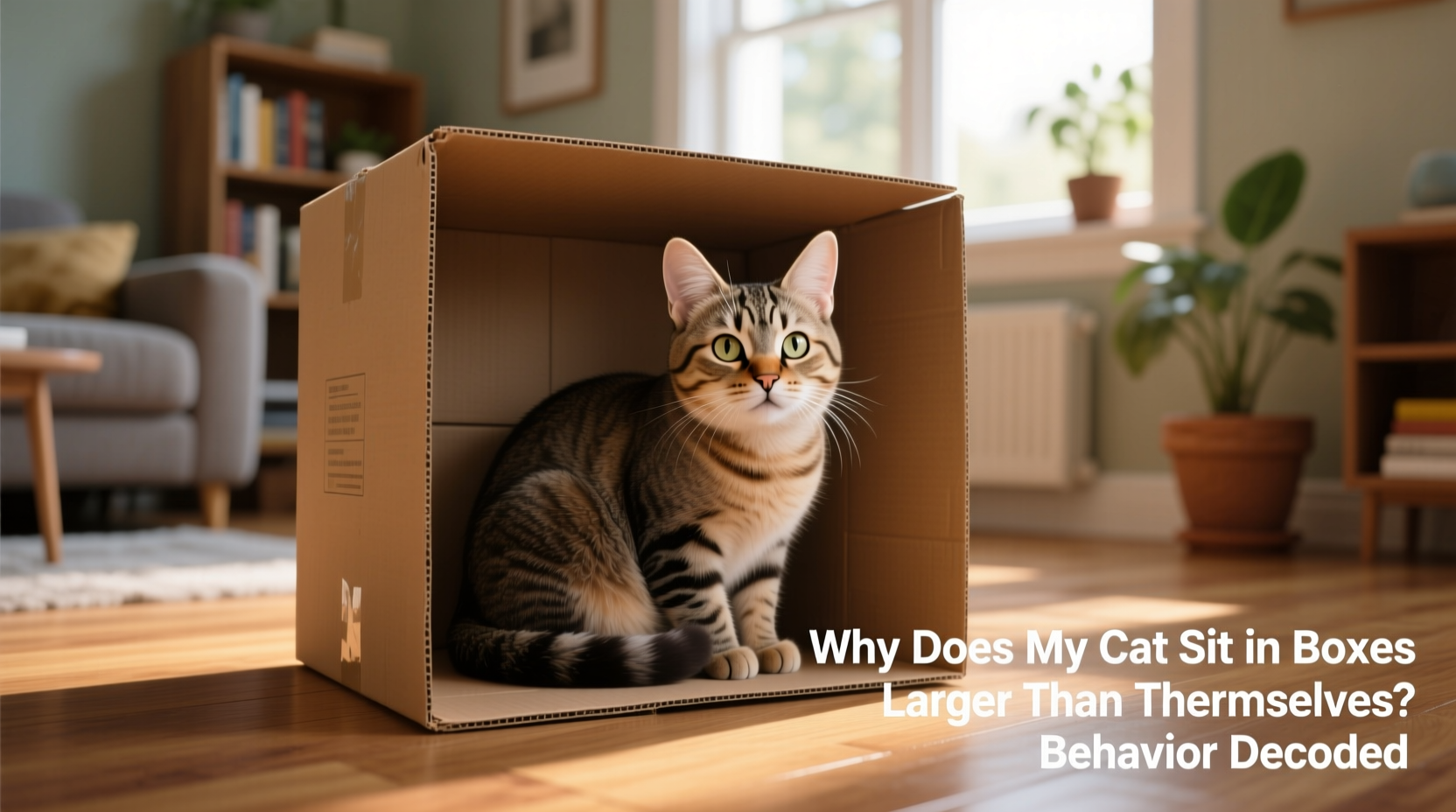
At first glance, it seems counterintuitive. If warmth is the goal, shouldn’t a smaller, tighter space be better? In fact, research suggests that while enclosed spaces help cats regulate body temperature, the size of the enclosure matters less than its perceived security. A study conducted at Utrecht University found that shelter cats given access to cardboard boxes adapted faster to new environments and exhibited lower stress levels than those without boxes. The presence of an enclosure—even a large one—provided psychological refuge.
But what makes a box feel “safe”? For cats, safety isn’t solely about physical fit; it’s about control over visibility and escape routes. A larger box often allows a cat to sit upright, observe surroundings from a slightly elevated position, and still feel shielded on three sides. This vantage point gives them both concealment and surveillance—a perfect balance for a predator-prey species that evolved to avoid threats while scanning for opportunities.
“Cats don’t just seek warmth in boxes—they seek control. A large box offers multiple postures, sightlines, and options for retreat.” — Dr. Sarah Ellis, Feline Behavior Scientist, University of Lincoln
Instinctual Roots: Survival Strategies from the Wild
Domestic cats may live in climate-controlled homes, but their brains operate on ancient wiring shaped by survival needs. In the wild, small carnivores like wildcats (Felis silvestris lybica, the ancestor of domestic cats) relied on concealed resting spots to avoid predators and ambush prey. Hollow logs, rock crevices, and dense brush provided cover where they could rest undisturbed. Cardboard boxes mimic these natural shelters—not by exact dimensions, but by function.
A large box doesn’t need to wrap tightly around a cat to serve its purpose. What matters is the sense of enclosure. Even if the box is spacious, the walls block peripheral movement, reducing visual stimuli that can cause low-level anxiety. In multi-cat households or busy homes, this reduction in environmental noise is critical. A 2020 study published in *Applied Animal Behaviour Science* noted that cats in high-traffic areas preferred larger enclosures because they allowed repositioning throughout the day while maintaining a consistent safe zone.
Thermal Comfort and Energy Conservation
Cats maintain a higher body temperature than humans—between 100.5°F and 102.5°F—and they’re hardwired to conserve energy. While fur provides insulation, enclosed spaces enhance heat retention. Even oversized boxes trap warm air near the ground, especially when lined with soft materials like towels or blankets.
Interestingly, cats often use large boxes seasonally. In winter, they curl tightly in one corner, minimizing surface area exposed to cooler air. In summer, they sprawl out fully, using the box as a cool, shaded platform away from direct sunlight. This adaptability makes large boxes functionally versatile. Unlike rigid pet beds, a cardboard container allows the cat to dictate posture, orientation, and proximity to walls based on thermal needs.
Moreover, kittens raised in enriched environments with varied-sized enclosures show greater behavioral flexibility later in life. Exposure to different spatial configurations during development supports cognitive resilience—a benefit that extends well into adulthood.
Scent Marking and Territorial Ownership
Cats are territorial animals, and scent plays a crucial role in defining personal space. They possess scent glands on their cheeks, paws, and flanks, which they use to mark objects through rubbing and scratching. When a cat enters a new box—regardless of size—it begins the process of claiming it as part of its domain.
A larger box offers more surface area for marking. As the cat turns, rubs its head, scratches the edges, or simply rests for hours, it deposits pheromones that signal ownership. Over time, the box becomes infused with the cat’s unique olfactory signature, reinforcing feelings of familiarity and control. This is particularly important in homes with multiple pets or frequent visitors, where environmental stability is key to emotional well-being.
In multi-cat homes, competition for resources—including resting spots—is common. A large box can become a contested zone or, conversely, a shared neutral ground if introduced properly. Observations from veterinary behaviorists suggest that providing several large boxes in separate locations reduces inter-cat tension by decreasing resource guarding.
Do’s and Don’ts of Cat Box Provision
| Do’s | Don’ts |
|---|---|
| Provide multiple boxes in different rooms | Use only one box for multiple cats |
| Secure boxes to prevent collapse | Leave loose plastic or tape inside |
| Rotate boxes weekly to maintain novelty | Dispose of soiled boxes immediately |
| Add soft linings for comfort | Use strong chemical cleaners on reusable boxes |
| Place boxes near heat sources in winter | Block all exits—ensure at least one open side |
Behavioral Enrichment: How Boxes Support Mental Health
Beyond physical comfort, boxes contribute significantly to mental stimulation. Cats thrive on environmental complexity—opportunities to explore, hide, jump, and observe. A large box can be transformed through minor modifications into an interactive space: cut two side-by-side openings for a “tunnel” effect, stack boxes for climbing, or place toys inside to encourage play.
Behavioral enrichment isn’t just for kittens. Older cats benefit equally from novel experiences that engage their senses and instincts. A 2018 case study from the American Association of Feline Practitioners followed a 12-year-old indoor cat exhibiting signs of mild depression after the loss of a companion animal. Introducing rotating large boxes with hidden treats and catnip dramatically improved activity levels and reduced hiding behaviors within three weeks.
“Our senior cat started exploring again once we added bigger, changeable boxes. It was like she rediscovered her curiosity.” — Maria Thompson, pet owner, Portland, OR
Step-by-Step Guide: Creating the Ideal Box Environment
- Select sturdy boxes: Choose corrugated cardboard with minimal wear. Avoid glossy or wax-coated packaging.
- Modify entrances: Cut one or two openings large enough for easy access but not so big that the structure loses its enclosed feel.
- Enhance comfort: Line the bottom with an old towel, fleece blanket, or removable pet mat.
- Add scent cues: Rub a cheek-worn toy or blanket along the interior to transfer familiar scents.
- Position strategically: Place the box in a low-traffic area with partial visibility—near a window or beside a favorite furniture piece works well.
- Rotate monthly: Replace or reposition the box every few weeks to maintain interest and hygiene.
- Monitor usage: Note how your cat uses the space—do they sleep, play, or just peek in? Adjust size or location accordingly.
Common Misconceptions About Cat Box Behavior
Despite how common box-sitting is, several myths persist. One widespread belief is that cats prefer small boxes because they’re warmer. While snug fits do retain heat, studies show cats consistently choose larger enclosures when given options. Another myth is that this behavior indicates loneliness or insecurity. In reality, healthy cats exhibit this regardless of socialization status—it’s normal, not pathological.
Some owners worry that oversized boxes encourage inappropriate elimination. However, there’s no evidence linking box size to litter box avoidance. The key factors remain cleanliness, accessibility, and location of the actual litter tray—not decorative or recreational boxes.
Frequently Asked Questions
Why won’t my cat use a small box but loves huge ones?
Cats value choice and mobility within a safe space. A large box allows them to stretch, turn, and adjust posture without exiting. Small boxes may feel restrictive, even if warmer. Size preference varies by individual, but most cats opt for versatility over tightness.
Is it safe for cats to play in moving boxes or those with tape?
No. Always remove packing tape, staples, and plastic liners before offering a box. These materials pose choking or intestinal blockage risks if ingested. Supervise initial interactions, especially with kittens.
Should I buy specialty cat caves instead of using boxes?
Commercial cat beds have benefits—durability, washability, design—but they don’t always replicate the psychological appeal of cardboard. Many cats prefer disposable boxes because they’re replaceable, non-territorial, and lack residual odors. Use both: boxes for rotation and novelty, purchased beds for long-term anchors.
Practical Checklist for Cat Owners
- Keep at least one clean, accessible box per cat in the home
- Inspect boxes weekly for damage or soiling
- Introduce new boxes gradually, allowing sniffing and exploration
- Avoid strong perfumes or disinfectants on or near boxes
- Encourage use with treats, toys, or pheromone sprays (e.g., Feliway)
- Recycle used boxes regularly to prevent mite buildup or mold
- Observe changes in box use—it may signal health or stress issues
Conclusion: Embracing the Quirks of Feline Nature
The image of a cat curled up in a box too big to make sense is more than a viral meme—it’s a window into the intricate mind of a species that values security, autonomy, and subtle environmental control. Far from being a random habit, this behavior reflects deep-seated instincts honed over millennia. By providing large, accessible boxes, you’re not indulging a silly whim; you’re supporting your cat’s mental health, thermal regulation, and sense of territory.
Instead of questioning why your cat chooses impractical spaces, celebrate their intelligence and adaptability. These choices aren’t illogical—they’re solutions to invisible needs. Whether your cat uses the box as a lookout post, nap station, or scent-marked sanctuary, each decision reinforces their confidence in their environment.




 浙公网安备
33010002000092号
浙公网安备
33010002000092号 浙B2-20120091-4
Comments
No comments yet. Why don't you start the discussion?