
Cats are creatures of mystery and contradiction—graceful yet clumsy, independent yet affectionate, aloof yet obsessed with the most ordinary cardboard box. If you’ve ever watched your cat squeeze into a shipping container clearly too small or lounge regally in a box far larger than necessary, you’ve likely wondered: Why do cats do this? The answer lies deep within their evolutionary psychology and behavioral instincts. It’s not just whimsy; it’s survival, comfort, and control all wrapped in corrugated fiberboard.
This seemingly simple act—sitting in boxes—is rooted in complex feline needs shaped over thousands of years. From hiding from predators to regulating body temperature, the cardboard box offers more than meets the eye. Understanding this behavior gives insight not only into your cat’s mind but also into how best to support their emotional and physical well-being at home.
The Evolutionary Roots of Box-Sitting Behavior
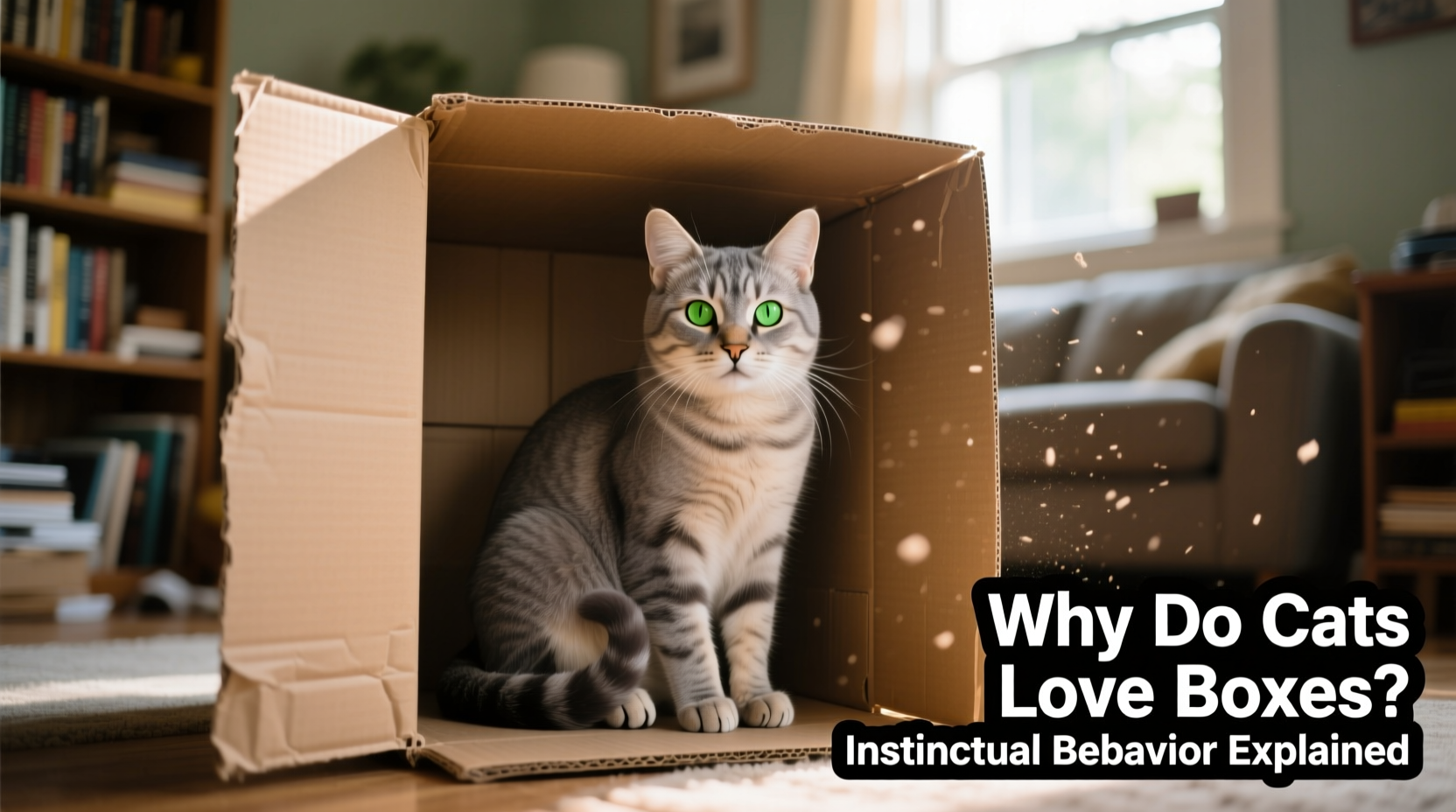
Cats, even domesticated ones, retain many instincts from their wild ancestors. In nature, small prey animals seek enclosed spaces for protection. Though house cats are apex predators in their own right when hunting toys or insects, they still carry the genetic memory of needing safe retreats. A box—even one much larger than the cat—provides a psychological boundary that mimics a den or burrow.
In the wild, felines use natural enclosures like hollow logs, rock crevices, or dense brush to hide from threats and observe their surroundings without being seen. These spaces offer both security and vantage points. When your cat climbs into a box significantly larger than their body, they aren’t necessarily trying to fit snugly—they’re claiming territory that feels contained and controllable.
Dr. Sarah Ellis, a feline behavior expert at the University of Lincoln, explains:
“Enclosed spaces reduce stress in cats because they provide an escape from environmental stimuli. Even if the space is oversized, the mere presence of walls on three or four sides triggers a sense of safety.” — Dr. Sarah Ellis, Feline Behavior Researcher
This need for environmental control is especially pronounced in multi-cat households or homes with frequent visitors, loud noises, or unpredictable routines. A box becomes a sanctuary where the cat can reset, observe, and feel empowered rather than exposed.
Thermoregulation: The Warmth Factor
One of the most practical reasons cats love boxes is temperature regulation. Cats maintain a higher body temperature than humans—between 100.5°F and 102.5°F (38°C–39.2°C)—and prefer warm environments. Cardboard is a natural insulator, trapping body heat and creating a cozy microclimate inside the box.
Even in a large box, your cat may curl up in one corner, effectively reducing the usable space to match their size while benefiting from the insulating properties of the surrounding walls. This behavior mirrors how wild cats would nest in sheltered spots to conserve energy and stay warm during cooler periods.
A study published in *Applied Animal Behaviour Science* found that shelter cats given access to cardboard boxes showed significantly lower stress levels compared to those without. While warmth played a role, the researchers emphasized that predictability and enclosure were equally important factors in reducing anxiety.
Predatory Instincts and Environmental Control
Beyond safety and warmth, boxes serve another critical function: hunting preparation. Cats are ambush predators. They rely on stealth, surprise, and precise timing to catch prey. An elevated or partially enclosed box gives them a perfect staging ground—a place to watch household activity, track movement, and launch playful attacks on unsuspecting shoelaces or ankles.
When a cat sits in a large box, they often position themselves near the edge, peering out with focused attention. This isn’t random lounging; it’s surveillance. The box functions as a blind, allowing them to remain hidden while scanning their domain. Even indoor cats, who’ve never hunted live prey, exhibit these behaviors instinctively.
This territorial monitoring reinforces their sense of control. In homes with multiple pets or changing layouts (like new furniture or renovations), having consistent observation posts helps cats re-establish familiarity and dominance. A large box might seem inefficient from a human perspective, but for a cat, it’s a strategic outpost.
Psychological Comfort and Stress Reduction
Cats are highly sensitive to changes in their environment. Moving, guests, construction noise, or even rearranging furniture can cause stress. Boxes provide immediate relief by offering a familiar structure—a “safe zone” they can claim instantly.
Interestingly, the size of the box doesn’t negate its calming effect. In fact, a larger box may be more appealing because it allows the cat to choose *where* to sit within it. That autonomy—the ability to select a spot based on light, draft, or proximity to a doorway—is crucial for emotional regulation.
Consider this real-world example:
Mini Case Study: Luna Adjusts to a New Apartment
Luna, a 3-year-old rescue tabby, moved with her owner from a quiet suburban house to a bustling city apartment. Within days, she began hiding under beds and avoiding interaction. Her owner introduced several cardboard boxes of varying sizes around the living area. One large moving box—nearly twice Luna’s length—was placed near the window with a soft towel inside. After initial hesitation, Luna began spending hours there each day, gradually increasing her time outside the box as well.
Within two weeks, Luna was more vocal, playful, and confident. The large box didn’t confine her—it gave her a base from which to explore a new, overwhelming environment. Over time, she rotated between multiple boxes, using them as emotional anchors during transitions.
This case illustrates that enclosure size is less important than perceived security. A large box isn’t inefficient; it’s flexible. It allows the cat to adapt their posture, orientation, and level of exposure based on mood and external stimuli.
Do’s and Don’ts of Supporting Your Cat’s Box Habit
| Do’s | Don’ts |
|---|---|
| Provide multiple boxes in different rooms for choice and accessibility. | Force your cat into a box or disturb them while inside. |
| Use clean, unprinted cardboard to avoid chemical exposure. | Use tape-heavy or stapled boxes that could injure curious paws. |
| Rotate boxes periodically to maintain novelty and interest. | Assume all cats will love every type of box—some prefer tunnels or covered beds. |
| Add soft bedding or catnip to encourage use. | Dispose of a frequently used box without offering a replacement. |
Step-by-Step: Creating the Ideal Box Environment for Your Cat
- Choose the Right Size: Select a box that’s at least 1.5 times your cat’s body length. Larger is acceptable as long as entry is easy.
- Modify Entry Points: Cut one side down slightly if needed, or create a single entrance for maximum privacy.
- Enhance Comfort: Line the bottom with a removable fabric mat or old t-shirt for warmth and scent familiarity.
- Place Strategically: Position the box in a low-traffic area with partial visibility—near a window or beside a favorite chair works well.
- Maintain Hygiene: Replace or clean the box weekly, especially if your cat uses it for sleeping.
- Observe Preferences: Note whether your cat likes open tops, enclosed sides, or elevated positions, and adjust future setups accordingly.
Frequently Asked Questions
Why does my cat sit in a box that’s way too big instead of a smaller, cozier one?
Cats value control and visibility as much as snugness. A larger box allows them to stretch, shift positions, and still benefit from surrounding walls. It also provides room for thermoregulation—if they get too warm, they can move to a cooler corner rather than leaving entirely.
Is it normal for my cat to prefer boxes over expensive cat beds?
Yes, extremely common. Many commercial cat beds lack the structural definition of a box—soft walls don’t provide the same sense of enclosure. Additionally, cardboard carries neutral or novel scents, making it more appealing than laundered fabric that smells strongly of detergent.
Should I be concerned if my cat suddenly starts hiding in boxes more often?
An increase in hiding behavior can signal stress, illness, or discomfort. If accompanied by changes in appetite, litter box use, or activity level, consult a veterinarian. Otherwise, occasional shifts in preference are normal, especially after environmental changes.
Expert Insight: What Veterinarians Say About Enclosure Preferences
Dr. Elizabeth Collinge, a veterinary behaviorist, emphasizes that enrichment doesn’t have to be expensive:
“The cardboard box is one of the most effective, low-cost enrichment tools we have. It satisfies multiple behavioral needs—security, warmth, play, and rest—all in a biodegradable package.” — Dr. Elizabeth Collinge, DVM, Veterinary Ethologist
She recommends integrating boxes into routine care, particularly during stressful events like travel, vet visits, or introducing new pets. Placing a familiar box in a carrier or quarantine area can dramatically reduce fear responses.
Final Thoughts: Embracing the Quirks of Feline Nature
The sight of a cat sitting in a box far too large may seem illogical, even comical. But beneath the surface, it reflects a sophisticated interplay of instinct, emotion, and environmental adaptation. Far from being a trivial habit, box-sitting is a window into the feline psyche—an expression of self-preservation, comfort-seeking, and territorial awareness.
As cat owners, we don’t need to fully understand every nuance of their behavior to respect it. Sometimes, the simplest gestures—leaving a clean box out, removing loose tape, or placing it near a sunlit floor—are the most meaningful. By supporting these natural tendencies, we help our cats thrive emotionally and physically, even in modern, human-designed spaces.




 浙公网安备
33010002000092号
浙公网安备
33010002000092号 浙B2-20120091-4
Comments
No comments yet. Why don't you start the discussion?