
Cats have long fascinated humans with their enigmatic behaviors—aloof one moment, affectionate the next, and inexplicably drawn to cardboard boxes. Even more curious is that cats often choose boxes far larger than their bodies, squeezing into corners or curling up in the center of an oversized container as if claiming territory. This seemingly illogical preference isn’t random; it’s deeply rooted in feline psychology, survival instinct, and emotional comfort. Understanding why your cat sits in boxes much larger than themselves reveals not just a quirk, but a window into their evolutionary past and emotional needs.
The Evolutionary Instinct Behind Box-Sitting
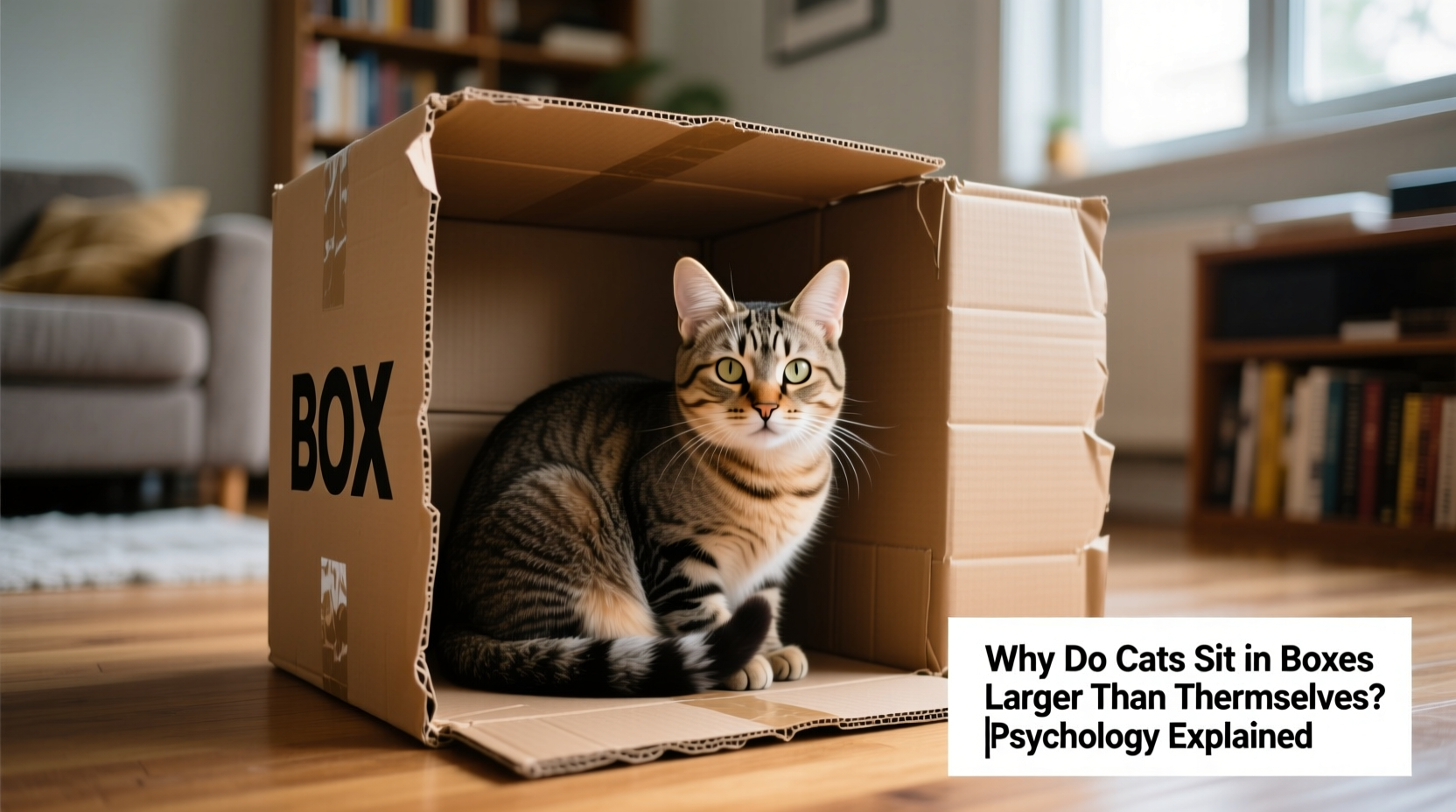
Cats are descendants of solitary hunters who relied on stealth, concealment, and environmental control for survival. In the wild, small enclosures like hollow logs, rock crevices, or dense brush provide shelter from predators and a vantage point for stalking prey. These spaces offer three critical advantages: protection, warmth, and surveillance. A box—even one significantly larger than the cat—replicates this sense of enclosure.
While modern domestic cats don’t face the same threats as their ancestors, their brains still operate under the same primal programming. When a cat enters a box, its nervous system registers safety. The walls, even if distant, create psychological boundaries. This is known as a \"secure perimeter response\"—a subconscious signal that danger is less likely to approach undetected. The size of the box matters less than the presence of defined edges. A large box with high sides offers more perceived security than an open space, regardless of how much empty room remains.
“Cats seek out confined spaces not because they fit perfectly, but because the structure reduces sensory overload and provides a sense of control.” — Dr. Sarah Thompson, Feline Behavioral Scientist, Cornell University College of Veterinary Medicine
Thermoregulation and Comfort: The Warmth Factor
One of the most practical reasons cats love boxes is temperature regulation. Cats maintain a higher body temperature than humans—around 101–102.5°F (38.3–39.2°C)—and prefer ambient temperatures between 86–100°F (30–38°C) to feel comfortable. Cardboard is a natural insulator, trapping body heat and reducing exposure to drafts.
Even in a large box, a cat will often tuck itself into a corner or curl tightly, minimizing surface area exposed to cooler air. The excess space doesn’t diminish the thermal benefit; instead, it allows the cat to adjust its position based on airflow, sunlight, or household activity. This flexibility enhances comfort without sacrificing warmth.
Psychological Security in a Chaotic Environment
Domestic environments can be overwhelming for cats. Household noises, visitors, other pets, and sudden movements create stress. Boxes act as “safe rooms”—low-cost, accessible retreats where cats regain a sense of control. This is particularly evident in multi-cat households or homes with frequent activity.
A study conducted at the University of Utrecht in 2014 found that shelter cats given access to cardboard boxes showed significantly lower stress levels within the first week of arrival compared to those without boxes. The researchers concluded that the availability of hiding places accelerates acclimation and improves overall well-being.
This need for psychological refuge explains why a cat might choose a large box even when smaller ones are available. It’s not about physical fit—it’s about having space to monitor surroundings while remaining hidden. A large box allows the cat to observe without being seen, maintaining vigilance while feeling protected.
The Role of Territory and Scent Marking
Cats are territorial animals that rely heavily on scent to mark and claim space. They possess scent glands on their cheeks, paws, and flanks, which release pheromones when they rub against objects. By sitting—or simply occupying—a box, your cat deposits its unique chemical signature, effectively saying, “This is mine.”
Larger boxes offer more surface area for scent marking, making them more valuable as territory markers. Even if the cat doesn’t use every inch, the act of inhabiting the space reinforces ownership. This behavior is especially common in homes with multiple pets, where competition for secure zones is subtle but real.
Interestingly, cats often revisit the same box repeatedly, reinforcing their scent over time. This creates a familiar, comforting environment that reduces anxiety. The size of the box may also allow for future expansion—your cat may not use all the space today, but reserves it for later use, naps, or observation posts.
Curiosity, Play, and Cognitive Engagement
Beyond safety and warmth, boxes stimulate a cat’s natural curiosity. The crinkle of cardboard, the novelty of a new shape, and the opportunity to explore confined spaces activate hunting instincts. A large box becomes a playground—a place to leap into, peek out from, or bat toys around inside.
From a cognitive standpoint, boxes provide mental enrichment. They introduce variability into an otherwise predictable environment. A cat entering a large box may test its stability, scratch the interior, or reposition itself multiple times, engaging both motor skills and decision-making. This kind of low-stress exploration supports brain health and prevents boredom-related behaviors like over-grooming or aggression.
Moreover, the unpredictability of human behavior makes boxes appealing. If a box appears suddenly—say, after unpacking groceries—the cat investigates as part of its environmental monitoring routine. The size of the box amplifies this intrigue; a large container suggests potential for discovery, even if it ultimately holds nothing.
Mini Case Study: Luna and the Moving Box
Luna, a 3-year-old domestic shorthair, lived in a busy two-person apartment with occasional guests. Her owners noticed she consistently chose a large shipping box—nearly twice her length—over smaller enclosures or plush cat beds. Initially, they assumed she preferred the texture of cardboard. But careful observation revealed a pattern: Luna used the box primarily during evenings when the television was loud or friends visited.
After placing a second identical box in a quieter corner, Luna began using both—one as a daytime play zone, the other as a nighttime retreat. Over time, she rotated between them, often rubbing her cheeks along the edges. A veterinarian confirmed Luna showed no signs of anxiety but benefited from having multiple secure zones. The large boxes provided not just shelter, but choice—an essential component of feline well-being.
Do’s and Don’ts: Managing Your Cat’s Box Behavior
| Do’s | Don’ts |
|---|---|
| Provide multiple boxes in different rooms for choice and rotation. | Remove boxes abruptly—this can cause stress or territorial insecurity. |
| Use non-toxic tape and remove staples to prevent injury. | Use plastic bins exclusively—lack of breathability increases overheating risk. |
| Place boxes near windows or quiet corners for optimal viewing and comfort. | Force your cat into a box—they must enter voluntarily to feel safe. |
| Replace damp or soiled boxes promptly to maintain hygiene. | Assume all cats like boxes—some prefer tunnels or elevated perches. |
Expert Insight: What Veterinarians and Ethologists Say
Feline ethology—the scientific study of cat behavior—has increasingly validated the importance of environmental enrichment. Dr. Karen Becker, a proactive pet care expert, emphasizes that “what looks like a simple preference is actually a complex interplay of instinct, emotion, and cognition.”
“The box isn’t just a hiding spot. It’s a coping mechanism, a hunting blind, a warming station, and a declaration of territory—all in one.” — Dr. Karen Becker, DVM, Integrative Wellness Advocate
This multifunctional role explains why cats don’t discriminate based on size. A large box may serve different purposes at different times: a nap spot in the morning, a lookout post in the afternoon, and a play arena when kittens or toys are introduced.
Step-by-Step: Creating the Ideal Box Environment for Your Cat
- Select sturdy, clean cardboard boxes with intact flaps and no strong odors from packaging materials.
- Remove hazards such as plastic wrap, tape residue, or sharp edges.
- Position boxes in low-traffic, warm areas near natural light or heating vents.
- Add soft bedding (optional) like a fleece blanket to enhance comfort without reducing the structural integrity of the box.
- Rotate boxes weekly to maintain novelty and hygiene—swap locations or introduce new shapes.
- Observe your cat’s usage patterns to determine preferences: Is it used for sleeping, playing, or hiding?
- Introduce multiple boxes in multi-cat homes to prevent competition and support individual space needs.
Frequently Asked Questions
Is it normal for my cat to sit in boxes much larger than themselves?
Yes, it’s completely normal. Cats prioritize perceived security and environmental control over physical fit. A large box still provides boundaries, insulation, and a sense of ownership, even if there’s extra space.
Should I be concerned if my cat suddenly starts hiding in boxes more often?
Increased hiding can signal stress, illness, or environmental changes. If accompanied by changes in appetite, grooming, or litter box use, consult a veterinarian. Otherwise, occasional increased box use is typically benign.
Can I use plastic containers instead of cardboard boxes?
Plastic bins can work if they have adequate ventilation and soft lining, but they lack the insulating and scratching-friendly qualities of cardboard. Many cats avoid plastic due to noise and static. Cardboard remains the preferred option for most felines.
Conclusion: Respecting Your Cat’s Need for Space—Big or Small
The sight of a cat curled up in a box far too large is more than a viral internet moment—it’s a reflection of deep-seated instincts and emotional intelligence. From thermoregulation to territorial behavior, from stress reduction to cognitive engagement, the cardboard box serves as a Swiss Army knife of feline needs. Size is secondary to function: what matters is the sense of safety, control, and familiarity it provides.
As cat owners, we can support our pets not by questioning their choices, but by honoring them. Offering accessible, safe enclosures—even oversized ones—affirms their autonomy and reduces anxiety in human-dominated environments. Instead of removing the box when it seems unnecessary, consider it an invitation to observe, understand, and connect.




 浙公网安备
33010002000092号
浙公网安备
33010002000092号 浙B2-20120091-4
Comments
No comments yet. Why don't you start the discussion?