
Cats are creatures of habit, mystery, and undeniable charm. One of the most endearing and widely observed quirks among domestic cats is their inexplicable attraction to cardboard boxes. Whether it’s a shipping box left on the floor or a small delivery container, if it’s made of cardboard, there’s a good chance your cat has claimed it as personal territory. But why do cats exhibit this behavior so consistently? The answer lies deep within their evolutionary biology, psychological needs, and sensory preferences. Experts in animal behavior and feline psychology point to the nesting instinct as a primary driver—rooted in survival, comfort, and emotional regulation.
The Evolutionary Roots of the Nesting Instinct
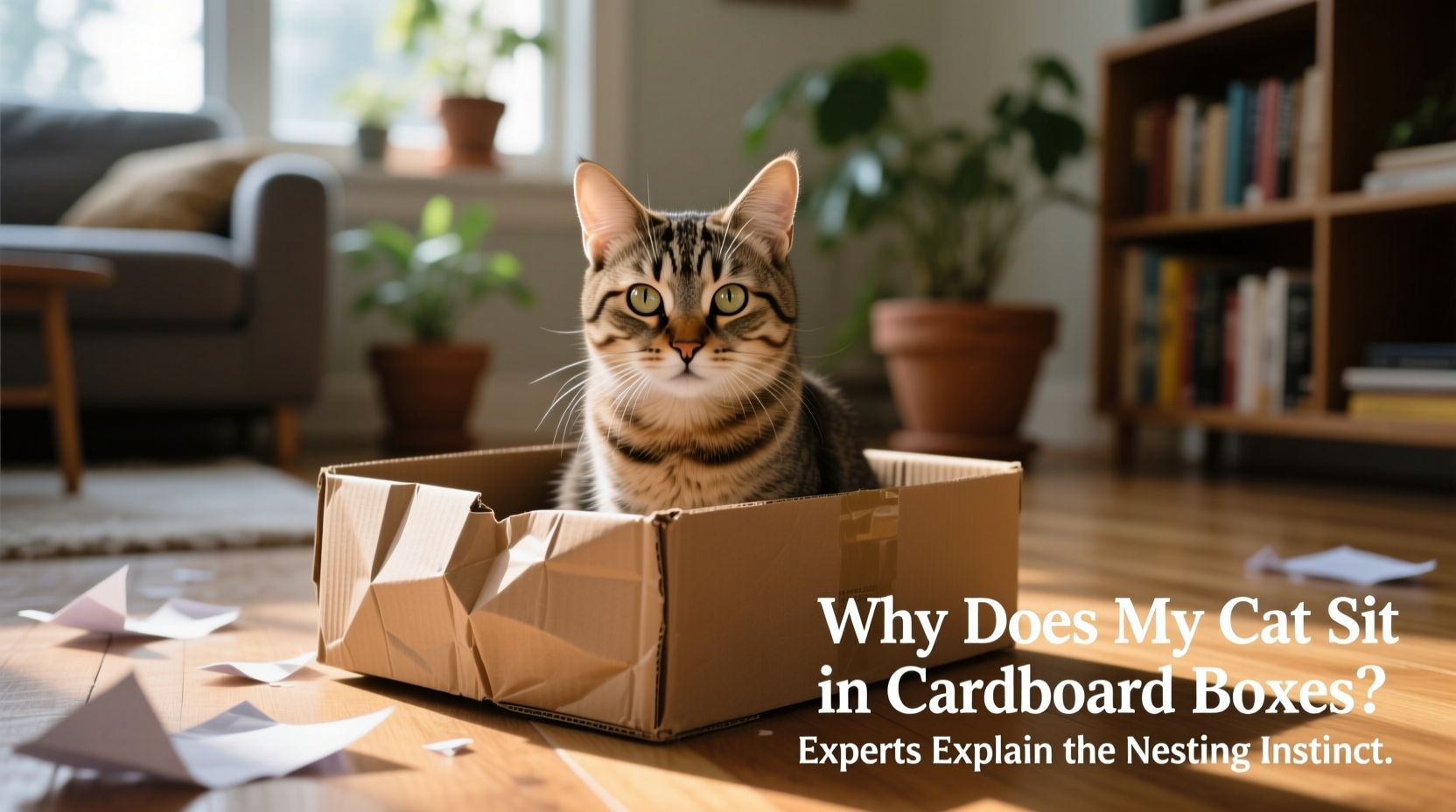
In the wild, cats are both predators and prey. While they hunt with precision, smaller felines—especially kittens and vulnerable adults—are at risk from larger animals. This duality has shaped their behavior over thousands of years. Seeking out enclosed spaces provides protection, concealment, and a sense of security. Cardboard boxes mimic the natural shelters cats would seek in the wild: hollow logs, dense brush, or rock crevices.
Dr. Sarah Thompson, a certified feline behaviorist with over 15 years of clinical experience, explains:
\"Enclosed spaces activate a cat’s innate need for safety. Even domesticated cats retain these instincts. A box isn’t just a toy—it’s a refuge, a den, and sometimes even a hunting blind.\"
This nesting instinct is especially strong in kittens, who rely on warmth and protection during early development. In multi-cat households, dominant cats may claim boxes first—not for play, but to secure a safe zone where they can observe without being seen.
Thermal Regulation: Warmth and Insulation
Cats have a higher thermoneutral zone than humans—the temperature range in which they don’t need to expend energy to stay warm. A cat’s ideal ambient temperature ranges between 86°F and 100°F (30°C–38°C), far above typical room temperatures in most homes. Cardboard, despite its flimsy appearance, is an excellent insulator due to the air pockets trapped within its corrugated layers.
When a cat curls up inside a box, the walls reflect body heat back toward them, creating a microclimate of warmth. This is particularly appealing during colder months or in air-conditioned environments. Studies conducted at the University of Utrecht found that shelter cats given access to cardboard boxes exhibited lower stress levels and adapted more quickly to new surroundings—largely due to improved thermal comfort.
Stress Reduction and Environmental Security
Modern homes, while safe, can be overwhelming for cats. Sudden noises, unfamiliar visitors, or changes in routine can elevate stress hormones like cortisol. Enclosed spaces act as buffers against sensory overload. A study published in *Applied Animal Behaviour Science* demonstrated that cats introduced to new environments showed significantly reduced anxiety when provided with hiding places such as boxes.
The walls of a cardboard box limit visual stimuli and muffle sound, allowing cats to feel less exposed. Unlike open beds or cushions, boxes offer a defined boundary—a psychological \"container\" that helps cats regulate their environment. This is crucial for indoor cats who lack the ability to roam or escape perceived threats.
Interestingly, the height of the box walls matters. Boxes with sides at least equal to the height of the cat when sitting allow full visibility while still providing cover. This vantage point supports their predatory nature—they can survey the room without exposing themselves.
Sensory Appeal and Novelty
Cats are highly sensitive to scent, texture, and novelty. A fresh cardboard box carries the faint aroma of paper pulp and adhesive, which many cats find intriguing. Unlike plastic or fabric, cardboard is porous and absorbs scents—including the cat’s own pheromones—making it easier for them to mark the space as theirs.
Moreover, the crinkly texture under paw stimulates tactile receptors. Some cats will scratch, knead, or rub against the interior, reinforcing ownership through both physical interaction and scent marking. The novelty factor also plays a role: a new object in a familiar space triggers investigative behavior, and once explored, the box becomes a trusted fixture.
This explains why removing a favored box often leads to protest—cats form attachments not just to people, but to objects that fulfill emotional and physical needs.
| Factor | How It Influences Box Use |
|---|---|
| Insulation | Cardboard traps body heat, helping cats maintain optimal temperature. |
| Security | Enclosed design reduces exposure and lowers stress in unpredictable environments. |
| Scent Retention | Porous material holds the cat’s scent, reinforcing territorial familiarity. |
| Tactile Feedback | Crinkly texture satisfies curiosity and encourages exploration. |
| Visual Control | Allows cats to observe surroundings while feeling hidden. |
Behavioral Benefits in Multi-Cat Households
In homes with multiple cats, resource competition can lead to tension. Boxes serve as neutral zones or private retreats, reducing conflict. When each cat has access to at least one enclosed space, territorial disputes decrease significantly.
A real-world example comes from the Rivera household in Portland, Oregon. After adopting a second cat, Luna, their resident cat Milo began hiding under furniture and avoiding shared areas. Introducing several cardboard boxes—one per room—allowed both cats to establish individual territories. Within two weeks, aggression incidents dropped from daily to nearly zero. “It was like giving them invisible fences,” says owner Maria Rivera. “They still interact, but now they have safe exits.”
Veterinarian Dr. Alan Perez notes:
\"In multi-cat dynamics, vertical space and hiding spots are just as important as food and water. Boxes are low-cost tools for promoting harmony.\"
Step-by-Step Guide to Optimizing Box Use for Your Cat
- Select the Right Size: Choose a box large enough for your cat to turn around and lie down comfortably, but not so big that it loses its cozy feel.
- Remove Lids and Sharp Edges: Ensure no tape remnants or jagged flaps remain that could injure your cat.
- Elevate for Observation: Place the box on a side table or shelf to give your cat a better view of the room.
- Add Soft Bedding: Line the bottom with a washable cushion or fleece blanket for added comfort.
- Rotate Boxes Weekly: Introduce a new box every 7–10 days to maintain novelty and prevent boredom.
- Respect Boundaries: If your cat is inside, avoid reaching in or disturbing them unless necessary.
Common Misconceptions About Cats and Boxes
Despite widespread observation, several myths persist about why cats love boxes:
- Myth: Cats only use boxes for play.
Reality: While some cats play in boxes, most use them for rest and security. - Myth: Only certain breeds like boxes.
Reality: Box preference spans all breeds and ages—though shyer cats may use them more frequently. - Myth: Plastic containers are just as good.
Reality: Plastic doesn’t insulate as well and lacks the comforting crinkle sound cats enjoy.
Frequently Asked Questions
Is it safe for my cat to chew on cardboard?
Occasional nibbling is normal and usually harmless. However, ingesting large pieces can cause gastrointestinal blockages. Monitor your cat and remove heavily damaged boxes. Avoid boxes with ink, tape residue, or chemical treatments.
What if my cat ignores the box I provide?
Not all cats respond immediately. Try placing treats or catnip inside to encourage interest. Location matters—position the box in a quiet corner near a window or heat source. Some cats prefer alternative enclosures like covered beds or tunnels.
Can I reuse old boxes?
Yes, but inspect for mold, moisture damage, or strong odors. Clean with mild soap and water if needed, then dry thoroughly. Replace if the structure is weakened or edges are frayed.
Checklist: Creating a Cat-Friendly Box Environment
- ✅ Provide at least one box per cat
- ✅ Position boxes away from high-traffic areas
- ✅ Use non-toxic materials (no staples, minimal tape)
- ✅ Rotate boxes regularly to maintain interest
- ✅ Monitor for signs of overuse (e.g., refusing other spaces)
- ✅ Combine with scratching posts or toys nearby to enrich the area
Conclusion: Respecting the Instinct, Enhancing Wellbeing
The tendency for cats to sit in cardboard boxes is far more than a quirky internet meme—it’s a window into their complex psychological and physiological needs. From regulating body temperature to managing stress and asserting territorial control, the humble box serves multiple essential functions. By understanding and supporting this nesting instinct, cat owners can significantly improve their pets’ quality of life.
You don’t need expensive cat furniture to make a difference. A simple cardboard box, thoughtfully placed and maintained, can become a cornerstone of your cat’s daily comfort. Instead of removing boxes out of habit, consider preserving them—or repurposing them into dedicated cat zones. In doing so, you’re not just indulging a whimsical behavior; you’re honoring a deep-seated survival mechanism that continues to shape feline wellbeing today.




 浙公网安备
33010002000092号
浙公网安备
33010002000092号 浙B2-20120091-4
Comments
No comments yet. Why don't you start the discussion?