
If you've ever brought home a new appliance only to find your cat immediately claiming the cardboard box as its personal throne, you're not alone. This common yet curious behavior—cats sitting in empty boxes—has baffled and delighted pet owners for generations. While it may seem whimsical, there’s a deep-rooted biological explanation behind it. Far from being random quirks, these behaviors stem from survival strategies passed down through thousands of years of evolution. Understanding why cats are drawn to confined spaces like boxes reveals much about their psychology, environmental needs, and natural instincts.
The Evolutionary Need for Security
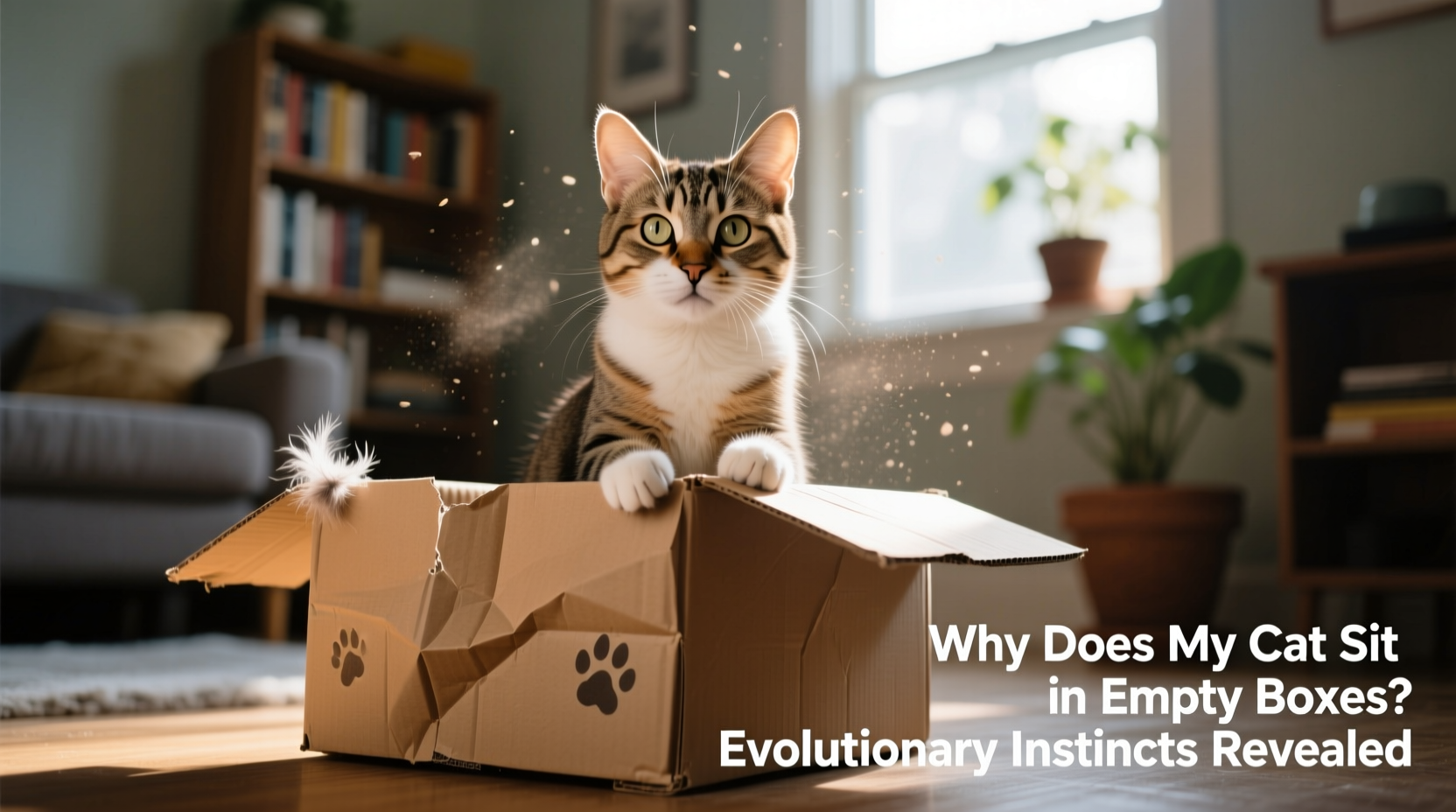
Cats, both wild and domesticated, are descendants of solitary hunters that evolved in environments where safety was never guaranteed. In the wild, small predators must remain vigilant against larger animals. To survive, they rely on stealth, concealment, and quick access to shelter. Enclosed spaces such as hollow logs, rock crevices, or dense underbrush provided essential protection from threats and extreme weather.
Domestic cats retain these ancestral instincts despite living in safe homes. An empty box mimics the qualities of a natural den: it has walls on four sides, limits visibility from outside, and offers a sense of enclosure. When a cat enters a box, it activates ancient neural pathways associated with safety and territorial control. From an evolutionary standpoint, tight spaces reduce exposure to potential danger, allowing cats to observe their surroundings while remaining hidden—a critical advantage for ambush predators.
“Cats don’t just seek comfort—they seek control over their environment. A box gives them a private zone where they feel dominant and secure.” — Dr. Sarah Thompson, Feline Behavior Specialist
Thermoregulation: The Warmth Factor
Another compelling reason cats favor boxes lies in temperature regulation. The average indoor temperature comfortable for humans (around 70°F or 21°C) is cooler than what cats prefer. Cats maintain a higher body temperature—between 100.5°F and 102.5°F (38°C–39.2°C)—and are most comfortable in ambient temperatures between 86°F and 97°F (30°C–36°C).
Cardboard is a natural insulator. Its fluted structure traps air, creating a thermal barrier that helps retain body heat. When a cat curls up inside a box, especially one recently unpacked and still holding residual warmth from handling or sunlight, it becomes an instant cozy microclimate. This explains why cats often choose boxes over plush cat beds—function trumps luxury when thermoregulation is at stake.
In colder months, this behavior intensifies. Studies conducted by the American Association of Feline Practitioners show that cats exposed to lower room temperatures spend significantly more time in enclosed spaces compared to warmer conditions. This isn't mere preference—it's physiological necessity.
Stress Reduction and Environmental Control
Modern homes, though safe, are full of unpredictable stimuli: loud noises, sudden movements, unfamiliar visitors, or other pets. For a species wired to assess risk constantly, such unpredictability can be mentally exhausting. Boxes serve as “safe rooms” where cats can retreat, decompress, and regain a sense of control.
Research published in *Applied Animal Behaviour Science* found that shelter cats given access to hiding boxes adjusted to new environments faster and showed lower cortisol levels (a key stress hormone) than those without. The study concluded that accessible hiding spots improved overall welfare and reduced signs of fear-based behavior.
This principle applies equally to household cats. Whether recovering from a veterinary visit, avoiding a barking dog, or simply needing downtime, a box offers immediate psychological relief. It functions as a sensory buffer, dampening auditory and visual input, which allows the nervous system to relax.
Do’s and Don’ts of Providing Hiding Spaces
| Action | Recommendation |
|---|---|
| Do place boxes in quiet areas | Choose low-traffic zones like corners of bedrooms or behind furniture |
| Don’t force interaction | Avoid reaching into the box or trying to pull the cat out |
| Do rotate boxes regularly | Fresh boxes renew interest and prevent boredom |
| Don’t use taped-shut containers | Ensure easy exit; trapped cats experience panic |
| Do reinforce with soft bedding | Add a fleece liner for extra warmth and comfort |
Hunting Instincts and Ambush Behavior
Beyond safety and warmth, boxes also tap into a cat’s predatory nature. In the wild, cats rely on ambush tactics—lying in wait before launching a surprise attack. Enclosures like boxes simulate ideal stalking positions. With limited visibility from the outside and a clear view of the surrounding area, a cat in a box is perfectly positioned to monitor movement.
You might notice your cat crouched low in a box, ears forward, eyes locked on a toy or another pet passing by. This isn’t just play—it’s rehearsal. The confined space encourages a crouch-and-pounce posture, engaging muscles used in real hunts. Even indoor cats with no need to hunt still require mental stimulation, and boxes provide an outlet for instinctual behaviors that would otherwise go unfulfilled.
This connection between confinement and predation is further supported by observations in multi-cat households. Dominant cats often claim central boxes as observation posts, using elevation and positioning to assert social control. Subordinate cats may use smaller, more concealed boxes near baseboards or under tables—optimal escape routes factored into their choice.
Mini Case Study: Luna and the Moving Day Box
Luna, a three-year-old tabby, had always been shy around strangers. When her family moved to a new apartment, she disappeared for nearly two days. Her owner finally spotted her nestled deep inside a taped-up moving box left in the corner of the living room. Though the box offered no bedding or insulation, Luna remained inside for over 12 hours at a time, only emerging briefly to eat.
After consulting a feline behaviorist, the owner learned that the box represented continuity amid chaos. Despite being empty, its familiar scent (from prior handling) and enclosed design gave Luna a psychological anchor. Within a week of adding additional hideouts—fabric tunnels, covered cat caves, and open-top baskets—Luna began exploring the apartment confidently.
This case illustrates how simple solutions like boxes can dramatically improve transition periods for cats. They’re not hiding out of fear alone—they’re recalibrating their sense of territory.
Why Not All Cats React the Same Way
While many cats exhibit strong box preferences, individual differences exist based on personality, early life experiences, and breed tendencies. For example, Siamese and Bengal cats—often more outgoing and active—may spend less time in boxes than Persian or Scottish Fold cats, which tend to be more reserved.
Socialization during kittenhood also plays a role. Kittens raised in enriched environments with varied textures and enclosures are more likely to explore boxes voluntarily. Conversely, cats with traumatic pasts or limited early stimulation may avoid novel objects altogether, including boxes, until trust is established.
It’s important not to interpret disinterest as abnormal. Some cats prefer elevated perches or open beds. Others may use boxes temporarily during stressful events but not as daily lounging spots. The key is offering options and observing what your cat chooses.
Checklist: Creating a Cat-Friendly Environment with Boxes
- Provide at least one enclosed space per cat in the household
- Use clean, non-toxic cardboard boxes without staples or tape residue
- Place boxes in quiet, low-traffic areas with good sightlines
- Rotate boxes weekly to maintain novelty and hygiene
- Add soft liners or old sweaters for added comfort
- Avoid placing boxes near loud appliances or high-activity zones
- Never disturb a cat while inside a box unless necessary
- Monitor for signs of over-reliance (e.g., refusing to leave), which may indicate chronic stress
FAQ: Common Questions About Cats and Boxes
Is it safe for my cat to sit in cardboard boxes?
Yes, as long as the box is clean, structurally sound, and free of hazards like tape, plastic, or inked labels. Avoid boxes previously used for storage of chemicals or food items that could attract pests. Always ensure your cat can enter and exit freely.
Why does my cat only sit in boxes after I’ve opened them?
The act of opening a box introduces new scents, textures, and sounds—all stimulating to a cat’s senses. Additionally, human interaction with the box deposits familiar pheromones, making it more appealing. Novelty itself is a major attractant; cats are naturally curious about changes in their environment.
Can I use alternatives to cardboard boxes?
Absolutely. Commercial cat caves, igloo beds, and fabric tunnels offer similar benefits. However, cardboard remains popular due to its affordability, replaceability, and insulating properties. Many cats enjoy the ability to scratch and manipulate cardboard, adding tactile enrichment.
Conclusion: Respecting Instinct, Enhancing Well-Being
The seemingly simple act of a cat sitting in an empty box is anything but trivial. It reflects a complex interplay of evolutionary survival mechanisms—protection from predators, thermoregulation, stress management, and predatory preparation. By recognizing these behaviors as biologically driven rather than merely cute, we gain deeper insight into our cats’ emotional and physical needs.
Providing accessible, safe enclosures doesn’t require expensive gear. Often, a humble cardboard box suffices. What matters most is consistency, respect for boundaries, and understanding that even in a secure home, your cat’s instincts remain finely tuned to a world of uncertainty. When we accommodate these instincts, we don’t just enrich their lives—we strengthen the bond we share.




 浙公网安备
33010002000092号
浙公网安备
33010002000092号 浙B2-20120091-4
Comments
No comments yet. Why don't you start the discussion?