
If you’ve ever brought home a new appliance or received a package online, you know the drill: before you can even open it fully, your cat has already claimed the box as their personal throne. It’s a familiar scene—your feline curled up in an empty cardboard container, peering out with quiet satisfaction. But why do cats do this? What drives such a seemingly odd yet universally observed behavior? The answer lies deep within feline biology, psychology, and evolutionary history. Far from being just a cute quirk, a cat's attraction to boxes is rooted in survival instincts, emotional regulation, and sensory preferences that have been shaped over thousands of years.
The Evolutionary Instinct for Concealment
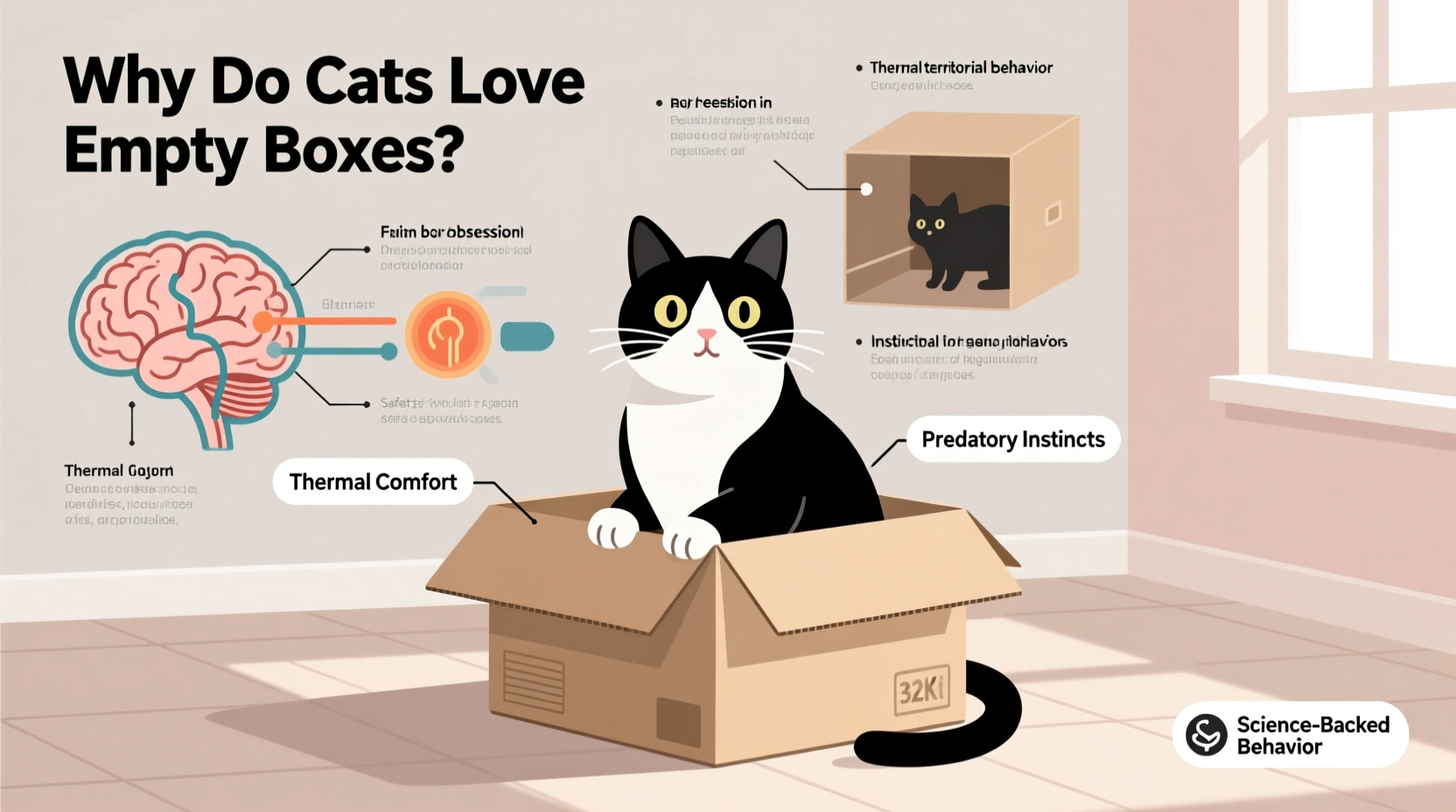
Cats are natural predators, but they are also prey animals in certain contexts. In the wild, small felines like African wildcats—the ancestors of domestic cats—rely on concealment to avoid larger predators and to stalk their own prey effectively. Enclosed spaces provide both physical protection and visual cover, making them ideal for resting, observing surroundings, and launching surprise attacks.
Empty boxes mimic the sheltered dens and burrows these wild ancestors would seek. Even though modern house cats face no real threat from hawks or coyotes, the instinct to find enclosed, confined spaces remains hardwired. A study published in *Applied Animal Behaviour Science* found that shelter cats given access to hiding boxes showed significantly lower stress levels than those without. This suggests that enclosed spaces aren’t just comforting—they’re essential for psychological well-being.
“Enclosure-seeking behavior in cats isn't whimsical—it's a critical component of their coping strategy in unfamiliar or stressful environments.” — Dr. Sarah Ellis, Feline Behavior Scientist, University of Lincoln
Thermoregulation: The Warmth Factor
Another key reason cats love boxes ties into their need for warmth. The average domestic cat prefers ambient temperatures between 86°F and 97°F (30–36°C), much higher than typical human comfort zones. Cardboard is a surprisingly effective insulator, trapping body heat and creating a cozy microclimate. When a cat curls up inside a box, the walls reflect radiant heat back toward them, reducing the energy needed to maintain their core temperature.
This thermoregulatory benefit explains why cats often choose boxes over plush cat beds—even expensive ones. While soft bedding may look inviting to humans, it doesn’t offer the same heat retention or boundary definition. A box provides not only warmth but also a sense of containment that makes the cat feel secure while conserving energy.
Stress Reduction and Environmental Security
Cats are highly sensitive to changes in their environment. Moving homes, introducing new pets, loud noises, or even rearranging furniture can trigger stress responses. In such situations, access to hiding spots becomes crucial. Boxes serve as instant safe zones—private retreats where cats can observe without being seen, lowering their perceived vulnerability.
Research conducted at Utrecht University demonstrated that newly arrived shelter cats given cardboard boxes adapted to their environment faster and exhibited more social behaviors within days compared to control groups without boxes. The simple presence of a box allowed cats to manage their stress proactively, leading to better overall welfare.
This principle applies equally in homes. A cat that feels overwhelmed by visitors, children, or noisy appliances may retreat into a box not out of stubbornness, but as a self-regulating mechanism. By controlling visibility and auditory input, the cat regains a sense of agency over its surroundings.
Sensory Enrichment and Cognitive Engagement
Beyond safety and warmth, boxes provide mental stimulation. Cats are curious creatures who engage with their world through exploration. An empty box represents novelty—an object to investigate, manipulate, and claim. The crinkly sound of cardboard, the texture under their paws, and the spatial challenge of squeezing into tight spaces all contribute to sensory enrichment.
Interestingly, cats often exhibit what ethologists call “exploratory looping”—a pattern of repeatedly entering and exiting novel objects. This behavior allows them to assess risk and reward incrementally. A box might start as something to sniff from afar, then cautiously enter, and eventually become a favored sleeping spot once deemed safe.
Moreover, boxes can become part of play sequences. A cat may leap into a box dramatically, use it as a vantage point, or even treat it as a toy by clawing at the edges. These actions fulfill natural hunting and territorial behaviors, offering cognitive engagement that helps prevent boredom-related issues like over-grooming or destructive scratching.
How Boxes Compare to Other Cat Hiding Options
| Item | Pros | Cons |
|---|---|---|
| Cardboard Box | Inexpensive, insulating, easy to replace, satisfies chewing/scratching urges | Not durable long-term, can attract pests if left too long |
| Plastic Hideaway Tunnel | Durable, washable, collapsible designs available | Poor insulation, slippery surface, less natural feel |
| Fabric Cat Cave | Soft texture, portable, machine-washable | Less structural integrity, harder to clean deeply |
| Elevated Perch with Cover | Combines height + concealment, good for multi-cat households | Expensive, takes up space, may not retain heat well |
When the Box Habit Turns Problematic
While occasional box-sitting is perfectly normal, excessive reliance on hiding can signal underlying issues. If your cat spends most of the day secluded, avoids interaction, or shows signs of illness (lethargy, poor appetite), the behavior may indicate chronic stress, pain, or disease. Similarly, aggression when disturbed in a box could suggest hyper-vigilance or fear-based reactivity.
It’s important to distinguish between healthy use of hiding spaces and maladaptive withdrawal. A balanced cat will alternate between exploration, play, grooming, and rest—including time in open areas. Persistent isolation warrants a veterinary check-up to rule out medical causes such as arthritis, dental pain, or hyperthyroidism.
Real-Life Example: Mia, the Shy Rescue Cat
Mia, a three-year-old domestic shorthair adopted from a rural shelter, initially refused to leave her carrier for weeks. Her new owner, frustrated, considered returning her. However, following advice from a certified feline behavior consultant, she began placing shallow cardboard boxes around the living room, each lined with a fleece blanket and lightly sprayed with synthetic feline facial pheromones (Feliway).
Within days, Mia started using the boxes as stepping stones—first peeking out, then sitting at the entrance, and eventually napping inside. Over six weeks, she expanded her range, using the boxes as transitional shelters until she felt secure enough to lounge on the sofa. Today, Mia still enjoys a favorite box near the window but no longer depends on it for emotional safety. Her story illustrates how simple environmental modifications can support profound behavioral change.
Practical Tips for Supporting Healthy Hiding Behavior
You don’t need to fill your home with boxes to support your cat—but offering appropriate options can enhance their quality of life. Here’s how to encourage positive use of enclosures:
Checklist: Creating a Cat-Friendly Hiding Environment
- Provide at least one enclosed space per cat in multi-cat homes
- Place boxes in quiet, low-traffic areas (e.g., bedroom corners, behind furniture)
- Use untreated cardboard—avoid tape, staples, or ink-heavy packaging
- Line boxes with soft, washable fabric for added comfort
- Introduce new enclosures gradually; let the cat approach on their own terms
- Respect your cat’s privacy—don’t force them out of a box
- Monitor usage patterns for sudden changes indicating stress or illness
Step-by-Step Guide: Introducing a New Box to Your Cat
- Choose the right size: The box should be snug but allow the cat to turn around comfortably.
- Prepare the interior: Add a familiar-smelling blanket or towel (worn by you or previously used by the cat).
- Position strategically: Place the box near a food station, litter box, or sunny window depending on your cat’s routine.
- Add olfactory incentives: Sprinkle silver vine or valerian root (cat-safe herbs) or use a pheromone spray.
- Observe silently: Watch from a distance to see if your cat investigates. Avoid hovering.
- Reward naturally: If they enter, praise softly or offer a treat nearby—but never trap them inside.
- Maintain access: Leave the box available for several days even if ignored at first.
Frequently Asked Questions
Is it safe for cats to chew on cardboard?
Occasional nibbling on plain, uncoated cardboard is generally harmless and may satisfy mild oral fixation or teething in younger cats. However, ingesting large pieces can cause gastrointestinal blockages. Always remove loose fragments and avoid boxes with glue, tape, or printed dyes.
Why does my cat prefer boxes over expensive cat furniture?
Many commercial cat products prioritize human aesthetics over feline needs. A $100 cat tree may lack the enclosed sides, height security, or thermal properties a cat desires. Simplicity often wins: a humble box offers enclosure, warmth, and predictability—all key factors in feline comfort.
Can I discourage my cat from sitting in boxes?
There’s no need to discourage this natural behavior unless it interferes with safety (e.g., blocking hallways or accessing hazardous materials). Instead, redirect unwanted habits by providing better alternatives—like designated \"cat forts\" placed in acceptable locations.
Conclusion: Embracing the Quirk with Scientific Insight
The next time you catch your cat nestled into a shipping container barely big enough to fit them, remember: this isn’t random whimsy. It’s a complex interplay of evolution, thermodynamics, and emotional intelligence playing out in your living room. Boxes fulfill fundamental needs—security, warmth, control, and mental stimulation—that even the most pampered indoor cat still carries within their DNA.
By understanding the science behind this beloved habit, we can move beyond amusement to appreciation. Rather than removing the box, consider enhancing it: make it safer, cleaner, and more integrated into your cat’s daily environment. In doing so, you’re not indulging a funny habit—you’re supporting your cat’s psychological health and enriching their lived experience.




 浙公网安备
33010002000092号
浙公网安备
33010002000092号 浙B2-20120091-4
Comments
No comments yet. Why don't you start the discussion?