
It’s a familiar scene for many cat owners: steam rising from the shower, water running, and there—perched on the closed toilet lid or peering through the curtain—is your cat, watching you intently. You might find it endearing, amusing, or even slightly unsettling. But why does your cat choose this moment, of all times, to stake out a spot in the bathroom? This behavior isn’t random. Cats are highly observant, territorial, and emotionally attuned creatures, and their presence during your shower is often a complex mix of instinct, curiosity, and social bonding.
Understanding this habit requires looking beyond surface-level quirks. It involves examining feline senses, attachment patterns, environmental cues, and subtle communication methods. Whether your cat waits outside the door, taps at the glass, or settles in for the full 20-minute session, there’s meaning behind the action. Let’s explore the reasons—and what they reveal about your relationship with your pet.
The Sensory Appeal of the Bathroom Environment
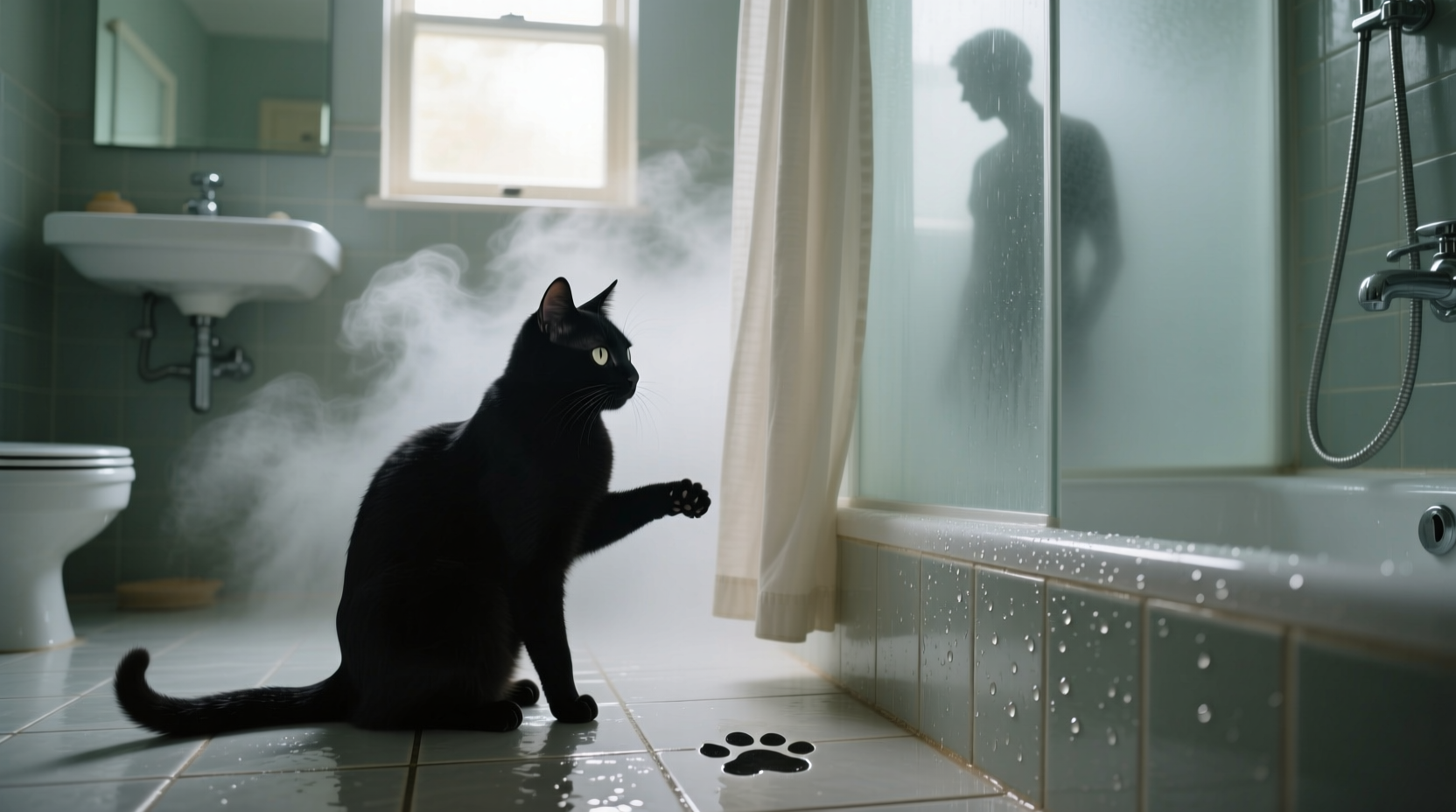
Cats rely heavily on their senses to navigate the world, and the bathroom during a shower offers a rich sensory experience unlike any other room in the house.
The sound of running water is one of the most compelling stimuli. Unlike stagnant water bowls, moving water signals freshness—a survival instinct inherited from wild ancestors who avoided still, potentially contaminated sources. While your cat may not drink from the shower, the auditory cue can be captivating. The rhythmic patter, echoes off tiles, and changes in pitch as temperature shifts create an ever-changing soundscape that holds attention.
Then there’s humidity. A warm, steamy bathroom alters scent distribution. Cats have an extraordinary sense of smell—up to 200 million olfactory receptors compared to our 5 million. Steam releases your natural pheromones and skin oils into the air, making your scent more pronounced. To your cat, this is like a live broadcast of your presence, health, and emotional state. They’re not just watching—they’re smelling you in high definition.
Temperature also plays a role. Showers heat up cold tile floors and create pockets of warm air. Cats naturally seek warmth, especially in homes with drafty areas or air conditioning. The bathroom becomes a temporary thermal oasis, particularly appealing if your cat tends to curl up near radiators or sunbeams.
Social Bonding and Attention-Seeking Behavior
Despite their reputation for independence, cats form deep social bonds—with humans included. Many cats view their owners as parental figures or colony members, and they actively monitor routines to stay connected.
Your shower represents a predictable daily ritual. When you disappear behind a closed door for several minutes, your cat may perceive this as social withdrawal. Their presence isn’t just passive observation—it’s an attempt to maintain proximity. By sitting nearby, they remain part of your activity cycle, even when direct interaction isn’t possible.
This behavior often intensifies in cats with strong owner attachments. A 2020 study published in *Current Biology* found that over 60% of domestic cats exhibit secure attachment to their caregivers—similar to human infants. For these cats, being separated—even briefly—can trigger mild anxiety. The bathroom visit becomes a reassurance strategy: “I see you, I’m here, and everything is normal.”
In some cases, the timing is strategic. Cats learn patterns quickly. If you tend to give attention, treats, or playtime immediately after showering, your cat may anticipate this reward and position themselves accordingly. It’s not just about companionship; it’s about opportunity.
“Cats don’t just react to us—they predict us. Their presence during private moments like showers shows how finely tuned they are to our routines.” — Dr. Sarah Ellis, Feline Behavior Scientist, University of Lincoln
Territorial Monitoring and Scent Security
Cats are inherently territorial animals. Their world is mapped through scent, sound, and visual markers. When you enter the bathroom and close the door, you temporarily alter the household’s environmental balance. Steam, noise, and your concentrated scent signal change—and change demands investigation.
Your cat may interpret the shower as a potential event requiring surveillance. Is someone else in there? Are you unwell? Why are you making unusual noises? These questions drive investigative behavior. Sitting nearby allows them to monitor the situation without direct intrusion.
Additionally, bathrooms often lack strong territorial markers. Unlike bedrooms or living rooms filled with cat toys, bedding, or scratching posts, bathrooms are typically neutral zones. Your cat’s presence during your shower may be a way of claiming space, reinforcing their inclusion in all areas of your life—even those that seem off-limits.
Some cats even engage in scent-mixing behaviors. Rubbing against the door, pawing at towels, or lying where your clothes were dropped helps blend their scent with yours—a sign of social cohesion in feline terms. This isn’t clinginess; it’s integration.
Do’s and Don’ts: Responding to Bathroom Companionship
| Do | Don’t |
|---|---|
| Maintain calm interactions—acknowledge your cat gently if they’re present. | Yell or push them out aggressively; this may increase anxiety. |
| Provide alternative warm spots nearby (e.g., heated bed outside the bathroom). | Leave slippery surfaces wet; cats can fall on tile. |
| Use the moment to reinforce positive habits (e.g., offering a toy afterward). | Reward excessive meowing with immediate attention—this reinforces demand behavior. |
| Observe frequency and mood—if sudden changes occur, note them. | Assume all bathroom visits are purely affectionate; some may signal stress. |
A Case of Routine and Ritual: Luna’s Morning Watch
Luna, a 4-year-old Siamese mix from Portland, Oregon, began appearing in her owner’s bathroom within weeks of moving into a new apartment. At first, Maria thought it was curiosity. But soon, Luna was waiting by the door every morning at 7:15 a.m., tail upright, purring softly as soon as the water started.
What made this behavior stand out was its consistency—even on weekends, when Maria slept in, Luna would tap the bathroom door with her paw at the usual time. Concerned, Maria consulted a veterinary behaviorist. After reviewing video footage and daily logs, the specialist concluded that Luna associated the shower with the start of quality time: post-shower cuddles, breakfast preparation, and play sessions.
The solution wasn’t to discourage the behavior but to reinforce it positively. Maria began placing a soft mat outside the shower and giving Luna a small treat after drying off. Over time, Luna became less insistent about entering and more content to wait nearby. The ritual remained intact—but with reduced pressure on both parties.
This case illustrates how deeply cats internalize routine. What appears to be a simple habit is often a carefully learned sequence tied to emotional rewards.
When Bathroom Visits Signal Underlying Issues
While most instances of shower-time companionship are harmless—or even healthy—there are situations where this behavior warrants closer attention.
Sudden onset of obsessive monitoring, especially if accompanied by vocalization, pacing, or refusal to leave the area, could indicate separation-related distress. Cats with a history of abandonment or rehoming may develop hyper-attachment, interpreting any absence as potential loss.
Similarly, if your cat begins eliminating in the bathroom outside the litter box—particularly on towels or bath mats—this may be marking behavior triggered by environmental stress. The shower itself isn’t the cause, but the increased human activity in a normally low-traffic zone might disrupt scent boundaries.
Medical conditions should also be ruled out. Hyperthyroidism, cognitive dysfunction in older cats, or pain-induced anxiety can manifest as altered social behavior. If your cat suddenly starts following you everywhere—including the shower—and exhibits other changes like appetite loss, restlessness, or litter box avoidance, consult your veterinarian.
Step-by-Step: Managing Your Cat’s Bathroom Presence
- Observe the pattern: Note when, how long, and under what conditions your cat joins you.
- Assess motivation: Is it warmth, sound, attention, or anxiety? Look for clues in body language (relaxed vs. tense).
- Provide alternatives: Place a heated bed or soft blanket near the bathroom door.
- Reinforce independence: Reward calm behavior elsewhere with treats or praise.
- Maintain routine: Avoid reinforcing demand behaviors by only giving attention on your terms.
- Consult a professional: If behavior escalates or causes distress, seek advice from a vet or certified animal behaviorist.
Frequently Asked Questions
Is it normal for my cat to watch me shower every day?
Yes, it’s quite common. As long as your cat appears relaxed and doesn’t show signs of distress, this behavior is typically a sign of bonding, curiosity, or environmental preference—not concern.
Why does my cat meow at the bathroom door?
Meowing is a direct communication attempt. Your cat may want access, seek attention, or express mild frustration at being excluded. Persistent meowing could indicate anxiety, especially if they’ve recently experienced changes in routine or environment.
Should I let my cat into the bathroom while I shower?
If both you and your cat are comfortable, short visits are fine. Ensure the floor isn’t slippery, avoid extreme temperatures, and never force interaction. Some cats enjoy the mist; others prefer to observe from a safe distance.
Final Thoughts: Understanding the Unspoken Language of Cats
Your cat’s decision to sit in the bathroom while you shower is rarely about the shower at all. It’s about connection, comfort, and context. In a world structured by scent, sound, and schedule, your rituals become landmarks in your cat’s day. Their presence is not intrusion—it’s inclusion.
By paying attention to the nuances of this behavior, you gain deeper insight into your cat’s emotional world. Are they seeking warmth? Confirming your presence? Participating in a shared routine? Each reason reflects a different facet of the bond you’ve built.
Rather than discouraging the habit outright, consider what it reveals. Use it as an opportunity to strengthen trust, provide enrichment, and appreciate the quiet ways your cat chooses to be with you—even when you’re just rinsing shampoo from your hair.




 浙公网安备
33010002000092号
浙公网安备
33010002000092号 浙B2-20120091-4
Comments
No comments yet. Why don't you start the discussion?