
If you’re a cat owner, you’ve likely walked into your bathroom to find your feline perched proudly in the sink—sometimes even staring up at you as if they own the plumbing. It’s odd, amusing, and occasionally inconvenient when you need to brush your teeth. But far from being random, this behavior is rooted in biology, instinct, and environmental preference. Cats don’t act without reason; their choices are shaped by evolution, sensory perception, and comfort. Understanding why your cat chooses the sink over their plush bed can deepen your bond and help you create a more enriching home environment.
The Instinctual Drive: Territory and Observation
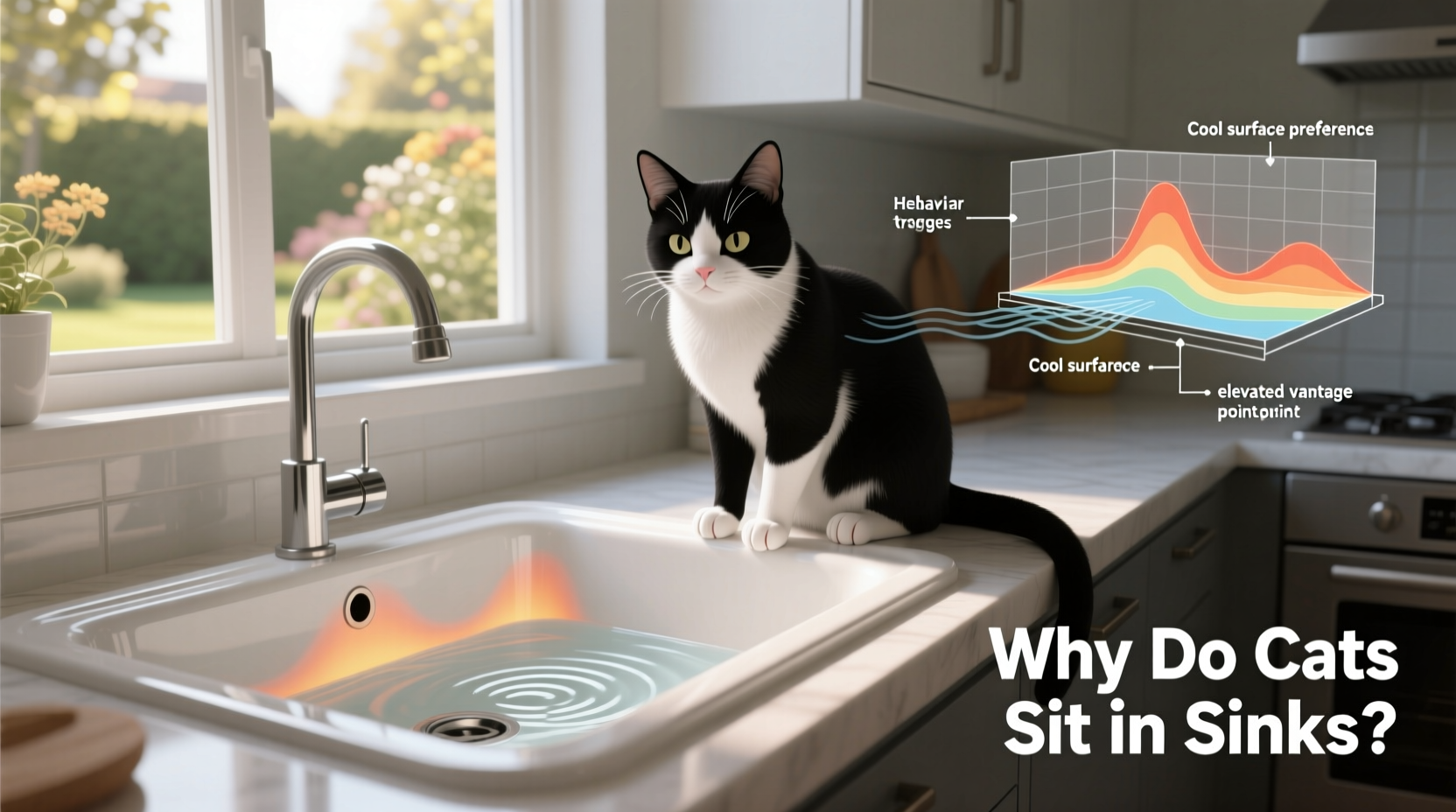
Cats are territorial animals with a strong need to monitor their domain. The sink, often located in the bathroom, provides an elevated vantage point—a key feature in feline spatial preferences. From this perch, cats can observe foot traffic, listen for sounds, and remain alert to changes in their surroundings. This behavior echoes their wild ancestors’ need to stay safe from predators and keep tabs on prey movements.
In multi-pet households or busy homes, high places like sinks offer a temporary refuge where cats feel secure. Unlike open floor spaces, sinks are bounded and contained, which gives cats a sense of enclosure and protection. The porcelain sides act as natural barriers, reducing anxiety from unexpected approaches.
“Elevated locations serve dual purposes for cats: surveillance and safety. A sink offers both, making it an ideal observation post.” — Dr. Sarah Thompson, Feline Behavior Specialist
This need for control over space explains why some cats prefer sinks even when other elevated furniture—like bookshelves or window sills—is available. Sinks are often centrally located, frequently used by humans, and thus rich in social information. By sitting there, cats stay involved in household activity without direct interaction.
Temperature and Material Appeal
One of the most compelling reasons cats are drawn to sinks is temperature regulation. Cats have a higher baseline body temperature than humans—ranging between 100.5°F and 102.5°F—and naturally seek out cool surfaces when overheated. Porcelain and stainless steel sinks conduct heat efficiently, drawing warmth away from a cat’s body. During warmer months or after bursts of play, the cool surface becomes highly attractive.
Conversely, in colder environments, a recently used sink may retain residual warmth from running water, offering brief thermal comfort. Some cats will wait near the sink after someone uses hot water, anticipating the lingering heat on the basin’s surface.
The smooth texture of porcelain also appeals to cats’ tactile senses. Many cats enjoy the contrast between soft bedding and hard, cool surfaces. This variety in texture stimulation contributes to environmental enrichment, preventing boredom and repetitive behaviors.
Curiosity and Water Fascination
Water is a powerful attractant for many cats. While not all cats drink from sinks, the sound of dripping faucets or residual moisture in the basin can trigger investigative behavior. The auditory cue of dripping water mimics natural streams, tapping into primal instincts related to hunting and hydration sources.
A study published in *Applied Animal Behaviour Science* found that cats show increased interest in moving water over stagnant water, likely due to evolutionary associations with freshness and safety. A sink that occasionally drips or retains droplets becomes a micro-habitat of sensory engagement. Licking condensation, pawing at droplets, or simply sitting near wet surfaces allows cats to interact with water safely.
This fascination doesn’t always translate to drinking. However, repeated exposure to sinks may condition cats to associate the location with hydration, especially if owners sometimes turn on the tap for them. Over time, the sink becomes a conditioned stimulus—a place where water appears, attention is given, and rewards (like petting or play) follow.
Do’s and Don’ts: Managing Your Cat’s Sink Habits
| Do’s | Don’ts |
|---|---|
| Provide alternative cool surfaces (ceramic tiles, marble slabs) | Yell at or punish your cat for using the sink |
| Install a cat water fountain to satisfy hydro-curiosity | Leave harsh cleaners in the sink where your cat can access them |
| Use positive reinforcement to redirect behavior | Assume the behavior is “weird” without investigating causes |
| Keep the sink clean and dry when not in use | Ignore signs of obsessive or anxious repetition |
Psychological Comfort and Routine
Routine plays a significant role in feline well-being. Cats thrive on predictability, and certain areas of the home become embedded in their daily rituals. If a cat learns that sitting in the sink leads to human interaction—such as being talked to, petted, or even gently removed—they may repeat the behavior to elicit attention.
This is particularly common in homes where owners spend time in the bathroom during morning or evening routines. The sink becomes a social hotspot. For cats seeking companionship, occupying the sink ensures visibility and increases the likelihood of engagement.
In some cases, sink-sitting evolves into a displacement behavior—an action performed when a cat feels conflicted or stressed. For example, if a new pet arrives or household dynamics shift, a cat might retreat to the sink as a neutral zone. It’s familiar, accessible, and associated with low conflict.
“When a cat repeatedly chooses non-traditional resting spots like sinks or bathtubs, it’s worth assessing their overall stress levels and environmental security.” — Dr. Lena Patel, Veterinary Ethologist
Mini Case Study: Bella the Bathroom Dweller
Bella, a 3-year-old domestic shorthair, began spending hours each day in her owner’s bathroom sink. Initially dismissed as quirky, the behavior intensified after the family adopted a puppy. Observations revealed that Bella only occupied the sink when the puppy was nearby and would leave once the dog was crated.
A veterinary behaviorist suggested that the sink served as a safe observation deck—high enough to avoid direct contact, yet close enough to monitor the intruder. The family introduced a tall cat tree near a bedroom window and began using pheromone diffusers. Within three weeks, Bella’s sink visits decreased by 80%, replaced by window perching and vertical climbing elsewhere.
This case illustrates how sink-sitting can signal underlying environmental stress, not just whimsy.
Step-by-Step Guide to Redirecting Sink Behavior
If your cat’s sink habit is inconvenient or potentially unsafe (e.g., risk of falls or exposure to cleaning products), consider a structured redirection plan. The goal isn't to suppress natural behavior but to provide better alternatives.
- Observe patterns: Note when and how often your cat uses the sink. Is it after water use? During specific times of day? In response to certain people or pets?
- Identify triggers: Determine whether the motivation is thermal comfort, curiosity, attention-seeking, or stress avoidance.
- Create appealing alternatives: Place a soft bed on a cool tile floor, install a cat shelf near a window, or set up a water fountain in a quiet corner.
- Use positive reinforcement: Reward your cat with treats or affection when they use the alternative spot instead of the sink.
- Manage access: Keep the bathroom door closed or the sink covered when unsupervised, especially if cleaning agents are present.
- Enrich the environment: Add puzzle feeders, rotating toys, and climbing structures to reduce fixation on one area.
- Monitor progress: Track changes over two to four weeks. Adjust strategies if no improvement occurs.
Frequently Asked Questions
Is it safe for my cat to sit in the sink?
Generally, yes—but only if the sink is clean and free of toxic residues like bleach, ammonia, or drain cleaners. Always rinse thoroughly after using chemicals. Also ensure your cat can enter and exit safely; older or arthritic cats may struggle with slippery surfaces.
Why does my cat only sit in the sink when I’m brushing my teeth?
This is likely attention-based behavior. The routine creates a predictable opportunity for interaction. Your cat associates the sink with your presence and may be seeking engagement. They might also be intrigued by the toothbrush movement, running water, or mirror reflections.
Could sink-sitting indicate a medical issue?
In rare cases, yes. Excessive focus on cold surfaces may suggest fever or hyperthyroidism. Similarly, obsessive repetition of any behavior warrants veterinary evaluation. If your cat shows lethargy, appetite changes, or unusual vocalization alongside sink use, consult your vet.
Expert Insight: The Role of Sensory Design
Modern homes often lack species-appropriate design for cats. Dr. Elena Ruiz, an animal-environment designer, emphasizes that “cats don’t need luxury beds—they need functional spaces that align with their sensory and behavioral needs.” She advocates for integrating feline ergonomics into home layouts, such as installing wall-mounted shelves near sinks or placing water stations away from food (a preference rooted in avoiding contamination).
“We’ve designed homes for human convenience, forgetting that cats experience space differently. A sink isn’t just a fixture—it’s a multisensory hub.” — Dr. Elena Ruiz, Animal Habitat Designer
By viewing household objects through a feline lens, owners can anticipate behaviors and design solutions proactively rather than reactively.
Checklist: Creating a Cat-Friendly Bathroom
- ✅ Keep cleaning products securely stored or locked away
- ✅ Provide a stable, non-slip mat in the sink if your cat insists on using it
- ✅ Install a small water fountain on the counter or nearby shelf
- ✅ Offer an alternative perch within sight of the sink
- ✅ Use baby gates or door stops to manage access if needed
- ✅ Regularly clean the sink to maintain hygiene and prevent bacterial exposure
- ✅ Monitor for signs of obsession or anxiety around the sink
Conclusion: Embracing Quirks with Understanding
Your cat sitting in the sink isn’t just a funny habit—it’s a window into their instincts, preferences, and emotional state. Whether driven by temperature, curiosity, territory, or social connection, this behavior reflects a complex mind adapting to a human world. Rather than discouraging it outright, consider what your cat is communicating and how you can meet their needs more effectively.
Small adjustments—like adding a cool tile bed, introducing a water fountain, or repositioning a favorite perch—can make a big difference. At the same time, embrace the charm of these quirks. They’re part of what makes living with cats so uniquely rewarding.




 浙公网安备
33010002000092号
浙公网安备
33010002000092号 浙B2-20120091-4
Comments
No comments yet. Why don't you start the discussion?