
Cats are creatures of habit—and sometimes, those habits are baffling. One moment your feline is lounging on the windowsill, and the next, they’re perched inside the bathroom sink like it’s a throne. If you’ve ever walked into the bathroom only to find your cat occupying the porcelain basin, you're not alone. This peculiar behavior has puzzled pet owners for years. While there's no single explanation that fits every cat, several well-supported theories shed light on why cats seem drawn to sinks. From thermoregulation to social dynamics, the reasons range from biological instinct to psychological need.
The Cooling Effect: A Natural Air Conditioner
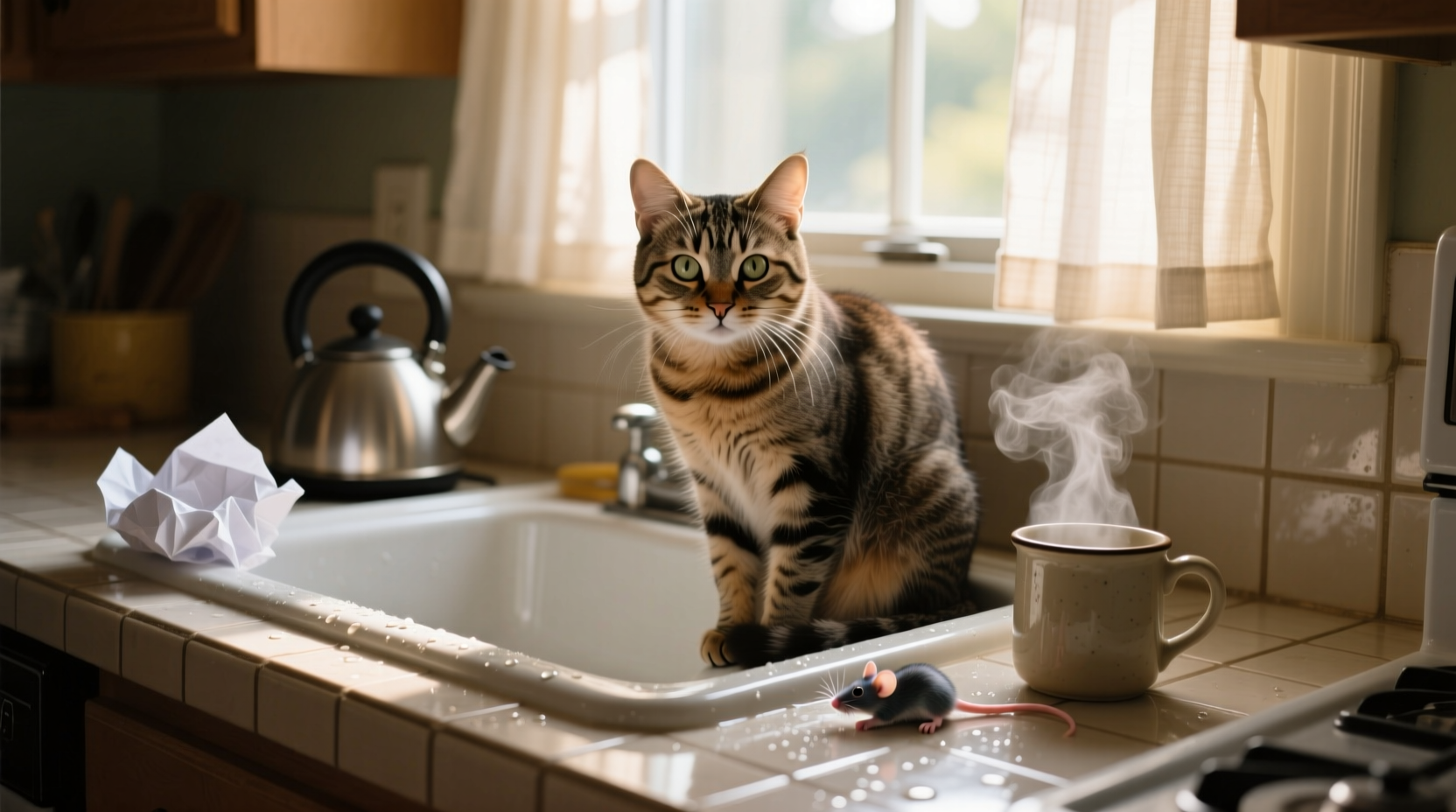
One of the most common explanations for sink-sitting is temperature regulation. Cats maintain a higher body temperature than humans—typically between 100.5°F and 102.5°F (38°C–39.2°C). When ambient temperatures rise, especially during summer months, cats seek out cool surfaces to help dissipate heat. Sinks, particularly those made of porcelain or stainless steel, retain coolness better than carpets, beds, or wooden floors.
Bathrooms are often cooler than other rooms due to tile flooring, lack of direct sunlight, and frequent ventilation. The metal faucet and ceramic bowl create an ideal microclimate for a heat-sensitive cat. Lying directly on the sink allows maximum contact with these cool materials, helping them regulate their body temperature without expending energy.
This behavior is more common in older cats or breeds with thick coats, such as Persians or Maine Coons, who are more prone to overheating. It’s also worth noting that while panting is rare in cats, seeking cool surfaces is one of their primary methods of thermal relief.
Water Fascination: More Than Just a Drink
Another compelling reason cats occupy sinks involves water itself. Many cats show a fascination with running water. The sound of dripping taps or the sight of flowing liquid can trigger curiosity and even predatory instincts. Some cats prefer drinking from faucets rather than still water bowls, possibly because moving water appears fresher and safer from an evolutionary standpoint.
Even when the tap is off, the sink remains associated with water access. Your cat may sit there anticipating a drink, waiting for you to turn on the faucet, or simply enjoying the residual moisture on the surface. In multi-cat households, dominant cats might claim the sink as a strategic watering hole, reinforcing territorial behavior through proximity to resources.
“Cats evolved in arid regions where fresh water was scarce and potentially contaminated. Their preference for moving water is deeply rooted in survival instinct.” — Dr. Lena Ruiz, Feline Behavior Specialist
Attention Seeking: The Center of the Stage
Sinks are high-traffic zones—especially in shared bathrooms. When your cat hops into the sink, they position themselves exactly where you’re guaranteed to notice them. Whether you’re brushing your teeth, washing your face, or getting ready for work, your routine brings you within inches of their chosen perch.
For socially motivated cats, this is prime real estate for interaction. Sitting in the sink forces engagement: you have to acknowledge them, move them, or at least comment on their presence. Over time, if this behavior results in petting, talking, or treats, it becomes positively reinforced. The cat learns: sink = attention.
This theory is especially relevant for indoor-only cats with limited environmental stimulation. Without sufficient playtime or mental enrichment, cats may resort to attention-seeking behaviors to fulfill their social needs. Sink-sitting is harmless compared to destructive alternatives like knocking things over or waking owners at dawn.
Safety and Elevation: Instinctual Security
Cats are both predators and prey animals. Even domesticated felines retain strong instincts to monitor their surroundings from secure vantage points. A sink offers elevation, clear sightlines, and physical boundaries on three sides—making it a naturally defensible spot.
In the wild, cats seek out elevated locations to observe potential threats or prey. The sink mimics this by lifting them off the ground and placing them near reflective surfaces like mirrors, which may enhance their sense of spatial awareness. Additionally, bathrooms often have fewer sudden movements or loud noises compared to kitchens or living rooms, making them lower-stress zones.
Ill or anxious cats may retreat to sinks during times of discomfort. The cool surface provides physical relief, while the enclosed space offers emotional security. If your cat suddenly begins spending excessive time in the sink—especially if accompanied by changes in appetite or litter box use—it may be worth consulting a veterinarian.
Texture and Sensory Appeal
Beyond function, the sensory experience of the sink matters. The smooth, hard surface contrasts sharply with soft bedding or carpeted floors. Some cats simply enjoy the tactile sensation of pressing against cool, non-porous material. Unlike fabric, which absorbs body heat, ceramic or metal stays consistently cool and firm.
Additionally, sinks often carry faint scents—residual toothpaste, soap, or cleaning products—that may intrigue a cat’s highly developed olfactory system. While strong chemicals should be avoided around pets, mild aromas can pique interest without causing harm.
It’s also possible that early life experiences shape this behavior. Kittens exposed to bathroom routines—or those weaned near sinks—may form positive associations with the space. Early exposure to human activity in the bathroom could make it feel like a “family hub” worth claiming.
Real-Life Example: Bella the Siamese
Bella, a five-year-old Siamese cat from Portland, Oregon, began sitting in her owner’s bathroom sink every evening after work. At first, her owner assumed it was due to the summer heat. But when fall arrived and Bella continued the ritual—even nudging aside toothbrushes and hand soap—the pattern suggested something deeper.
After installing a pet fountain and adding window perches elsewhere, the behavior decreased slightly but didn’t stop. What changed was consistency: Bella only occupied the sink when her owner was home. She’d jump in shortly after the front door closed and remain until she received affection.
A veterinary checkup revealed no health issues. The conclusion? Bella wasn’t seeking comfort or cooling—she was demanding connection. Her sink-sitting was a calculated move for quality time. Once her owner established a daily play session before bedtime, the sink visits dropped by 70%.
Do’s and Don’ts: Managing Sink-Sitting Behavior
| Action | Recommended? | Reason |
|---|---|---|
| Allow occasional sink use | Yes | Harmless if sink is clean and safe |
| Leave faucets dripping | Yes (with caution) | May satisfy curiosity but conserve water |
| Yell or punish the cat | No | Increases anxiety and damages trust |
| Block access permanently | No (unless safety risk) | May cause stress or displacement behaviors |
| Provide alternative cool spots | Yes | Redirects behavior positively |
| Ignore signs of obsession | No | Potential indicator of underlying issue |
Step-by-Step: How to Respond to Frequent Sink Use
- Observe the context: Note when and how often your cat uses the sink. Is it during hot weather, alone time, or family activity?
- Check for health concerns: Rule out fever, dehydration, or kidney issues with a vet visit if behavior is new or intense.
- Assess environmental factors: Is the house too warm? Are water sources stale or poorly placed?
- Offer alternatives: Place a cooling pad nearby or install a cat fountain in a quiet corner.
- Enrich daily routine: Increase interactive play and mental stimulation to reduce attention-seeking.
- Reinforce desired behavior: Reward your cat for using acceptable spaces instead of the sink.
- Be patient: Change takes time. Avoid punishment; focus on redirection and consistency.
FAQ: Common Questions About Cats in Sinks
Is it safe for my cat to sit in the sink?
Generally, yes—as long as the sink is clean and free of toxic residues like bleach, disinfectants, or dental products. Always rinse thoroughly after cleaning and avoid leaving harsh chemicals unattended.
Why does my cat meow from the sink?
Vocalization from the sink is often a call for interaction. Siamese and other vocal breeds may use it as a stage to demand food, play, or affection. It can also signal frustration if they want water turned on.
Should I stop my cat from sitting in the sink?
Not necessarily. If the behavior isn't causing harm, it’s best to understand the motivation behind it rather than suppress it outright. Redirecting with better options is more effective than restriction.
Final Thoughts: Understanding, Not Correcting
Your cat sitting in the sink isn’t a flaw in training—it’s a window into their world. Whether driven by temperature, thirst, territory, or tenderness, this behavior reflects a blend of instinct and learned experience. Rather than viewing it as odd, consider it communication. Each leap onto the porcelain is a sentence in a language only attentive owners can fully translate.
Instead of asking “Why?” with frustration, ask it with curiosity. What does your cat need in that moment? Coolness? Connection? Control? By answering those questions, you deepen the bond you share—one paw print at a time.




 浙公网安备
33010002000092号
浙公网安备
33010002000092号 浙B2-20120091-4
Comments
No comments yet. Why don't you start the discussion?