
Cats are enigmatic creatures. One moment they’re curled up on your lap, the next they’ve chosen to nap inside an empty cardboard box, atop the refrigerator, or nestled between your freshly folded laundry. While these sleeping habits may seem bizarre—or even inconvenient—they are rarely random. Behind every odd perch or tucked-away nook lies a blend of instinct, environmental preference, and psychological comfort. Understanding why your cat chooses such unusual sleeping spots offers more than just amusement; it provides insight into their health, emotional state, and evolutionary heritage.
Domestic cats may live in climate-controlled homes with plush beds provided by doting owners, but their behavior still echoes that of their wild ancestors. Sleep is a vulnerable state, so where a cat chooses to rest reflects deep-seated survival strategies. By observing these patterns closely, you can better meet your cat’s physical and emotional needs—while appreciating the quirky charm that makes feline companionship so unique.
The Evolutionary Roots of Unusual Sleeping Spots
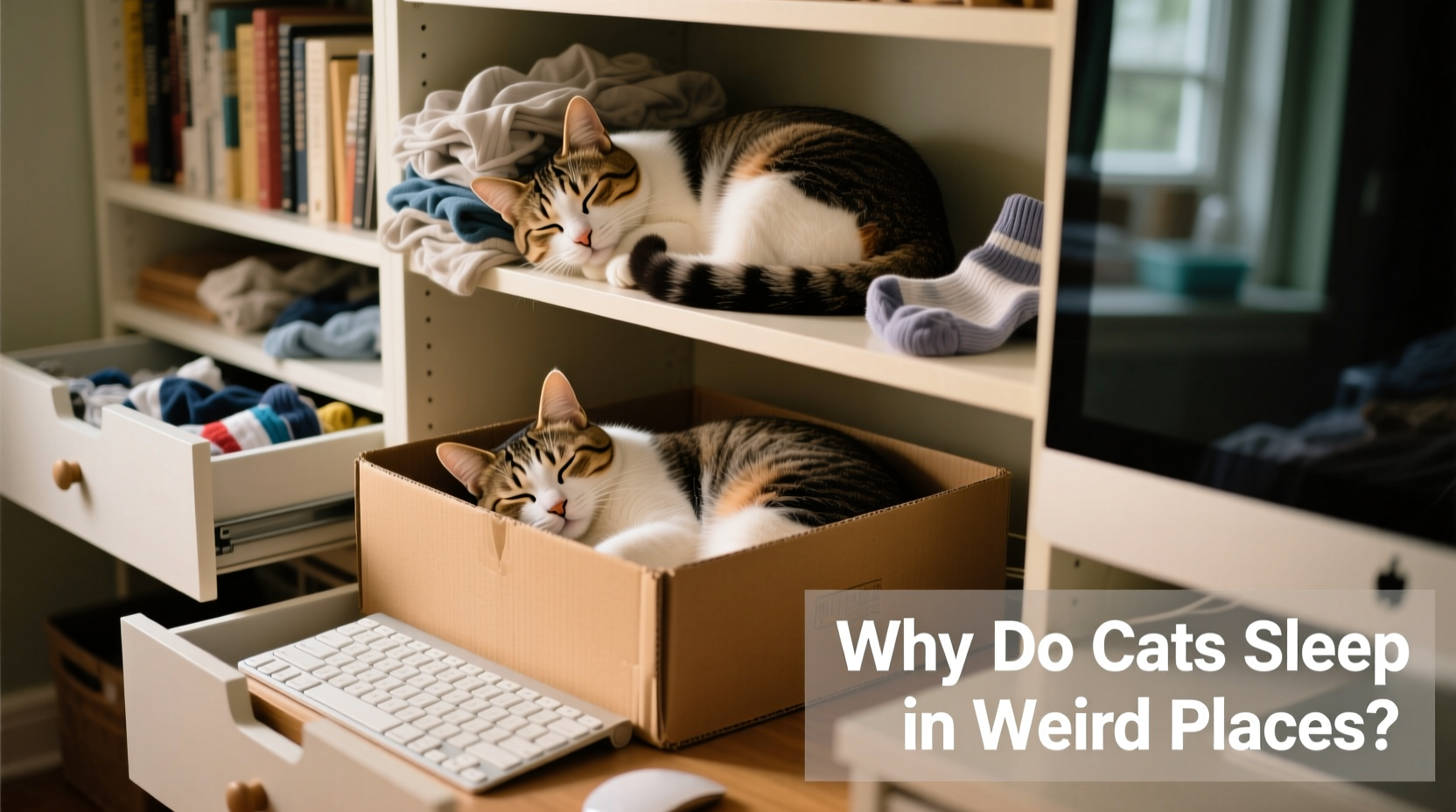
In the wild, cats are both predators and potential prey. This dual role shapes nearly every aspect of their behavior, including where they choose to sleep. A safe sleeping location must offer concealment from threats, a vantage point for monitoring surroundings, and protection from environmental extremes. These priorities remain embedded in domestic cats, even when there are no real dangers nearby.
For example, a cat sleeping inside a paper bag or shoebox mimics denning behavior observed in wild felines. Enclosed spaces provide a sense of security by limiting exposure from multiple angles. Similarly, elevated spots like bookshelves or countertops allow cats to observe their territory while remaining out of reach—mirroring how wild cats use trees or rocky outcrops as lookout points.
“Cats don’t just seek comfort—they seek control over their environment. Where they sleep is often about safety first, softness second.” — Dr. Lena Torres, Feline Behavior Specialist, American Veterinary Ethology Society
This instinctual drive explains why many cats ignore expensive orthopedic beds in favor of seemingly impractical locations. A bed on the floor may feel exposed, whereas a spot behind the curtains or under a desk offers visual barriers and proximity to walls—both of which increase perceived safety.
Temperature and Sensory Preferences at Play
Cats maintain a higher body temperature than humans—between 100.5°F and 102.5°F—and prefer ambient temperatures around 86°F to feel truly comfortable. Because of this, they are constantly adjusting their position to regulate heat. This thermoregulatory instinct heavily influences where they decide to nap.
You might notice your cat sleeping:
- In sunbeams during the day
- On electronic devices like laptops or routers (which emit warmth)
- Near radiators or heating vents in winter
- Inside bathtubs or on tile floors in summer
The cool surface of a porcelain sink or bathtub helps dissipate excess body heat, making these spots ideal during warmer months. Conversely, warm electronics or sunny windowsills become prime real estate in colder seasons.
Sensory input also plays a role. Cats have highly sensitive paws and rely on tactile feedback when selecting a resting place. Smooth surfaces like glass tables or polished wood may be avoided if they feel unstable, while textured materials like knit blankets or carpeted areas offer better grip and reassurance.
Emotional Security and Familiar Scents
Cats are scent-oriented animals. They mark their territory using facial pheromones released when they rub against objects—a behavior known as bunting. When your cat sleeps on your pillow, in your laundry basket, or inside your purse, it’s not merely seeking attention. They are surrounding themselves with your scent, which has a calming, anxiety-reducing effect.
This behavior is especially common in multi-cat households or environments with frequent changes (new people, renovations, moving). In uncertain situations, familiar smells serve as emotional anchors. A t-shirt with your odor becomes a form of emotional support, much like a child clinging to a favorite blanket.
Additionally, enclosed spaces with strong human scent—such as drawers, coat pockets, or gym bags—combine olfactory comfort with physical containment, creating a “safe zone” that reduces stress.
Real-Life Example: The Case of Oliver and the Office Drawer
Oliver, a 4-year-old tabby, began sleeping exclusively in his owner’s half-open office drawer after the family adopted a second kitten. Despite having multiple plush beds and access to sunny window perches, Oliver chose the confined space lined with old sweaters. His veterinarian noted signs of mild social stress due to competition for resources. After introducing separate feeding zones and additional vertical spaces, Oliver gradually returned to more open sleeping areas—but continued visiting the drawer during high-activity times in the home.
This case illustrates how unusual sleeping choices can signal underlying emotional shifts. The drawer wasn’t just cozy—it was predictable, quiet, and saturated with familiar scents, offering Oliver a retreat from social pressure.
Common Weird Sleeping Spots—And What They Mean
Below is a breakdown of frequently observed odd sleeping locations and the likely motivations behind them:
| Sleeping Spot | Possible Reason | When to Be Concerned |
|---|---|---|
| Cardboard boxes | Security, insulation, novelty | None—this is normal and healthy |
| Top of fridge/bookshelf | Elevated vantage point, warmth from appliance | If mobility seems impaired or jumps become risky |
| Inside sinks/tubs | Cool surface, acoustics create soothing echo | If accompanied by excessive drinking or lethargy (possible kidney issue) |
| Laundry baskets/clothes piles | Human scent, soft texture, warmth | None—unless obsessive or displaces necessary hygiene |
| Under beds/furniture | Seclusion, reduced stimulation | If sudden onset or paired with hiding during waking hours |
| On keyboards/laptops | Warmth, attention-seeking, territorial marking | If persistent despite alternatives and disrupts work |
Note that context matters. Occasional use of unusual spots is typical. However, a sudden shift in sleeping behavior—especially toward isolation or hard-to-reach areas—can indicate pain, illness, or anxiety.
How to Encourage Healthier Sleeping Habits (Without Suppressing Instincts)
You don’t need to stop your cat from enjoying quirky napping spots—nor should you. Instead, guide their preferences by enhancing the appeal of safer, more accessible options. Here’s how:
- Provide enclosed beds: Choose covered cat caves or hooded beds that mimic boxes and drawers. Place them near frequented areas so your cat doesn’t feel isolated.
- Add warmth strategically: Use microwavable heating pads or low-wattage heated beds in cooler rooms. Avoid electric blankets unless specifically designed for pets.
- Elevate resting options: Install wall-mounted shelves or cat trees near windows. Ensure stability and easy access, especially for older cats.
- Incorporate your scent: Rotate worn clothing items (like socks or T-shirts) into your cat’s bed weekly to maintain familiarity without cluttering personal spaces.
- Maintain routine cleaning: Dust and wash bedding regularly to prevent allergens, but avoid strong detergents that could deter use due to overpowering smell.
Feline Sleeping Environment Checklist
Use this checklist to evaluate whether your home supports your cat’s natural sleeping instincts:
- ✅ At least one enclosed or cave-like sleeping option available
- ✅ Elevated perches near windows or main living areas
- ✅ Access to warm spots in winter (without reliance on appliances)
- ✅ Cool resting surfaces in summer (tile, marble, cooling mats)
- ✅ Bedding regularly cleaned with pet-safe detergent
- ✅ Multiple sleeping zones in multi-cat homes to reduce competition
- ✅ Minimal sudden environmental changes (furniture moves, loud noises)
Frequently Asked Questions
Is it normal for my cat to sleep in the litter box?
Occasionally lying in the litter box is not uncommon, especially if the box is large and unused. However, consistent sleeping or hiding in the litter tray—particularly if paired with inappropriate elimination elsewhere—can signal medical issues (like urinary tract infections), stress, or territorial insecurity. Consult your vet if this behavior persists.
Why does my cat sleep in the bathroom?
Bathrooms often offer cool, quiet, and contained environments. Tile floors help regulate body temperature, and the lack of foot traffic makes them peaceful. Some cats are also drawn to the sound of dripping faucets or the reflective surfaces. As long as hygiene isn’t compromised, this behavior is generally harmless.
Should I wake my cat if they’re sleeping somewhere dangerous, like on a stove?
Yes—if the location poses a risk (e.g., near an oven, open window, or fragile shelf), gently redirect your cat. Never startle them awake. Instead, softly call their name and lure them with a treat or toy to a safer alternative spot. Prevent future incidents by blocking access or making the area less appealing (e.g., placing double-sided tape on smooth surfaces).
Final Thoughts: Embracing the Quirks, Supporting Well-Being
Your cat’s choice to sleep in a shopping bag, atop the kitchen cabinets, or wedged behind the couch isn’t defiance—it’s communication. Each decision reflects a complex interplay of biology, emotion, and environment. Rather than correcting these behaviors outright, consider them clues. Is your cat seeking warmth? Security? Solitude? Answering these questions allows you to respond with empathy and intention.
By enriching your home with options that align with feline instincts—enclosed spaces, elevated lookouts, temperature-regulated zones—you give your cat the freedom to express natural behaviors safely. You’ll likely find that, given appealing alternatives, your cat still enjoys the occasional adventure in a laundry basket—but now balances it with restful nights in well-designed spaces made just for them.




 浙公网安备
33010002000092号
浙公网安备
33010002000092号 浙B2-20120091-4
Comments
No comments yet. Why don't you start the discussion?