
Cats are masters of contortion. One moment they’re curled into a perfect cinnamon roll, the next they’re sprawled belly-up with legs flung in opposite directions, or folded like origami beneath a coffee table. While these odd sleeping postures often look uncomfortable to human eyes, they’re usually perfectly normal feline behavior. Cats have flexible spines, loose skin, and a natural instinct to conserve heat or stay alert—even while asleep. However, not all strange sleeping habits are harmless. Some positions, especially when paired with behavioral changes, can indicate underlying pain, injury, or illness.
Understanding the line between quirky comfort and potential distress is crucial for responsible cat ownership. This article explores the science behind your cat’s bizarre sleeping habits, identifies key warning signs of discomfort, and provides practical guidance on when to seek veterinary care.
The Science Behind Cat Sleep Postures
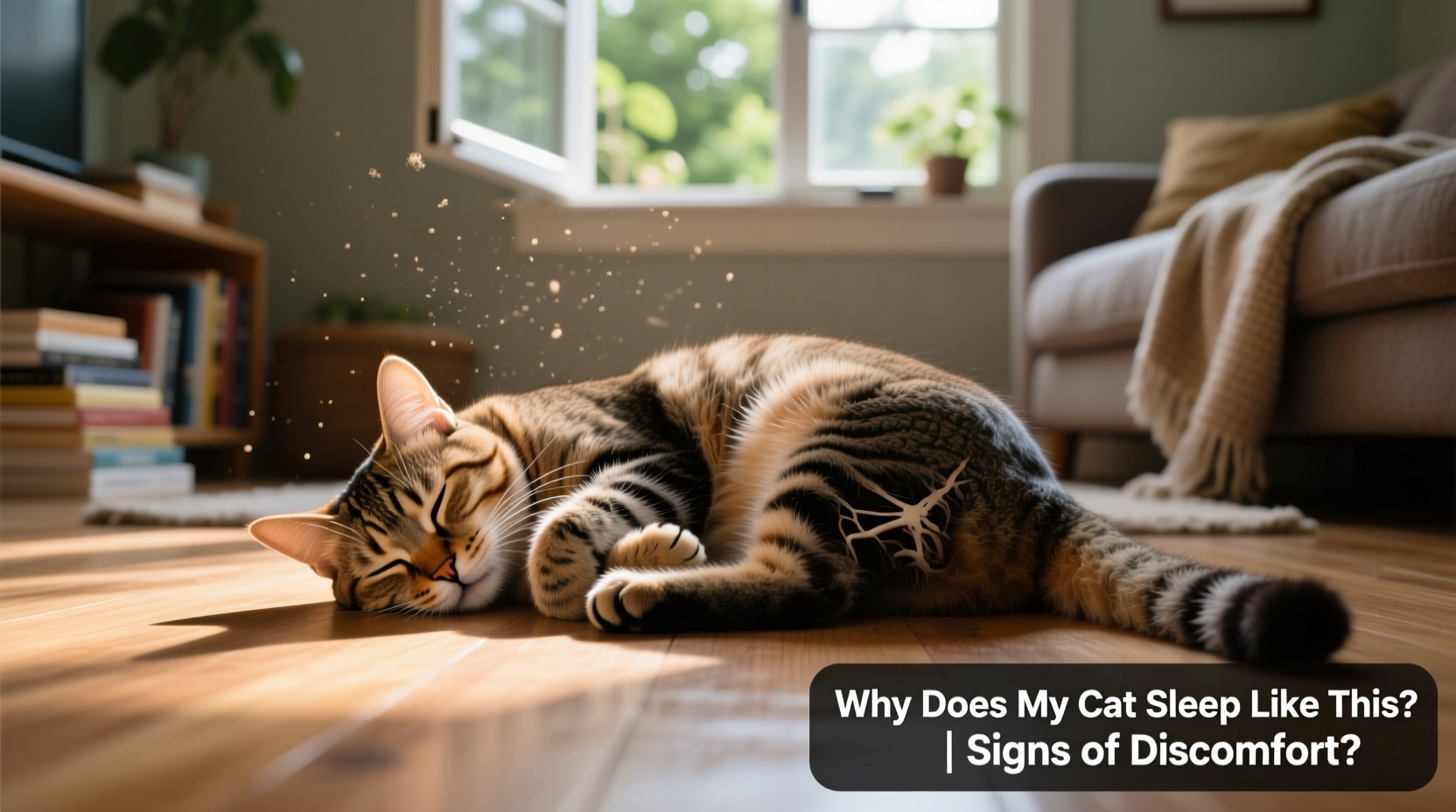
Cats spend an average of 12 to 16 hours per day sleeping—nearly two-thirds of their lives. During this time, they cycle through light dozing, deep sleep, and REM (rapid eye movement) phases where dreaming occurs. Their sleeping positions shift depending on temperature, mood, environment, and instinctual needs.
Their extreme flexibility stems from a unique skeletal structure: cats have more vertebrae than humans (53 compared to 33), no collarbone, and highly elastic ligaments. This allows them to twist, tuck, and stretch into positions that would leave a human incapacitated.
Common \"weird\" but normal sleeping positions include:
- The loaf: Paws tucked under, tail wrapped around—compact and ready to spring.
- The pancake: Belly down with legs splayed out, maximizing contact with cool surfaces.
- The back sleeper: On their back, exposing the vulnerable abdomen—often a sign of trust and relaxation.
- The upside-down loaf: Head tucked under a leg or twisted backward, resembling a pretzel.
- The space-saver: Wedged behind furniture or in tight boxes—instinctively seeking security.
These positions serve functional purposes. Curling up conserves body heat, lying flat helps regulate temperature in warm weather, and elevated spots provide safety from perceived threats. Even twitching during sleep—common in kittens and young adults—is typically a sign of active dreaming, not distress.
When Weird Positions Signal Discomfort
While most odd sleeping postures are harmless, certain behaviors should raise concern—especially if they represent a change from your cat’s usual habits. Pain, arthritis, respiratory issues, or neurological conditions can manifest subtly through altered posture.
Warning signs that a sleeping position may reflect discomfort include:
- Sudden reluctance to jump onto favorite sleeping spots
- Stiffness when rising from rest
- Avoidance of lying on one side
- Excessive grooming of a specific area (e.g., hips or lower back)
- Vocalizing softly when settling down
- Hunched posture even during sleep
- Shallow, rapid breathing while resting
For example, a cat with arthritis may avoid curling tightly or sleeping on hard surfaces. Instead, they might choose soft, accessible areas and adopt a stretched-out stance to reduce joint pressure. A cat with abdominal pain may lie in a “praying position”—front legs extended forward with rear end raised—which eases tension on the stomach.
“Cats are experts at hiding pain. Subtle changes in posture, especially during rest, are often the first clue that something is wrong.” — Dr. Lena Torres, DVM, Feline Internal Medicine Specialist
Key Indicators: Normal vs. Concerning Behaviors
To help differentiate between typical quirks and potential health issues, consider the following comparison table:
| Behavior | Normal | Potentially Concerning |
|---|---|---|
| Sleeping with belly exposed | Common in relaxed, trusting cats | Rarely a concern unless accompanied by lethargy or vomiting |
| Lying in a hunched position | Occasional during light naps | Persistent hunching, especially with shallow breathing |
| Stretching limbs fully | Typical after waking or in warm environments | Reluctance to bend limbs or favoring one leg |
| Sleeping in high places | Natural instinct for safety and warmth | Stopped accessing high areas without explanation |
| Twitching during sleep | Common in REM sleep, especially in young cats | Seizure-like movements, drooling, or loss of bladder control |
| Sleeping near heat sources | Normal in cold weather | Constantly seeking warmth despite ambient heat |
Step-by-Step: Assessing Your Cat’s Sleep Health
If you notice a sudden or persistent change in your cat’s sleeping behavior, follow this step-by-step evaluation process:
- Document the behavior: Note the exact posture, duration, frequency, and any associated actions (limping, vocalizing, etc.). Use a journal or notes app for consistency.
- Compare to baseline: Recall your cat’s typical sleeping habits. Has this position appeared recently or only under certain conditions?
- Check for secondary symptoms: Look for reduced appetite, decreased grooming, litter box accidents, or aggression—these often accompany pain.
- Perform a gentle physical check: With your cat awake and calm, lightly run your hands along their spine, hips, and abdomen. Watch for flinching, tensing, or avoidance.
- Adjust the environment: Provide soft, low-entry beds and ensure food, water, and litter boxes are easily accessible. Monitor if posture improves.
- Consult your veterinarian: If changes persist beyond 48 hours or worsen, schedule a professional exam. Early diagnosis improves outcomes significantly.
Real-Life Example: Recognizing Arthritis in an Aging Cat
Milo, a 12-year-old domestic shorthair, had always slept on the top shelf of his cat tree—a spot he leapt to effortlessly for years. His owner, Sarah, began noticing he was spending nights on the living room rug instead. At first, she assumed he preferred the cooler surface in summer. But soon, Milo stopped jumping altogether. He started sleeping stretched out on his side with his hind legs stiff, and winced slightly when standing.
After tracking his behavior for three days and noting reduced playfulness and grooming, Sarah took him to the vet. X-rays revealed moderate hip arthritis. With a treatment plan including joint supplements, weight management, and a ground-level orthopedic bed, Milo’s mobility improved. He still avoids high jumps, but now sleeps comfortably—and his owner caught the issue before it severely impacted his quality of life.
This case highlights how subtle shifts in sleeping location and posture can be early red flags, especially in senior cats.
Action Checklist: Monitoring and Supporting Healthy Cat Sleep
Use this checklist to ensure your cat’s sleeping habits remain safe and comfortable:
- ✅ Observe daily sleeping positions to establish a baseline
- ✅ Note any sudden or recurring changes in posture
- ✅ Provide multiple bedding options (soft, warm, elevated, enclosed)
- ✅ Ensure easy access to food, water, and litter boxes
- ✅ Monitor for stiffness, vocalization, or reluctance to move
- ✅ Schedule annual vet exams (biannual for cats over 7)
- ✅ Weigh your cat monthly—unexplained weight loss can indicate chronic pain
- ✅ Keep a behavior log if concerns arise
Frequently Asked Questions
Why does my cat sleep with its legs in the air?
This “back sleeper” position usually indicates deep relaxation and trust. Exposing the belly—a vulnerable area—means your cat feels safe. It also helps release body heat. Unless accompanied by lethargy or difficulty moving, this is normal behavior.
Is it bad if my cat sleeps in tight spaces like boxes or drawers?
No—this is instinctive. Confined spaces mimic den-like environments, offering warmth and security. As long as the space allows easy exit and isn’t hazardous (e.g., with sharp edges or chemicals), it’s perfectly safe and even comforting for your cat.
When should I worry about my cat’s sleeping position?
Seek veterinary advice if your cat shows persistent hunching, avoids previously favored spots, has trouble rising, breathes rapidly at rest, or displays signs of pain when moving. Sudden changes are more concerning than lifelong quirks.
Conclusion: Trust Observation, Prioritize Proactive Care
Your cat’s sleeping positions offer a window into their physical and emotional well-being. While many strange postures are simply expressions of feline flexibility and comfort, others can silently communicate pain or illness. The key lies in knowing your cat’s individual norms and staying attentive to deviations.
By combining regular observation with thoughtful environmental support and timely veterinary care, you can ensure your cat enjoys restful, pain-free sleep throughout their life. Don’t dismiss odd poses as mere quirks—sometimes, they’re the only language your cat has to say they need help.




 浙公网安备
33010002000092号
浙公网安备
33010002000092号 浙B2-20120091-4
Comments
No comments yet. Why don't you start the discussion?