
If you’ve ever been lounging on the couch or lying in bed when your cat suddenly leaps onto your back and curls up to sleep, you’re not alone. This peculiar yet oddly comforting behavior baffles many cat owners. While it may seem strange—or even slightly inconvenient—your cat’s decision to use you as a personal mattress is deeply rooted in feline psychology, instinct, and social bonding. Understanding why your cat chooses your back over any other spot can deepen your relationship and offer insight into their emotional world.
The Warmth Factor: A Living Heating Pad
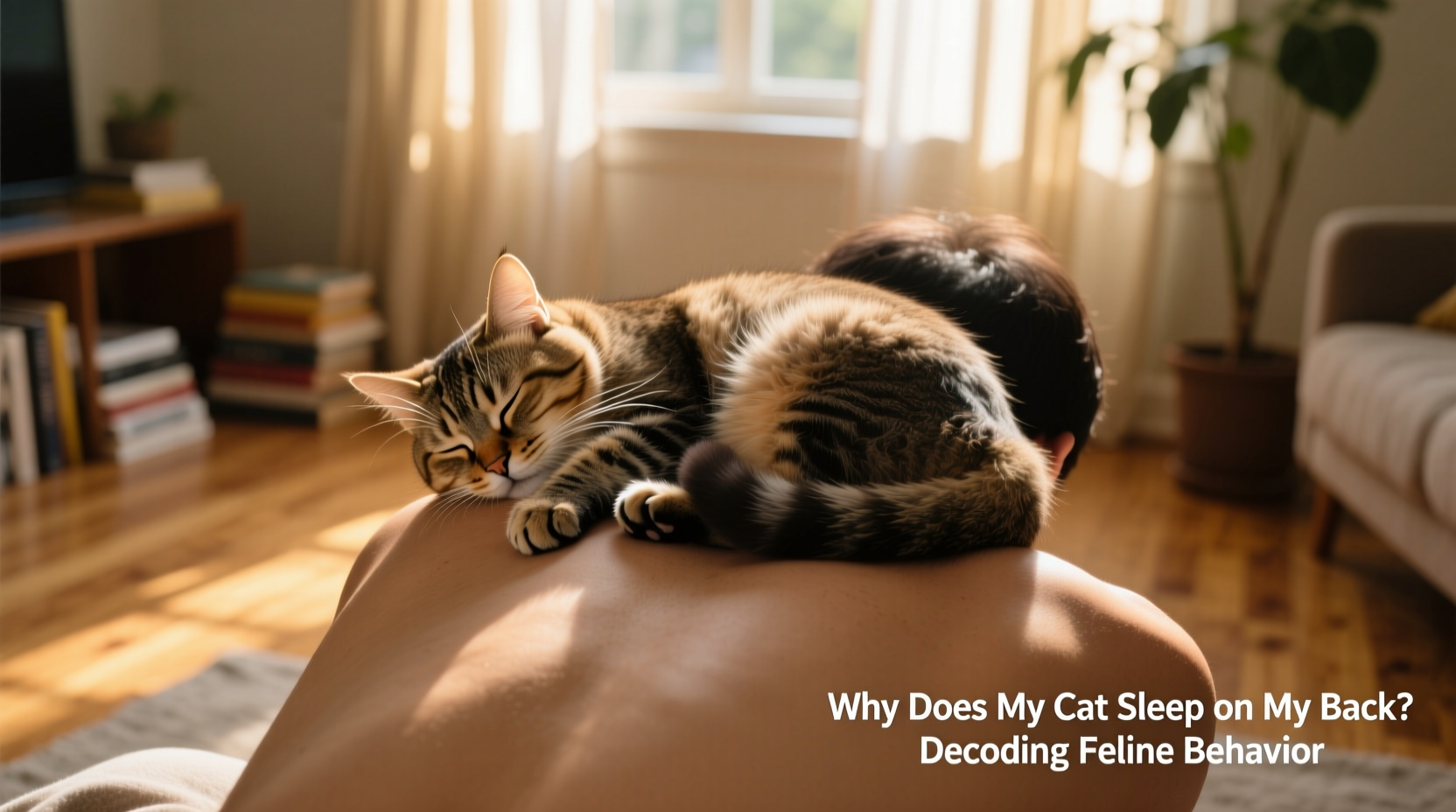
Cats are naturally drawn to warmth. In the wild, felines seek out sun-drenched rocks, warm soil, or sheltered nooks to regulate their body temperature. Domestic cats haven’t lost this instinct. Your body radiates heat, especially along the back and torso, making you an ideal thermal refuge. When your cat sleeps on your back, they’re essentially using you as a built-in heating pad.
This behavior is particularly common during colder months or in homes with lower ambient temperatures. Older cats or those with thin coats may be more prone to seeking out warm spots, and your back offers consistent, reliable heat without the need to search for sunbeams or heated blankets.
Safety and Trust: The Ultimate Sign of Confidence
A cat that sleeps on your back is demonstrating profound trust. In the animal kingdom, vulnerability during sleep makes one susceptible to predators. By choosing to nap on your back—a position where they can’t easily see their surroundings—they are signaling that they feel completely safe in your presence.
Feline behavior experts emphasize that this kind of physical closeness is not given lightly. Dr. Sarah Ellis, co-author of *The Trainable Cat*, explains:
“Cats are often misunderstood as aloof, but their affiliative behaviors—like sleeping on their human—are powerful indicators of attachment. When a cat chooses to rest in a vulnerable position on a person, it reflects a deep-seated sense of security.” — Dr. Sarah Ellis, Feline Behavior Specialist
Your cat isn’t just looking for comfort; they’re reinforcing a social bond. In multi-cat households, cats often sleep in contact with one another to maintain group cohesion. By including you in this behavior, your cat is treating you as part of their social unit—essentially, as family.
Instinctual Herding and Territory Marking
Beyond warmth and safety, there’s an evolutionary layer to this behavior. Cats are territorial animals, and they mark their domain through scent glands located in their paws, cheeks, and flanks. When your cat settles on your back, they’re transferring their scent onto you, effectively claiming you as part of their territory.
This isn’t possessive in a negative sense—it’s a form of social inclusion. In the feline mind, marking you strengthens the bond and communicates to other animals (real or perceived) that you belong to them. It’s a subtle but meaningful act of ownership that underscores their attachment.
Additionally, some experts suggest that climbing onto elevated positions—such as your back while you're lying down—gives cats a strategic vantage point. Even in sleep, being slightly elevated aligns with their natural instinct to observe their environment from a safe height.
Behavioral Checklist: Is Your Cat’s Back-Sleeping Normal?
While sleeping on your back is generally harmless, it’s helpful to assess whether the behavior fits within normal feline patterns. Use this checklist to evaluate your cat’s actions:
- ✅ Does your cat appear relaxed and at ease when on your back?
- ✅ Do they choose this spot consistently, especially during quiet times?
- ✅ Are they responsive when called or gently moved?
- ✅ Is there no sign of distress, aggression, or excessive clinginess?
- ✅ Do they have access to other warm, comfortable sleeping areas?
If all answers are “yes,” the behavior is likely a healthy expression of trust and comfort. However, if your cat seems anxious, won’t leave your side, or shows signs of separation distress, it may be worth consulting a veterinarian or feline behaviorist.
Real-Life Example: Bella and the Midnight Back Nap
Maria, a graphic designer from Portland, noticed that her 3-year-old tabby, Bella, began sleeping on her back every night after she started working from home. At first, it was uncomfortable—Bella’s weight pressed on her spine, and shifting positions risked waking the cat. But Maria soon realized that Bella only did this when she was stressed or when the house was unusually quiet.
After reading about feline bonding behaviors, Maria understood that Bella was seeking reassurance. She adjusted by placing a soft cushion beside her on the bed, encouraging Bella to sleep nearby instead. Over time, Bella began using the cushion more often, though she still occasionally returns to Maria’s back during storms or loud noises.
This case illustrates how environmental changes and emotional needs influence feline behavior—and how small adjustments can support both cat and owner.
Do’s and Don’ts: Managing Back-Sleeping Behavior
| Do’s | Don’ts |
|---|---|
| Provide alternative warm, elevated sleeping spots (e.g., heated beds, window perches) | Forcefully remove your cat while they’re sleeping |
| Respect their need for closeness while setting gentle boundaries | Scold or punish your cat for seeking comfort |
| Use positive reinforcement to encourage use of designated cat beds | Ignore signs of anxiety or over-attachment |
| Observe patterns—does it happen more during stress or at certain times of day? | Assume the behavior is always attention-seeking |
Step-by-Step Guide: Redirecting Without Damaging Trust
If your cat’s back-sleeping becomes uncomfortable or disruptive, you can gently guide them toward alternative resting spots without undermining their sense of security. Follow these steps:
- Identify Triggers: Note when and why your cat climbs onto your back. Is it cold? Are you inactive? Is there noise or change in routine?
- Create Appealing Alternatives: Place a soft, heated bed or a blanket with your scent near your usual resting spot.
- Introduce Gradually: Encourage your cat to explore the new spot with treats, toys, or catnip.
- Reinforce Positively: Praise and reward your cat when they choose the alternative spot.
- Be Patient: Change takes time. Allow your cat to transition at their own pace.
The goal isn’t to stop the behavior entirely but to offer choices that respect both your comfort and your cat’s emotional needs.
Frequently Asked Questions
Is it normal for my cat to sleep on my back every night?
Yes, it’s normal if your cat feels safe and bonded with you. Many cats develop strong preferences for specific people and spots. As long as the behavior isn’t linked to anxiety or health issues, it’s a sign of affection.
Could this behavior indicate a health problem?
Generally, no. However, if your cat suddenly becomes overly clingy, avoids other areas, or shows signs of pain when moving, consult a vet. Excessive attachment can sometimes signal underlying discomfort or illness.
Why does my cat only do this when I’m lying down, not sitting?
When you’re lying down, your back forms a flat, stable surface that’s easier to settle on. Sitting creates an incline and less space, making it harder for your cat to balance and relax.
Conclusion: A Purr-fect Expression of Love
Your cat sleeping on your back is more than just a quirky habit—it’s a complex blend of instinct, trust, and emotional connection. Far from being random, this behavior reveals how deeply your cat values your presence. They see you not just as a caregiver, but as a source of warmth, safety, and belonging.
Rather than viewing it as an inconvenience, consider it a compliment. Few animals willingly place themselves in vulnerable positions unless they feel secure. By understanding the reasons behind this behavior, you can respond with empathy and strengthen the unique bond you share.




 浙公网安备
33010002000092号
浙公网安备
33010002000092号 浙B2-20120091-4
Comments
No comments yet. Why don't you start the discussion?