
It’s a familiar scene: you’re halfway through a sandwich or enjoying a warm dinner, and suddenly you feel it—that unblinking, laser-focused gaze from your cat. They’re not looking away. No blink. No distraction. Just steady eye contact as if they’re silently judging your menu choices. While this behavior might seem odd—or even slightly unnerving—it’s actually quite common among domestic cats. The truth is, your cat isn’t trying to unsettle you. Their stare is usually rooted in instinct, curiosity, or a well-honed strategy to get what they want. Understanding why your cat watches you eat can deepen your bond and help you respond more effectively to their needs.
The Evolutionary Roots of Feline Observation
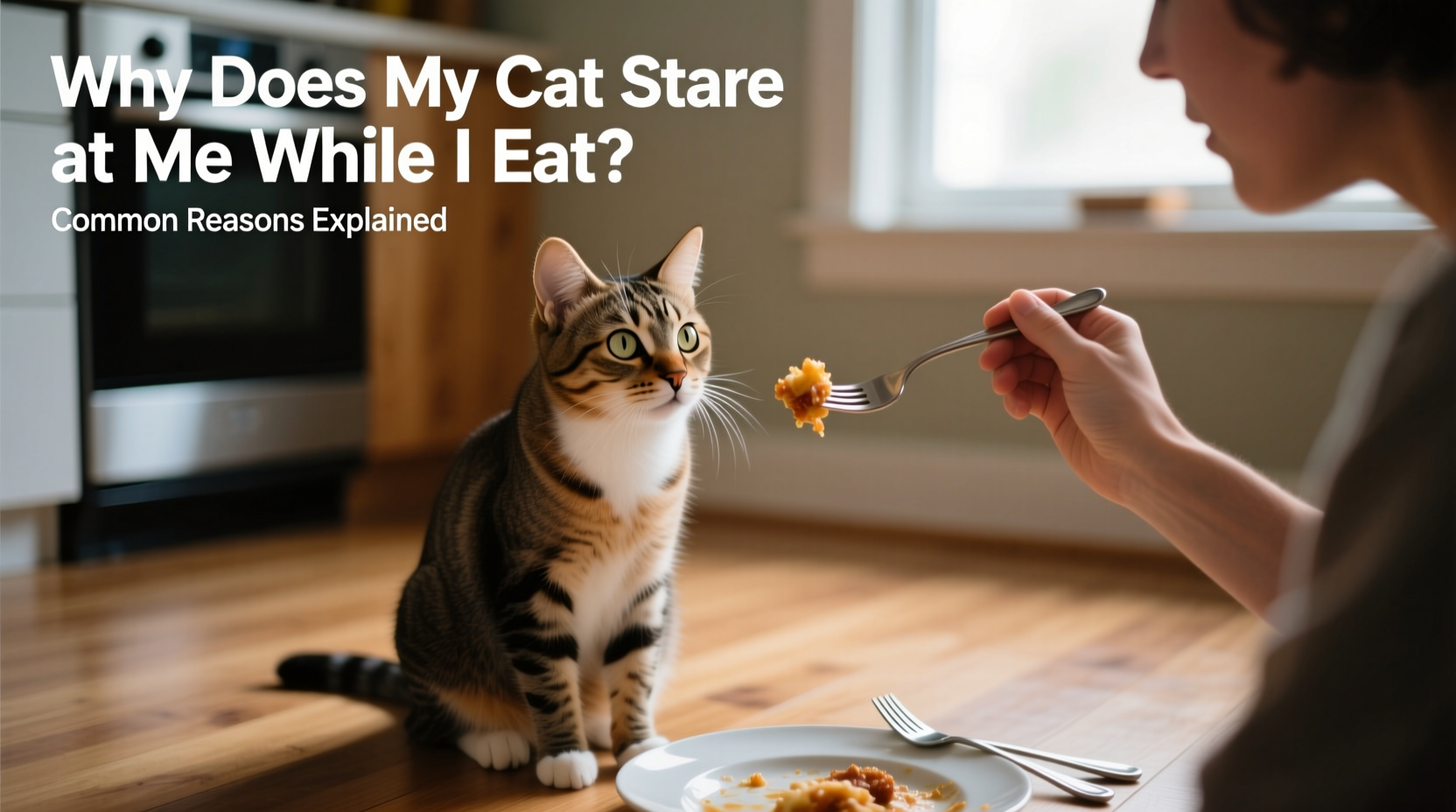
Cats are natural predators, and their survival in the wild depended on keen observation. Even though your indoor cat doesn’t need to hunt for food, their instincts remain intact. Watching movement—especially human activity around food—is deeply embedded in their behavioral repertoire. In multi-cat households or feral colonies, subordinate cats often observe dominant ones during meals to assess when it might be safe or beneficial to approach. This translates into domestic life: your cat may be watching you eat because they’re subconsciously treating you as the “alpha” member of the household, waiting for scraps or signs of food-sharing.
Additionally, cats are highly attuned to routines. If you’ve ever fed them right after eating, or accidentally dropped morsels in their direction, they’ve likely made an association between your mealtime and potential food rewards. Over time, this creates a conditioned response: you sit down with food → cat appears and stares. It’s not just about hunger; it’s about pattern recognition honed by experience.
Hunger and the Hope for Handouts
The most obvious reason your cat stares at you while you eat is simple: they want some of what you’re having. Cats are opportunistic feeders and have learned that humans often eat tastier, more aromatic foods than kibble or canned meals. The smell of cooked meat, fish, or even buttered toast can be irresistible. Your cat’s stare is often a calculated move—a silent plea designed to wear you down.
Some cats escalate from staring to more direct tactics: meowing, pawing at your leg, or rubbing against your arm. These behaviors are often shaped by past success. If you once gave in and shared a bite of chicken, your cat now views staring as step one in a proven strategy.
But here’s the catch: feeding cats human food regularly can lead to nutritional imbalances, obesity, or even toxicity. Onions, garlic, chocolate, and grapes are just a few examples of common foods that are dangerous for cats. Even seemingly harmless items like bread or cheese can cause digestive upset.
What Human Foods Are Safe (in Moderation)?
| Foods Safe for Cats | Foods to Avoid |
|---|---|
| Plain cooked chicken or turkey | Onions, garlic, chives |
| Small pieces of plain fish (no seasoning) | Chocolate, caffeine |
| Cooked eggs (fully scrambled or boiled) | Alcohol, raw dough |
| Pumpkin (plain, canned or cooked) | Milk and dairy (many cats are lactose intolerant) |
| Blueberries or melon (seedless) | Grapes, raisins, citrus |
“Cats don’t need human food to thrive. A balanced commercial diet meets all their nutritional needs. Treats should make up no more than 10% of daily intake.” — Dr. Lena Torres, DVM, Feline Nutrition Specialist
Bonding and Social Attention-Seeking
Not every stare is food-related. For many cats, watching their human eat is a form of social engagement. Cats form strong attachments to their caregivers, and mealtime offers a long, uninterrupted window of proximity. Unlike dogs, who often demand attention through physical nudges or barking, cats tend to communicate more subtly. Staring can be their way of saying, “I’m here with you,” or “Don’t forget I exist.”
In some cases, the act of sharing space during meals mimics grooming or resting together in the wild—a sign of trust and companionship. If your cat settles nearby and maintains soft eye contact (with slow blinks), they’re likely expressing affection rather than demanding food. This is especially true if they don’t vocalize or approach aggressively.
Interestingly, research shows that cats recognize their owners’ faces and voices, and they often prefer human interaction over food in controlled settings. So when your cat watches you eat without begging, they may simply be enjoying your presence.
Curiosity and Sensory Engagement
Cats are naturally curious creatures. The textures, smells, and sounds of human food are vastly different from their usual diet. That sizzle of bacon, the crinkle of a chip bag, or the steam rising from soup can captivate their attention. Your cat isn’t just watching you—they’re observing the entire sensory event.
This kind of focused attention is similar to how cats watch birds out a window or investigate a new object in the house. It’s mental stimulation. For indoor cats especially, mealtime may be one of the most exciting events of the day. The combination of movement, aroma, and novelty makes it hard to look away.
Some cats even develop preferences based on what you eat. They might ignore a salad but perk up instantly when you open a tuna can. This selectivity shows that their interest isn’t just about food availability—it’s about quality, scent, and memory.
Mini Case Study: Luna and the Midnight Snack
Luna, a 4-year-old tuxedo cat, began staring at her owner every time she ate peanut butter toast. At first, her owner assumed Luna wanted a taste. But after refusing to share, Luna didn’t leave—she stayed, sat beside the table, and watched intently until the meal ended. Over time, the owner noticed Luna only did this with peanut butter toast, not other foods. Eventually, she realized Luna wasn’t begging. She was fascinated by the sticky texture and the way the knife spread the peanut butter. The ritual itself—the scraping sound, the spreading motion—was the real attraction. Once understood, the owner started letting Luna observe from a safe distance, turning it into a brief daily bonding moment.
When Staring Signals Stress or Anxiety
While most staring is harmless, persistent, intense eye contact can occasionally signal underlying stress. Cats that feel insecure about food resources—such as those from shelters or competitive multi-pet homes—may watch meals obsessively due to fear of scarcity. In these cases, the stare is accompanied by tense body language: flattened ears, twitching tail, or pacing.
If your cat stares intensely, follows you from room to room, or becomes agitated when you don’t respond, it may indicate anxiety. This is especially true if they were previously underfed or lived in an unstable environment.
To ease such behavior:
- Feed on a consistent schedule so your cat knows when meals are coming.
- Use puzzle feeders or timed dispensers to provide mental stimulation.
- Avoid eating in front of them if it triggers obsessive behavior—consider stepping into another room.
- Consult a veterinarian or feline behaviorist if the behavior escalates.
Checklist: Responding to Your Cat’s Mealtime Stare
- Assess body language: Is your cat relaxed or tense?
- Determine motivation: Are they hungry, curious, or seeking attention?
- Avoid rewarding begging with food unless intentional.
- Offer a small, healthy treat before your meal to reduce fixation.
- Engage them with a toy or feeder to redirect focus.
- Practice slow blinking to acknowledge them without encouraging demands.
- Ensure their own feeding routine is predictable and sufficient.
FAQ: Common Questions About Cat Staring During Meals
Is it normal for my cat to stare at me while I eat?
Yes, it’s very common. Most cats stare due to curiosity, hunger, or social bonding. As long as the behavior isn’t obsessive or aggressive, it’s considered normal feline communication.
Should I feed my cat from my plate?
It’s best to avoid regular sharing of human food. Many ingredients are unsafe for cats, and feeding from the table encourages begging. If you want to offer a treat, choose cat-safe options and serve them separately.
My cat never used to stare—why has this started recently?
Sudden changes in behavior can stem from increased hunger (e.g., dietary changes), environmental shifts (new pet, moving), or learned associations. If accompanied by weight loss, vocalization, or aggression, consult a vet to rule out medical issues like hyperthyroidism.
Understanding the Gaze: A Step-by-Step Guide
Next time your cat locks eyes with you during dinner, follow this sequence to interpret and respond appropriately:
- Pause and Observe: Note your cat’s posture, tail position, and facial expression. Are they calm or alert?
- Identify Triggers: What are you eating? Has your cat had their own meal recently?
- Respond Calmly: Acknowledge them with a slow blink or quiet word. Avoid sudden movements.
- Redirect if Needed: Offer a toy, turn on a bird video, or give a pre-measured treat to shift focus.
- Establish Boundaries: If staring leads to begging, consistently withhold food during meals to break the cycle.
- Reinforce Positive Behavior: Reward calm observation with affection after you finish eating.
Over time, this approach helps your cat learn acceptable behaviors while still feeling included.
Conclusion: Seeing Beyond the Stare
Your cat’s stare isn’t mysterious—it’s meaningful. Whether driven by hunger, habit, affection, or instinct, that quiet gaze is a form of communication. By paying attention to context and body language, you can respond in ways that respect both your boundaries and your cat’s needs. Instead of brushing off the behavior or feeling guilty for not sharing your meal, use it as an opportunity to understand your cat better. With patience and consistency, you can shape healthier interactions around food and strengthen your relationship beyond the dinner table.




 浙公网安备
33010002000092号
浙公网安备
33010002000092号 浙B2-20120091-4
Comments
No comments yet. Why don't you start the discussion?