
Cats are enigmatic creatures. One moment they’re curled up in a sunbeam, the next they’re perched on your nightstand, eyes locked onto yours in the dim glow of moonlight. If you’ve ever woken to find your cat silently watching you while you sleep, you’re not alone—and you’re probably wondering: why? Is it affection? Curiosity? Or something more primal?
Animal behaviorists, veterinarians, and feline specialists have spent years studying cat communication. While cats don’t speak in words, their body language—especially eye contact—reveals volumes. What may seem like an eerie or intrusive habit is often rooted in deep evolutionary instincts, social bonds, and subtle expressions of trust.
This article decodes the science and psychology behind your cat’s nighttime gaze, exploring everything from emotional attachment to predatory instincts. You’ll learn how to interpret your cat’s stare, when to be concerned, and how to strengthen your bond based on expert insights.
The Science Behind Cat Staring: More Than Just a Look
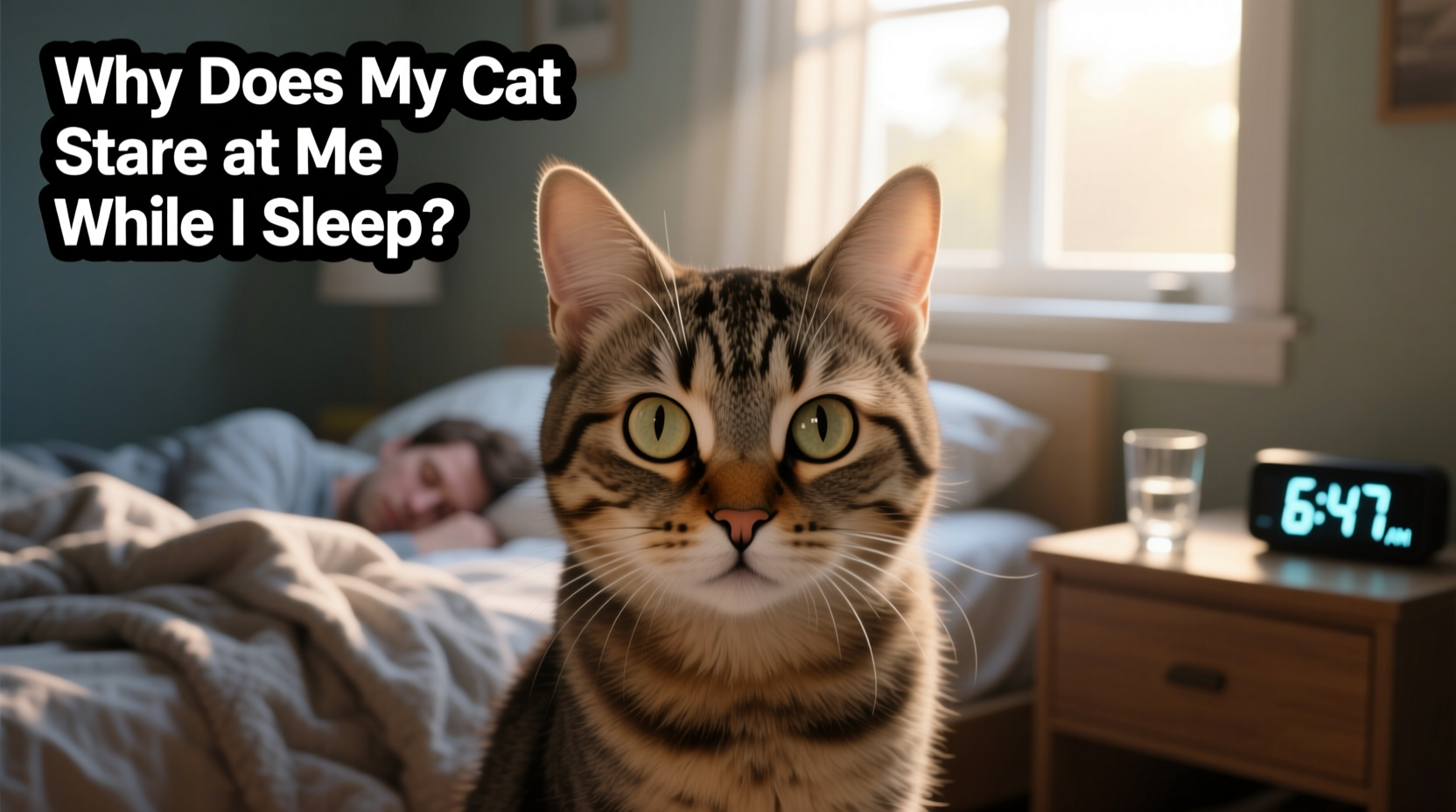
Cat staring isn’t random. Unlike humans, who use prolonged eye contact as a sign of dominance or intimacy, cats employ gaze differently. In the wild, direct eye contact between animals can signal threat or challenge. Yet domestic cats frequently stare at their owners—sometimes for minutes—without aggression.
Experts believe this shift is due to domestication. Over thousands of years, cats have adapted their communication to coexist with humans. A 2019 study published in *Scientific Reports* found that cats form secure attachments to their caregivers, similar to human infants. When a cat stares at you while you sleep, it may be monitoring your presence as part of that attachment.
“Cats use visual cues to assess safety and connection. A sleeping human is vulnerable, and the cat’s stare can be a way of checking in—like a silent ‘You’re still here, right?’” — Dr. Sarah Ellis, Feline Behavior Specialist, University of Lincoln
Additionally, cats have excellent low-light vision. Their pupils dilate in darkness, allowing them to see clearly even in minimal light. This means your cat may be fully aware of your breathing patterns, movements, or even facial expressions—even when you think you're unseen.
Common Reasons Your Cat Watches You Sleep
Not all staring is the same. The context, timing, and accompanying behaviors help determine what your cat is communicating. Below are the most common explanations backed by animal behavior research.
1. Bonding and Affection
In cat language, slow blinks and soft gazes are signs of trust. If your cat stares at you with half-closed eyes or slowly blinks while watching you, it’s likely expressing affection. These “cat kisses,” as some call them, indicate contentment and emotional security.
2. Monitoring for Safety
Cats are both predators and prey animals. Even in a safe home, instinct drives them to stay alert. Your cat may watch you to ensure no sudden movements or threats occur. Since humans are larger and unpredictable during sleep (tossing, snoring, talking), your cat stays vigilant.
3. Anticipation of Routine
If you typically feed your cat first thing in the morning, they may begin staring hours before, waiting for signs you’re waking. Cats are masters of routine and can predict feeding times within minutes. Their gaze becomes a silent request: “Are you awake yet?”
4. Curiosity About Movement
Even subtle twitches during REM sleep—like hand flicks or leg jerks—can catch a cat’s attention. Their hunting instincts kick in, interpreting these motions as potential prey-like activity. This doesn’t mean they think you’re food; rather, their brain registers movement as something worth observing.
5. Seeking Attention or Interaction
Sometimes, the stare is a prelude to action. Your cat may be waiting for you to open your eyes so they can initiate play, demand pets, or prompt feeding. If the stare is followed by pawing, meowing, or tail flicking, it’s likely a bid for engagement.
When Staring Might Signal a Problem
While most staring is harmless, certain patterns warrant attention. Prolonged, unblinking fixation—especially if accompanied by other behavioral changes—could indicate underlying issues.
| Behavior | Normal? | Potential Concern |
|---|---|---|
| Soft gaze with slow blinks | ✅ Yes | Bonding behavior |
| Fixed, wide-eyed stare without blinking | ⚠️ Monitor | Pain, anxiety, or neurological issue |
| Staring combined with pacing or vocalizing | ❌ Possibly | Cognitive dysfunction (especially in older cats) |
| Staring only at night, restlessness | ❌ Likely | Feline hyperesthesia or sensory decline |
Older cats, in particular, may develop feline cognitive dysfunction (FCD), akin to dementia in humans. Symptoms include disorientation, altered sleep cycles, and obsessive staring at walls or people. If your senior cat begins staring excessively at night, consult your veterinarian.
“Persistent staring without interaction, especially in aging cats, should be evaluated. It could be early-stage cognitive decline or discomfort we can’t see.” — Dr. Elizabeth Colleran, DVM, Past President of the American Association of Feline Practitioners
Mini Case Study: Luna and the Midnight Gaze
Maria, a 34-year-old teacher from Portland, noticed her 3-year-old tabby, Luna, began sitting at the foot of her bed every night, staring intently. At first, she found it unsettling. “It felt like she was guarding me,” Maria said. “I’d wake up and there she’d be—motionless, just watching.”
After tracking Luna’s behavior for two weeks, Maria realized the staring always occurred between 2:00 and 4:00 AM, shortly before she usually woke up. She also noticed Luna would nudge her hand or meow softly after about ten minutes of silence.
Upon consulting a feline behaviorist, Maria learned that Luna had associated Maria’s subtle pre-waking movements—like shifting under the covers—with breakfast time. The stare wasn’t mysterious; it was anticipation. By adjusting her morning routine slightly earlier and offering a timed feeder, the intense nighttime vigil decreased significantly.
“She still checks in,” Maria said, “but now it feels more like love than surveillance.”
How to Respond: A Step-by-Step Guide
If your cat’s staring bothers you—or if you want to encourage healthier nighttime behavior—follow this practical sequence:
- Observe the context. Note the time, duration, and any accompanying actions (meowing, pawing, blinking).
- Check for routine triggers. Does the stare happen before feeding, playtime, or your alarm?
- Respond calmly. Avoid shouting or startling your cat. Instead, offer a slow blink to acknowledge them.
- Adjust environmental factors. Use blackout curtains to reduce outside stimuli or provide a cozy alternative sleeping spot nearby.
- Introduce a bedtime routine. Play, feed, and cuddle before bed to reduce nighttime arousal.
- Consult a vet if behavior changes. Sudden or obsessive staring, especially in older cats, warrants medical evaluation.
Do’s and Don’ts of Handling Cat Staring
| Do | Don’t |
|---|---|
| Return slow blinks to build trust | Stare back aggressively or widen your eyes |
| Provide a comfortable perch near the bed | Push your cat away abruptly |
| Use a timed feeder if they’re hungry | Reinforce attention-seeking stares with treats at odd hours |
| Monitor for health changes over time | Assume all staring is problematic |
Frequently Asked Questions
Is it normal for my cat to stare at me all night?
Occasional staring, especially if calm and non-intrusive, is normal. Cats are crepuscular—most active at dawn and dusk—and may observe you during their peak alertness. However, constant, rigid staring with no interaction may require veterinary assessment.
Does my cat think I’m prey when they stare at me?
No. While cats retain hunting instincts, they do not view their bonded humans as prey. Movement during sleep might trigger curiosity, but the relationship context prevents predatory behavior. Your cat knows you’re not food.
Should I let my cat sleep in bed with me if they stare?
If both you and your cat are comfortable, co-sleeping can strengthen your bond. However, if the staring disrupts your sleep or leads to pouncing at night, consider setting boundaries—like closing the bedroom door or providing a separate sleeping area.
Expert Tips for Strengthening Trust and Reducing Anxiety
A cat’s stare often reflects their emotional state. To foster security and reduce obsessive monitoring, focus on consistent, positive interactions:
- Engage in daily interactive play using wand toys to satisfy hunting instincts.
- Establish predictable routines for feeding, cleaning, and affection.
- Use pheromone diffusers (like Feliway) to reduce nighttime anxiety.
- Offer elevated perches or cat trees so your cat can observe safely without needing to invade your space.
- Practice gentle touch and voice modulation—soft tones help reinforce calmness.
Conclusion: Understanding the Silent Watch
Your cat’s stare while you sleep isn’t a mystery to be feared—it’s a window into their world. Whether it’s a quiet act of devotion, a survival instinct, or simply anticipation of breakfast, that gaze speaks volumes about your relationship. Far from being invasive, it often signifies that your cat sees you as central to their sense of safety and belonging.
By understanding the reasons behind the behavior, responding with empathy, and supporting your cat’s needs, you transform what might feel like surveillance into a deeper connection. After all, few creatures choose to watch us in our most vulnerable state unless they care.




 浙公网安备
33010002000092号
浙公网安备
33010002000092号 浙B2-20120091-4
Comments
No comments yet. Why don't you start the discussion?