
If you’ve ever woken up to the quiet, unblinking gaze of your cat perched at the foot of the bed or curled beside you, you’re not alone. Many cat owners report their feline companions watching them intently during sleep. While it can feel eerie—almost like being monitored—it’s rarely a cause for concern. In fact, veterinary behaviorists and feline experts say this behavior is often rooted in instinct, trust, and subtle communication. Understanding why your cat stares at you while you sleep reveals deeper layers of the human-cat relationship and offers insight into your pet’s emotional world.
The Evolutionary Roots of Feline Observation
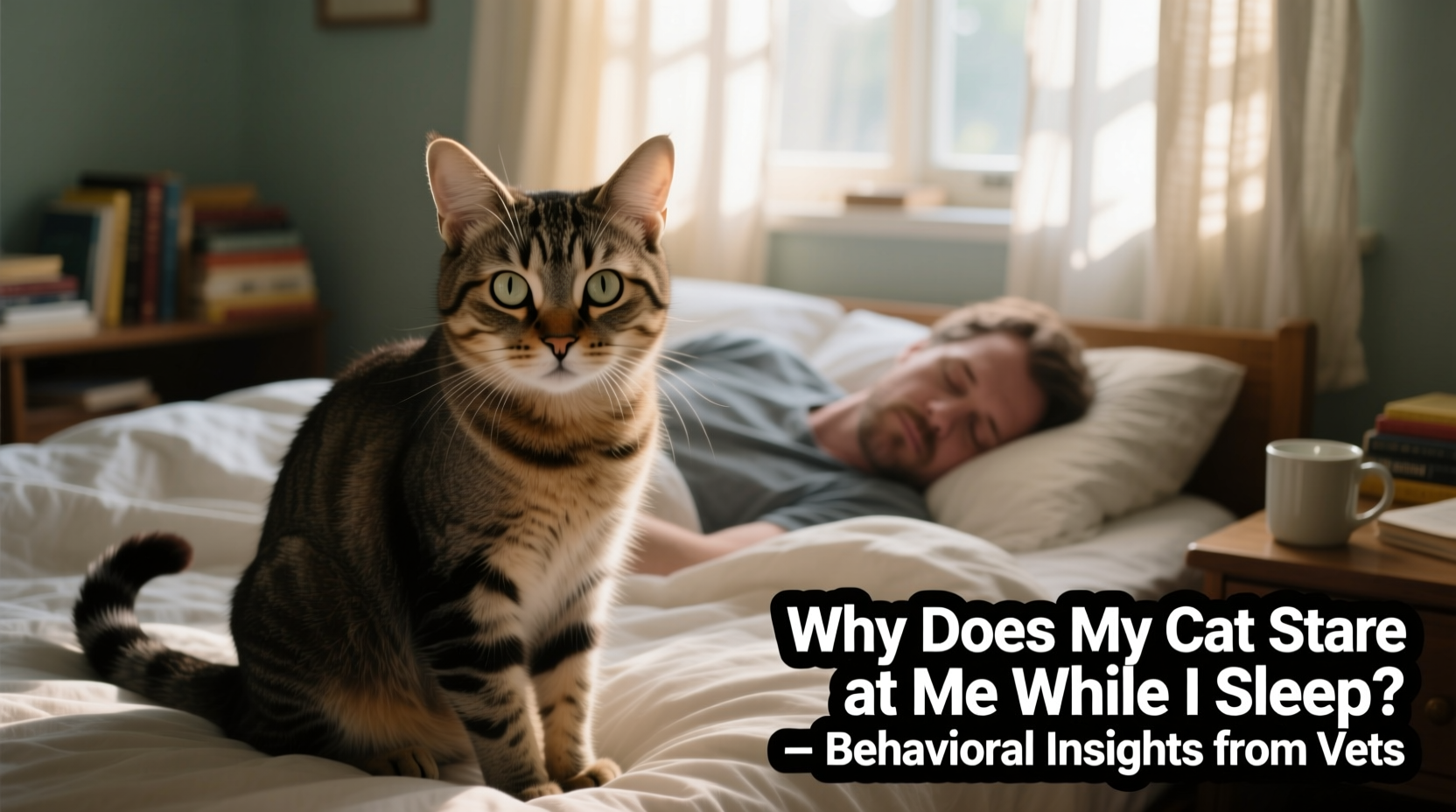
Cats are naturally observant animals. As both predators and prey in the wild, they rely heavily on vigilance to survive. Even domesticated cats retain these instincts. Their ancestors needed to monitor their environment constantly—tracking movement, identifying threats, and timing their hunts. When your cat watches you while you sleep, it may simply be fulfilling an innate need to stay alert.
Dr. Sarah Thompson, a certified veterinary behaviorist with over 15 years of clinical experience, explains: “Cats don’t have the same concept of privacy as humans. To them, observing a sleeping human isn’t intrusive—it’s strategic. They’re assessing safety, monitoring routines, and reinforcing social bonds.”
In multi-pet households, cats often take turns being the “watcher,” especially during vulnerable times like sleep. If your cat is the most alert or dominant animal in the home, it may assume the role of guardian—keeping one eye open while others rest.
“Staring is a form of environmental scanning. For cats, a sleeping human is part of the landscape—one that moves unpredictably and sometimes provides warmth or food.” — Dr. Sarah Thompson, DVM, Veterinary Behavior Specialist
Signs Your Cat’s Stare Is About Trust, Not Suspicion
Contrary to how it might feel, prolonged eye contact from a cat is often a sign of affection—not aggression. Unlike dogs, who may avoid direct eye contact as a sign of submission, cats use slow blinks and steady gazes to communicate comfort. If your cat stares at you while you sleep but exhibits relaxed body language—ears forward, tail loosely curled, pupils normal in size—it’s likely expressing trust.
Experts refer to this as “quiet bonding.” During your sleep, when you’re still and non-threatening, your cat may feel safest simply being near you and watching. The absence of interaction allows them to observe without pressure, which can be deeply comforting for a creature that values control over its environment.
Common Behavioral Triggers Behind the Stare
While general vigilance and bonding are common reasons, several specific triggers can prompt your cat to fixate on you during sleep:
- Anticipation of Routine: Cats thrive on predictability. If you typically wake up at 6:30 a.m. to feed them, your cat may begin staring at you 10–15 minutes beforehand, silently urging you to get moving.
- Hunger or Thirst: An empty food bowl can turn your sleeping form into a target of intense focus. Some cats learn that sustained eye contact increases the likelihood of early feeding.
- Seeking Warmth or Space: Your bed is warm and comfortable. A cat may stare while deciding whether to jump in, weighing your movements and breathing patterns before making their move.
- Curiosity About Noises or Movements: Even minor twitches, snoring, or rolling over can capture a cat’s attention. These small changes break the stillness and trigger investigative behavior.
- Separation Anxiety: In some cases, particularly with bonded cats, staring may reflect mild anxiety. If you’ve recently changed your schedule or sleeping location, your cat may watch you more closely to ensure you’re still present.
When Staring Crosses Into Problematic Territory
Most staring is harmless, but there are exceptions. Persistent, wide-eyed fixation combined with other symptoms—such as pacing, vocalization, or dilated pupils—can indicate underlying issues:
- Medical discomfort (e.g., hyperthyroidism, cognitive dysfunction in older cats)
- Sensory decline (vision or hearing loss leading to disorientation)
- Stress from environmental changes (new pets, construction, or relocation)
If your senior cat begins staring at you all night and seems confused or restless, consult your veterinarian. Conditions like feline cognitive dysfunction (FCD) affect up to 50% of cats over age 15 and often manifest during nighttime hours.
Decoding the Silent Language of Cat Eyes
A cat’s eyes are powerful tools for communication. The duration, intensity, and context of a stare all carry meaning. Here’s how to interpret what your cat might be saying:
| Eye Behavior | Meaning | What to Do |
|---|---|---|
| Slow blinking while staring | Sign of affection and relaxation | Return the blink to reinforce bonding |
| Dilated pupils, fixed gaze | Heightened arousal—could be excitement or stress | Check environment for triggers; calm interaction |
| Narrowed eyes, squinting | Contentment or mild irritation | Observe body language; may want space |
| Unblinking, rigid posture | Potential threat assessment or anxiety | Rule out medical causes if persistent |
| Looking away after eye contact | De-escalation; showing non-aggression | No action needed—this is polite cat behavior |
Understanding these cues helps distinguish between benign observation and potential distress. A relaxed stare with occasional slow blinks is usually nothing to worry about. But if your cat appears tense or won’t look away even when called, further evaluation may be necessary.
Real-Life Example: Luna and the Midnight Watch
Maria, a graphic designer from Portland, noticed her 4-year-old tuxedo cat, Luna, had started spending nights perched on the nightstand, silently watching her sleep. At first, Maria found it unsettling. “It felt like she was waiting for something—like I was in a horror movie,” she said. Concerned, she recorded a video and sent it to her vet.
After reviewing the footage and Luna’s history, the vet concluded that Luna was exhibiting protective behavior. Maria often worked late and slept irregularly. Luna, who had been adopted from a shelter, had formed a strong attachment. The staring wasn’t predatory—it was vigilant. The vet recommended increasing daytime interaction and adding a cozy cat bed next to the bed to encourage co-sleeping rather than surveillance.
Within two weeks, Luna began sleeping beside Maria instead of watching her. The staring decreased significantly. “I realized she wasn’t judging me—she was just making sure I was okay,” Maria shared. “Now we both sleep better.”
How to Respond: A Step-by-Step Guide
If your cat’s nighttime staring concerns you or disrupts your sleep, follow this practical timeline to address the behavior:
- Observe and Document (Days 1–3): Note when the staring occurs, how long it lasts, and your cat’s body language. Look for patterns related to feeding, noise, or your movements.
- Rule Out Medical Causes (Day 4): Schedule a vet check-up, especially if your cat is over 10 years old or shows other odd behaviors (excessive meowing, litter box issues).
- Adjust Feeding Schedule (Day 5): If hunger is a factor, use an automatic feeder to provide a pre-dawn meal, reducing motivation to wake you.
- Enhance Environmental Enrichment (Days 6–10): Add window perches, puzzle feeders, or night-safe toys to keep your cat mentally stimulated during your sleep.
- Encourage Co-Sleeping (Ongoing): Provide a soft bed or blanket on your bed to invite your cat to sleep *with* you, not just watch you.
- Practice Positive Reinforcement (Daily): Reward calm behavior with gentle praise or treats in the morning. Never punish staring—it may increase anxiety.
This approach addresses both the physical and emotional drivers behind the behavior, helping your cat feel secure without resorting to constant monitoring.
Frequently Asked Questions
Is it normal for my cat to stare at me all night?
Occasional staring is normal, especially if your cat is relaxed. However, continuous, intense staring throughout the night—especially in older cats—may indicate confusion, pain, or sensory issues. Consult your vet if it becomes disruptive or is accompanied by vocalization or pacing.
Does my cat think I’m helpless when I’m sleeping?
Not exactly. Cats recognize that sleeping humans are less responsive, but they don’t necessarily see us as weak. Instead, they may view us as part of their social group needing protection. Some cats even position themselves between their owner and the bedroom door—a behavior observed in bonded pairs.
Should I let my cat sleep in bed with me?
If both you and your cat enjoy it, yes. Co-sleeping can strengthen your bond and reduce feline anxiety. Just ensure your cat has its own designated space (like a heated pad or cushion) to avoid accidental injury during tossing and turning.
Actionable Checklist: Responding to Your Cat’s Nighttime Staring
- ✅ Observe your cat’s body language during the stare (relaxed vs. tense)
- ✅ Record a short video to share with your vet if concerned
- ✅ Rule out medical issues, especially in cats over 10 years old
- ✅ Adjust feeding times or use an automatic feeder
- ✅ Provide alternative sleeping spots near your bed
- ✅ Increase daytime play and mental stimulation
- ✅ Practice slow blinking to build trust
- ✅ Avoid sudden movements or yelling if caught staring—it may scare your cat
Final Thoughts: Seeing Beyond the Stare
Your cat’s silent vigil during your sleep is more than a quirk—it’s a window into their mind. Whether driven by instinct, affection, or anticipation, this behavior reflects a complex blend of survival, social connection, and curiosity. Rather than dismissing it as odd, consider what your cat might be trying to tell you. Are they seeking reassurance? Waiting for breakfast? Or simply finding peace in your presence?
By responding with empathy and understanding, you deepen the mutual trust that defines the best human-feline relationships. The next time you catch those luminous eyes in the dark, remember: your cat isn’t judging you. They’re watching over you.




 浙公网安备
33010002000092号
浙公网安备
33010002000092号 浙B2-20120091-4
Comments
No comments yet. Why don't you start the discussion?