
It’s a quiet night. You’re half-asleep, drifting into dreams, when you feel it—the unmistakable weight of eyes on you. You open one eye, and there they are: your cat, sitting silently at the foot of the bed or perched on the nightstand, staring intently. No blinking. No movement. Just focused observation. It can be eerie, endearing, or even slightly unnerving. But why do cats do this? What’s going through their minds as they watch us in our most vulnerable state?
Cats are complex creatures shaped by instinct, social learning, and deep bonds with their humans. Their behavior often has roots in survival, communication, and emotional connection. The act of staring while you sleep isn’t random—it’s meaningful. Understanding the reasons behind it can deepen your relationship and ease any unease you might feel.
The Evolutionary Roots of Feline Observation
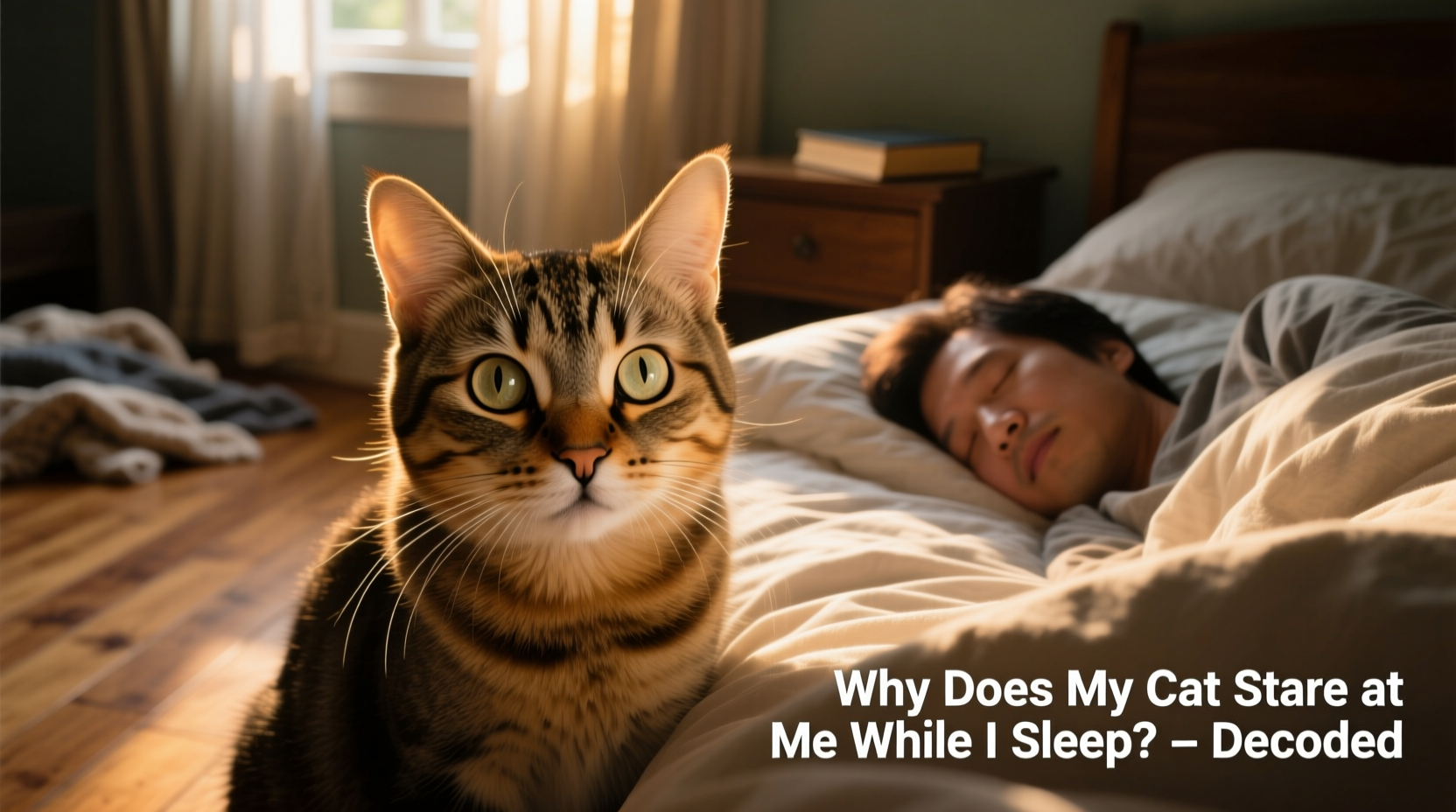
To understand why your cat stares at you while you sleep, it helps to look back at their wild ancestors. Cats are crepuscular predators—most active during dawn and dusk—but they remain alert throughout the night. In the wild, vigilance is essential. A moment of inattention could mean missing prey or failing to detect a threat.
Domestication hasn’t erased these instincts. Your home may be safe, but your cat still operates with an innate need to monitor its environment. When you’re asleep, you become part of that environment—not just a companion, but a variable in their mental map of safety and routine.
Your breathing patterns, movements, and even subtle sounds (like snoring or shifting) provide data. A cat’s brain constantly processes sensory input, and watching you sleep allows them to assess whether everything is “normal.” If you suddenly sit up or make a loud noise, their attention snaps to high alert—not out of malice, but because their instincts tell them to respond to change.
“Cats don’t just see their humans as caregivers—they see them as part of their social group. Monitoring your behavior, especially during passive states like sleep, is a way of maintaining group cohesion.” — Dr. Sarah Thompson, Feline Behavior Specialist, University of Edinburgh
Signs of Affection and Trust
Contrary to popular belief, cats are not emotionally detached. They form strong attachments to their people, though they express them differently than dogs. One of the most profound signs of trust in cats is prolonged eye contact—what experts call a “slow blink” or “cat kiss.” While your sleeping cat may not be slow-blinking, the act of sustained gazing can still signal affection.
If your cat chooses to sit near you at night and watches you quietly, it’s often because they feel safe and bonded. They aren’t plotting anything sinister; they’re simply enjoying your presence. For a cat, being close to someone who is unconscious and unaware is a sign of deep trust. They know you won’t suddenly move or startle them, making the moment peaceful and secure.
In multi-pet households, cats often take turns keeping watch. One sleeps while another remains alert. This rotational vigilance strengthens group survival. In a human-cat household, your cat may unconsciously adopt this role—watching over you while you’re defenseless.
Hunger, Routine, and Expectations
Not all staring is emotional. Sometimes, it’s purely practical. Cats are creatures of habit, and if you feed them at a certain time each morning, their internal clock kicks in long before your alarm does. As your bedtime routine winds down, your cat may begin anticipating the next day’s events.
When they stare at you while you sleep, they might be waiting for you to wake up so breakfast can begin. This is especially common in cats who have trained their owners to respond to early-morning meows or paw taps. The stare becomes a prelude to action—a silent demand for attention.
Consider this scenario: Bella, a 4-year-old tabby, sits on her owner’s chest every night at 5:30 AM, unblinking. Her owner groggily opens their eyes, and within seconds, Bella trots to the kitchen, expecting food. Over time, the stare evolved into a conditioned behavior—Bella learned that watching equals feeding.
Mini Case Study: The 5:45 AM Watcher
Lena adopted Milo, a rescue cat, six months ago. She noticed he began staring at her from the foot of the bed around 5:45 AM daily. At first, she thought he was anxious. After consulting a behaviorist, she realized Milo associated her waking with breakfast. By adjusting his feeding schedule and introducing timed feeders, the intense staring decreased significantly. The behavior wasn’t emotional—it was logistical.
Curiosity and Sensory Engagement
Cats are naturally curious. Even in familiar environments, they remain alert to changes. Your sleeping habits—how you move, breathe, or even talk in your sleep—can be fascinating to a cat. Snoring, mumbling, or sudden limb jerks during REM sleep may catch their attention.
Unlike humans, cats don’t experience sleep in the same extended cycles. They nap frequently but rarely enter deep, uninterrupted sleep for hours. Watching you stay still for so long may seem strange or intriguing to them. It’s not uncommon for cats to gently paw at a sleeping person’s hand or nose, testing responsiveness—much like they would with another animal.
This curiosity isn’t malicious. It’s exploratory. Your cat may be trying to understand your behavior, just as you try to interpret theirs. Some cats even mimic your posture, lying down nearby once they’ve confirmed you’re not moving.
| Behavior | Possible Meaning | Action to Take |
|---|---|---|
| Staring with relaxed body | Contentment, bonding | No action needed; enjoy the moment |
| Staring with tail flicking | Irritation or impatience | Check feeding schedule or environmental stressors |
| Staring with ears forward, pupils normal | Curiosity or alertness | Allow observation; avoid startling |
| Staring with dilated pupils, crouched | Overstimulation or fear | Dim lights, reduce noise, give space |
Health and Behavioral Red Flags
While most nighttime staring is harmless, sudden changes in behavior warrant attention. If your cat, who previously ignored you at night, now spends hours staring without blinking, pacing, or vocalizing, it could indicate an underlying issue.
- Cognitive Dysfunction: Older cats may develop feline cognitive decline, similar to dementia in humans. Symptoms include confusion, disorientation, and altered sleep-wake cycles.
- Pain or Discomfort: A cat in pain may become more clingy or vigilant, seeking reassurance.
- Vision or Hearing Loss: Impaired senses can make cats more reliant on visual cues, leading to increased staring as they try to interpret their surroundings.
- Anxiety or Stress: Changes in the household, new pets, or loud noises can heighten a cat’s alertness, causing them to monitor you more closely.
If the staring is accompanied by other symptoms—excessive meowing, litter box avoidance, aggression, or loss of appetite—consult your veterinarian. A full check-up can rule out medical causes and guide behavioral interventions.
Step-by-Step Guide: Responding to Nighttime Staring
- Observe the context: Note the time, your cat’s body language, and any recent changes in routine.
- Check for patterns: Does the staring happen only before feeding? After loud noises? At the same time every night?
- Assess physical health: Look for signs of illness or discomfort, such as limping, grooming changes, or weight loss.
- Adjust the environment: Provide a comfortable sleeping spot near you, use white noise to reduce disturbances, or install nightlights to ease anxiety.
- Reinforce positive behavior: Reward calm, quiet observation with gentle praise or a small treat in the morning—never during the stare, as that reinforces attention-seeking.
- Consult a professional: If the behavior persists or worsens, seek advice from a certified feline behaviorist or vet.
Do’s and Don’ts of Cat Staring Etiquette
| Do’s | Don’ts |
|---|---|
| Return slow blinks to show affection | Stare directly without blinking—this can be seen as threatening |
| Provide a cozy observation spot near your bed | Yell or punish your cat for watching you |
| Respect their need for quiet time | Force interaction when they’re being observant |
| Monitor for sudden behavioral shifts | Ignore persistent changes in sleep or activity patterns |
Frequently Asked Questions
Is it normal for my cat to stare at me all night?
Occasional staring is completely normal, especially if your cat is relaxed and near you. However, constant, unblinking focus—especially if paired with restlessness or vocalization—may indicate anxiety, hunger, or health issues. Monitor the frequency and context to determine if intervention is needed.
Why does my cat stare and then suddenly run away?
This is common and usually harmless. Cats have bursts of energy, especially at night. After observing you, they may get a sudden urge to sprint, which is a natural expression of their predatory instincts. It’s often called the “midnight crazies” and is typically not a cause for concern unless destructive.
Can staring be a sign of aggression?
Rarely. Direct staring without blinking *can* be a challenge in cat-to-cat interactions, but when directed at humans, it’s usually not aggressive. However, if your cat stares while growling, hissing, or with flattened ears, it may feel threatened. In such cases, give them space and identify potential stressors.
Conclusion: Seeing Through Your Cat’s Eyes
Your cat’s gaze while you sleep is more than a quirky habit—it’s a window into their mind. Whether driven by instinct, affection, curiosity, or routine, that silent observation reflects a deep, complex relationship. Cats don’t waste energy on meaningless actions. When they watch you, they’re processing the world, ensuring safety, and sometimes, simply enjoying your presence.
Instead of feeling unsettled, consider it a compliment. Out of all the places they could be, they choose to be near you—even in your most passive state. That’s trust. That’s love, in feline form.




 浙公网安备
33010002000092号
浙公网安备
33010002000092号 浙B2-20120091-4
Comments
No comments yet. Why don't you start the discussion?