
Cats are enigmatic creatures. Their behaviors often leave owners puzzled—especially when they fixate on something seemingly invisible, like a blank spot on the ceiling. You’re not alone if you’ve caught your feline staring upward for minutes on end, ears perked and tail twitching. While this can appear odd or even unsettling, in most cases, ceiling-staring is a normal expression of your cat’s instincts and sensory perception. However, under certain circumstances, it may signal an underlying health issue. Understanding why cats engage in this behavior—and knowing when to intervene—is essential for every responsible pet owner.
The Science Behind Feline Vision and Hearing
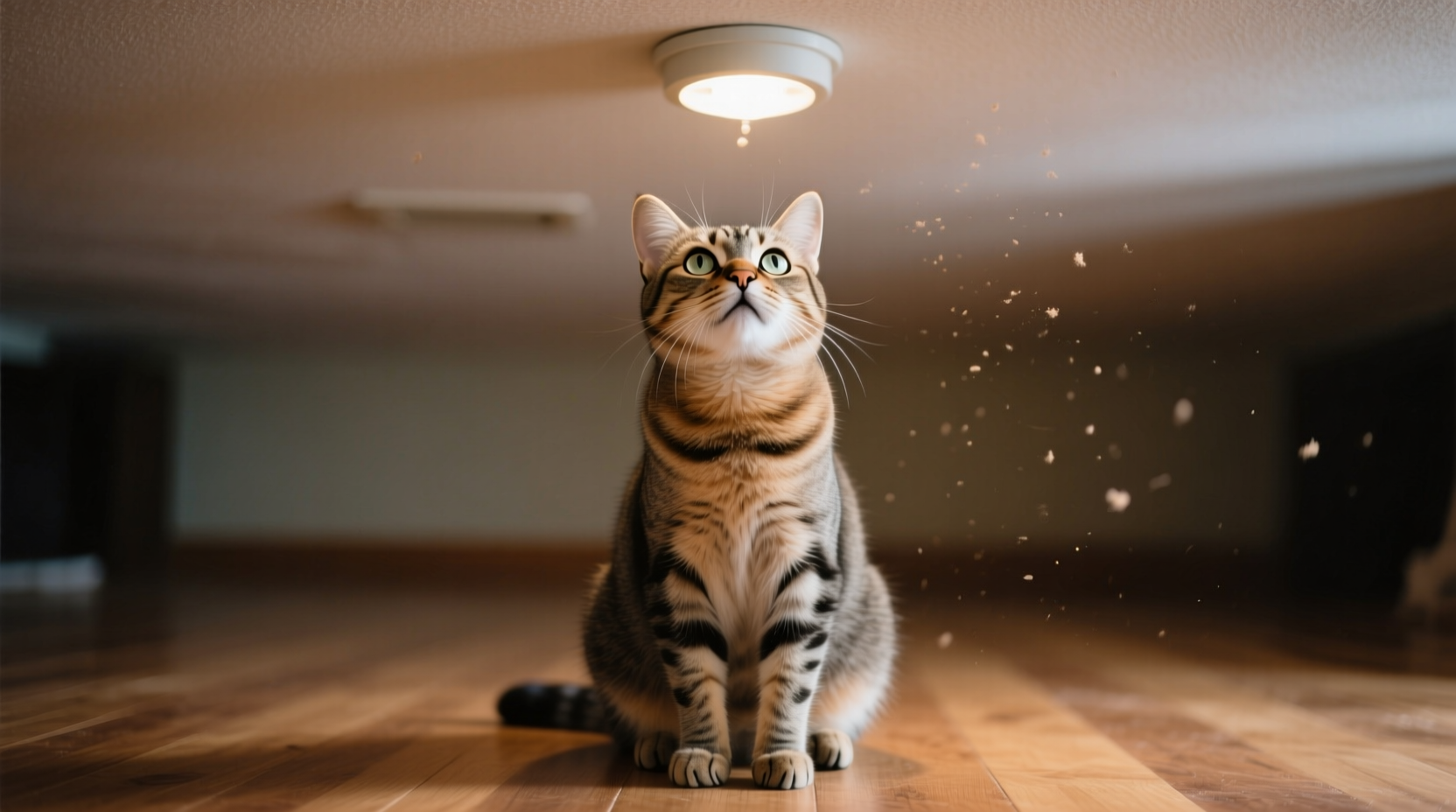
Cats possess highly evolved senses that allow them to detect stimuli humans cannot. Their eyes are adapted for low-light hunting, with a reflective layer behind the retina called the *tapetum lucidum* that enhances night vision. This gives cats superior motion detection, especially in dim lighting. Even subtle movements—a flickering shadow, dust motes drifting in a sunbeam, or a fly buzzing near the ceiling—are easily picked up by their keen eyesight.
Their hearing is equally impressive. Cats can detect frequencies up to 64,000 Hz, far beyond human capability. High-pitched sounds such as insect wings, electrical humming from light fixtures, or even ultrasonic noises from appliances might draw their attention upward. What seems silent to you could be a symphony of noise to your cat.
“Cats don’t just see the world the way we do—they experience it differently. Their sensory input is constantly scanning for movement and sound, which explains many ‘odd’ behaviors.” — Dr. Lena Patel, Veterinary Behaviorist
This sensory sensitivity means that your cat isn’t necessarily seeing “nothing” when staring at the ceiling. They may be tracking something imperceptible to you—whether it's a moth fluttering above, a cobweb swaying in air currents, or even patterns formed by light reflections.
Common Reasons Cats Stare at the Ceiling
Not all ceiling-gazing is cause for concern. In fact, most explanations are rooted in natural feline curiosity and instinct. Below are the most frequent causes:
- Motion Detection: Even tiny movements catch a cat’s eye. Dust particles, shadows from passing clouds, or a spider crawling along the edge of the ceiling can trigger intense focus.
- Insect Activity: Flies, moths, or spiders near lights or vents often attract a cat’s predatory instincts. The rapid, erratic flight patterns mimic prey behavior.
- Auditory Stimuli: Fluorescent lights, HVAC systems, or electronic devices emit high-frequency hums that only cats can hear. These sounds may originate near or above the ceiling.
- Light and Shadow Play: Sunlight filtering through blinds or reflections from mirrors and glass can create moving patterns on the ceiling, stimulating play or hunting responses.
- Playfulness or Boredom: Indoor cats with limited stimulation may fixate on anything novel, including ceiling textures or paint cracks, simply out of mental engagement.
When Ceiling Staring May Signal a Health Issue
While occasional ceiling fixation is normal, persistent or repetitive staring without apparent stimulus could indicate a medical problem. Two primary concerns are feline cognitive dysfunction and seizures.
Feline Cognitive Dysfunction (FCD), similar to dementia in humans, affects older cats. Symptoms include disorientation, changes in sleep cycles, litter box avoidance, and vacant staring into space. A cat with FCD may appear \"zoned out,\" gazing at walls or ceilings for extended periods without reacting to stimuli.
Seizures are another possible cause. During a partial (focal) seizure, a cat may exhibit odd behaviors such as twitching, lip-smacking, or fixed staring—often directed upward. These episodes typically last seconds to minutes and may be followed by confusion or drowsiness.
Other neurological issues, such as brain tumors or infections, though rare, can also manifest through abnormal visual tracking or obsessive focus on non-existent objects.
Red Flags That Warrant a Vet Visit
| Symptom | Normal Behavior | Potential Concern |
|---|---|---|
| Duration of Staring | Seconds to a few minutes | Over 5–10 minutes without blinking or response |
| Frequency | Occasional, linked to stimuli | Daily, without clear trigger |
| Physical Signs | Alert, responsive after | Twitching, drooling, unsteady gait afterward |
| Other Behavioral Changes | None | Vocalization, hiding, aggression, or disorientation |
Real-Life Example: Bella the Curious Tabby
Bella, a 4-year-old domestic shorthair, began staring at the kitchen ceiling every evening around 7 PM. Her owner, Sarah, initially thought it was playful behavior—until it became routine. Concerned, she set up a camera to observe when she wasn’t home. The footage revealed a small moth trapped between the ceiling light fixture and the glass cover, fluttering intermittently. Bella could hear and see its erratic movements, triggering her hunting focus.
After removing the insect, Bella stopped staring at that spot entirely. This case illustrates how environmental factors invisible to humans can captivate a cat’s attention. It also highlights the importance of investigating potential stimuli before assuming a behavioral or medical issue.
Step-by-Step Guide: Assessing Your Cat’s Ceiling-Staring Habits
If your cat frequently stares at the ceiling, follow this logical sequence to determine whether action is needed:
- Observe the context: Note the time of day, lighting, and any sounds. Is the behavior tied to specific conditions?
- Scan for stimuli: Look for insects, shadows, reflections, or flickering lights on or near the ceiling.
- Check for repetition: Does the behavior occur in the same location daily, or is it random?
- Monitor physical symptoms: Watch for twitching, drooling, loss of balance, or disorientation during or after episodes.
- Record a video: Capture a short clip of the behavior to show your veterinarian if concerns persist.
- Consult your vet: If staring is prolonged, unresponsive, or paired with other odd behaviors, schedule a check-up to rule out medical causes.
How to Reduce Excessive Ceiling Fixation
If your cat’s ceiling-staring stems from boredom or overstimulation, environmental enrichment can help redirect their focus:
- Provide interactive toys: Wand toys, puzzle feeders, and motorized mice satisfy hunting instincts indoors.
- Install window perches: Give your cat a view of the outdoors where real birds and squirrels offer natural stimulation.
- Use treat-dispensing balls: These encourage active play and reduce idle time spent scanning ceilings.
- Introduce scheduled play sessions: Two 10-minute play periods daily can significantly reduce obsessive behaviors.
- Limit exposure to flickering lights: Replace aging fluorescent bulbs or dimmers that may create stroboscopic effects.
For older cats showing signs of cognitive decline, your vet may recommend supplements like antioxidants (e.g., vitamin E, selenium) or prescription diets designed to support brain health.
Frequently Asked Questions
Is it normal for cats to stare at nothing?
Yes, within reason. Cats often focus on stimuli we can’t perceive. Brief episodes of stillness and observation are part of their natural vigilance. However, prolonged unresponsiveness or repetitive behavior should be evaluated by a vet.
Can cats see spirits or ghosts on the ceiling?
There’s no scientific evidence that cats see supernatural entities. What may seem like “seeing ghosts” is more likely acute awareness of minute movements, sounds, or changes in air currents that humans miss. Attributing behavior to the paranormal overlooks their advanced sensory abilities.
Should I stop my cat from staring at the ceiling?
Interference isn’t necessary unless the behavior disrupts sleep, leads to self-injury, or appears compulsive. Instead, gently redirect their attention with a toy or treat. If it happens frequently, investigate the environment first.
Action Plan Checklist
Use this checklist to assess and address ceiling-staring behavior:
- ☐ Observe when and where the staring occurs
- ☐ Look for insects, shadows, or light reflections
- ☐ Listen for high-pitched noises (e.g., buzzing lights)
- ☐ Record a video of the behavior
- ☐ Check for physical symptoms (twitching, drooling)
- ☐ Increase playtime and environmental enrichment
- ☐ Schedule a veterinary visit if behavior persists or worsens
Conclusion: Understanding Your Cat’s World
Your cat’s ceiling-staring habit is rarely a cause for alarm—but it is a window into their extraordinary perception. By understanding the blend of instinct, sensory acuity, and environmental influence behind this behavior, you can better meet their needs and ensure their well-being. Most episodes are harmless expressions of curiosity or hunting drive. But when patterns shift, duration increases, or other symptoms emerge, professional evaluation becomes crucial.
Cats live in a world rich with sights and sounds we’ll never fully grasp. Rather than dismissing their actions as strange, consider them invitations to see life from a feline perspective. With attentive care and informed observation, you can nurture a healthier, happier bond with your companion—one glance at the ceiling at a time.




 浙公网安备
33010002000092号
浙公网安备
33010002000092号 浙B2-20120091-4
Comments
No comments yet. Why don't you start the discussion?