
Cats are naturally curious and observant animals. Their behaviors often reflect their evolutionary instincts as predators and solitary hunters. One of the more puzzling habits cat owners report is their pet staring intently at a blank wall for minutes—or even hours—at a time. While this may seem bizarre or even concerning, it's not always a sign of something serious. In many cases, wall-staring is rooted in normal feline behavior. However, under certain circumstances, it can signal underlying medical or neurological issues. Understanding why your cat engages in this behavior requires careful observation and knowledge of both typical and atypical feline actions.
The Feline Mind: Why Cats Focus So Intently
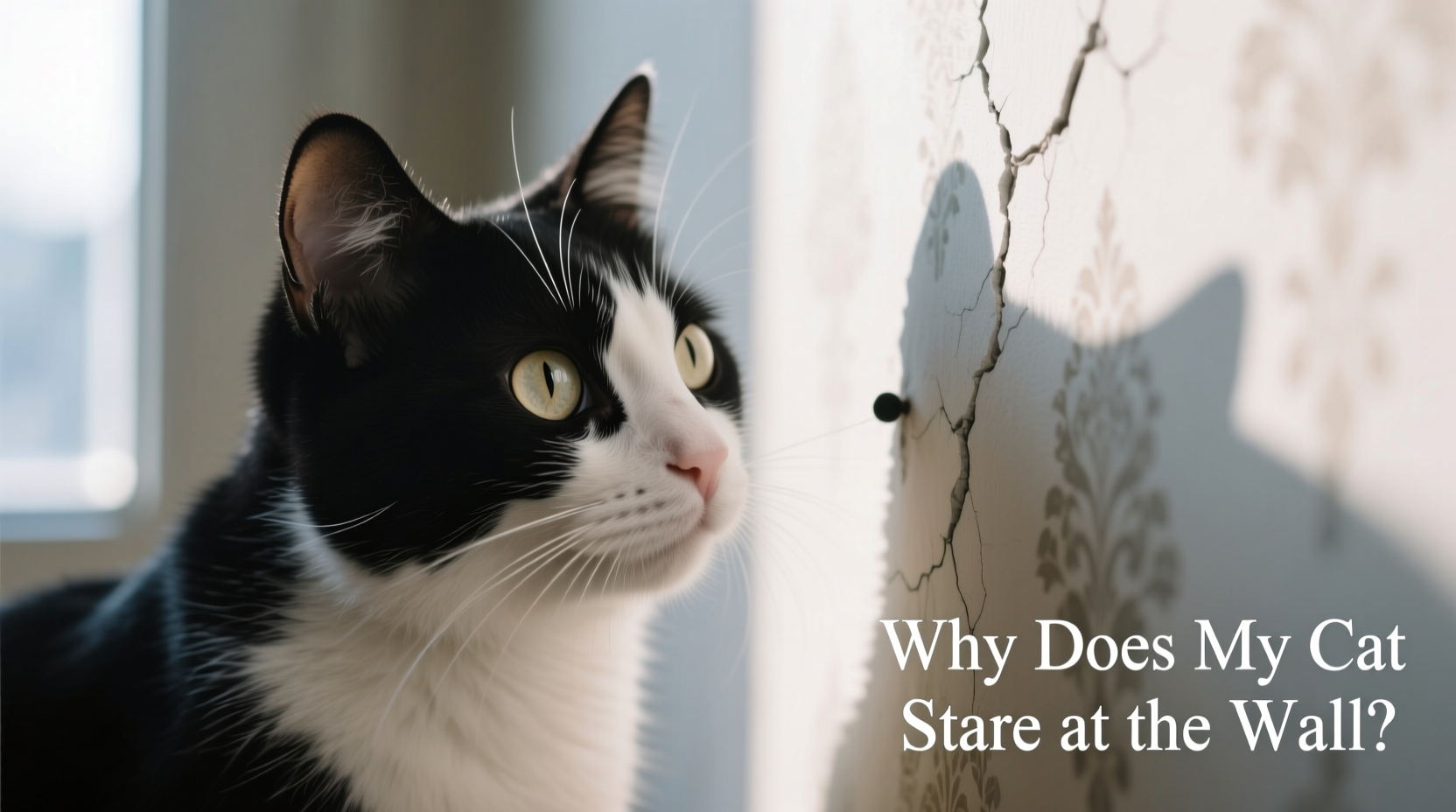
Cats possess highly developed senses, particularly vision and hearing. Their eyes are adapted to detect even the slightest movement, especially in low light. This makes them excellent nocturnal hunters but also prone to reacting to stimuli that humans cannot perceive. When a cat stares at a wall, they may be responding to subtle cues such as shadows, dust particles drifting in a sunbeam, air currents moving a curtain, or high-frequency sounds coming from within walls (like pipes or electrical wiring).
Additionally, cats have a wide field of peripheral vision—nearly 200 degrees—and superior motion detection compared to humans. What appears to be an empty wall to us might contain flickering light patterns, tiny insects, or vibrations that capture a cat’s full attention. Their brains are wired to monitor these micro-movements as potential prey or threats, which explains prolonged fixation on seemingly nothing.
Common Non-Medical Reasons for Wall Staring
In most instances, wall-staring falls within the range of normal feline behavior. Below are several everyday explanations:
- Movement detection: Even minute movements—such as a spider crawling behind wallpaper or a fly near the ceiling—can hold a cat’s focus.
- Shadow play: Sunlight filtering through blinds creates shifting patterns that mimic prey-like motion.
- Auditory triggers: Mice in walls, plumbing noises, or HVAC systems emit sounds at frequencies cats can hear but humans often cannot.
- Boredom or overstimulation: Indoor cats with limited environmental enrichment may fixate on static objects due to lack of stimulation.
- Dreaming or zoning out: Some cats enter a semi-trance state while resting, during which their gaze becomes fixed without conscious intent.
These behaviors are typically short-lived and do not interfere with normal eating, grooming, or social interaction. If your cat resumes regular activity after the episode, there’s likely no cause for concern.
When Wall Staring Signals a Health Problem
While occasional wall-gazing is normal, persistent or repetitive staring—especially when accompanied by other unusual symptoms—may indicate a medical condition. The most common health-related causes include:
- Epilepsy or seizures: Cats can experience partial (focal) seizures that manifest as vacant staring, twitching, or unresponsiveness. These episodes may last seconds to minutes and are often followed by disorientation.
- Vision problems: Cataracts, retinal detachment, or sudden acquired retinal degeneration syndrome (SARDS) can lead to confusion and odd visual tracking behaviors.
- Cognitive dysfunction syndrome (CDS): Older cats (typically over 10 years) may develop feline dementia, characterized by aimless wandering, vocalization, and prolonged fixation on objects.
- Hypertension and stroke: High blood pressure can affect brain function and cause abnormal behaviors, including staring spells.
- Pain or discomfort: A cat experiencing chronic pain may withdraw and appear “zoned out,” sometimes misinterpreted as staring at walls.
“Persistent staring without an apparent trigger should prompt a veterinary evaluation. Neurological and metabolic conditions like hypertension or hyperthyroidism can present subtly.” — Dr. Lena Torres, DVM, Feline Internal Medicine Specialist
Red Flags That Warrant a Vet Visit
Not all staring is harmful, but certain warning signs suggest a deeper issue. Seek professional help if your cat exhibits any of the following:
- Staring for more than 5–10 minutes without response to stimuli
- Twitching, drooling, or falling during the episode
- Disorientation afterward (walking into walls, confusion)
- Changes in appetite, litter box use, or sleep patterns
- Increased vocalization, especially at night
- Sudden aggression or withdrawal from family members
Behavioral vs. Medical: How to Tell the Difference
Distinguishing between harmless curiosity and a pathological condition involves careful observation and context analysis. Use the table below to assess possible causes:
| Factor | Normal Behavior | Potential Medical Issue |
|---|---|---|
| Duration | Less than 1–2 minutes | Recurrent episodes lasting several minutes |
| Triggers | Light changes, sounds, movement | No obvious external stimulus |
| Responsiveness | Looks away when called | Unresponsive during episode |
| Aftermath | Resumes normal activity | Dazed, confused, or fatigued afterward |
| Frequency | Occasional, sporadic | Daily or multiple times per day |
This comparison helps pet owners determine whether further investigation is needed. Consistency and pattern recognition are key—single incidents are rarely alarming, but recurring unexplained behavior warrants attention.
Mini Case Study: Bella the Siamese Cat
Bella, a 12-year-old Siamese, began spending increasing amounts of time sitting in front of the living room wall, her eyes locked on one spot. Her owner initially assumed she was watching dust motes in the sunlight. But over two weeks, the behavior escalated: Bella would stare for up to 15 minutes at a time, fail to respond when spoken to, and occasionally twitch her head sideways.
Concerned, the owner recorded a video and brought it to the vet. After a thorough examination—including blood pressure testing and a neurological assessment—Bella was diagnosed with mild hypertension secondary to early kidney disease. Her staring episodes were likely micro-seizures triggered by elevated blood pressure affecting brain function.
With medication to control her blood pressure and dietary adjustments, Bella’s episodes decreased significantly within a month. This case highlights how subtle behavioral changes can be early indicators of systemic illness, especially in senior cats.
Step-by-Step Guide: What to Do If Your Cat Stares at Walls
If you notice your cat engaging in prolonged wall-staring, follow this practical timeline to assess and address the situation:
- Observe silently (Day 1–2): Note duration, frequency, and surroundings. Is there light, sound, or movement nearby?
- Eliminate environmental triggers: Close blinds, turn off fans, or inspect for pests. See if behavior changes.
- Monitor for additional symptoms: Track appetite, energy levels, litter box habits, and nighttime vocalization.
- Record a video (if possible): Capture an episode to share with your veterinarian.
- Schedule a vet visit (within 1 week if behavior persists): Request a full physical, blood work, blood pressure check, and ophthalmic exam.
- Follow treatment plan: If a medical condition is found, adhere to prescribed medications and lifestyle changes.
- Re-evaluate after 2–4 weeks: Assess improvement and report back to your vet.
This structured approach ensures timely intervention without unnecessary panic, balancing vigilance with rational assessment.
Environmental Enrichment: Reducing Boredom-Related Staring
For indoor cats, mental stimulation plays a crucial role in preventing obsessive or repetitive behaviors. A lack of engagement can lead to fixation on mundane stimuli like walls. Providing appropriate enrichment reduces stress and redirects focus toward healthy outlets.
Effective Enrichment Strategies
- Rotate toys weekly to maintain novelty
- Install window perches for bird watching
- Use puzzle feeders to encourage hunting-like behavior
- Introduce interactive play sessions twice daily (e.g., wand toys)
- Add vertical space with cat trees or shelves
- Play species-specific music or nature sounds designed for cats
Enrichment doesn’t need to be expensive. Simple changes—like placing a mirror temporarily or using a laser pointer (with supervision)—can provide cognitive stimulation. However, avoid overstimulation, which can also contribute to anxiety and erratic behavior.
FAQ: Common Questions About Cat Wall Staring
Is it normal for cats to stare at walls for long periods?
Short episodes (under 2 minutes) linked to visual or auditory stimuli are generally normal. However, staring longer than 5 minutes without reaction may indicate a medical problem, especially in older cats.
Can stress cause my cat to stare at walls?
Yes. Chronic stress or anxiety can lead to displacement behaviors, including repetitive actions or zoning out. Changes in routine, new pets, or household conflict may trigger such responses.
Should I stop my cat from staring at the wall?
Interrupting brief, non-distressed staring isn’t necessary. However, if the cat seems entranced or unresponsive, gently call their name or tap the floor nearby to check responsiveness. Avoid startling them.
Checklist: Assessing Your Cat’s Wall-Staring Behavior
Use this quick-reference checklist to evaluate whether your cat’s behavior needs action:
- ☐ Duration of episode less than 2 minutes? → Likely normal
- ☐ Occurs only once in a while? → Monitor
- ☐ Responsive when called? → Lower concern
- ☐ No other behavior changes? → Continue observation
- ☐ Episodes happen daily or last >5 minutes? → Consult vet
- ☐ Accompanied by twitching, drooling, or disorientation? → Urgent vet visit
- ☐ Cat is over 10 years old? → Recommend senior wellness screening
Conclusion: Understanding Your Cat’s Silent Language
Cats communicate largely through body language and subtle behaviors. Staring at a wall may simply reflect their acute awareness of the world around them—awareness far beyond our human perception. But when this behavior becomes frequent, prolonged, or detached from environmental triggers, it may be a quiet cry for help. By combining attentive observation with proactive veterinary care, you can ensure your cat remains mentally sharp and physically healthy throughout their life.




 浙公网安备
33010002000092号
浙公网安备
33010002000092号 浙B2-20120091-4
Comments
No comments yet. Why don't you start the discussion?