
Cats are enigmatic creatures. Their quiet intensity, sudden bursts of energy, and inscrutable behaviors often leave owners wondering what goes on behind those wide, unblinking eyes. One of the most unsettling habits some cats develop is staring fixedly at a blank wall for minutes—or even hours. When this happens, it’s natural to wonder: Is my cat seeing something I can’t? Could it be a ghost? Or is there a more practical, possibly concerning, explanation?
While the idea of feline sixth senses and spirit communication makes for intriguing folklore, modern veterinary science offers grounded explanations. Wall-staring in cats can stem from normal sensory perception, psychological patterns, or, in some cases, serious medical conditions. Understanding the full spectrum of causes is essential—not just to ease your mind, but to ensure your cat’s well-being.
The Myth of Cats Seeing Ghosts
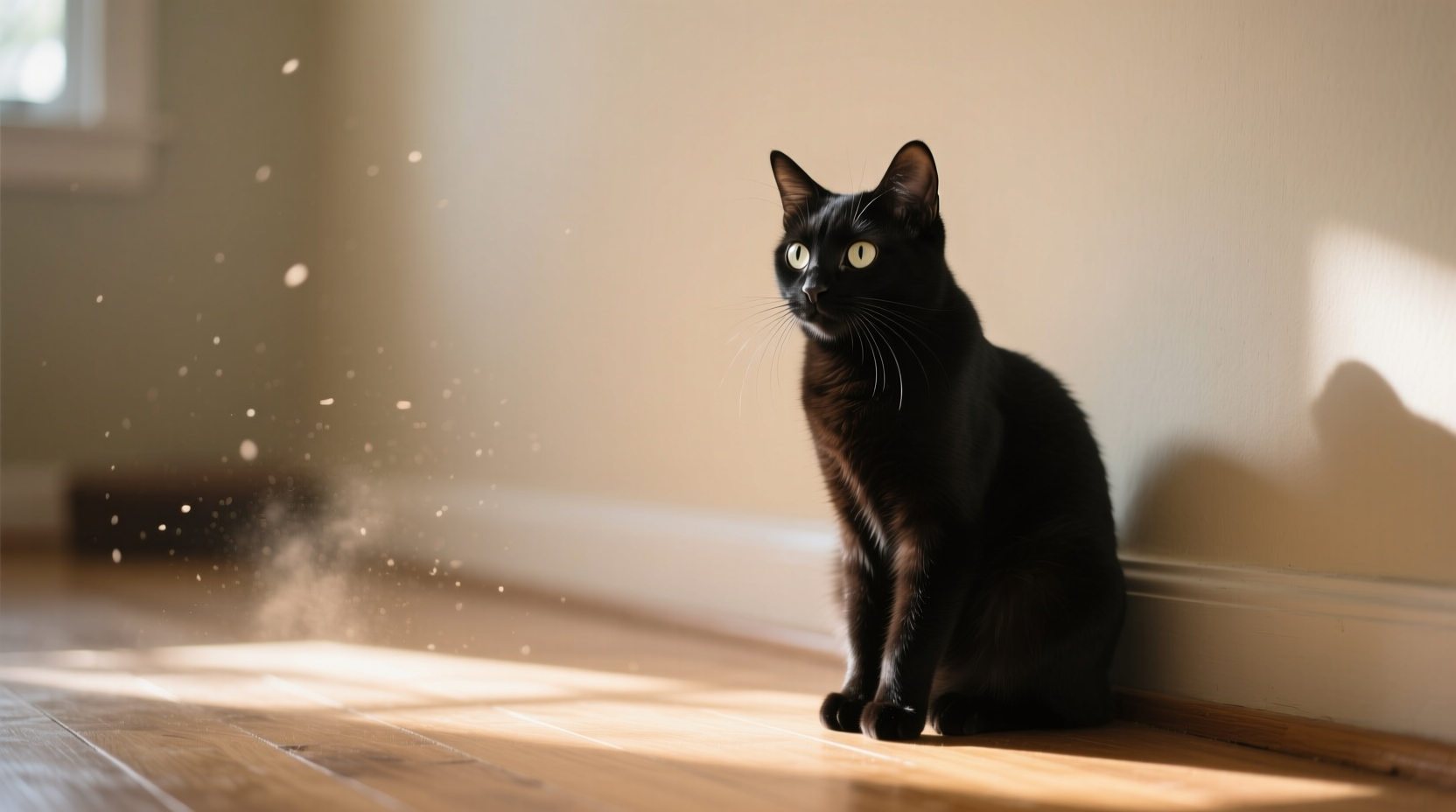
Across cultures, cats have long been associated with the supernatural. Ancient Egyptians revered them as divine protectors. In Japan, the maneki-neko (beckoning cat) is believed to attract good fortune. And in European folklore, black cats were thought to be witches’ familiars. This rich history fuels the belief that cats might perceive spirits or energies invisible to humans.
Some pet owners report their cats reacting to “empty” spaces—staring, hissing, or swatting at nothing. While these behaviors appear mysterious, they rarely point to paranormal activity. Instead, they’re usually tied to acute feline senses far superior to our own.
“Cats don’t see ghosts—they see things we can’t. Their vision, hearing, and whisker sensitivity allow them to detect subtle movements, high-frequency sounds, and air currents that escape human perception.” — Dr. Lena Patel, Veterinary Behaviorist
A cat may fixate on a wall because it sees dust motes dancing in a sunbeam, hears rodents inside the walls, or feels vibrations from appliances. What looks like supernatural awareness is often just exceptional sensory processing.
Normal Sensory Explanations for Wall-Staring
Before jumping to conclusions, consider the environment. Cats are predators by nature, hardwired to notice the tiniest changes in their surroundings. Even seemingly inert spaces contain stimuli.
- Movement: Insects crawling behind baseboards, shadows shifting with light, or reflections from mirrors or windows can capture a cat’s attention.
- Sounds: High-pitched noises from electrical wiring, HVAC systems, or pests within walls may be audible only to cats, whose hearing extends up to 64 kHz (humans max out around 20 kHz).
- Smells: Odors seeping through walls—mold, food residue, or pheromones from other animals—can intrigue a cat’s powerful nose.
- Textures and Patterns: Textured paint, wallpaper seams, or cracks may visually stimulate a cat, especially if light hits them at certain angles.
Behavioral and Psychological Causes
Not all wall-staring is rooted in external stimuli. Sometimes, the cause lies within the cat’s mind. Feline behavior is complex, and repetitive actions can signal underlying stress, boredom, or compulsive disorders.
Environmental Boredom
Indoor cats, especially those without enrichment, may develop fixation behaviors. A lack of hunting opportunities, vertical space, or interactive play can lead to redirected focus—like staring at walls—as a form of mental stimulation.
Stress and Anxiety
Changes in the home—new pets, moving furniture, loud noises, or even a shift in routine—can trigger anxiety. Some cats respond by zoning out or developing repetitive behaviors, including prolonged stillness and fixation.
Feline Compulsive Disorder (FCD)
Similar to obsessive-compulsive disorder in humans, FCD in cats manifests as repetitive, functionless actions. Tail-chasing, excessive grooming, and wall-staring are common signs. These behaviors often begin as coping mechanisms but can become ingrained.
“Compulsive behaviors in cats are not whimsical—they’re signals of distress. Ignoring them can worsen the condition.” — Dr. Aaron Lin, Feline Neurology Specialist
Medical Conditions That May Cause Wall-Staring
If environmental and behavioral factors don’t explain the behavior, a medical evaluation is crucial. Certain health issues can alter a cat’s perception, motor control, or consciousness, leading to unusual visual fixation.
Epilepsy and Seizure Activity
Focal (partial) seizures in cats can present subtly. Instead of convulsions, a cat may freeze, twitch its face, drool, or stare vacantly at a wall. These episodes may last seconds to minutes and are often followed by disorientation.
Vision Problems and Hallucinations
Cats with deteriorating eyesight—due to cataracts, glaucoma, or retinal disease—may misinterpret visual input. In advanced cases, such as blindness from hypertension, cats can experience visual hallucinations, perceiving shapes or motion that aren’t there.
Hypertension and Stroke
High blood pressure, common in older cats with kidney disease or hyperthyroidism, can lead to neurological symptoms. Sudden onset of wall-staring, circling, or head pressing may indicate a stroke or brain lesion.
Feline Cognitive Dysfunction (FCD)
Like dementia in humans, cognitive decline in senior cats can cause confusion, altered sleep cycles, and vacant staring. Affected cats may seem “lost” in familiar spaces.
| Condition | Key Symptoms | When to See a Vet |
|---|---|---|
| Epilepsy | Fixed gaze, facial twitching, drooling, brief loss of awareness | After first episode; recurrent staring spells |
| Hypertension | Sudden blindness, vocalizing, restlessness, bumping into objects | Immediate evaluation needed |
| Cognitive Dysfunction | Night vocalization, litter box accidents, confusion | Gradual onset in cats over 10 years old |
| Ear or Neurological Infection | Head tilt, circling, imbalance, discharge | Within 24 hours of symptom onset |
Mini Case Study: Bella’s Midnight Stares
Bella, a 7-year-old domestic shorthair, began staring at the same corner of her bedroom every night around 2 a.m. Her owner, Maria, initially thought Bella was reacting to noises from the alley. But after installing a white noise machine with no change, she grew concerned.
Maria recorded a 90-second clip showing Bella sitting upright, pupils dilated, unblinking, and completely silent. She brought the video to her vet, who noted subtle jaw twitching. Blood tests revealed normal thyroid levels, but an ophthalmologist discovered retinal detachment due to undiagnosed hypertension.
With medication to control her blood pressure and anti-seizure drugs, Bella’s episodes stopped within three weeks. The “ghost” was, in fact, a medical emergency masked as odd behavior.
Step-by-Step Guide: What to Do If Your Cat Stares at Walls
- Observe and Document: Note the time, duration, frequency, and any accompanying behaviors (twitching, vocalizing, drooling).
- Inspect the Environment: Check for drafts, insects, flickering lights, or sounds near the area.
- Assess Overall Health: Look for changes in appetite, litter box use, mobility, or interaction.
- Record a Video: Capture an episode to show your veterinarian.
- Schedule a Veterinary Exam: Include blood work, blood pressure check, and neurological assessment.
- Follow Up: If initial tests are inconclusive but behavior continues, consider referral to a veterinary neurologist or behaviorist.
Checklist: When to Worry About Wall-Staring
- ✅ Occurs multiple times per week
- ✅ Lasts longer than 30 seconds
- ✅ Accompanied by twitching, drooling, or disorientation
- ✅ New behavior in a senior cat (over 10 years)
- ✅ Followed by lethargy or confusion
- ✅ Happens during rest or sleep transitions
- ✅ Other neurological signs (circling, falling, head pressing)
If two or more apply, consult a veterinarian promptly.
Frequently Asked Questions
Can cats really see things we can’t?
Yes. Cats have superior night vision, detect higher-frequency sounds, and sense minute air movements with their whiskers. They may react to stimuli invisible or inaudible to humans—such as infrared heat patterns or ultrasonic rodent calls.
Is wall-staring always a sign of illness?
No. Occasional staring, especially in young or curious cats, can be normal. However, frequent, prolonged, or ritualistic fixation should be evaluated, particularly if it represents a change in behavior.
What’s the difference between zoning out and a seizure?
Zoning out usually involves relaxed muscles, slow blinking, and easy arousal. Seizures feature rigid posture, fixed pupils, involuntary movements, and post-episode confusion. Duration and context matter—seizure-like episodes lasting under 30 seconds may still be significant.
Conclusion: Listen to Your Cat—And Act
Your cat’s stare may not be about ghosts, but it is a message. Whether it’s a cry for mental stimulation, a response to unseen stimuli, or a warning sign of neurological trouble, dismissing it as quirky behavior risks missing something important. Cats cannot tell us when they’re in pain or confused—they show us through actions.
Taking the time to investigate, document, and consult a professional isn’t just responsible pet ownership; it’s an act of compassion. By paying attention to the details, you honor the bond you share with your feline companion and ensure they live not just safely, but meaningfully.




 浙公网安备
33010002000092号
浙公网安备
33010002000092号 浙B2-20120091-4
Comments
No comments yet. Why don't you start the discussion?