
Cats are enigmatic creatures. One moment they're curled up in your lap, purring softly; the next, they're frozen in place, eyes locked onto a blank stretch of wall with an intensity that seems almost supernatural. If you've ever caught your feline companion in this trance-like state, you're not alone—and you're probably wondering: what could possibly be so fascinating about drywall?
While occasional staring is normal feline behavior, prolonged or repetitive fixation on walls can signal anything from harmless curiosity to serious neurological issues. Understanding why cats do this—and knowing when it's time to act—can make all the difference in ensuring your pet’s well-being.
Understanding Feline Sensory Perception
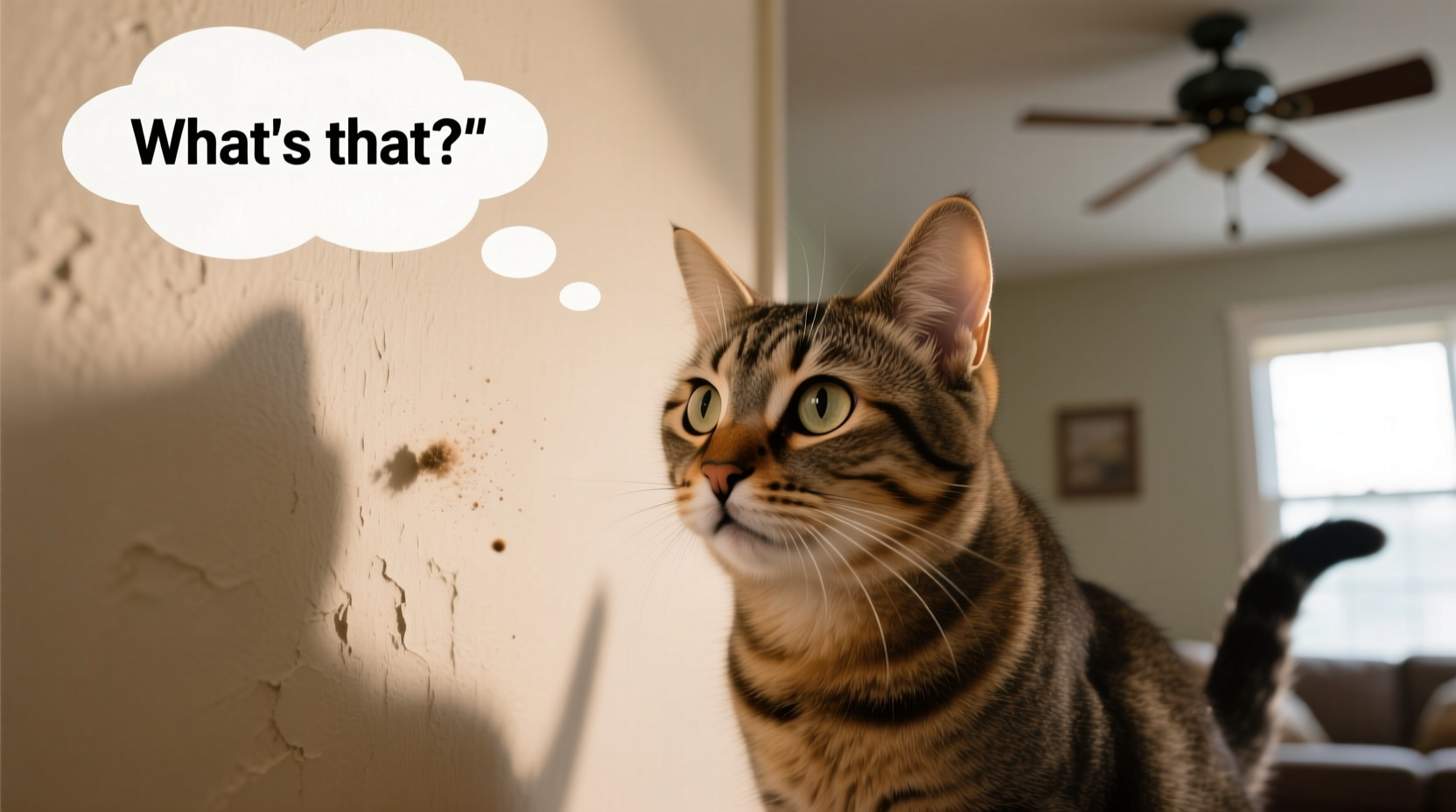
To grasp why a cat might fixate on a seemingly empty wall, it helps to understand how cats perceive their environment. Unlike humans, cats rely heavily on senses beyond sight. Their hearing, whisker sensitivity, and ability to detect subtle movements give them access to stimuli we often miss.
A cat’s vision is optimized for motion detection, especially in low light. While their visual acuity isn't as sharp as ours during the day, they excel at spotting even the tiniest shifts—a flickering shadow, a dust mote drifting through a sunbeam, or the almost imperceptible vibration of a fly crawling behind wallpaper. What looks like a blank wall to you may appear alive with activity to your cat.
Additionally, cats have a wide field of peripheral vision (about 200 degrees compared to our 180) and superior night vision due to a reflective layer behind the retina called the tapetum lucidum. These adaptations make them natural hunters, but also prone to reacting to stimuli invisible to human observers.
Common Behavioral Reasons for Wall Staring
Not every instance of wall gazing indicates a problem. In fact, many explanations are rooted in instinctual or environmental factors:
- Hunting Instincts: Even indoor cats retain strong predatory drives. A spider, moth, or small insect moving behind or near a wall can captivate their attention for extended periods.
- Visual Stimuli: Sunlight patterns shifting across a wall, reflections from mirrors or windows, or even cracks and textures in paint can hold a cat’s interest.
- Sound Detection: Cats hear frequencies up to 64 kHz—far beyond human range. Pipes creaking inside walls, rodents scurrying in insulation, or electrical buzzing may draw their gaze.
- Boredom or Lack of Stimulation: Cats left alone for long stretches may develop obsessive behaviors, including staring at walls out of mental under-stimulation.
- Routine Observation: Some cats simply patrol their territory. Watching walls may be part of their daily surveillance routine, especially if they’ve previously detected movement there.
In households with older homes, hidden pests like mice or silverfish are frequent culprits. One owner reported her cat returning to the same corner nightly—only to discover a small mouse nest behind the baseboard after investigation.
“Cats don’t waste energy on meaningless actions. If your cat is staring intently, there’s usually a reason—even if we can’t see it.” — Dr. Lena Torres, Veterinary Ethologist
When Wall Staring Signals Health Concerns
While many cases are benign, persistent or abnormal staring should raise concern—especially when paired with other symptoms. Neurological, sensory, or psychological conditions can manifest through this behavior.
Potential Medical Causes
| Condition | Description | Associated Symptoms |
|---|---|---|
| Feline Cognitive Dysfunction (FCD) | Similar to dementia in humans; common in senior cats (10+ years). | Disorientation, litter box accidents, vocalization at night, sleep cycle changes. |
| Epilepsy or Seizure Activity | Partial (focal) seizures may cause motionless staring without convulsions. | Facial twitching, drooling, sudden daze lasting seconds to minutes, unresponsiveness. |
| Vision Problems / Hallucinations | ||
| Retinal disease or brain tumors may lead to perceived movement where none exists. | Bumping into objects, dilated pupils, reluctance to jump, behavioral shifts. | |
| Hypertension (High Blood Pressure) | Can affect the brain and eyes, leading to disorientation and odd behaviors. | Blindness, restlessness, increased thirst, vocalizing. |
| Pain or Discomfort | Cats may zone out or fixate when experiencing chronic pain (e.g., arthritis, dental issues). | Licking one area obsessively, avoiding stairs, aggression when touched. |
If your cat suddenly begins staring at walls daily, appears “zoned out,” or fails to respond when called, consult your veterinarian promptly. Diagnostic tools such as blood work, blood pressure checks, and neurological exams can help identify underlying issues.
Mini Case Study: Bella the Siamese
Bella, a 12-year-old Siamese cat, began spending increasing time sitting motionless in front of the living room wall. Her owner initially dismissed it as aging behavior. But over two months, Bella started missing her food bowl, meowing loudly at night, and walking in circles.
A veterinary exam revealed high blood pressure and early signs of retinal detachment—both linked to undiagnosed kidney disease. After starting medication and environmental enrichment strategies, Bella’s episodes decreased significantly. Her owner installed nightlights and reduced background noise, which helped minimize confusion.
This case illustrates how wall staring can be an early red flag—not dramatic, but persistent. Early intervention improved Bella’s quality of life dramatically.
Step-by-Step Guide: Responding to Persistent Wall Staring
If your cat exhibits prolonged wall fixation, follow this practical timeline to assess and address the issue:
- Observe Patterns (Days 1–3): Note frequency, duration, time of day, and any triggers (e.g., lights turning on, appliances running).
- Check Environment (Day 4): Inspect walls for cracks, pests, drafts, or sounds. Use a flashlight to scan for insects or movement.
- Assess Overall Behavior (Ongoing): Look for changes in appetite, grooming, litter use, interaction, or mobility.
- Rule Out Boredom (Days 5–7): Introduce new toys, puzzle feeders, window perches, or scheduled play sessions twice daily.
- Schedule Vet Visit (By Day 10 if behavior persists): Request a full physical, blood panel, blood pressure test, and ocular exam—especially if your cat is over 8 years old.
- Follow Treatment Plan (As Directed): If a medical condition is diagnosed, adhere strictly to medication and monitoring schedules.
- Monitor Progress (Weeks 2–6): Keep a journal of episodes and note improvements or setbacks.
Prevention and Environmental Enrichment
Even in healthy cats, excessive wall staring can stem from understimulation. Providing a mentally engaging environment reduces the likelihood of obsessive behaviors.
Enrichment Checklist
- ✅ Rotate toys weekly to maintain novelty
- ✅ Install window bird feeders or aquarium videos for visual stimulation
- ✅ Offer vertical spaces like cat shelves or climbing towers
- ✅ Use treat-dispensing puzzles or DIY foraging games
- ✅ Schedule two 10-minute interactive play sessions daily (laser pointers, wand toys)
- ✅ Maintain consistent routines for feeding and interaction
- ✅ Minimize sudden household changes or loud noises
Cats thrive on predictability and engagement. A stimulated cat is less likely to invent its own entertainment—like analyzing plaster textures.
FAQ: Common Questions About Cat Wall Staring
Is it normal for cats to stare at walls occasionally?
Yes. Brief moments of intense focus are typical hunting-related behavior. As long as it’s infrequent and your cat responds normally afterward, it’s likely nothing to worry about.
Can cats see ghosts or spirits on walls?
There’s no scientific evidence supporting this idea. However, cats may detect subtle environmental cues—like electromagnetic fields, infrasound, or minute air currents—that humans cannot perceive. These could explain seemingly inexplicable reactions, but they’re grounded in biology, not the paranormal.
How do I know if my cat is having a seizure?
Focal seizures may involve staring, facial twitching, lip-smacking, or unresponsiveness lasting 30 seconds to a few minutes. The cat typically resumes normal activity afterward with no memory of the event. Generalized seizures include falling, paddling limbs, and loss of bladder control. Any suspected seizure warrants immediate veterinary evaluation.
Conclusion: Know Your Cat’s Normal
The key to interpreting your cat’s wall-staring habit lies in understanding their baseline behavior. Every cat has quirks—but sudden changes deserve attention. Whether driven by instinct, boredom, or health concerns, prolonged fixation on walls shouldn’t be ignored, especially in older cats.
By combining careful observation with proactive care, you can distinguish between harmless fascination and a cry for help. Your vigilance today could prevent a worsening condition tomorrow. Don’t hesitate to seek professional guidance if something feels off. After all, your cat can’t tell you what they’re seeing—they rely on you to notice when something’s wrong.




 浙公网安备
33010002000092号
浙公网安备
33010002000092号 浙B2-20120091-4
Comments
No comments yet. Why don't you start the discussion?