
Cats are enigmatic creatures. One moment they’re curled up in your lap, purring softly; the next, they’re frozen in place, eyes locked on an empty patch of wall with laser focus. If you’ve ever caught your feline companion doing this, you’re not alone—and you’re probably wondering: is this normal? Or could it be a sign of something more serious?
Staring at walls may seem odd to us, but for cats, it’s often rooted in instinct, curiosity, or sensory perception we can’t fully appreciate. However, there are times when prolonged staring can signal underlying health issues. Understanding the difference between harmless quirks and potential red flags is essential for responsible pet ownership.
Understanding Feline Behavior: Why Cats Stare
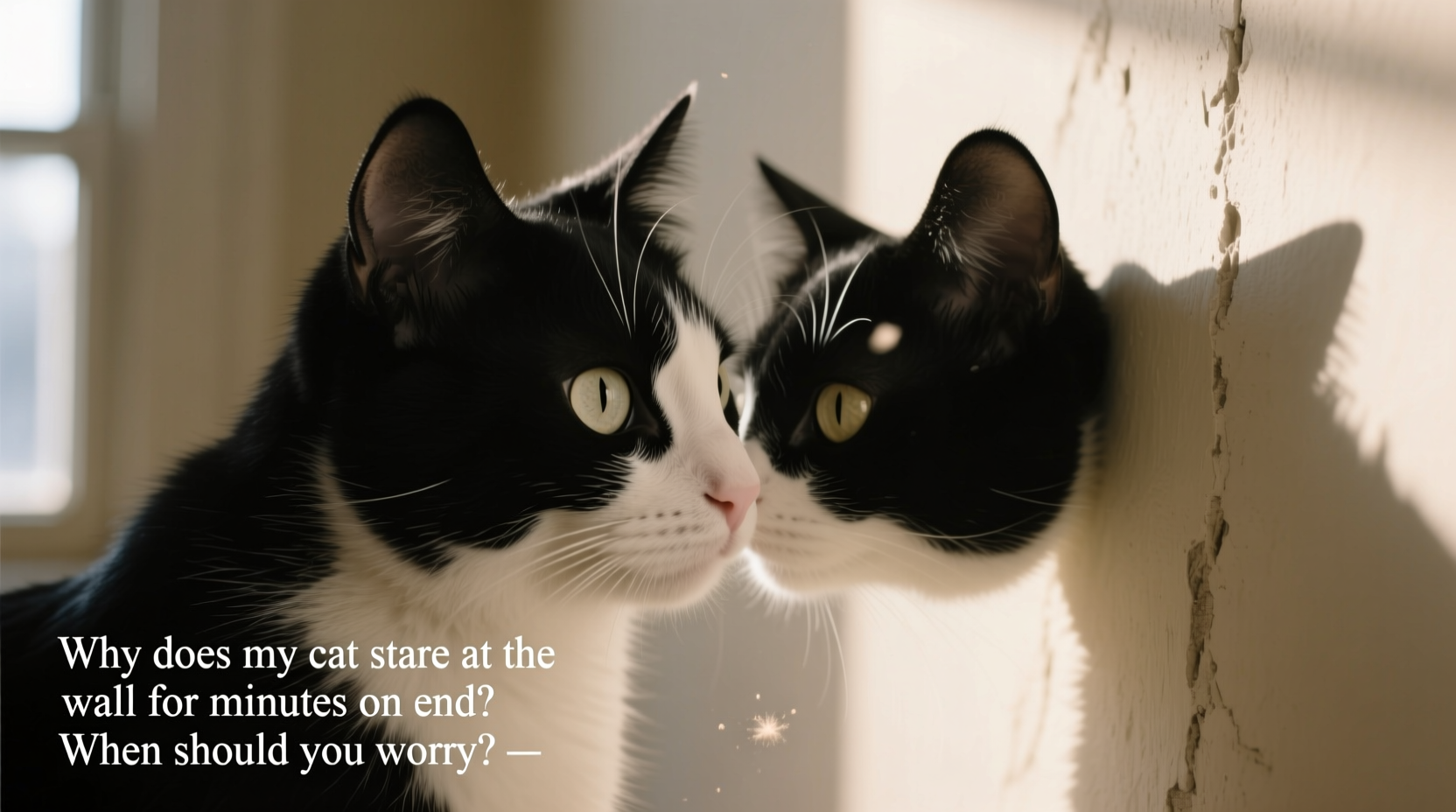
Cats are predators by nature. Their survival in the wild depended on acute senses—especially vision and hearing. Even domesticated cats retain these instincts. A flicker of light, a shadow, or a faint sound behind drywall might trigger their attention. What looks like blank space to us could be a dynamic sensory field to a cat.
Common reasons your cat might stare at the wall include:
- Movement detection: Tiny insects, dust particles, or even electrical currents in wiring can create vibrations or shadows that catch a cat’s eye.
- Sounds from within walls: Mice, pipes, or HVAC systems produce noises imperceptible to humans but highly noticeable to cats.
- Light reflections: Sunlight bouncing off mirrors, glass, or metallic surfaces can create moving patterns on walls.
- Hunting simulation: Cats often engage in imaginary prey tracking, especially if under-stimulated or bored.
- Dreaming while awake: Some cats enter a trance-like state during relaxation, appearing alert but mentally elsewhere.
In most cases, brief episodes—lasting seconds to a minute—are completely normal. But when staring becomes frequent, prolonged, or accompanied by unusual behaviors, it may warrant closer inspection.
When Staring Crosses the Line: Signs You Should Worry
Occasional wall-gazing isn’t cause for alarm. However, certain behavioral changes suggest that the staring may stem from medical or neurological problems rather than natural curiosity.
Red flags include:
- Episodes lasting longer than 5–10 minutes without interruption.
- Accompanying twitching, drooling, or loss of balance.
- Unresponsiveness when called or touched.
- Sudden onset after trauma or illness.
- Repetitive blinking, head tilting, or pawing at the eyes.
- Changes in appetite, sleep patterns, or litter box habits.
These symptoms could indicate conditions such as seizures, cognitive dysfunction, vision impairment, or hyperesthesia syndrome—a disorder causing abnormal sensitivity along the spine and erratic behavior.
“Cats are masters at hiding discomfort. Prolonged staring into space, especially with glazed eyes, can be a subtle seizure manifestation known as a ‘staring spell.’ Owners should document frequency and duration.” — Dr. Lena Torres, Veterinary Neurologist, UC Davis School of Veterinary Medicine
Seizures and Absence Episodes in Cats
Feline seizures aren’t always dramatic convulsions. Partial (focal) seizures can present as motionless staring, lip-smacking, or mild twitching. These “absence seizures” may last 30 seconds to several minutes and are often mistaken for daydreaming.
If your cat seems “zoned out,” doesn’t respond to stimuli, and then snaps back to normal without confusion, it could still be seizure-related. Post-episode disorientation, excessive grooming, or vocalization strengthens the suspicion.
Causes of seizures include:
- Brain tumors (more common in older cats)
- Epilepsy (rare but possible)
- Infections like toxoplasmosis
- Toxin exposure (e.g., antifreeze, certain plants)
- Metabolic imbalances (liver disease, kidney failure)
Diagnosis typically involves blood work, MRI, or spinal fluid analysis. Early detection improves treatment outcomes significantly.
Environmental and Psychological Factors
Not all staring stems from physical causes. Stress, anxiety, or environmental monotony can lead to repetitive behaviors in cats. This is particularly true in indoor-only cats lacking enrichment.
A cat living in a small apartment with minimal stimulation may develop compulsive habits—like watching blank walls—as a form of self-soothing or displacement behavior. It’s similar to how some humans pace or fidget when anxious.
Contributing factors include:
- Lack of vertical space or climbing opportunities
- No access to windows or outdoor views
- Recent changes in household routine
- New pets or people in the home
- Insufficient playtime or predatory outlets
Enrichment strategies can reduce these behaviors by redirecting focus toward positive activities.
Mini Case Study: Bella the Indoor Siamese
Bella, a 4-year-old Siamese cat, began staring at the bedroom wall every evening around 7 PM. Her owner initially dismissed it, assuming she saw a bug. Over time, the episodes lengthened—up to 15 minutes—and were followed by frantic licking of her paws.
After recording an episode and sharing it with her veterinarian, Bella was referred to a veterinary behaviorist. The team ruled out seizures through EEG testing but identified environmental stressors: Bella lived in a high-rise apartment with no window perches, and her owner worked long hours.
The solution included installing a bird feeder outside the window, introducing daily interactive play sessions with wand toys, and using a pheromone diffuser. Within three weeks, the staring decreased dramatically, and the licking stopped altogether.
This case illustrates how seemingly neurological symptoms can have behavioral roots—and why context matters.
Action Plan: What to Do If Your Cat Stares Frequently
If you're concerned about your cat’s staring behavior, follow this step-by-step guide to assess and address the issue systematically.
- Observe and Document: Note the time, duration, frequency, and any associated behaviors (twitching, vocalizing, falling over).
- Record a Video: Capture an episode on your phone. This helps veterinarians make accurate assessments.
- Check the Environment: Look for sources of movement, sound, or light that might attract your cat’s attention.
- Assess Overall Health: Monitor eating, drinking, litter use, and activity levels. Sudden changes may point to illness.
- Schedule a Vet Visit: Share your observations and video. Blood tests, neurological exams, or imaging may be recommended.
- Improve Enrichment: Add puzzle feeders, scratching posts, window perches, and scheduled play sessions.
- Follow Up: Track progress and report new developments to your vet.
| Behavior | Normal? | Potential Concern? | Action Step |
|---|---|---|---|
| Stares for 10–30 seconds | ✅ Yes | ❌ No | Monitor casually |
| Stares for >5 minutes, unresponsive | ❌ Rarely | ✅ Yes | Record and consult vet |
| Head tilt + circling after episode | ❌ No | ✅ High concern | Seek immediate evaluation |
| Stares only near flickering light | ✅ Likely | ❌ Probably not | Fix lighting issue |
| Excessive blinking during stare | ❌ Possibly | ✅ Eye discomfort | Ophthalmic exam needed |
Prevention and Long-Term Management
While you can’t eliminate every instance of feline oddity, you can minimize concerning behaviors through proactive care.
Enrichment Checklist
- Provide at least one window perch with outdoor visibility
- Rotate toys weekly to maintain novelty
- Use food puzzles or treat-dispensing balls daily
- Engage in 10–15 minutes of active play twice a day
- Introduce safe scents like silver vine or catnip
- Consider adopting a second cat if appropriate
- Install a bird feeder or fish tank for visual stimulation
FAQ: Common Questions About Cat Wall-Staring
Is it normal for cats to stare at nothing?
Yes, briefly. Cats perceive more motion and light variation than humans. Short bouts of apparent “nothing-watching” are usually just heightened awareness. However, prolonged or repetitive episodes should be evaluated.
Can cats see ghosts or spirits?
There’s no scientific evidence that cats see supernatural entities. What may seem paranormal is likely explained by subtle sensory input—ultrasonic sounds, air currents, or peripheral movements beyond human perception.
My older cat stares more since retirement. Should I be worried?
Increased stillness and gazing can occur with age-related cognitive decline (similar to feline dementia). If paired with nighttime vocalization, confusion, or soiling outside the litter box, consult your vet about cognitive support options.
Conclusion: Know Your Cat, Trust Your Instincts
Cats will always keep us guessing. Their silent stares, sudden sprints, and midnight zoomies are part of what makes them fascinating companions. Staring at a wall isn’t inherently dangerous—but when it becomes a pattern, it deserves attention.
The key is consistency in observation. You know your cat better than anyone. If their behavior shifts from quirky to concerning—if they seem detached, distressed, or different—don’t dismiss it. Early intervention can mean the difference between a manageable condition and a serious crisis.
Treat your cat’s mental and neurological health with the same care as their diet and vaccinations. With the right mix of vigilance, enrichment, and veterinary partnership, you can ensure your feline friend remains not just physically healthy, but mentally vibrant.




 浙公网安备
33010002000092号
浙公网安备
33010002000092号 浙B2-20120091-4
Comments
No comments yet. Why don't you start the discussion?