
Cats are enigmatic creatures. One moment they're curled up in your lap, purring contentedly; the next, they're frozen in place, eyes locked on a blank stretch of wall with an intensity that borders on otherworldly. If you’ve ever caught your feline staring into space and wondered, “What on earth are they seeing?” you’re not alone. This behavior—while unsettling to some—is more common than many realize. While occasional wall-gazing is typically harmless, understanding the reasons behind it can help distinguish between normal quirks and potential health concerns.
This article explores the science, psychology, and instinctual roots of why cats stare at walls. From sensory perception to neurological issues, we’ll break down the most likely explanations, provide practical guidance, and help you determine when it’s time to consult a veterinarian.
The Feline Mind: How Cats Perceive Their Environment
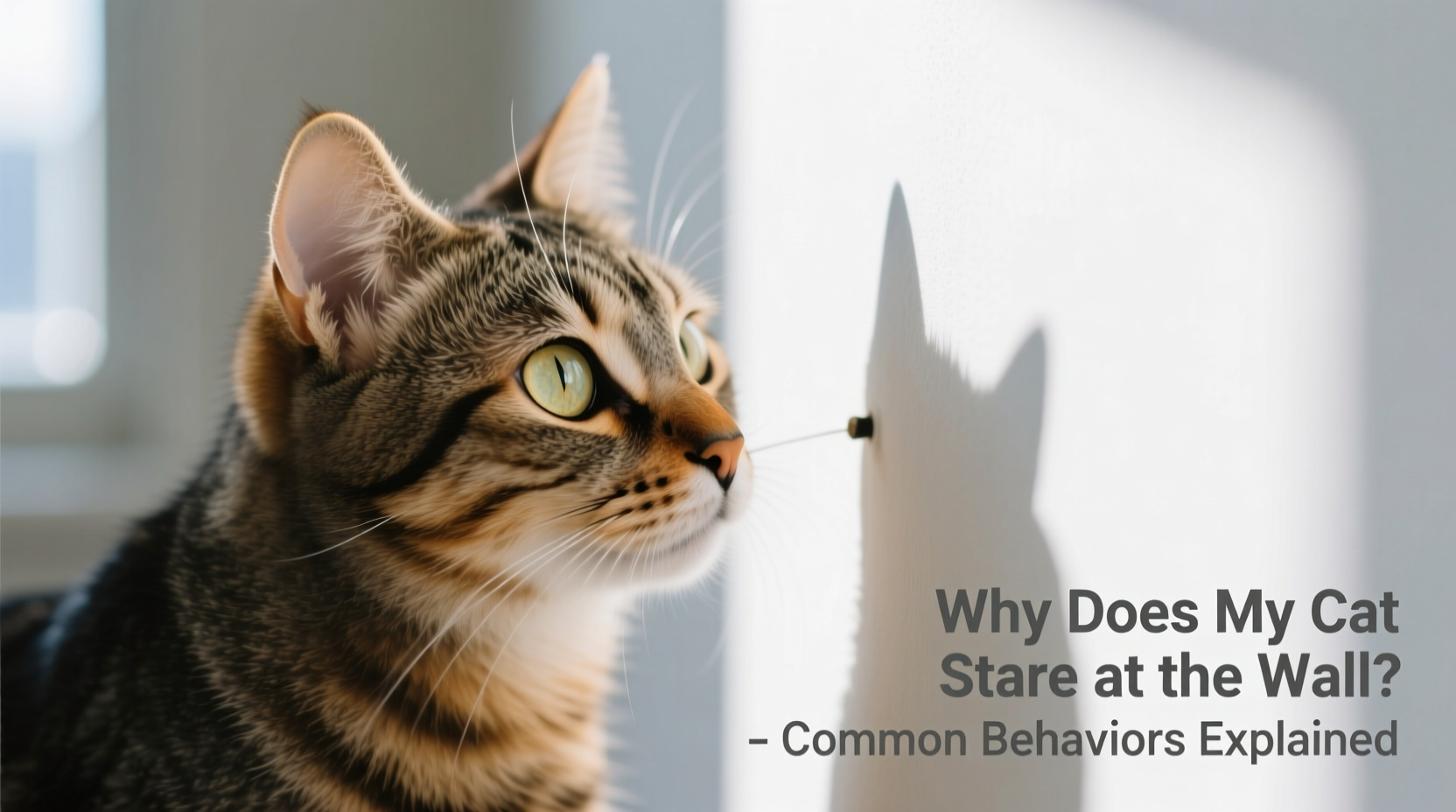
Cats experience the world differently than humans. Their senses are finely tuned for hunting and survival, even in domesticated life. What looks like a blank wall to us might be teeming with visual or auditory stimuli to a cat. Understanding their sensory capabilities is key to decoding seemingly odd behaviors.
A cat’s vision excels in low light, allowing them to detect the faintest movements—such as dust particles drifting in a sunbeam or a shadow shifting due to air currents. Their peripheral vision spans about 200 degrees, compared to our 180, making them highly alert to motion from the corners of their eyes. Additionally, cats can see into the ultraviolet spectrum, meaning they may perceive patterns on surfaces invisible to humans—like urine trails or subtle reflections.
Hearing also plays a role. Cats can detect frequencies up to 64,000 Hz (humans top out around 20,000 Hz), so they may hear sounds within walls—like rodents, pipes creaking, or electrical buzzing—that go unnoticed by their owners.
Common Behavioral Explanations for Wall Staring
Not every instance of wall-staring requires medical concern. In fact, most cases stem from natural, instinct-driven behaviors. Here are five of the most frequent non-medical reasons your cat might fixate on a wall:
- Motion detection: Even minor shifts in light or tiny insects crawling behind baseboards can capture a cat’s attention.
- Scent tracking: Cats have a secondary olfactory organ called the vomeronasal (or Jacobson’s) organ. If they detect a lingering scent on or near a wall, they may stare while processing it.
- Play anticipation: Some cats develop routines where they \"hunt\" shadows or reflections. A flickering light might trigger predatory focus.
- Environmental change: New paint, furniture rearrangement, or unfamiliar odors near a wall can prompt investigative staring.
- Attention-seeking: If staring gets a reaction from you, your cat may repeat the behavior to engage or entertain.
In multi-cat households, one cat may stare at a wall simply because another cat did first—a form of social mirroring. This is especially common among bonded pairs.
When Wall Staring Signals a Health Issue
While many staring episodes are benign, persistent or repetitive fixation on walls—especially when accompanied by other symptoms—can indicate underlying medical conditions. The following issues should be ruled out if your cat’s behavior changes suddenly or escalates in frequency.
“Cats are masters at hiding discomfort. A behavioral change like prolonged wall-staring can be one of the earliest signs of neurological or sensory decline.” — Dr. Lena Reyes, DVM, Feline Neurology Specialist
Potential Medical Causes
- Epilepsy or Seizure Activity: Cats can experience partial (focal) seizures that don’t result in convulsions. Symptoms include vacant staring, lip-licking, twitching, or unresponsiveness lasting seconds to minutes.
- Vision Problems: Cataracts, retinal detachment, or sudden acquired retinal degeneration (SARD) can cause disorientation. A cat may stare at walls due to visual hallucinations or confusion.
- Cognitive Dysfunction Syndrome (CDS): Similar to dementia in humans, older cats (typically over 10 years) may display aimless staring, vocalization at night, or getting stuck in corners.
- Hypertension: High blood pressure in cats often stems from kidney disease or hyperthyroidism. It can lead to retinal detachment or brain changes, manifesting as disoriented behavior.
- Inner Ear or Vestibular Disorders: These affect balance and spatial awareness, leading to head tilting, circling, or fixation on one spot.
If your cat stares at walls daily, appears dazed, doesn’t respond to their name, or exhibits additional symptoms like pacing, vocalizing, or loss of litter box habits, schedule a vet visit promptly.
Checklist: Is Your Cat’s Wall Staring Normal?
Use this checklist to assess whether your cat’s behavior falls within the range of typical feline quirks or warrants professional evaluation:
- ✅ Occurs occasionally (once every few days or less)
- ✅ Lasts only a few seconds to a minute
- ✅ Cat returns to normal activity immediately afterward
- ✅ No associated twitching, drooling, or falling
- ✅ No changes in appetite, grooming, or interaction
- ✅ Triggered by visible stimuli (e.g., light pattern, fly)
- ❌ Happens multiple times a day, lasting several minutes
- ❌ Accompanied by muscle jerking, blinking, or vocalization
- ❌ Cat seems unaware of surroundings during episode
- ❌ Behavior is new or worsening over time
If three or more of the red-flag items apply, contact your veterinarian for a full assessment.
Step-by-Step Guide: Responding to Suspicious Wall Staring
If you’re concerned about your cat’s behavior, follow this structured approach to gather information and take appropriate action:
- Observe and Document: Note the date, time, duration, and context of each episode. Use a journal or notes app to track patterns.
- Record a Video: Capture a short clip of the behavior. This helps vets differentiate between zoning out and seizure activity.
- Eliminate Environmental Triggers: Check for drafts, flickering lights, or insect activity near the wall. Try closing blinds or changing room lighting.
- Monitor Other Behaviors: Watch for changes in sleep, appetite, litter use, or interactions with family members.
- Schedule a Veterinary Exam: Include blood work, blood pressure check, and a neurological evaluation. Request a referral to a veterinary neurologist if needed.
- Follow Treatment Plan: If a condition like hypertension or epilepsy is diagnosed, administer prescribed medications consistently and monitor for improvement.
Early intervention significantly improves outcomes, especially in cases involving seizures or cognitive decline.
Real-Life Example: Bella’s Midnight Staring Episodes
Sarah, a cat owner from Portland, noticed her 12-year-old tabby, Bella, began staring at the bedroom wall every night around 2 a.m. At first, she assumed Bella saw a bug. But when the behavior persisted for weeks—and included subtle jaw tremors—Sarah grew concerned.
She recorded a video and brought it to her vet. Blood tests revealed Bella had undiagnosed hyperthyroidism, which led to high blood pressure and mild retinal changes. After starting medication and switching to a prescription diet, Bella’s nighttime episodes stopped within two weeks.
Sarah’s proactive response prevented further complications, including potential blindness or stroke. Her story underscores the importance of not dismissing unusual behaviors—even if they seem minor.
Do’s and Don’ts: Managing Wall-Staring Behavior
| Do’s | Don’ts |
|---|---|
| Provide mental stimulation with puzzle toys and play sessions | Ignore sudden or frequent staring episodes |
| Keep a consistent routine to reduce anxiety | Yell at or startle your cat during an episode |
| Use blackout curtains to minimize erratic light patterns | Assume old age explains all behavioral changes |
| Visit the vet annually (twice for senior cats) | Delay testing because “it might just be nothing” |
| Offer vertical spaces and window perches for natural observation | Overstimulate your cat right after a staring spell |
Frequently Asked Questions
Is it normal for cats to stare at walls?
Yes, occasional wall-staring is normal, especially if triggered by movement, light, or sound. However, frequent or prolonged episodes—particularly in older cats—should be evaluated by a veterinarian to rule out medical causes.
Can cats see ghosts or spirits?
There’s no scientific evidence that cats see supernatural entities. However, their heightened senses allow them to detect stimuli we cannot—such as high-pitched noises, infrared light, or subtle air vibrations—which may explain why they appear to react to “nothing.”
How do I know if my cat is having a seizure?
Focal seizures may involve staring, blinking, chewing motions, or limb twitching without full-body convulsions. The cat may seem unaware of surroundings and take minutes to recover. If you suspect seizures, record the episode and consult your vet immediately.
Conclusion: Understanding Your Cat’s Silent Language
Cats communicate largely through body language and behavior. Staring at a wall may seem inexplicable, but it’s often a window into their rich sensory world—or a subtle cry for help. By learning to interpret these actions with empathy and vigilance, you strengthen your bond and ensure your cat’s long-term well-being.
Never dismiss persistent odd behaviors as “just being a cat.” What feels like a quirk today could be a symptom tomorrow. Stay observant, document changes, and partner with your veterinarian to keep your feline companion healthy, happy, and understood.




 浙公网安备
33010002000092号
浙公网安备
33010002000092号 浙B2-20120091-4
Comments
No comments yet. Why don't you start the discussion?