
Cats are enigmatic creatures, often engaging in behaviors that leave their owners puzzled. One of the most unsettling—and frequently reported—is when a cat sits motionless, eyes fixed on an empty patch of wall. Is your cat seeing spirits? Or is something more grounded in biology at play? While the idea of cats perceiving ghosts makes for compelling folklore, science offers more plausible explanations rooted in their extraordinary sensory capabilities, particularly their acute hearing and advanced vision. Understanding why your cat stares at the wall means looking beyond superstition and into feline psychology, neurology, and environmental awareness.
The Myth of Cats Seeing Ghosts
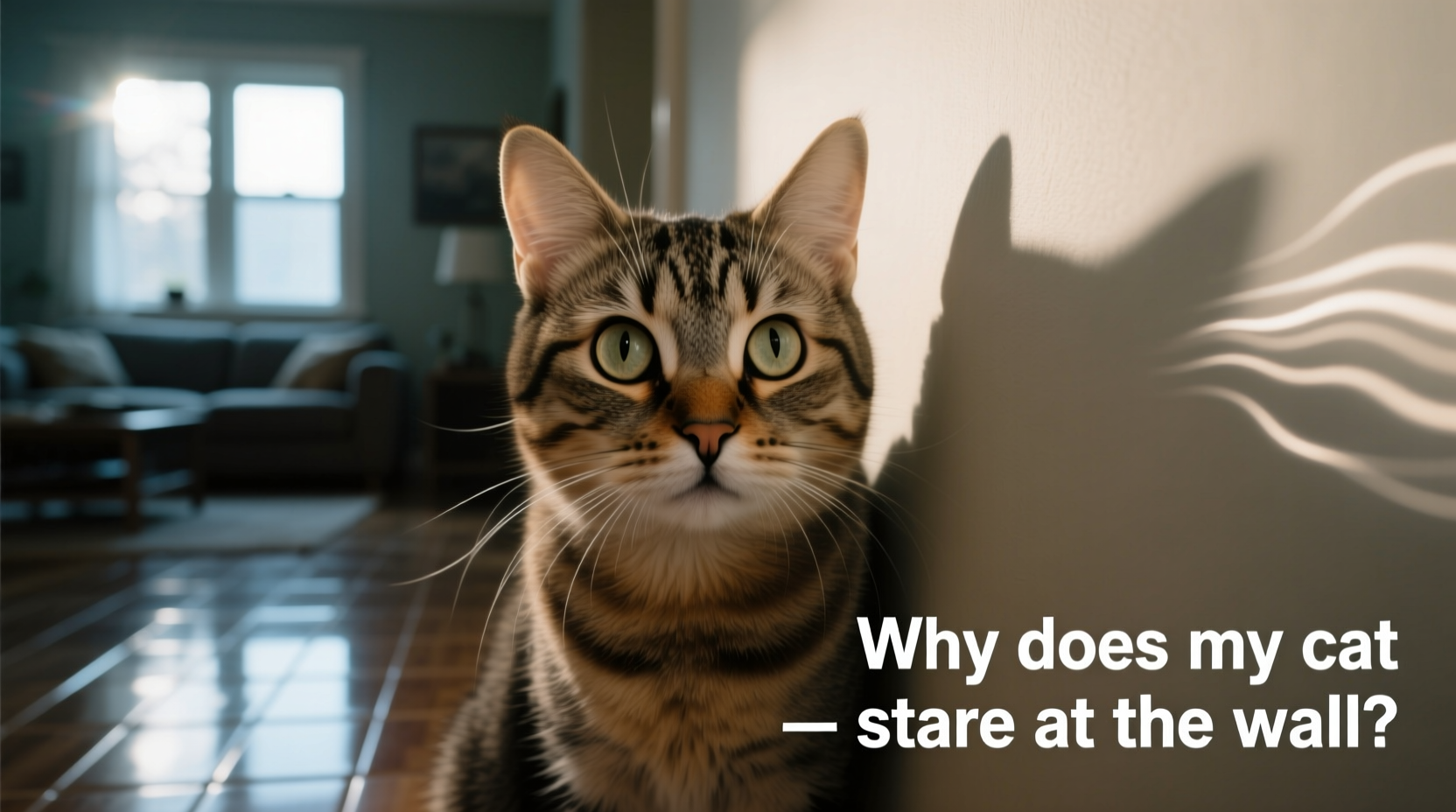
For centuries, cats have been associated with the supernatural. Ancient Egyptians revered them as sacred beings. In Japanese folklore, the maneki-neko brings good fortune. And across many cultures, black cats are seen as omens—either of bad luck or protection against evil. This mystical reputation extends to the belief that cats can see ghosts or sense spirits invisible to humans.
While this idea is emotionally comforting or intriguing to some, there’s no scientific evidence that cats perceive paranormal entities. What they do possess, however, is a suite of highly evolved senses that allow them to detect stimuli far beyond human perception. When your cat appears to stare at nothing, it’s far more likely reacting to sounds, movements, or light fluctuations we simply cannot register.
“Cats don’t see ghosts—they see (and hear) more of the real world than we do.” — Dr. Sarah Thompson, Feline Behavioral Scientist, Cornell University College of Veterinary Medicine
Feline Hearing: Beyond Human Limits
A cat’s hearing is one of the most sensitive among mammals. They can detect frequencies from 45 Hz to 64,000 Hz, compared to the human range of 20 Hz to 20,000 Hz. This means cats can hear ultrasonic sounds produced by rodents, insects, and even electrical devices like aging fluorescent lights or faulty wiring emitting high-pitched hums.
When your cat fixates on a wall, it may be listening to:
- Mice or insects moving inside walls
- Electrical buzzing from outlets or appliances
- Pipes shifting due to water pressure changes
- Drafts whistling through small gaps
- Neighbor activity through shared walls (especially in apartments)
These subtle noises are often imperceptible to us but can captivate a cat’s attention. Their ears swivel independently, acting like satellite dishes to pinpoint the source of sound. Once they lock onto a noise, their gaze follows instinctively—even if there’s nothing visible.
Vision and Peripheral Awareness
In addition to superior hearing, cats have exceptional vision adapted for low-light hunting. Their eyes contain a high density of rod cells, which detect motion and light in dim conditions. While they don’t see fine details as clearly as humans, they’re extremely sensitive to movement—even the slightest shift in shadows or dust particles floating in a sunbeam.
What looks like a blank wall to you might appear dynamic to your cat:
- Subtle vibrations from HVAC systems causing wall textures to shimmer
- Shadows cast by trees outside moving in the wind
- Dust motes illuminated by angled sunlight
- Reflections from mirrors or glass that create fleeting visual stimuli
Moreover, cats have a wider field of view—about 200 degrees compared to our 180—which enhances their peripheral detection. A flicker at the edge of their vision can trigger a full-body alert, leading them to focus intently on what seems like nothing.
Neurological and Behavioral Explanations
Sometimes, staring isn’t about external stimuli at all—it may stem from internal neurological patterns. Certain behaviors resemble daydreaming or mild dissociation, especially in older cats. However, prolonged or repetitive staring can also signal underlying medical issues.
Conditions associated with vacant staring include:
- Focal seizures: These affect only a part of the brain and may cause a cat to freeze, stare, drool, or twitch subtly without collapsing.
- Cognitive dysfunction syndrome (CDS): Similar to dementia in humans, CDS in senior cats can lead to disorientation, confusion, and prolonged fixation on objects or spaces.
- Vestibular disease: Affects balance and spatial orientation, sometimes resulting in odd postures and unblinking gazes.
If your cat’s staring is accompanied by other symptoms—such as lack of response to name, pacing, vocalizing at night, or accidents outside the litter box—it’s worth consulting a veterinarian.
Checklist: When to Be Concerned About Staring Behavior
- Staring lasts more than a few minutes without apparent cause
- Accompanied by muscle twitching, blinking spasms, or drooling
- Occurs multiple times a day or increases in frequency
- Happens alongside behavioral changes (aggression, clinginess, disorientation)
- Your cat seems “unreachable” during these episodes
If three or more apply, schedule a vet visit to rule out neurological conditions.
Environmental Triggers and How to Respond
Even in healthy cats, environmental factors can provoke intense staring. Identifying and managing these triggers can reduce anxiety and prevent obsessive focus.
| Trigger | Description | Do’s | Don’ts |
|---|---|---|---|
| Ultrasonic noises | From appliances, timers, or pest repellents | Use a smartphone app to scan for high-frequency sounds; replace noisy devices | Ignore repeated reactions—could escalate stress |
| Wall vibrations | Plumbing, heating systems, or nearby machinery | Relocate your cat’s bed or perch away from affected walls | Assume it’s “just being weird”—consistency matters |
| Visual illusions | Light reflections, moving shadows, or texture patterns | Adjust blinds, cover reflective surfaces, use matte finishes | Encourage fixation by playing along or overstimulating |
| Boredom | Lack of mental stimulation leads to obsessive behaviors | Provide puzzle feeders, interactive toys, daily play sessions | Leave your cat alone for long periods without enrichment |
Mini Case Study: Bella, the Apartment Cat
Bella, a 4-year-old tabby living in a third-floor apartment, began staring at the living room wall every evening around 7 PM. Her owner, Jen, initially thought it was odd but harmless—until Bella started meowing insistently and losing interest in meals.
Jen recorded a video and showed it to her vet, who noticed slight eye deviation and lip-licking during one episode. An MRI revealed no structural abnormalities, but an EEG indicated mild focal seizure activity. Bella was diagnosed with idiopathic epilepsy and prescribed a low-dose anticonvulsant. Within two weeks, the staring decreased dramatically.
Interestingly, the vet also discovered that the building’s elevator motor emitted a 52 kHz hum—inaudible to humans but well within Bella’s hearing range. The combination of auditory irritation and neurological sensitivity had created a perfect storm. After treatment and relocating Bella’s favorite window perch, her behavior normalized completely.
This case underscores the importance of not dismissing unusual behavior as mere quirkiness—especially when patterns emerge.
Step-by-Step Guide: Assessing Your Cat’s Wall-Staring Habit
Follow this timeline to determine whether your cat’s behavior is normal, environmentally driven, or medically concerning.
- Day 1–3: Observe and Document
Record when, where, and how long the staring occurs. Note time of day, lighting, sounds, and any accompanying actions (twitching, vocalizing). - Day 4–5: Audit the Environment
Walk through your home listening for faint noises. Use a flashlight to check for shadow play. Test appliances near the spot. Consider using a sound-frequency app on your phone. - Day 6–7: Modify the Space
Move your cat’s bed or perch. Cover reflective surfaces. Introduce white noise (like a fan) to mask ultrasonic sounds. - Week 2: Monitor Changes
See if modifications reduce the behavior. If not, or if episodes worsen, contact your veterinarian. - Week 3+: Professional Evaluation
Request a full neurological workup if necessary. Blood tests, urinalysis, and possibly imaging may be recommended.
Frequently Asked Questions
Can cats really hear things we can’t?
Yes. Cats hear frequencies up to 64,000 Hz, far beyond the human limit of 20,000 Hz. This allows them to detect ultrasonic calls from rodents, electronic whines, and even the flutter of moth wings—sounds completely silent to us.
Is it normal for cats to stare into space?
Occasional brief staring is normal, especially during quiet alertness or when tracking subtle stimuli. However, prolonged, repetitive, or unresponsive staring—especially if new or worsening—should be evaluated by a vet.
Could my cat be stressed or anxious?
Definitely. Environmental stressors like construction noise, new pets, or routine changes can lead to hyper-vigilance. Chronic stress may manifest as obsessive behaviors, including fixation on walls or corners. Providing safe hiding spots, consistent routines, and pheromone diffusers can help.
Conclusion: Look Beyond the Supernatural
The next time your cat locks eyes with an empty wall, resist the urge to assume the paranormal. Instead, consider the remarkable sensory world they inhabit—one filled with sounds, motions, and energies invisible to us. Whether it’s a mouse scurrying behind drywall, a flicker of light, or a subtle neurological event, there’s almost always a rational explanation.
By observing carefully, adjusting the environment, and knowing when to seek veterinary advice, you can ensure your cat’s health and deepen your understanding of their mysterious nature. Their behavior isn’t magic—it’s mastery of a world we’re only beginning to perceive.




 浙公网安备
33010002000092号
浙公网安备
33010002000092号 浙B2-20120091-4
Comments
No comments yet. Why don't you start the discussion?