
Cats are enigmatic creatures. One moment they’re curled up in a sunbeam, purring softly; the next, they’re locked in an intense, unblinking gaze at a blank stretch of drywall. You might wonder: Is my cat seeing something I can’t? Are there invisible bugs skittering along the baseboard? Or could this be something more unsettling — like hallucinations, neurological issues, or even signs of illness? While the idea of cats sensing “ghosts” makes for a compelling story, the reality is usually far more grounded. Still, persistent wall-staring can signal underlying problems that deserve attention.
This behavior, though common, often triggers concern among pet owners. The truth is, cats have superior vision in low light and can detect tiny movements humans miss. But when staring becomes obsessive, prolonged, or accompanied by odd behaviors, it may point to medical or environmental causes. Understanding why your cat fixates on walls involves looking at their senses, habits, and health — not just folklore.
The Science Behind Feline Vision and Perception
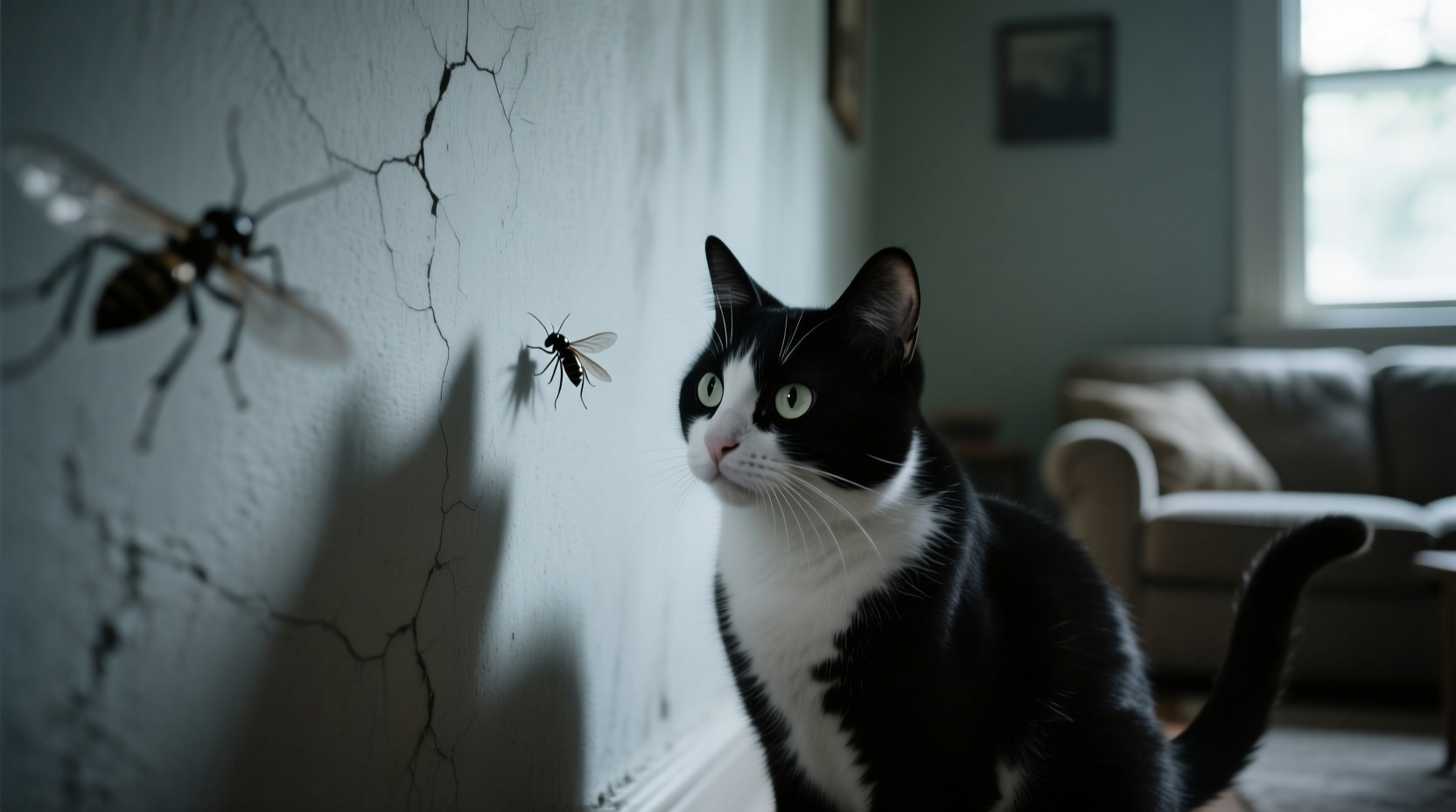
Cats don’t see the world as we do. Their eyes are adapted for hunting in dim light, with a higher concentration of rod cells, which detect motion and function well in darkness. This gives them exceptional night vision — about six times better than humans — but at the cost of color perception and visual clarity at a distance. What appears as a blank wall to you might be a dynamic landscape to your cat, complete with dust motes drifting in a sunbeam, shadows shifting from a passing car outside, or the faintest movement of a spider in the corner.
Additionally, cats have a wider field of view (about 200 degrees compared to our 180) and a reflective layer behind the retina called the *tapetum lucidum*, which amplifies available light. This is what causes their eyes to glow in the dark and helps them detect even the subtlest changes in their environment.
So, while your cat isn’t likely seeing ghosts, they might be reacting to stimuli invisible to human eyes. A flicker of light, a vibration through the wall, or a high-frequency sound (like a TV transformer or electrical wiring hum) could capture their attention. Cats also hear frequencies up to 64 kHz — well beyond human range — so they may be responding to sounds associated with movement behind walls, such as rodents, insects, or plumbing activity.
Common Non-Medical Reasons Cats Stare at Walls
In most cases, wall-staring is completely normal feline behavior. Here are the most frequent explanations:
- Movement detection: Tiny insects like silverfish, ants, or spiders may be crawling along baseboards or within wall cracks. Even if you don’t see them, your cat’s keen eyesight and hearing can pick up on their presence.
- Shadows and light play: Sunlight filtering through blinds, reflections from mirrors, or even a ceiling fan casting moving shadows can fascinate a cat.
- Sounds behind walls: Mice, rats, or even HVAC systems can produce noises that intrigue or alert your cat.
- Boredom or lack of stimulation: Indoor cats without sufficient enrichment may fixate on minor environmental stimuli simply because there’s nothing else to do.
- Anticipation: If your cat associates a certain spot with feeding, playtime, or your return home, they may stare expectantly at a doorway or wall nearby.
These behaviors are typically short-lived and don’t interfere with normal routines. The cat will eventually lose interest and move on.
When Wall-Staring Crosses Into Concerning Territory
Occasional staring is normal. But when it becomes repetitive, prolonged, or occurs alongside other symptoms, it may indicate a deeper issue. Neurological disorders, vision problems, cognitive dysfunction, or mental health conditions like feline hyperesthesia syndrome can manifest as obsessive staring.
Dr. Sarah Wilson, a board-certified veterinary behaviorist, explains:
“Cats that stare at walls for minutes at a time, especially if they seem unresponsive or disoriented afterward, should be evaluated. This could be a sign of seizures, particularly partial (focal) seizures, which don’t always involve convulsions.”
Focal seizures in cats may present only as unusual behaviors — such as twitching, lip-smacking, vocalizing, or fixed gazing — making them easy to miss. These episodes can last from seconds to several minutes and may be followed by confusion or drowsiness.
Medical Conditions Linked to Wall-Staring
Several health issues can cause or contribute to this behavior. It’s important to rule out physical causes before assuming it’s behavioral or environmental.
| Condition | Symptoms | What to Do |
|---|---|---|
| Epilepsy / Focal Seizures | Staring spells, twitching, drooling, disorientation after episode | Record video and consult a veterinarian; may require MRI or anticonvulsants |
| Vision Impairment | Bumping into objects, dilated pupils, reluctance to jump | Ophthalmic exam needed; cataracts or retinal disease possible |
| Cognitive Dysfunction Syndrome (CDS) | Confusion, nighttime vocalizing, litter box accidents | More common in senior cats; managed with diet, enrichment, and meds |
| Hearing Loss | Not responding to sounds, increased startle response | Auditory testing; compensatory behaviors may include visual fixation |
| Feline Hyperesthesia Syndrome | Frantic grooming, skin rippling, sudden running, tail chasing | Diagnosis of exclusion; treatment includes stress reduction and medication |
If your cat suddenly begins staring at walls frequently — especially if they seem “zoned out” or unresponsive — it’s worth scheduling a vet visit. Blood work, neurological exams, and possibly imaging can help identify underlying causes.
Environmental and Behavioral Factors
Even in the absence of medical issues, environment plays a major role. Cats are highly sensitive to changes in routine, household dynamics, and sensory input. A new appliance, construction noise, or even a relocated piece of furniture can trigger anxiety or hyper-vigilance.
Indoor cats, in particular, are prone to under-stimulation. Without adequate outlets for hunting, climbing, and exploration, they may develop compulsive behaviors — including staring, tail-chasing, or fabric-sucking.
Mini Case Study: Bella the Fixated Tabby
Bella, a 7-year-old domestic shorthair, began staring at the living room wall for up to 15 minutes at a time. Her owner initially dismissed it as quirky behavior until she noticed Bella would sometimes twitch her head or snap at the air afterward. Concerned, she recorded a video and brought it to her vet.
After a full examination, blood tests, and a referral to a veterinary neurologist, Bella was diagnosed with focal seizures. An MRI revealed a small lesion in her temporal lobe. With a prescribed anti-seizure medication and environmental adjustments — including reducing loud noises and maintaining a consistent routine — Bella’s episodes decreased significantly. Her wall-staring nearly stopped within two months.
This case highlights how subtle neurological symptoms can be mistaken for odd quirks — and why documentation and professional evaluation matter.
Step-by-Step Guide: What to Do If Your Cat Stares at Walls
If you’re worried about your cat’s wall-staring, follow this practical timeline to assess and respond appropriately:
- Observe and document: Note when the behavior occurs, how long it lasts, and any accompanying actions (twitching, vocalizing, drooling).
- Record a video: Use your phone to capture an episode. This is invaluable for veterinarians.
- Check the environment: Look for insects, drafts, lights, or sounds that might explain the fixation.
- Assess overall health: Has your cat changed eating habits, energy levels, or litter box use?
- Schedule a vet visit: Share your observations and video. Request a neurological and ophthalmic screening.
- Improve enrichment: Add puzzle feeders, climbing shelves, window perches, and daily play.
- Monitor progress: Keep a log for several weeks to track improvements or new symptoms.
FAQ: Common Questions About Cats Staring at Walls
Can cats really see ghosts or spirits?
There’s no scientific evidence that cats can perceive supernatural entities. However, their acute senses allow them to detect stimuli — such as ultrasonic sounds, infrared heat signatures, or minute vibrations — that humans cannot. This may create the illusion that they’re reacting to “invisible” presences.
How can I tell if my cat is having a seizure?
Focal seizures may involve staring, blinking, chewing motions, or paw lifting without full-body convulsions. The cat may seem unaware of surroundings and appear confused afterward. Generalized seizures involve loss of consciousness, paddling limbs, and sometimes urination or defecation. Any suspected seizure warrants immediate veterinary attention.
Is wall-staring a sign of dementia in older cats?
Yes, in senior cats (typically 10+ years), staring into space can be a symptom of Cognitive Dysfunction Syndrome (CDS), similar to Alzheimer’s in humans. Other signs include disorientation, altered sleep cycles, and reduced social interaction. Early intervention can improve quality of life.
Checklist: When to Worry About Your Cat’s Wall-Staring
- ✅ Episodes last longer than 30 seconds
- ✅ Cat doesn’t respond when called during the episode
- ✅ Followed by disorientation, fatigue, or confusion
- ✅ Occurs multiple times per week
- ✅ Accompanied by twitching, drooling, or vocalizing
- ✅ Sudden onset in a previously normal cat
- ✅ Changes in appetite, grooming, or litter box habits
If three or more apply, schedule a veterinary consultation promptly.
Conclusion: Listen to Your Instincts — And Your Cat
Cats stare at walls for many reasons — most harmless, some concerning. While it’s unlikely your cat is communing with spirits, they might be reacting to subtle environmental cues or struggling with an undiagnosed health issue. The key is discernment: knowing the difference between quirky feline behavior and a potential red flag.
Your cat relies on you to interpret their silent language. If something feels off, trust that instinct. Document the behavior, enhance their environment, and seek professional guidance when needed. With attentive care, most causes of wall-staring can be managed or resolved — ensuring your cat lives a mentally and physically healthy life.




 浙公网安备
33010002000092号
浙公网安备
33010002000092号 浙B2-20120091-4
Comments
No comments yet. Why don't you start the discussion?